I had many images to chose from these are what I submitted.
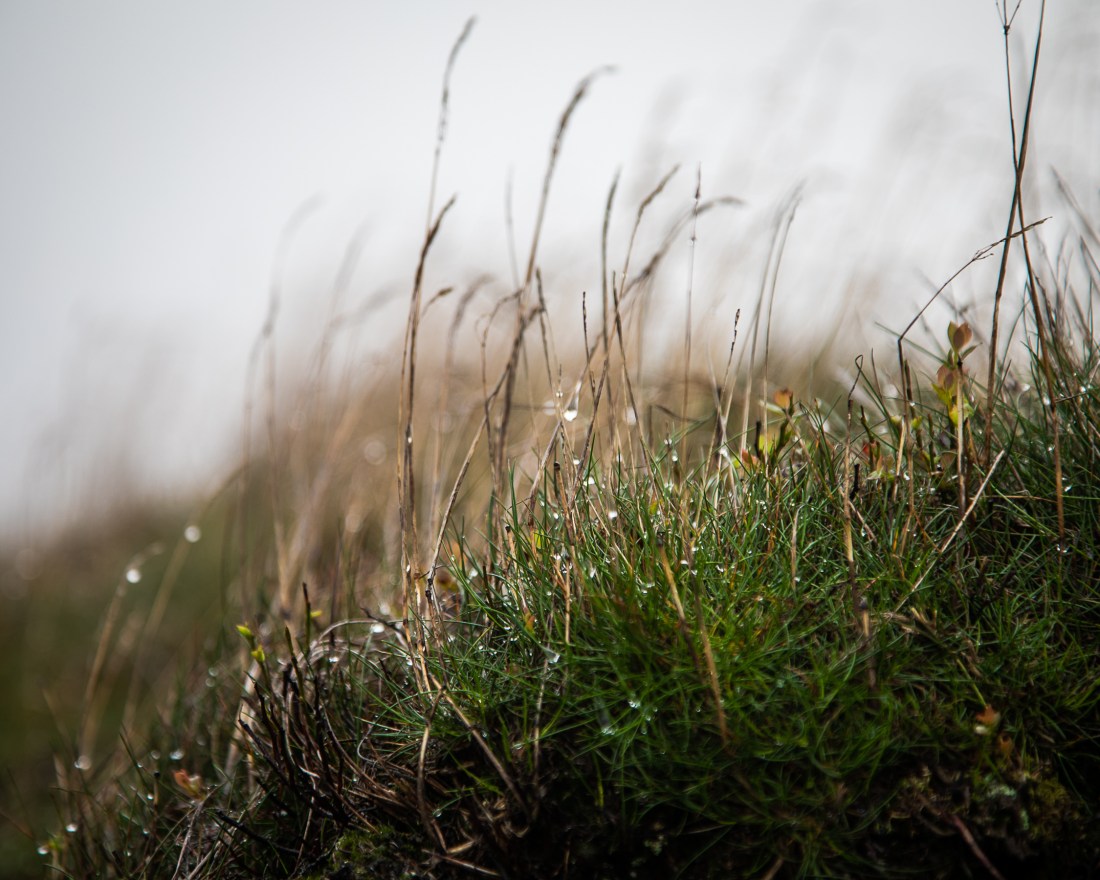
This is water droplets forming on grass and moss on the moors above Glossop when covered by cloud. I chose it because it reflects the source of the waters of Glossop Brook and the humid atmosphere that attracted the cotton spinning industry to the area.
It is taken against the light to catch the light as it passes through the droplets. I would have liked better lighting of the droplets to emphasise them and make them stand out, but the sun never broke through while I was there, and I had no artificial light with me.

Paving slabs from the floors of old mills have been used to pave eroded parts of footpaths on the moors. This image shows those and reflects to me the cycle of regeneration as those parts of the old mills are now used to protect the moors that have been damaged in the past by their smoke.
It is taken on a very cloudy day and the light is quite flat, but this enhances the atmosphere of the moors.
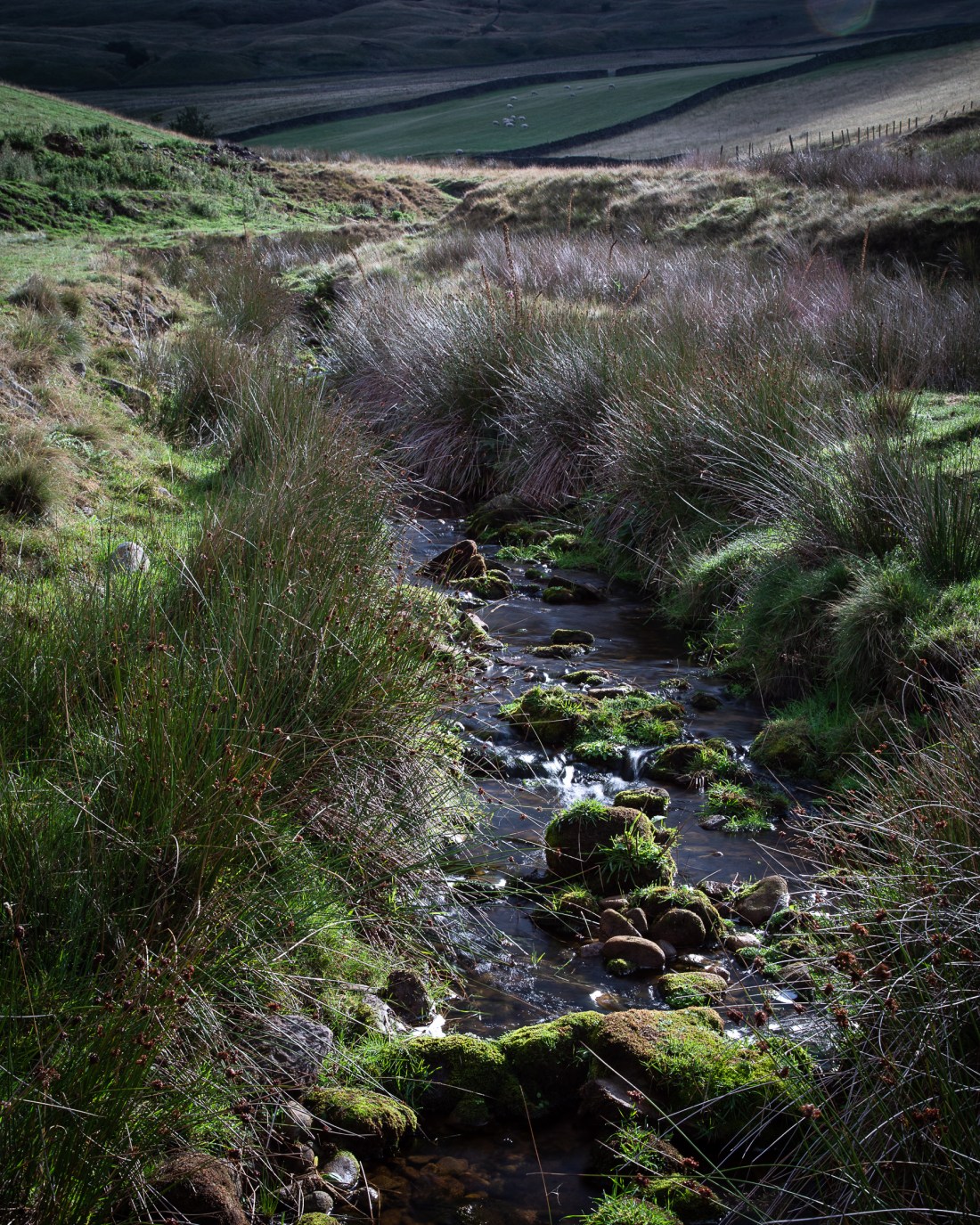
As the rivers descend from the moors there is the evidence of hill farming. In the background the sheep. It is the sheep farming which has created the landscape we see today. That landscape apparently natural, is as artificial as the industrial landscape of the town.
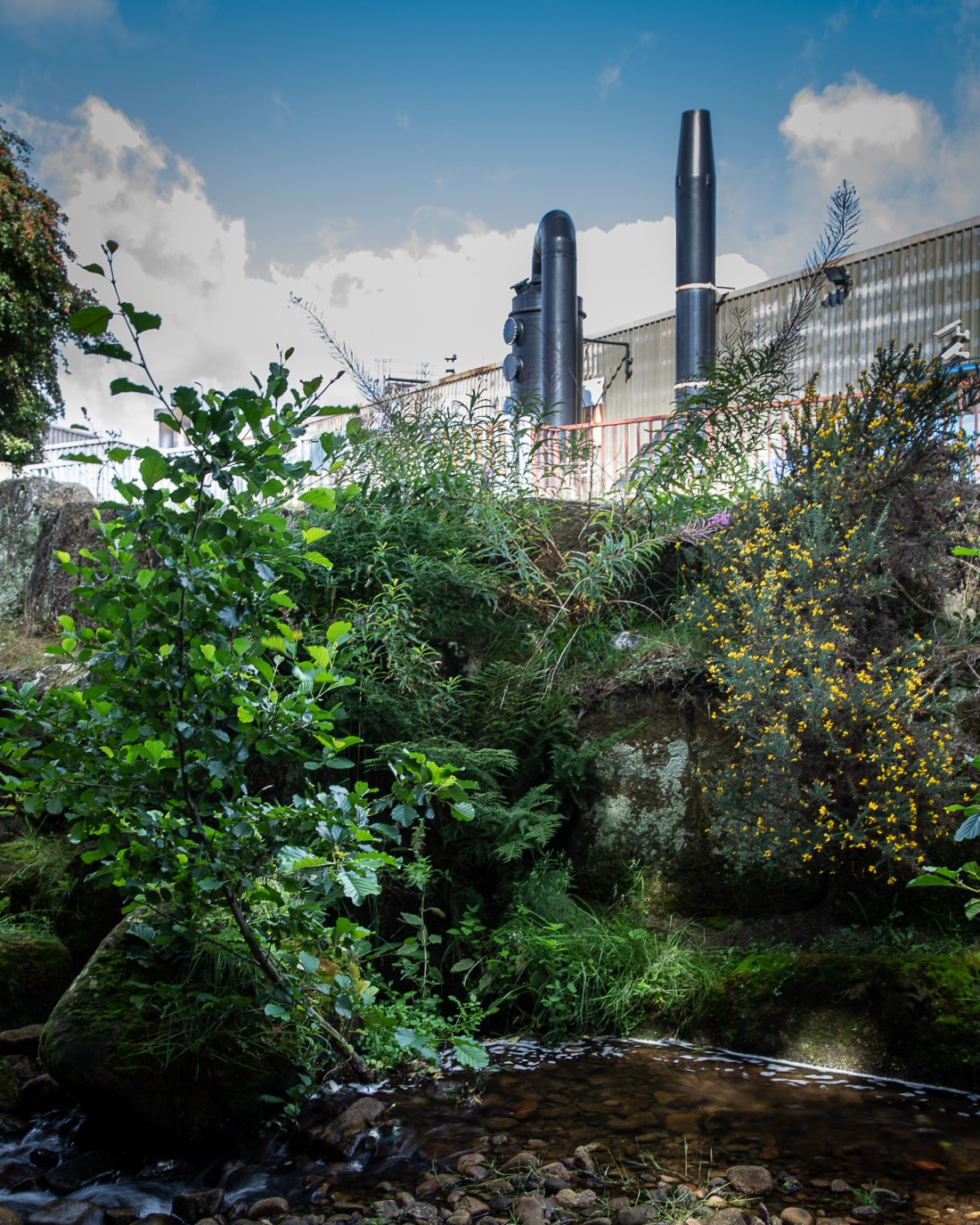
Entering the town the river passes modern factories such as this. I tried to reflect here the contrast between the force of nature as reflected by the river and vegetation, and the modern industrial plant.
I struggled finding a location to get a composition of this to get the juxtaposition of the two elements. In this image I think that the foreground is cluttered and messy, and there may not be a position to get that from. It might be better to just include the modernistic appearing black factory elements.

This is Glossop Brook in the centre of the town, passing through what was a huge development of mills. Here all that can be seen in an old pipe in the bed of the river and the walls on the left of the mill complex. This apparently rural river was in fact the centre of an industrial complex, again showing the power of regeneration.
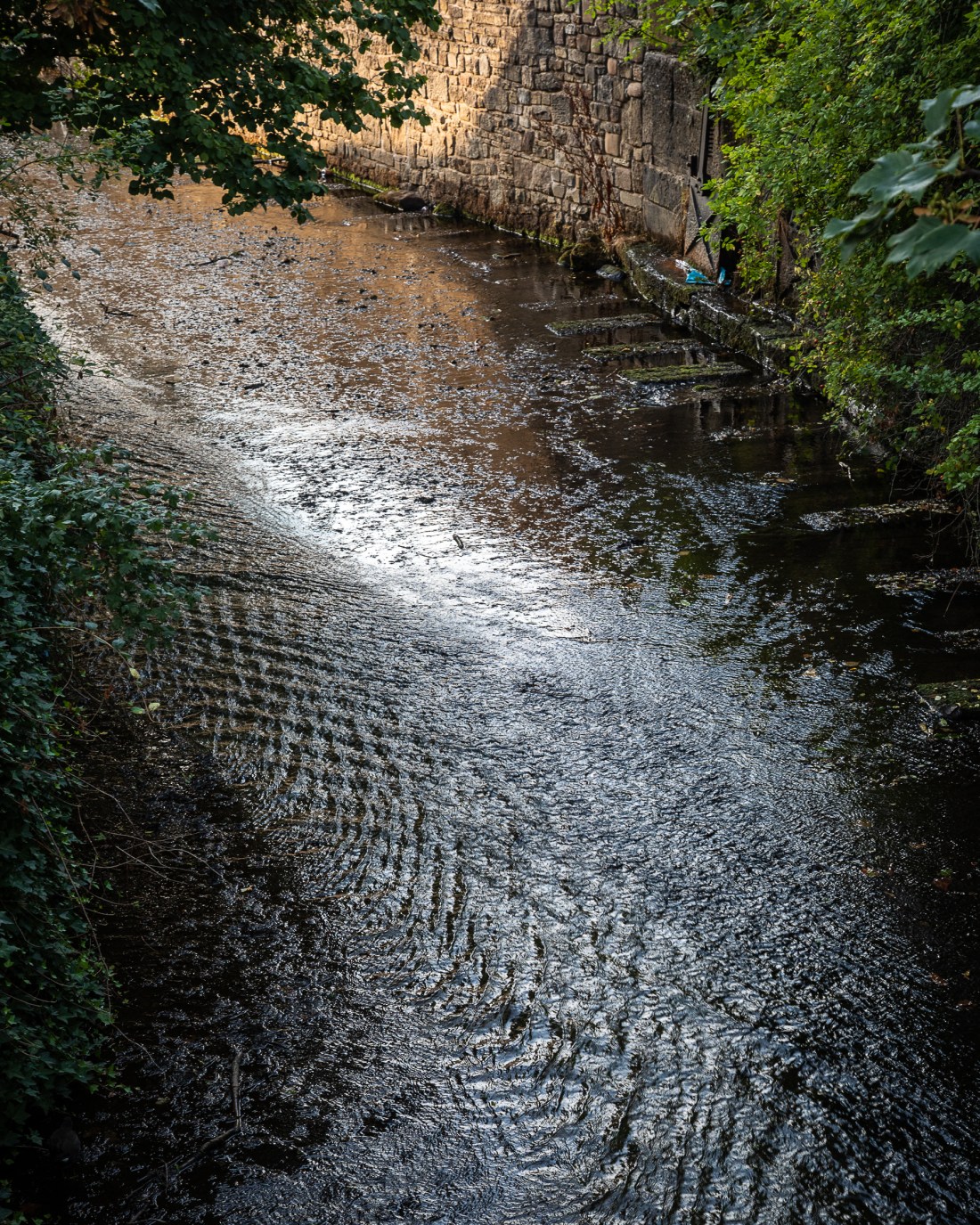
Further into the Mill complex the river is forced into artificial water course with paved bed. As it flows over that these patterns are formed, and I was attracted to the aesthetic element of this.
The patterning is perhaps small in relation to the size of the image and might be improved by better position and camera angle to enhance this.
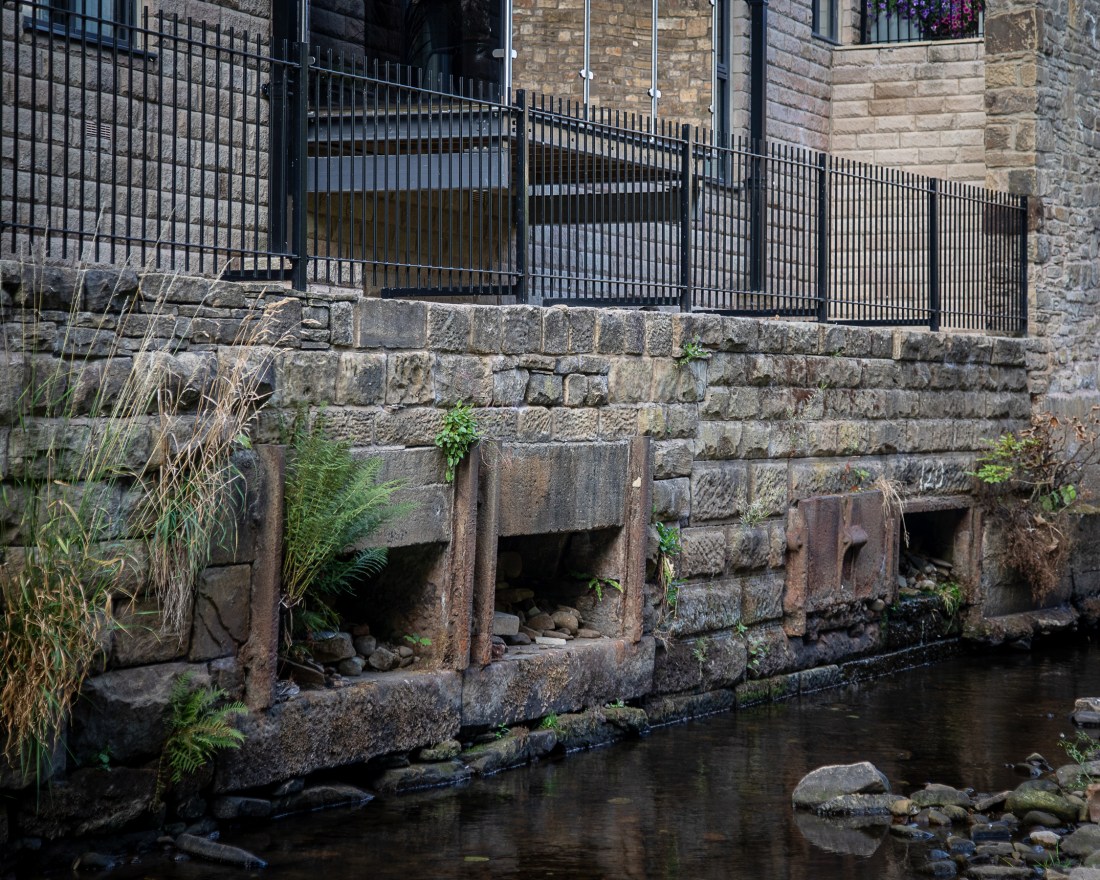
I like to think this image encapsulates what I am trying to show in my project. At the bottom is the river. This is what caused the mills to be built here, and the remains of old buildings can be seen in the centre. On the remains of these have been built new apartments with contrasting clean straight lines.
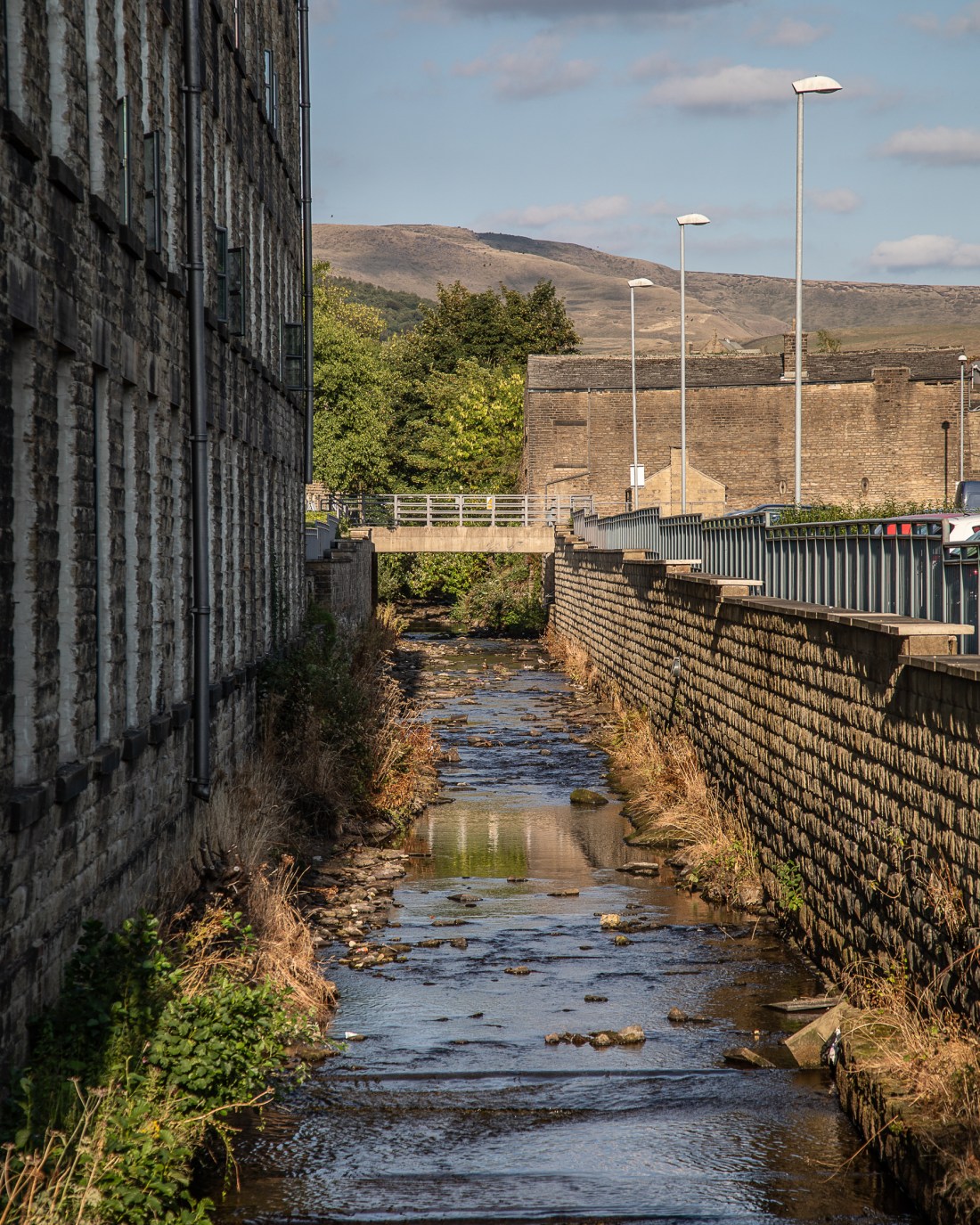
Similarly near this mill the river is forced into a man-made course, here the contrast between the old mill building and the modern carpark is enhanced by the quality of the light. The mill in the shadow is cool and blueish, whereas the right of the image is lit by the evening sun and is warmer. The background is important as it shows where this has all come from.
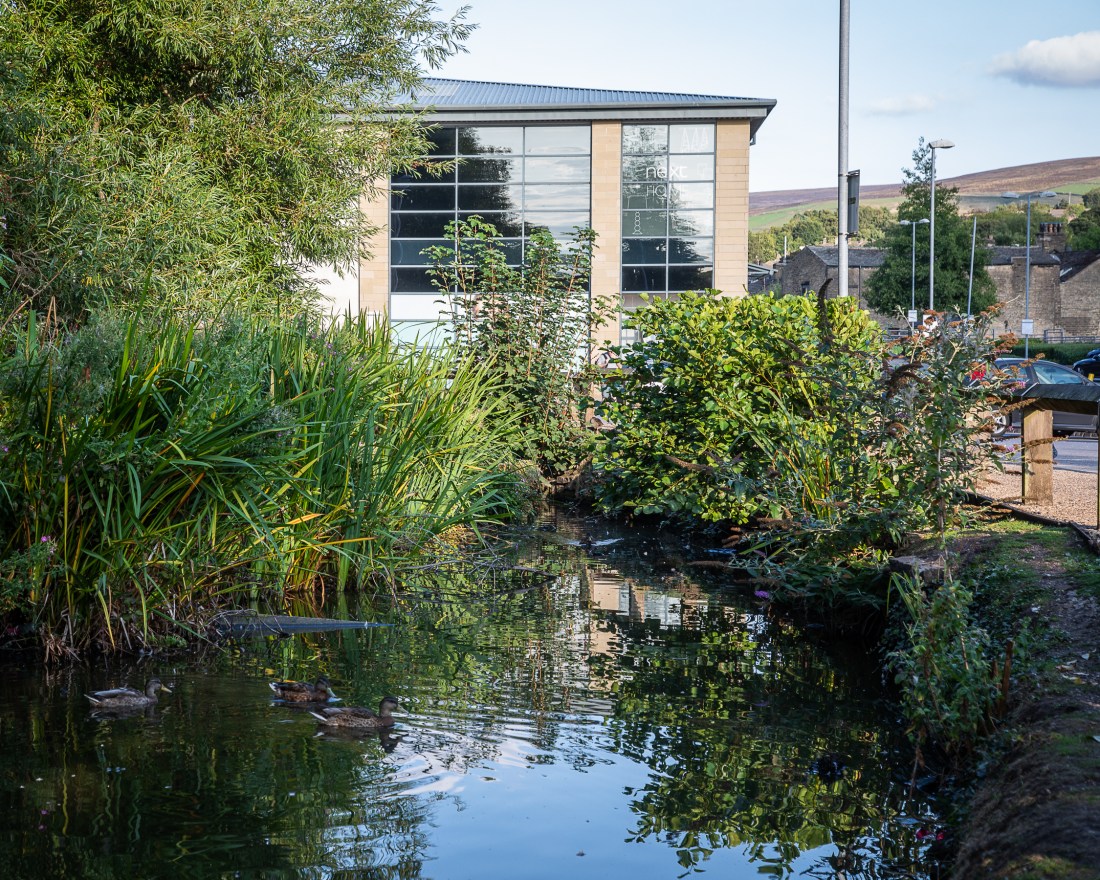
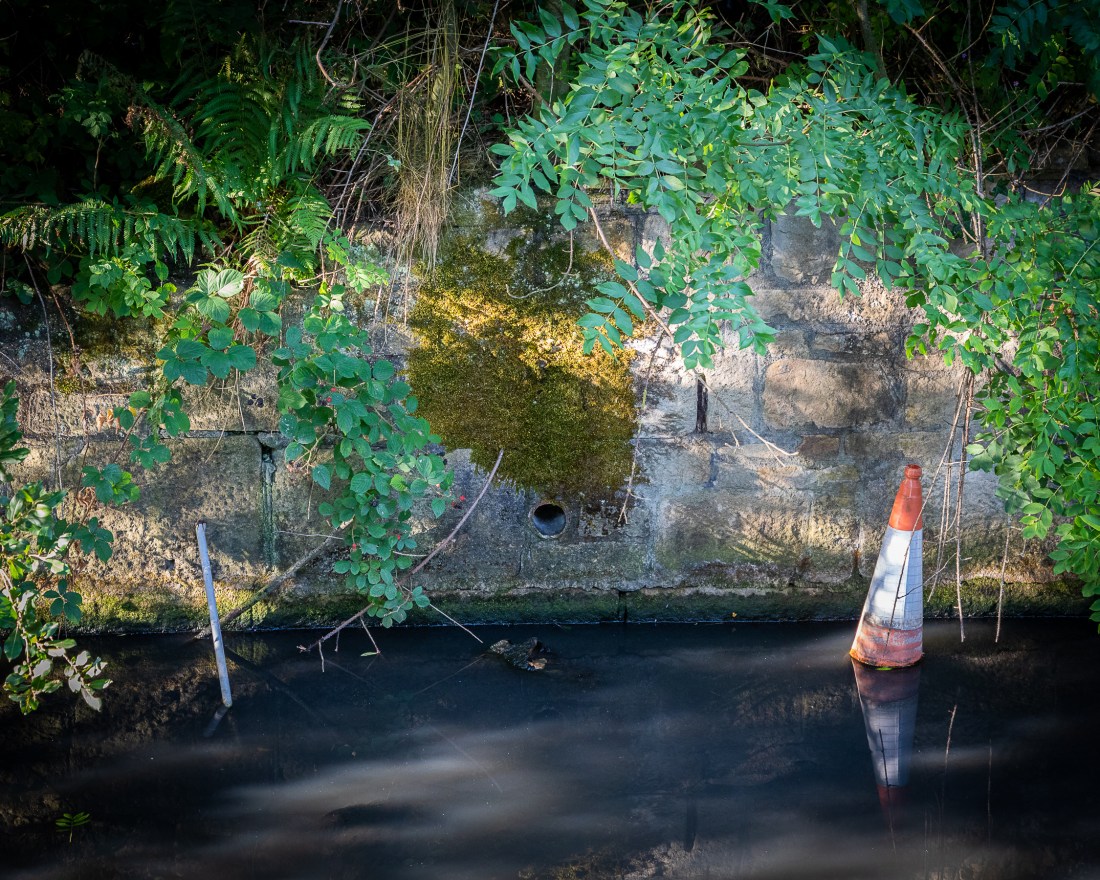
These images are a pair. The left shows a modern retail development with clean straight lines and the incorporation of the old mill pond into the landscaping around it. The right is taken behind the buildings where the mill pond is still there, but overgrown and including the archetypal image of urban decay, a discarded traffic cone.
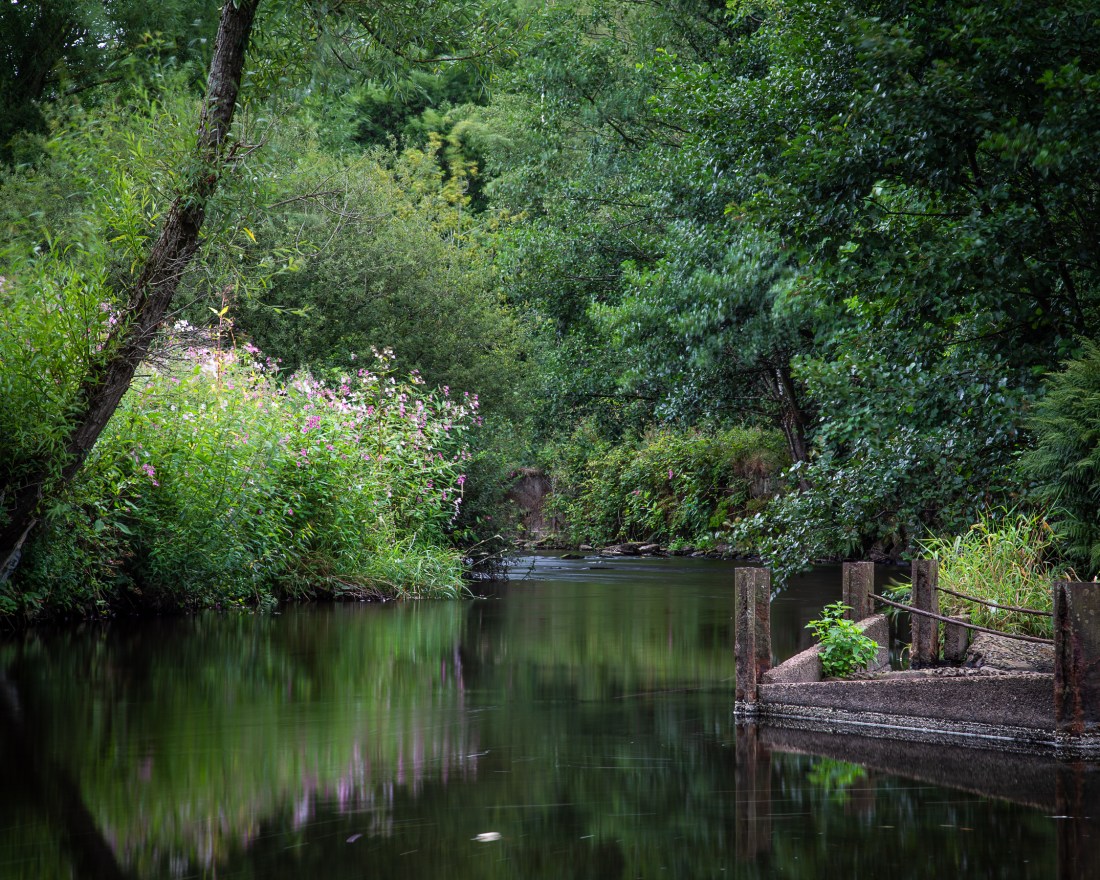
This shows the confluence of Glossop Brook with the River Etherow. Here the nature of the rivers has changed and they are bigger and slower flowing. Superficially this looks like a rural river with lush vegetation. However to the left of the image is the course of the Riverside Branch line which ran along the edge of the river here to other mills. Remains of the supports for a viaduct can be seen. The course of the railway is bridle path and the landscape remains as heavily managed now for recreation, as it was for industry.
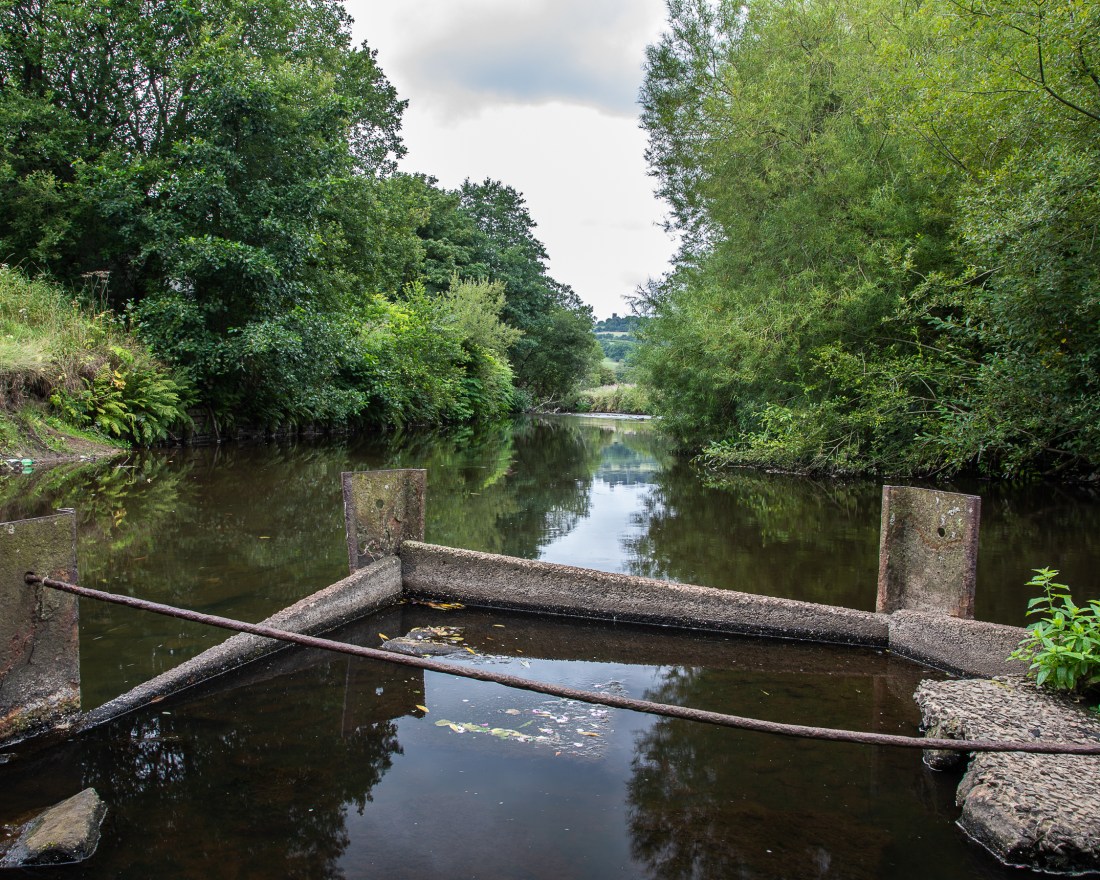
Looking down the River as it flows out onto the plain , it looks like a long standing rural landscape. However the traces of the old iron work, show that this remains a changing and evolving landscape.

 Andrew Procter
One thought on “Final Submission”