Looking for England – BBC Four, 5 February 2019
https://www.bbc.co.uk/programmes/m0002dv0 (accessed 09/03/2019)
The BBC introduction to this programme describes it as:
Travelogue that follows photographer Don McCullin, now 83, documenting his country from inner cities to seaside towns, on a journey in search of his own nation. Sixty years after starting out as a photographer, McCullin returns to his old haunts in the East End of London, Bradford, Consett, Eastbourne and Scarborough. Along the way he encounters an array of English characters at the Glyndebourne Festival and Goodwood Revival and photographs a hunt and a group of saboteurs aiming to disrupt them. McCullin’s journey is punctuated by scenes in his darkroom, a place he is allowing cameras into for the first time.
Sir Don McCullin is a British photojournalist, particularly recognized for his war photography and images of urban strife. His career, which began in 1959, has specialised in examining the underside of society, and his photographs have depicted the unemployed, downtrodden and the impoverished. (Wikipaedia accessed 09/03 2019).
The documentary covered a lot of material and in order to concentrate what I regarded as the main points I have learned, I tried here to record three main things I have learned from this.
1. McCullin’s motivations
Early in the programme he said that early in his career he was “not just taking photographs, it had a statement to make. Society we were living in was very unbalanced – haves and have nots. Photography is a powerful tool”.
However he also demonstrated in the programme that he maintains a professional impartiality in his images. He attempts to become an impartial recorder of what he sees. This is best illustrated in a sequence where he visits a hunt and takes images of the members of the hunt. There are also protesters and he tries unsuccessfully to engage them in dialogue to establish their motivations, and to show these people also.
He later visited Consett, a former industrial town which he has visited to photograph in 1980. He described that time, saying “that world had to go, people deserved better”. His austere images of the 1980s show a bleak landscape, and his portrayal of the town led to a complaint by the council.
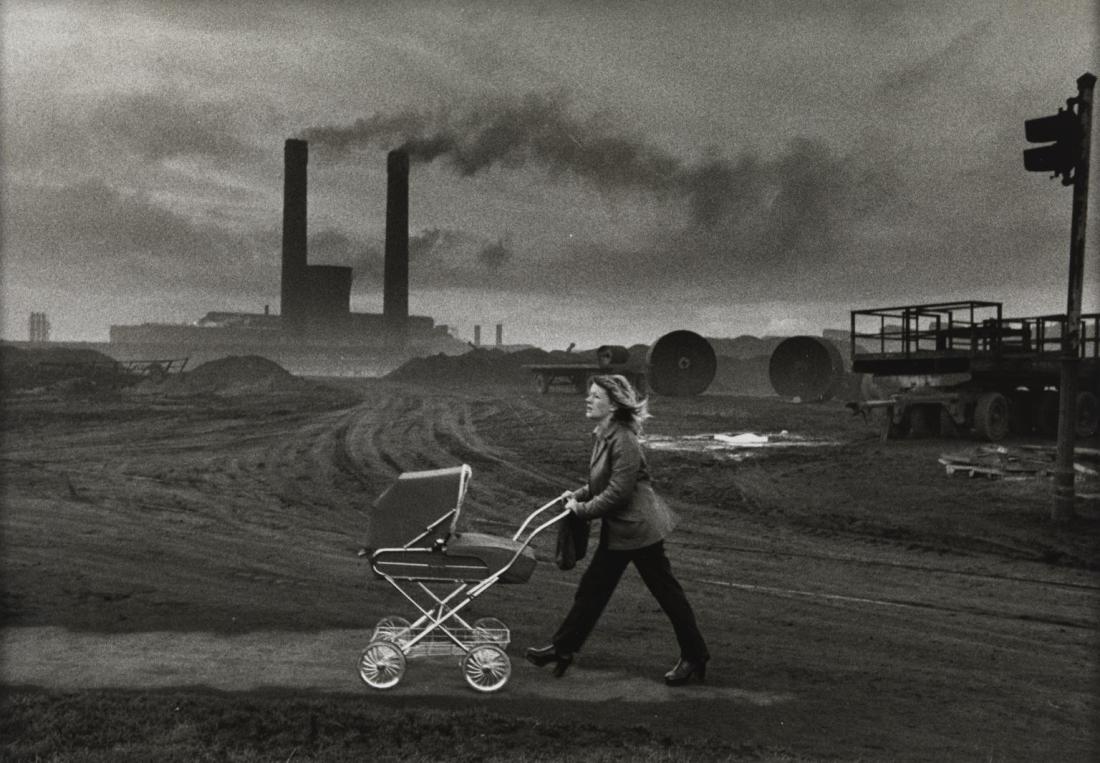
His depiction of the industrial North-East around this time, is very different from that of Ian MacDonald, from nearby Teesside who photographed the area a few years earlier. These show industry as clean and bright and the countryside around a bright and rural.
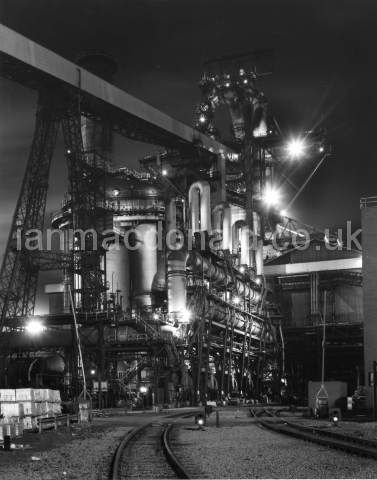
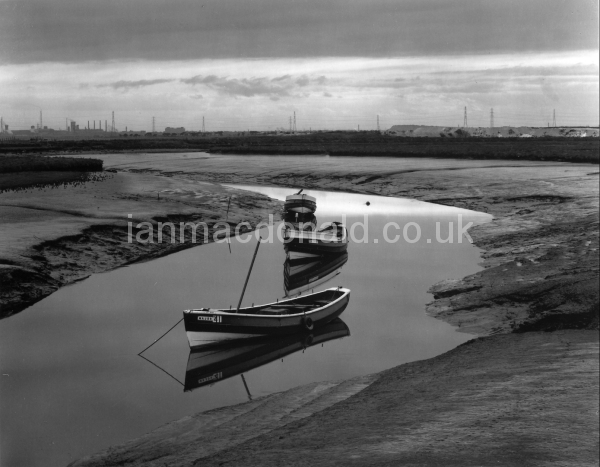
While this might reflect the sudden decline of industry in the intervening years, however I wonder if this is more to do with the difference in perception of a local person (MacDonald) as opposed to that of McCullin who was not from that area and saw the landscape with fresh eyes.
2. McCullin’s interaction with his subjects
In the documentary, we see McCullin photographing people in various settings. I was interested to watch his interaction and conversation with them. To some extent this was assisted by his use of a camera with a waist level view finder, the camera did not come between him and his subject. On viewing the resulting images, while some are clearly posed like this from Glyndebourne:
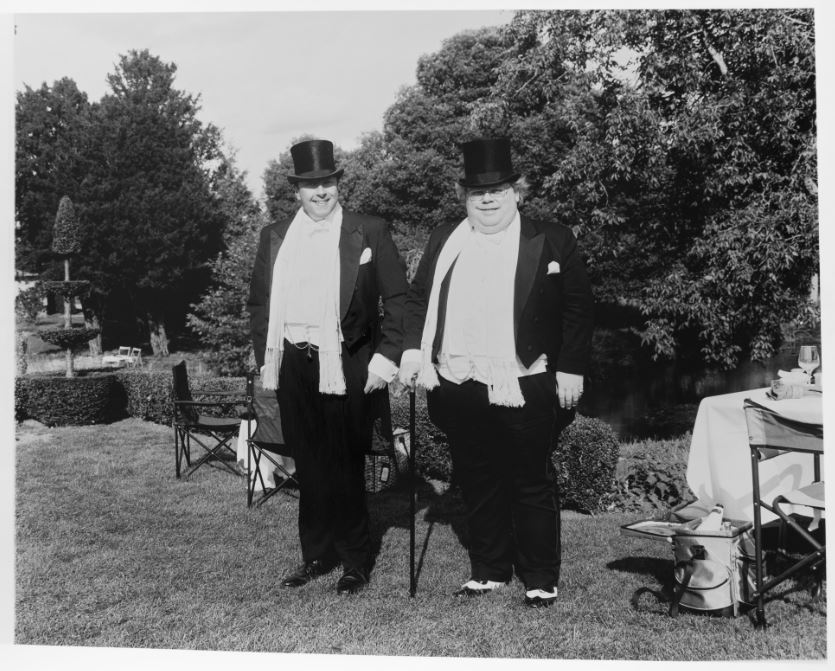
others are less obviously posed.

Watching McCullin work, we learn more about the subject. For example why this man is eating his lunch on a very windy pier. McCullin knows more about his subjects than is obvious from the image.
My own attempts at street photography have been more discrete, not engaging the subject and trying not to obviously be taking photographs. However, a more direct approach may be necessary to get the impression of emotional connectivity on which I commented in the work of Willy Ronis, but also seen in McCullin’s work.
3. Some technical points
This image of an elderly lady watching a brass band engages the observer with her eyes immediately.
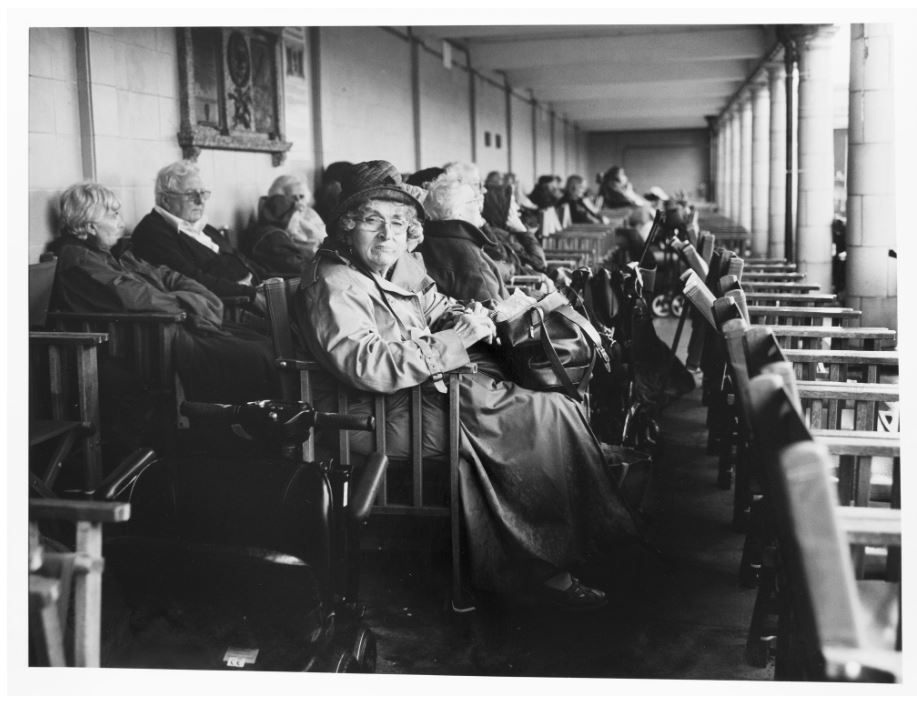
One’s gaze is directed to her face, in spite of the rest of the image having a lot of detail and being potentially quite distracting. This is probably because she is looking directly at the camera and is herself engaged in the image. My own approach to this would have involved severe cropping which would have lost the context and setting in which she was, or the use of narrow depth of field to emphasise her face. From this image I learned that that approach is not necessary and is limiting. What is necessary is that engagement with the subject that can then be portrayed in the final image.
Other aspects of McCullin’s technical approach is his use of film with medium and large format cameras. While his earlier work was in 35mm (particularly the war photography), his use of larger format enables high definition prints.
He is very committed to film – “some subjects demand film”. Although I do tend to disagree with him slightly on his statement that the photographer can “press the button on digital and its all done for you”
4. Other points
There are some other points that I intend to develop further in later posts.
These include his comment that “I cannot help taking my prints darker and darker and darker, I don’t know what makes me do it”.

 Andrew Procter
3 thoughts on “Looking for England – BBC Four, 5/2/2019”