Project 1 The frozen moment
Exercise 3.1
Using fast shutter speeds, try to isolate a frozen moment of time in a moving subject. Try to find the beauty in a fragment of time that fascinated John Szarkowski. Add a selection of shots, together with relevant shooting data and a description of your process (how you captured the images), to your learning log.
I had previously experimented with trying to capture images of water dropping from my kitchen tap into a container in the sink, and lit this with flash. I attach the contacts from this exercise and one interesting image which begins to capture the shapes and forms of the splash caught in time.

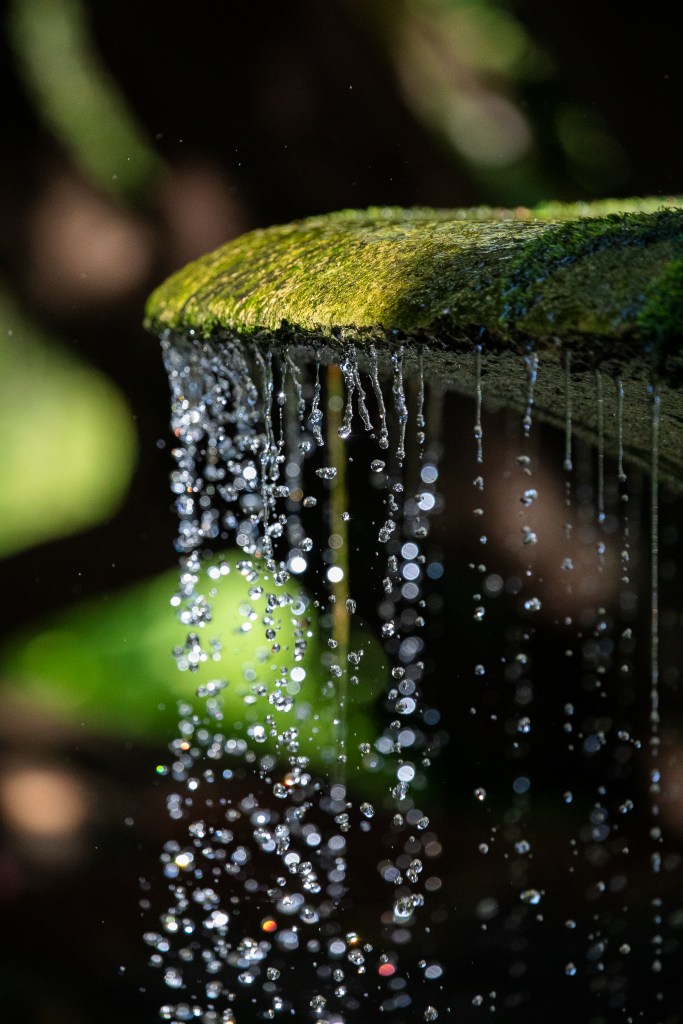
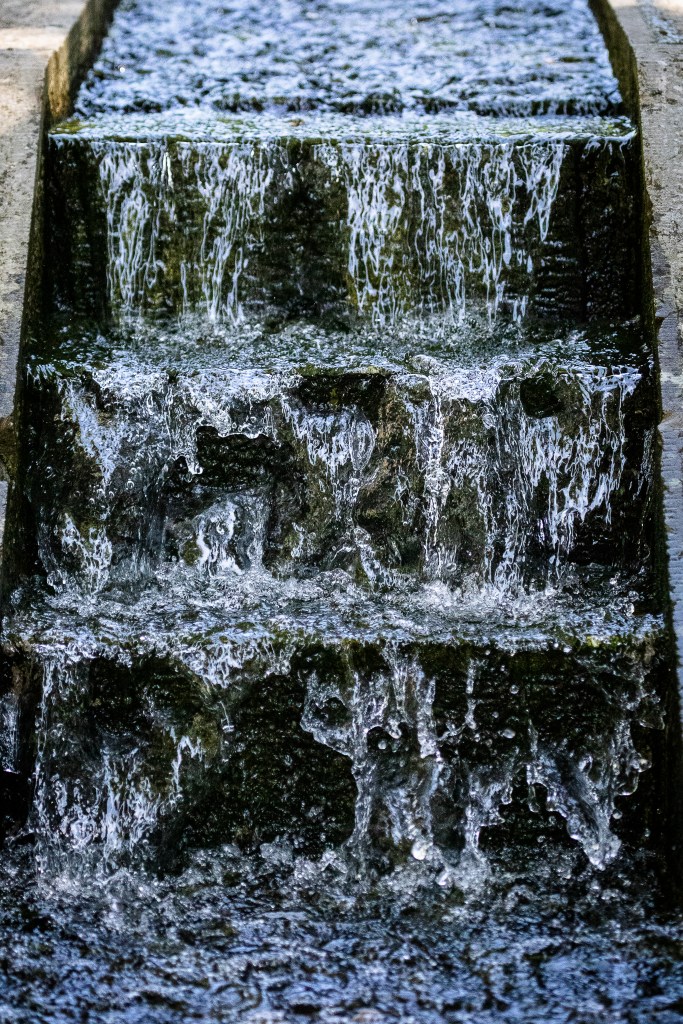
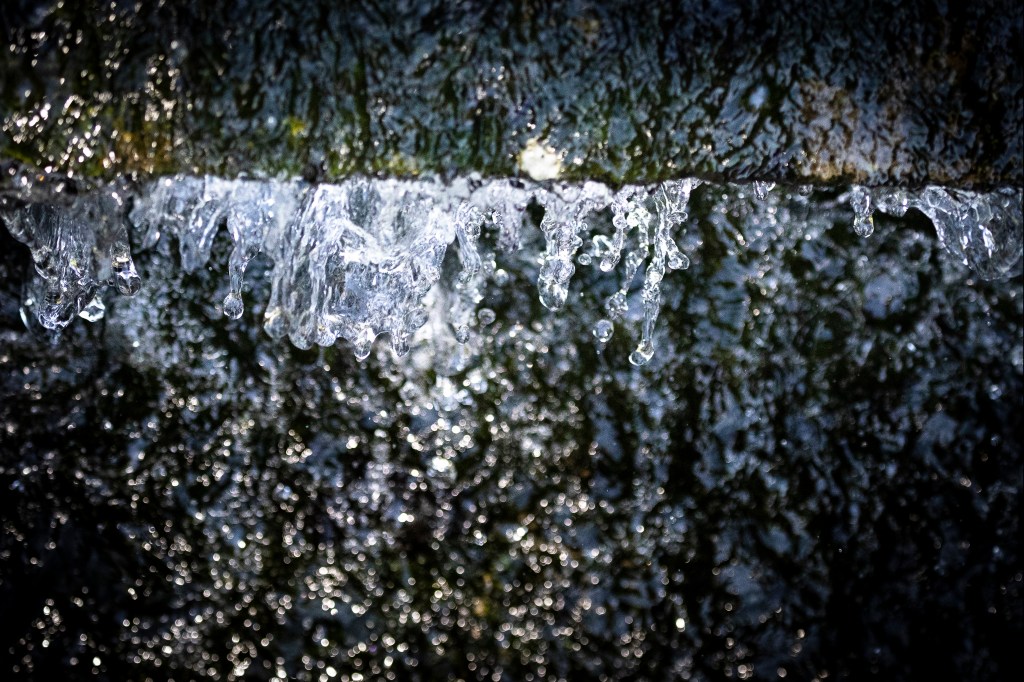
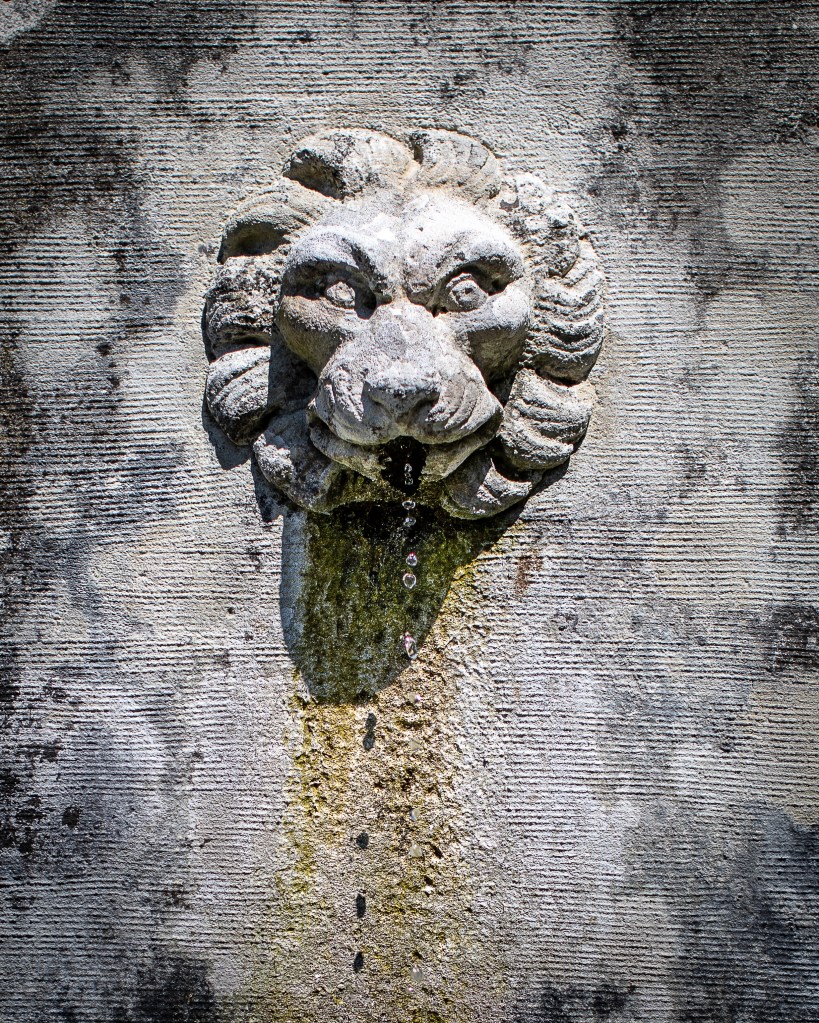
However before I did more work with this approach I visited the gardens of a country house in the Lake District (Holker Hall). It had not been my intention to complete the exercise while there, but in the grounds were a number of water features It was a bright sunny day which lit the drops of water from behind in a very interesting way. I had already researched some of the work and images of Muybridge, Worthington and Edgerton. With regard to this, I was therefore somewhat familiar with the appearance of splashes and drops of water recorded by Worthington with very short shutter speeds and the more stylised images by Edgerton. I wanted to try and capture the appearance of the water in these garden features in a manner more naturalistic than I had set up in my home. I therefore made a number of images of the water as it flowed variously over the features or fell back into pools from fountains.
Methodology
I used a telephoto lens – (100-400mm focal length) to enable me to capture the splashes from some distance. I have used fast shutter speed of around 1/2500sec to freeze the movement of the water. It is my more usual practice to use a long shutter speed for images like this to show the movement of the water with blurring, so this was quite a novel approach for me. I also used high speed continuous shooting and took bursts of 3 or 4 images at a time in order to see how the splash and droplets developed and regressed. This process obvious in some of the images on the contact sheet.
I have included contact sheets of all the images I made of the water features and have labelled them with the exposure data, rather than filenames so as to better show how these were made.
I have further developed a number with cropping and local exposure adjustments and think these show the patterns in the water only revealed to us by the use of very short shutter speed freezing the water in a moment in time.






 Andrew Procter
One thought on “Part Three/Project 1: The frozen moment”