I examined some of the work by Jeff Wall, an artist whose work, Milk, is presented in the course notes. One of the other works by Wall I came across also explores the ability of the camera to freeze time. That is A Sudden Gust of Wind (after Hokusai). This image is, like Milk, also displayed in a light box, and is a collage of images made by Wall of actors in a landscape photographed over a five month period.
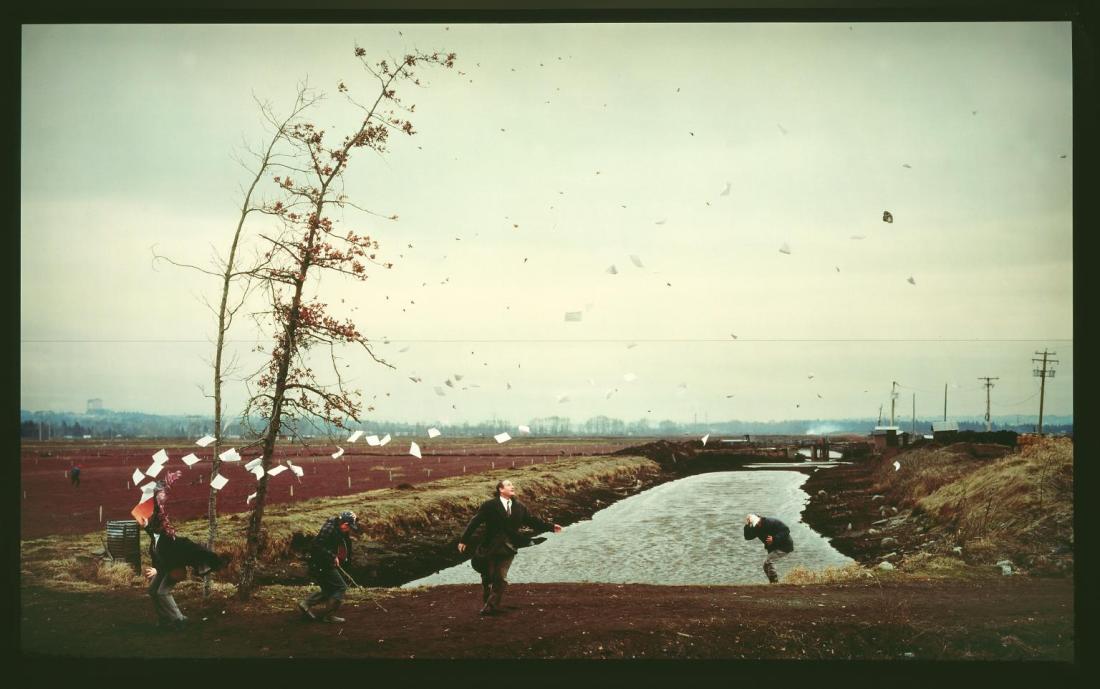
It is based on a woodcut, Travellers Caught in a Sudden breeze at Ejiri from the portfolio, The Thirty-six Views of Fuji, by the Japanese painter and printmaker Katsushika Hokusai (1760-1849). (https://www.tate.org.uk/art/artworks/wall-a-sudden-gust-of-wind-after-hokusai-t06951 : Accessed 14/06/19)
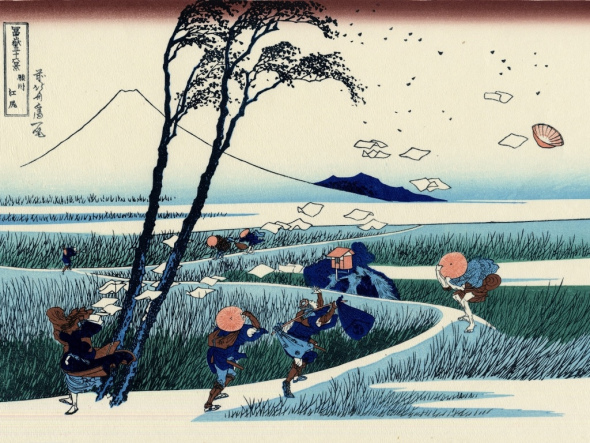
This image also captures the frozen moment as the travellers’ papers are scattered by the wind.
When I then investigated the portfolio of Hokusai, I came across the iconic image, The Great Wave off Kanagawa.
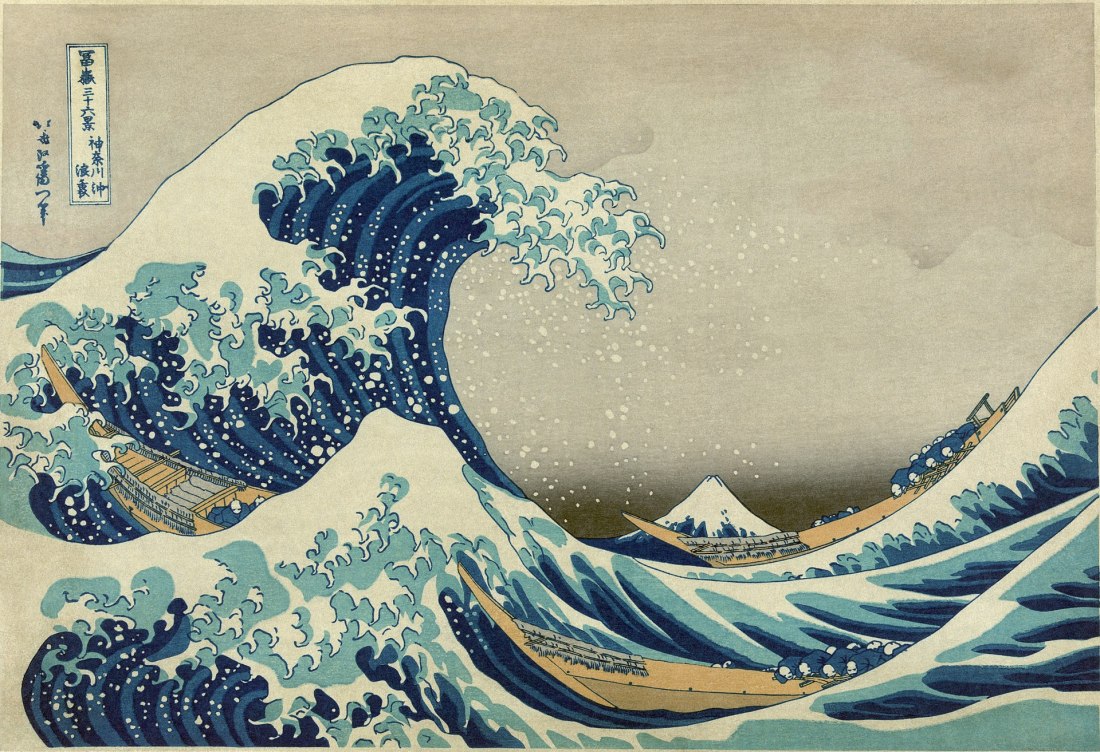
While I have seen this image many times before, looking at it with fresh eyes, I noted that Hokasai has captured the frozen form of the wave – the tip of the wave shows fine detail, reminiscent of the images made by Rachael Talibard.
My thought on this is that while we began this exercise in photography to see how short shutter speeds can freeze a moment and show us what we cannot otherwise see, Hokusai has achieved an understanding and, therefore, depiction of the frozen structure of the wave without this technology.

 Andrew Procter