Exercise 5.1: The Distance Between Us
“The camera for me is more a meter that measures the distance between myself and the other” Alexia Clorinda, quoted in the course notes.
On her website, Alexia Clorinda, describes herself as “an art historian, cultural critic, photographer, lecturer and independent researcher”. Her methods are described there as a “set of method and vocabularies informed and envisioned by collaborative work across chronologies, geographies and practices”(Alexia Clorinda, s.d.). My brief study of images and her projects indicate that her work involves valuing the contribution and experience of her subjects, regardless of their backgrounds.
The notes also cite the work of Ariella Azoulay, who describes the act of taking a photograph and relationship between photographer and subject as an “encounter… never entirely in the sole control of any one of them”.
I found this a key concept, and one I had become aware of but never articulated so clearly. I noticed this watching the TV video of Don McCullin at work, where he engages with his street subjects and they have some degree of choice in how they portray themselves. Similarly in his lecture, Peter Aitchison described also engaging with his subject and not “stealing the photograph” with telephoto lenses.
Brief
“Use your camera as a measuring device. This doesn’t refer to the distance scale on the focus ring. Rather, find a subject that you have an empathy with and take a sequence of shots to ‘explore the distance between you’. Add the sequence to your learning log, indicating which is your ‘select’ – your best shot.
Look critically at the work you did by including what you didn’t mean to do. Include the mistake, or your unconscious, or whatever you want to call it, and analyse it not from the point of view of your intention, but because it is there.”
My Subject
I have chosen to take photographs around St James’ Church, Woodhead. This is an isolated chapel, now only used very occasionally, situated near the trans-Pennine road over Woodhead pass. Nearby is the site of the first railway tunnel through the Pennines linking Manchester and Sheffield. Work began on it in 1839, and was carried out by itinerant labourers, many of whom were Irish immigrants. These labourers and their families lived in temporary huts high on the moors. There were many accidents during the building of the tunnel and many labourers died. There were also outbreaks of disease such as cholera in the camps, killing many of the families. These people were buried in unmarked graves in St James’ church yard, although it is rumoured that the Irish Catholics were buried in unconsecrated ground behind the church yard. (Higgins, 2017)
The original rail tunnel and two later parallel tunnels were closed in 1981, but the adjacent road has heavy use from lorries. Bizarrely, there are now calls to improve rail links across the Pennines although it is unlikely this tunnel will re-open as it is the route for electric cables.
I want to capture in this exercise some reminder of the labourers who built the trans-pennine link. They were poorly treated in life and now forgotten, although their construction seems to be what is now needed.
My Intention
I wanted to make images that captured the isolation of the chapel and graveyard. In addition, that it is largely forgotten and overlooked; yet it is adjacent to a busy road, which today takes the traffic that would otherwise go through the nearby disused rail tunnels.
My initial thoughts are that this may be a suitable subject for conversion to monochrome, as this will be reminiscent of old photographs, but also distance the viewer from the real subject and landscape.
Methods
I shot this using my DSLR, on a day with sunny intervals and showers. As a result the images are all quite brightly lit.
I have made a contact sheet of all the images I shot, and have selected a number for post-processing. I based this selection on the technical quality of the image and the composition, as well as how closely the image demonstrated the qualities I had aimed for.
Post processing was done with Lightroom and involved cropping and local adjustment of exposure. For the monochrome images I adjusted the contrast to result in a satisfying image.
My Images
My initial selection was these colour images.
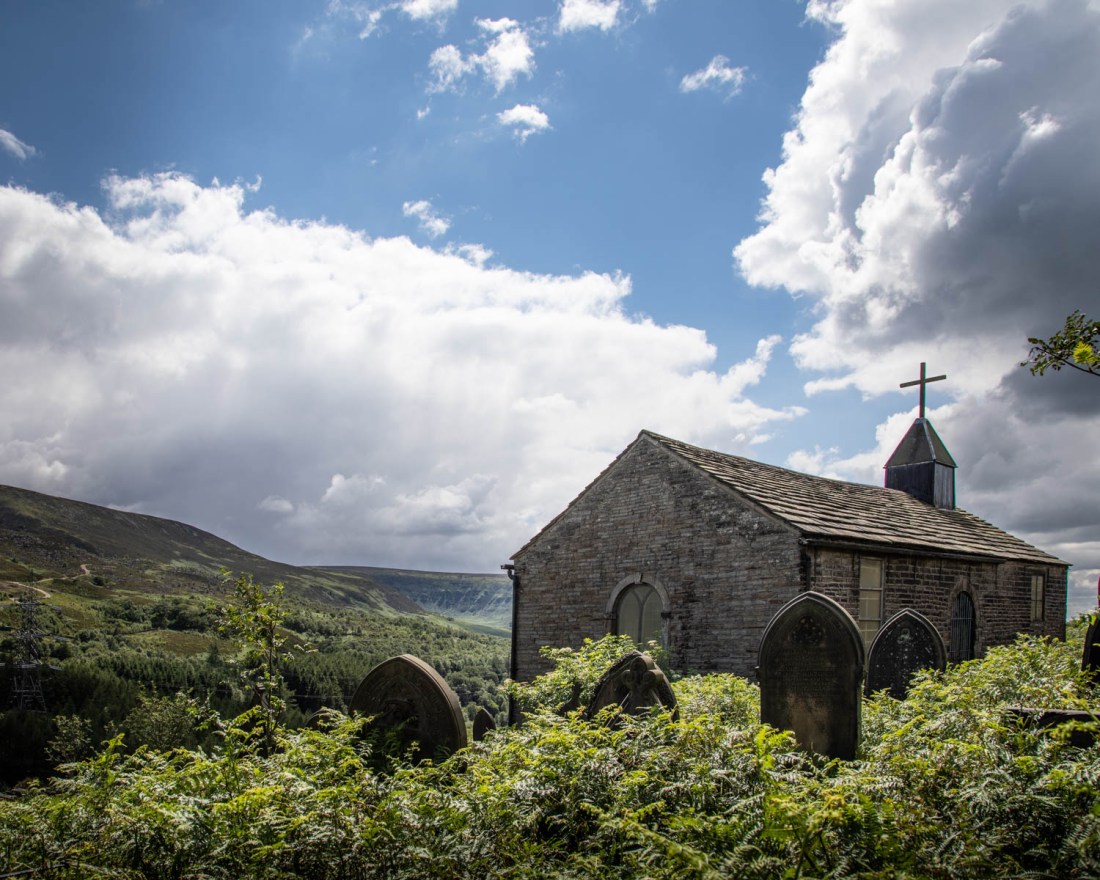


I had tried to include the busy road, and this is the only one which seemed to work.
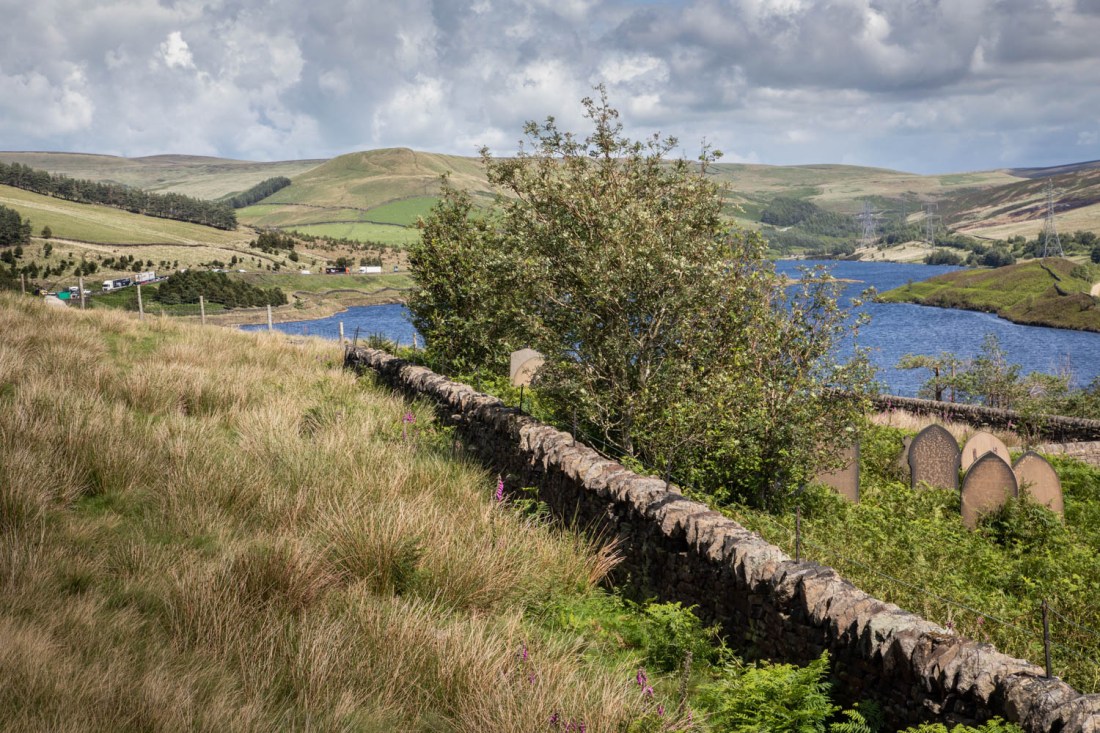
However overall, to me this seems to be too fussy and the road is too distant to be of significance.
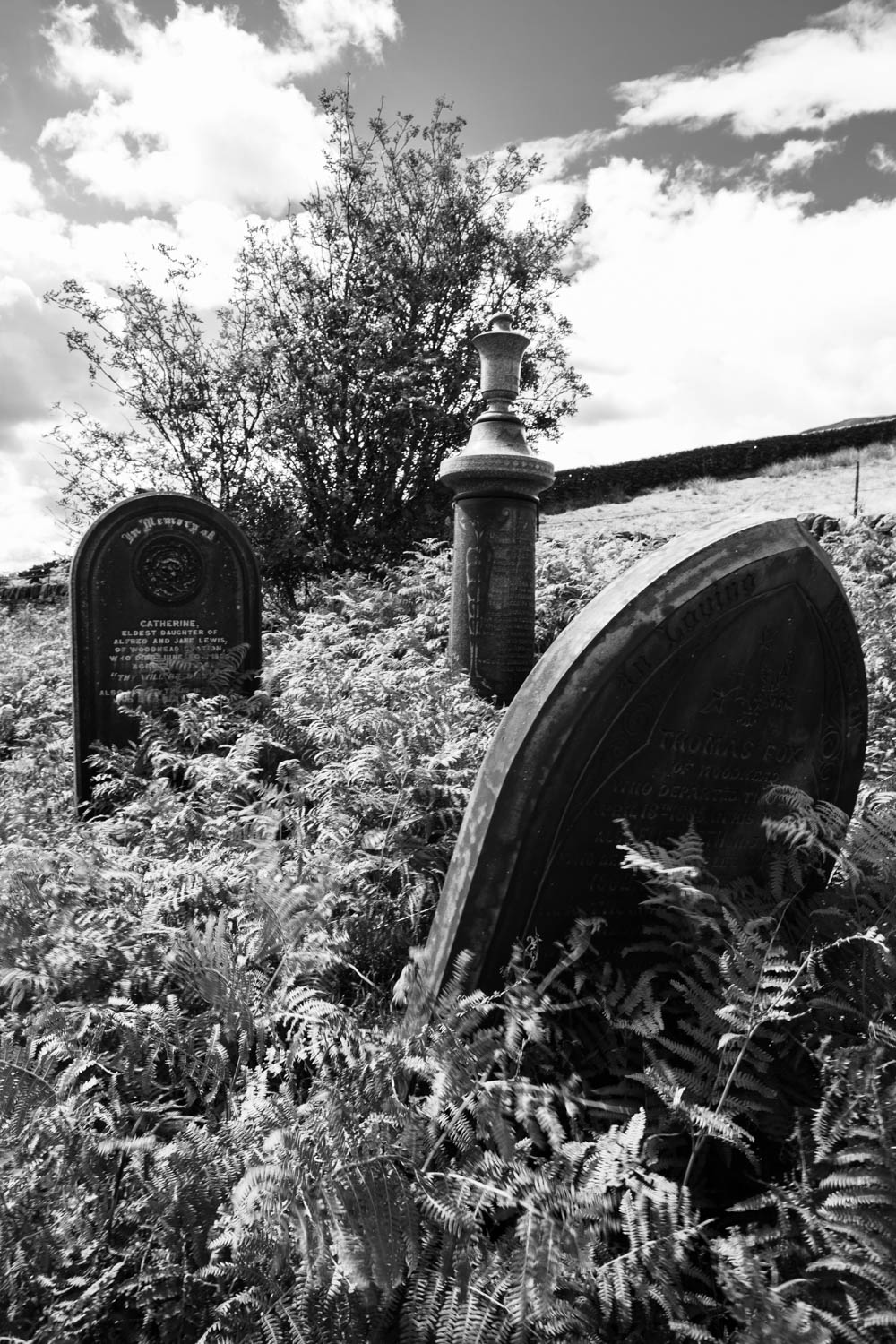
The graveyard is very overgrown and all the graves are difficult to find. I did not find any gravestones of the labourers (apparently marked as from “Woodhead Tunnel”) but most are probably unmarked. All the graves are overgrown and look untended and forgotten, and it is this aspect which I think altered my approach to the exercise. If the graves of people who had been local residents with friends and families in the area are so forgotten, how can we expect anything more for those of the temporary residents with different cultural backgrounds.
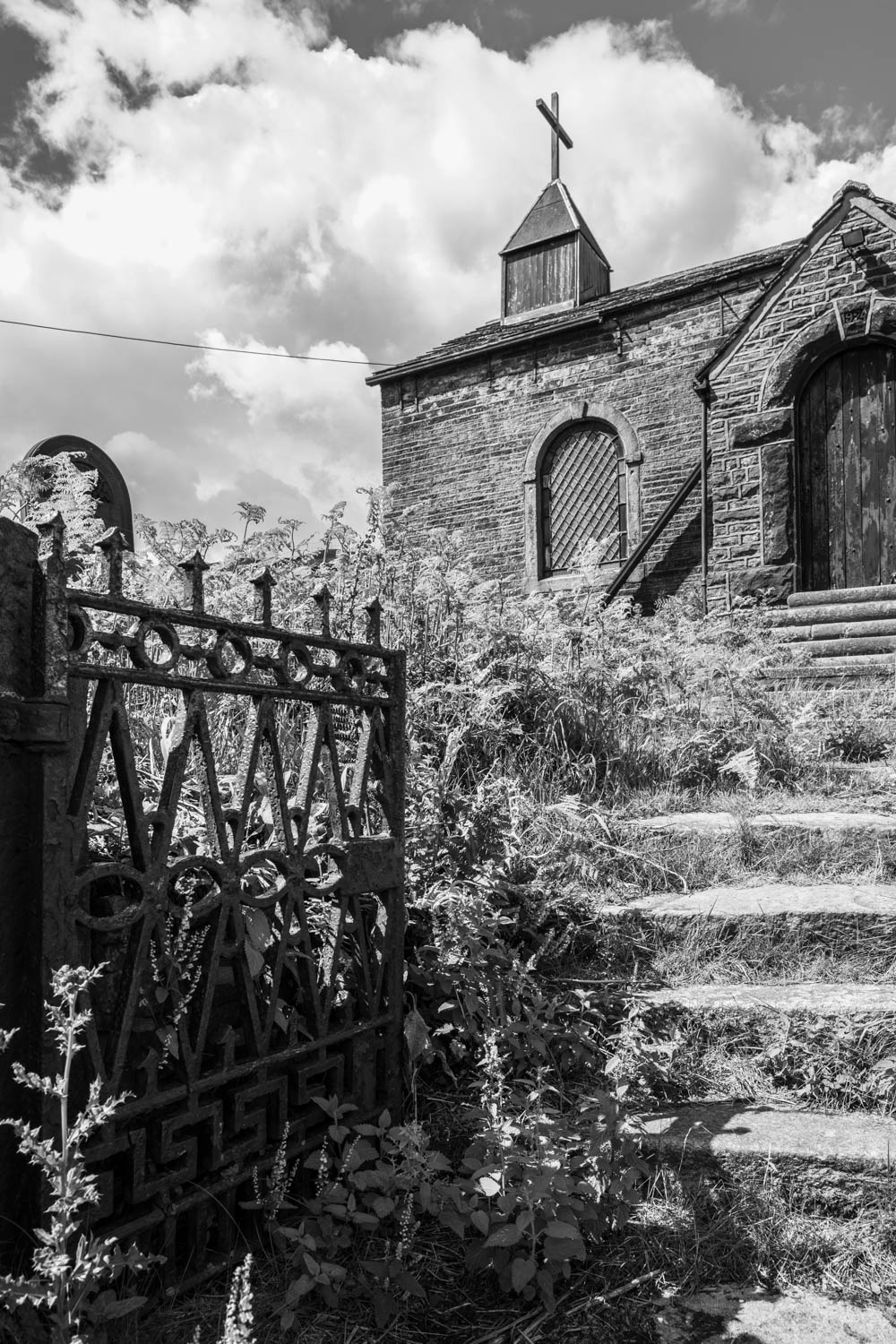
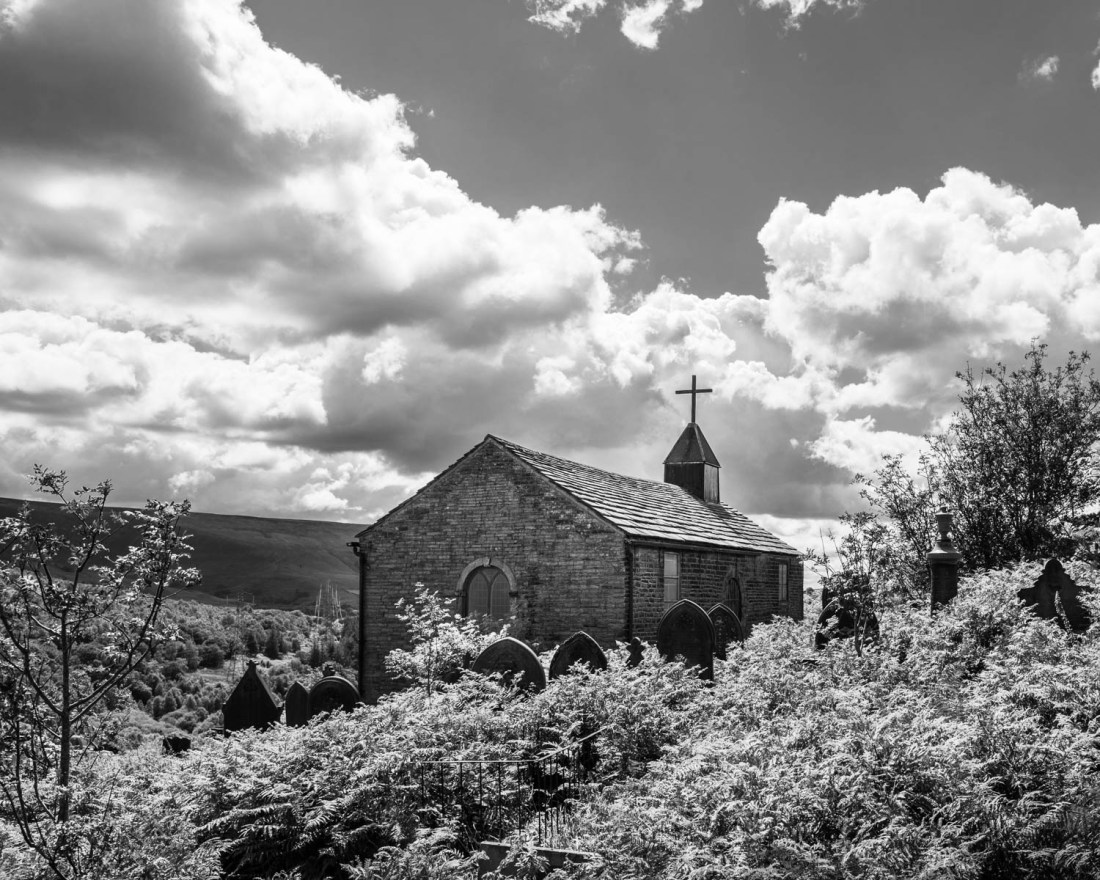

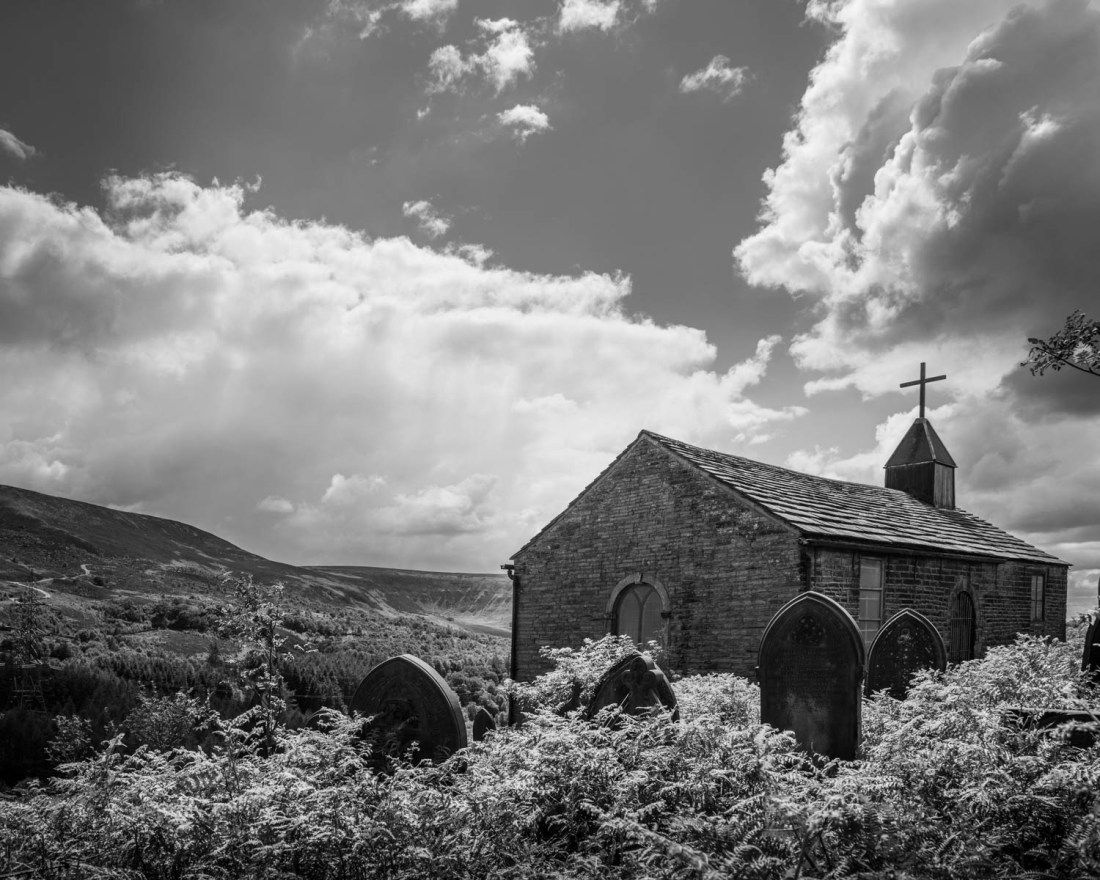
The monochrome images remove the bright colours of the sunny day and add to the atmosphere of neglect and decay. While this is obvious in the images of the church, my select is this of the overgrown graves of local residents.
(note added 26/7/20) I have had further thoughts about this exercise and added a further post in light of later exercises and discussions with my tutor.
References
References to the works cited in this post are found in my separate post “References”

 Andrew Procter
One thought on “Exercise 5.1 – The Distance Between Us”