Assignment 3 – Formative Feedback from Andy Hughes

Assignment 3: The Decisive Moment – Formative Feedback from Andy Hughes

Rather than reproduce Andy’s feedback document I will present sections from it that will enable me to recognise specific elements to maintain and those which need development.

Overall Comments

In his overall comment he wrote that of the prints I submitted, “each shows clear attempts to fulfil the brief requirements”; and that in my written analysis I had a “well-written descriptions of … how the depicted subjects relate to the decisive moment.”

This is an important message for me as I initially found the “decisive moment” a difficult concept to capture (as evidenced by my discussions of the concept at the beginning of my posts on this assignment).
Feedback on assignment
Demonstration of technical and Visual Skills, Quality of Outcome, Demonstration of Creativity
Use of traditional composition elements provided for you the basis of a series of strong images.” It is reassuring that Andy finds these “strong” images, as I was uncertain about this myself as I had had hopes of more geometric images with some of the settings.

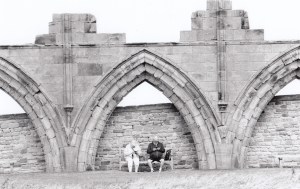
He also picked up on some technical shortcomings of which I was also aware. “There are one of two technical elements to bear in mind: #02-12 might have benefited from a faster shutter … there’s strength in the depiction but the framing is very tight to the edge with the figures.”
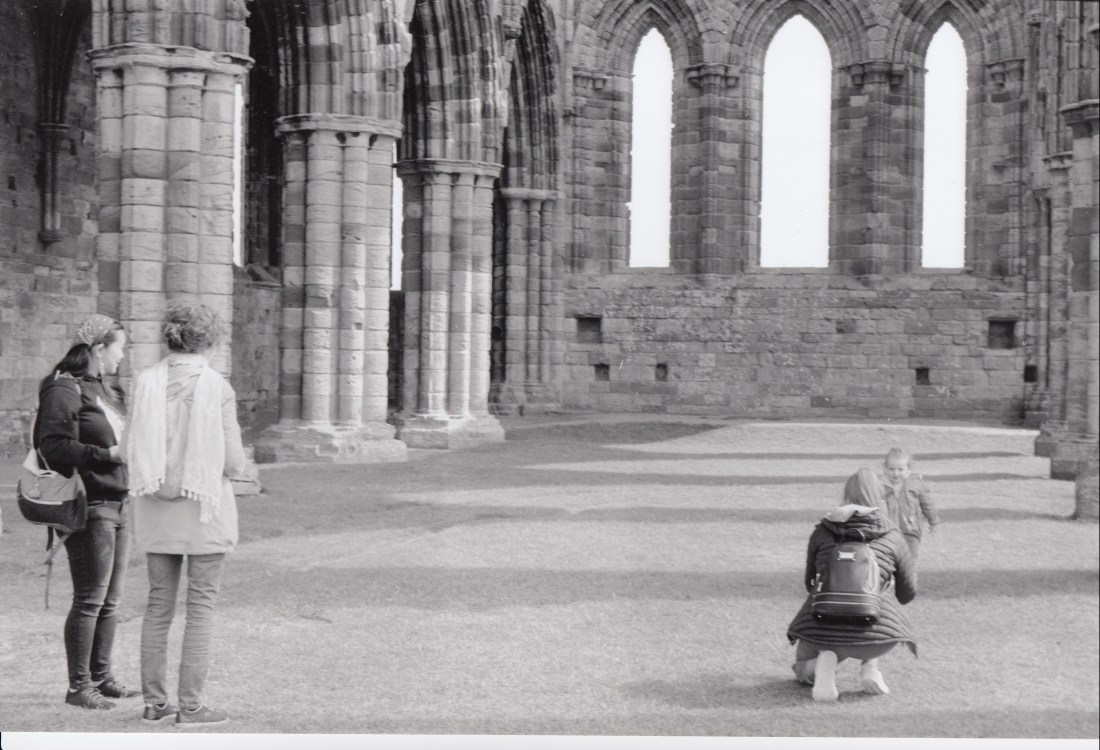
2019091702#12
2019-09-17 #02-12

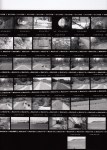
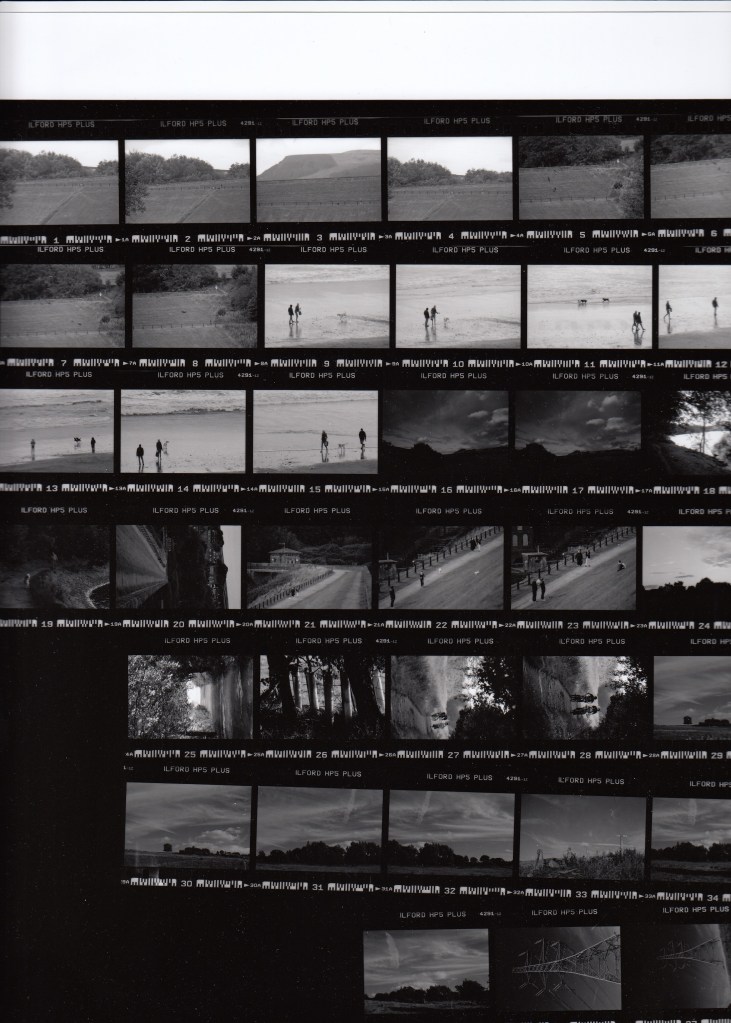
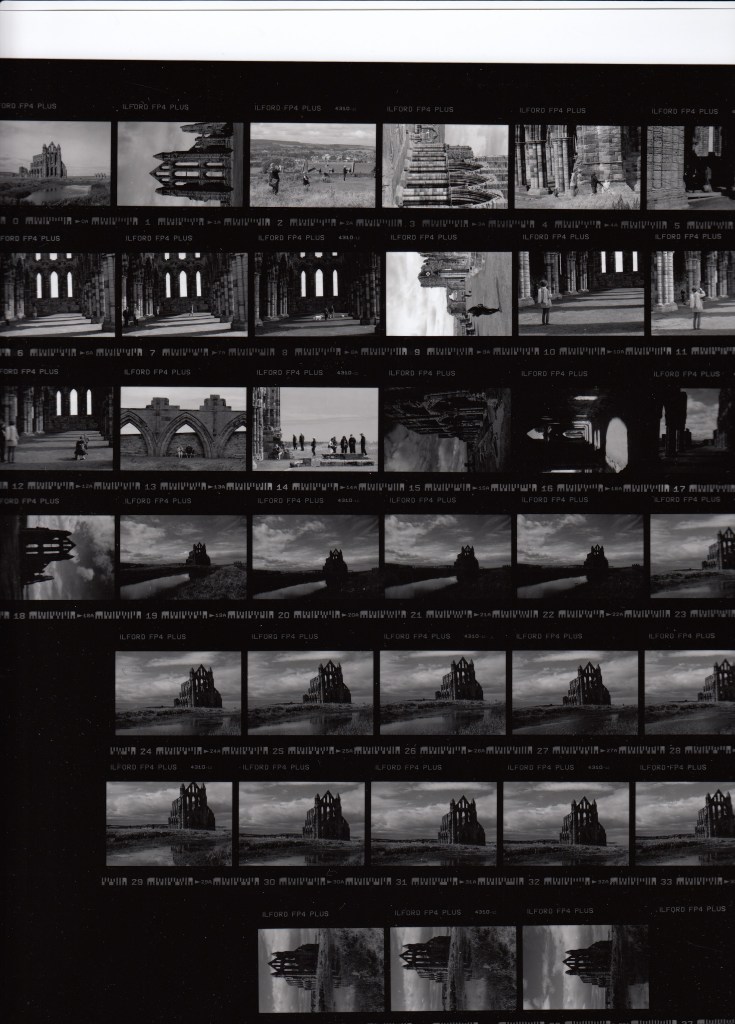
I was aware of the tight framing, particularly of the figures to the left of the image. To me it is this image which emphasised the difficulty of working with film and the importance of anticipating the movement of the subjects. The contact sheet shows that these figures are at the edge of the negative – I have a distinct recollection of wanting to catch the image of the child as he ran to (?) mother and pressed the shutter instinctively but had not paid enough attention to the others in the frame!
I chose to use film in order
to gain an insight into the work of Cartier-Bresson, and the significance of the timing of releasing the shutter in the creation of this image.” In the creation of this image I think I gained that insight!!

Andy also added that it “would be good to have added a little more specification (film stock and camera settings etc.)” I will bear this in mind for the future – however again things seemed to happen so quickly that I could not make notes of my camera settings before the next shot presented itself! (unlike digital where this is recorded automatically).
Coursework
Demonstration of technical and Visual Skills, Demonstration of Creativity

Given what I have commented on above, Andy’s comment that “Coursework seems more expressive in terms of subject matter; this is probably due to familiarity with the DSLR” is not surprising!

I plan to continue working with film and making my prints, however the nature of the next assignment (Languages of Light) lends itself to working in colour so I will be using digital cameras for that. I recognise that there is much I can do in black and white relevant to the topic, but taking a medium which prevents me using colour and the changes in colour temperature and balance means I am missing learning opportunities.

Andy referred to my incorporation of my objectives pages into my learning log “There’s some great elements across the site which reveals good planning and strong structure going forward. Objectives page sets goals with subject specific areas to tackle in terms of practical and thinking elements.”

I am pleased about this as I have added this to the suggested OCA template – but it works for me and I have incorporated it from other learning portfolios with which I am familiar. (eg https://portfolioonline.zendesk.com/hc/en-gb/articles/115000949949-The-Personal-Development-Plan-PDP accessed 27.05.2020).

Andy also makes a positive comment about my incorporation of other art forms.
It’s good to see an ability to connect other art forms and relay back and forth between your interests and subject matter… It’s clear that you’re starting to connect other art forms to your method and approach to research.

Again I am pleased that he is supportive of this as a specific objective of mine is

to gain a better understanding of other art disciplines and influence on photographic work”. It was an area with which I have not been familiar or entirely comfortable.

He also suggested “It might be worth using a notebook for annotations and sticking in small prints, cutting etc”. This is a theme he has mentioned in the past and I am still struggling with, but doing some work on.

He has directed me to other sources – particularly for contemporary artists.

Overall:
Strengths
“Good notes and supporting commentary” – I am pleased that the level of discussion I have written is satisfactory and I will aim to continue to work at this level

New experiences gained by attending events, shows and talks etc.” I have made an effort to seek these experiences, so clearly need to continue.
Areas for development
Consider technical elements and keep a record.” I will aim to record more technical details for my images.

Look at contemporary work” This will be a focus for my choice of events, shows and talks etc which I attend.
My next steps before submission:

I found capturing these images very much more time consuming using film rather than digital, and I am not sure I will have time to re-shoot any. However I think there are some that could be stronger and I will attempt to get a couple more – now I have more confidence that these are suitable.

The printing of some could be improved in terms of contrast and I had to cut the border off one, as there was some fogging due to a failed safelight. Again if I have time I will reprint them.
The Decisive Moment – Assignment Notes


The Decisive Moment – Assignment Notes

“Submit assignment notes of between 500 and 1,000 words with your series. Introduce your subject and describe your ‘process’ – your way of working. Then briefly state how you think each image relates to the concept of the decisive moment.”

These notes should be read in conjunction with my learning log at
https://ap231photography.com/
where I have expanded much more on the background to my approach to the assignment and the other subjects covered here. I have also included there the references to my sources for my research and conclusions.

My Approach

Having researched the subject I have concluded that an image which might be considered to show a Decisive Moment (DM) shows the following characteristics:

A: The compositional elements of the image produce balance, harmony, simplicity, and unity with meaningful figure/ground relationship and may incorporate a visual gap, interval, or suspension of some kind. Overall the effect of this composition is to create an element of ambiguity, uncertainty, and even contradiction.

B. The image is captured at a unique, fleeting, and meaningful moment in a precisely timed, unrepeatable, one-chance shot using an unobtrusive, candid, photorealistic image of people in real life situations

C: The final image arouses meaning and emotion about the human condition
This last criterion refers to a narrative aspect to the DM such that each picture is a whole story in itself and the past present and future of the story can be read, summed up at a ‘glance’.


Methodologically I chose to complete this assignment using film cameras and developing and printing my own images. I did this in part as a learning exercise to better understand how Cartier-Bresson and contemporaries worked and to improve my skills of observation and timing. I have sought locations with strong geometric features against which I could capture the “unique, fleeting, and meaningful moment”.

My images
2019-07-30 #01-14
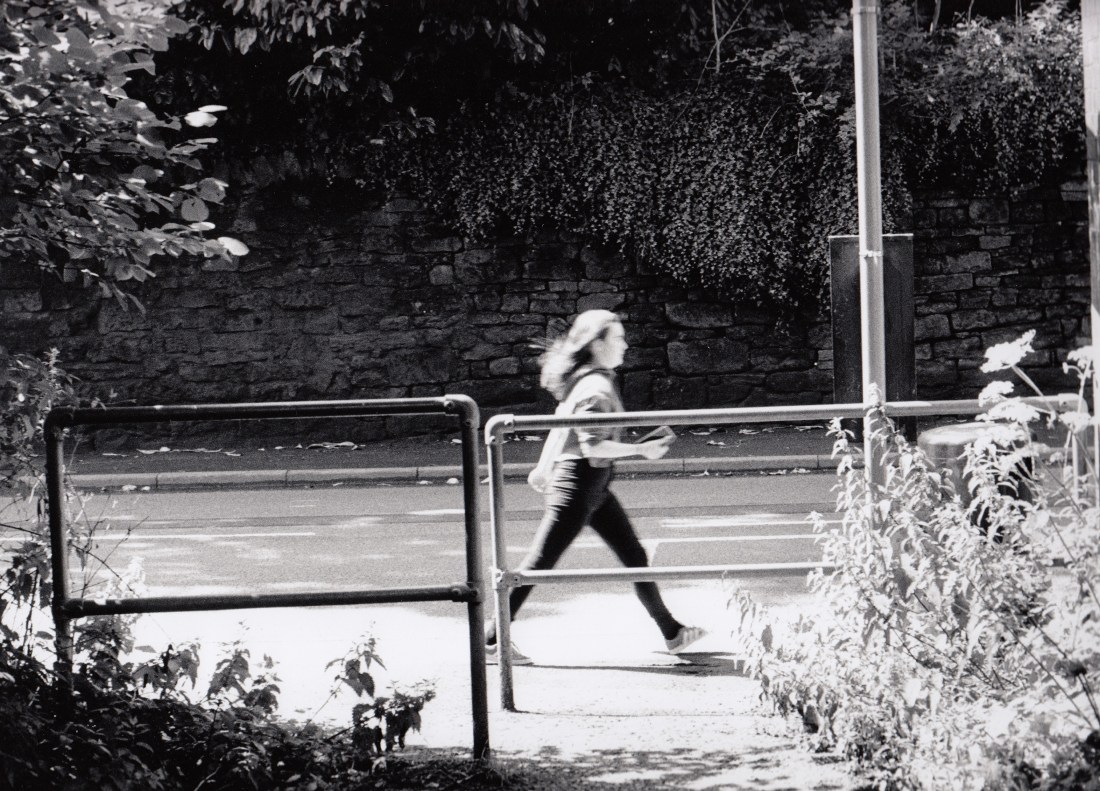
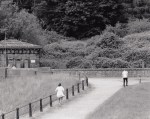
A. In terms of the compositional elements of the image there are strong framing elements of the rear wall, road, railway arch to the side and the railings in the foreground. The girl is positioned in this frame and the blurring shows the urgency of her walking. Her foot is about to strike the ground – she is clearly in motion.
B. Because of her movement, the image is certainly captured at a unique moment in time, and the setting shows an unobtrusive location – she seems unaware of the photographer.
C. Whether the image arouses meaning and emotion about the human condition is debatable, however it does capture the tendency to rush from appointment to appointment characteristic of modern society.
Is this a story in itself? It raises more questions than it answers – where is she going? Why is she in a hurry?…

2019-09-17 #01-13
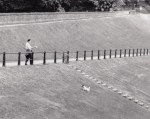
A. Compositionally there are strong lines across the frame – the beach and the lines of the waves, against these two people watch two dogs in the breaking waves; The people are stationary, huddled against the wind while the dogs run and jump on the beach – clearly in motion.
B. As the people are moving and the pattern of the waves changing, this scene is constantly changing, and the image is one moment in that change. Like the previous the subjects are unaware, and the flattening of perspective suggests a telephoto lens has been used to observe at a distance.
C. This image shows two people indulging in a typical British pastime of enjoying the beach in inclement weather and indulging their dogs who clearly ignore the weather.

2019-09-17 #01-28
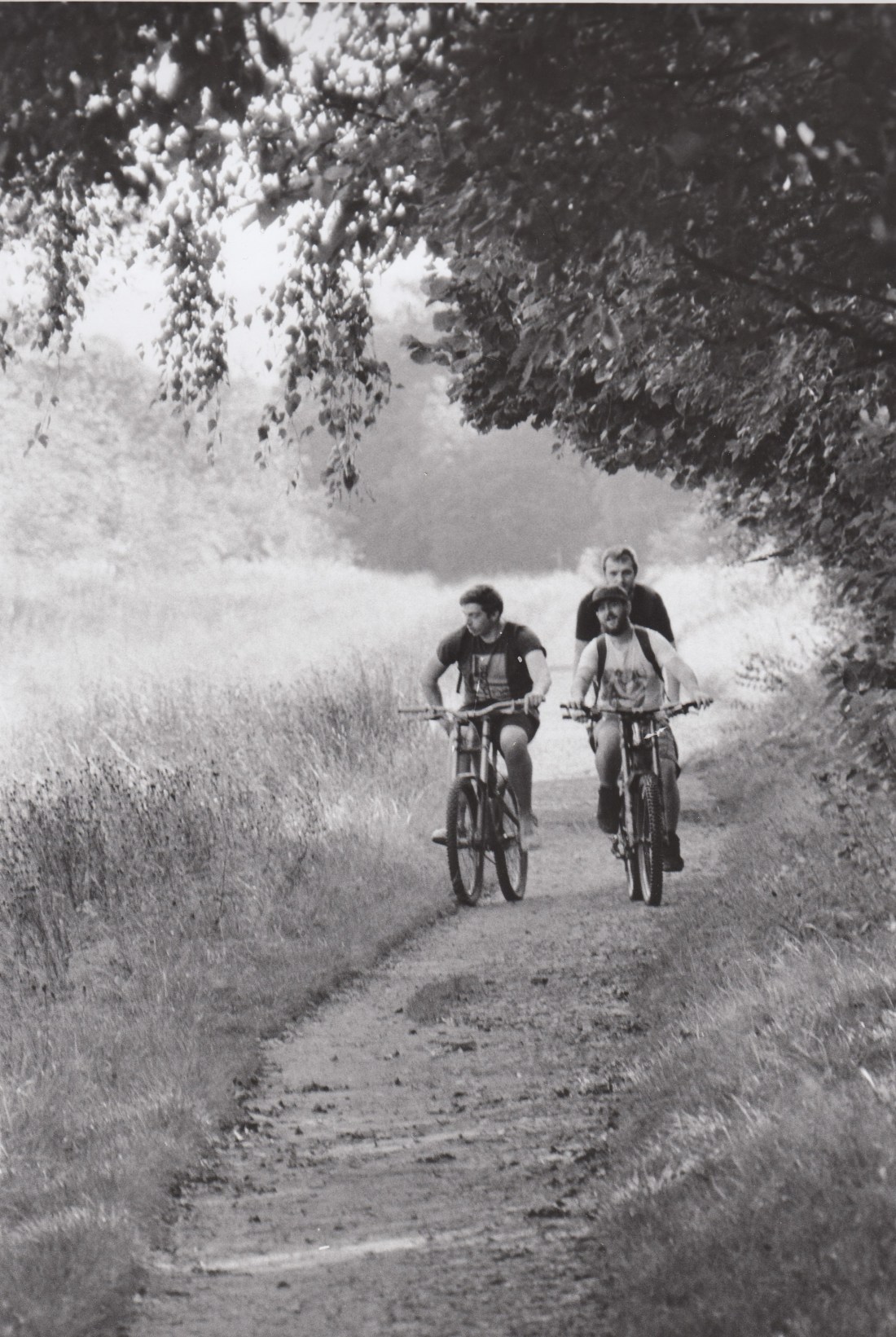
A. There are compositional elements here with the path and the overhanging trees framing the cyclists. They are in motion and the front right cyclist is slightly tilted to the left in an unstable position.
B. They are in motion – not only coming towards the photographer, but also moving relative to each other – evidenced by the tilt of the front cyclist. The left-hand cyclist is looking at something off the frame to the left unaware of the photographer.
C. It looks a sunny day with fairly strong shadows, and they are dressed in tee shirts fitting with this – they look like they are out and having an enjoyable ride.

2019-09-17 #02-12
A. The figures in this image are positioned against a background with strong lines – the vertical lines of the architecture and the horizontal lines of the shadows. There is an unseen line – the line of sight of the two women to the left, watching the child run to the person we assume is its mother.
B. The child is running – any further and we could not see its face; the image has been captured at a moment to show that.
C. It is a sunny day, their postures are relaxed – they all look like they are enjoying themselves on a day out…

2019-09-17 #02-13
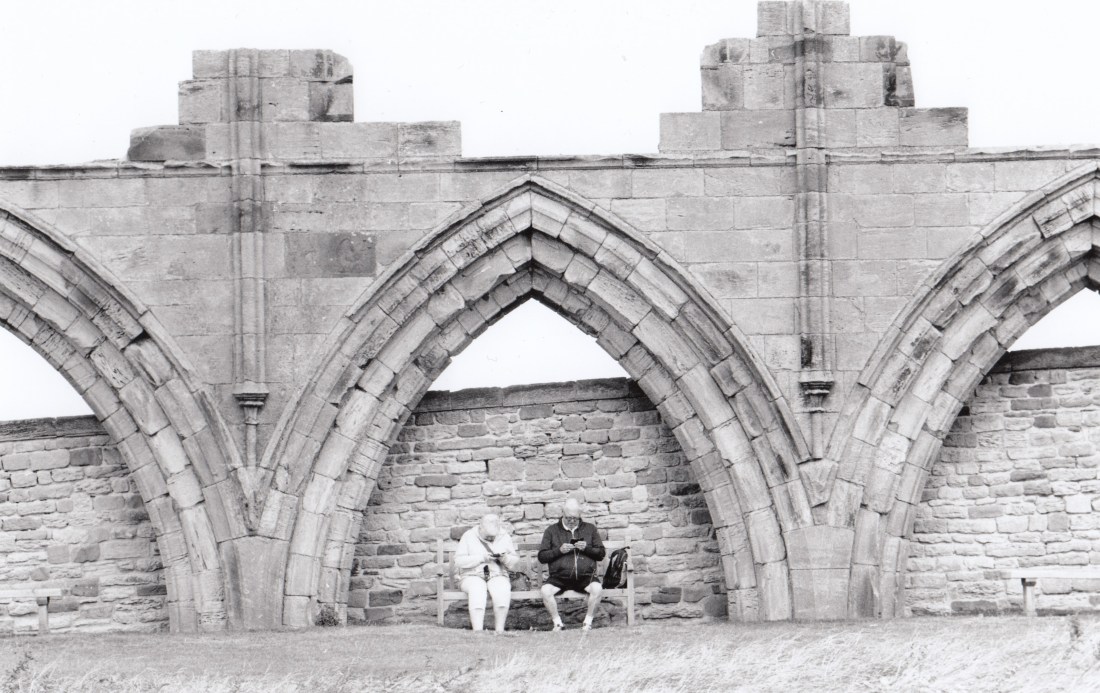
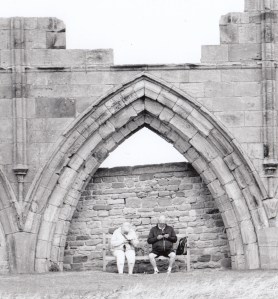
A. Here the subjects are set against strong architectural features, in the middle of an arch. The ambiguity appears to be that they may be a couple, visiting a historical site but they sit apart – each preoccupied with their own mobile phones.
B. There is less motion obvious in this image, but the subjects’ heads are down, and they have been captured at a time when they are engrossed in their phones.
C. Does this reflect on the human condition in what it suggests about the distance in their relationship – apart physically and emotionally, a stronger relationship with their phones than each other…

2019-07-30 #01-22
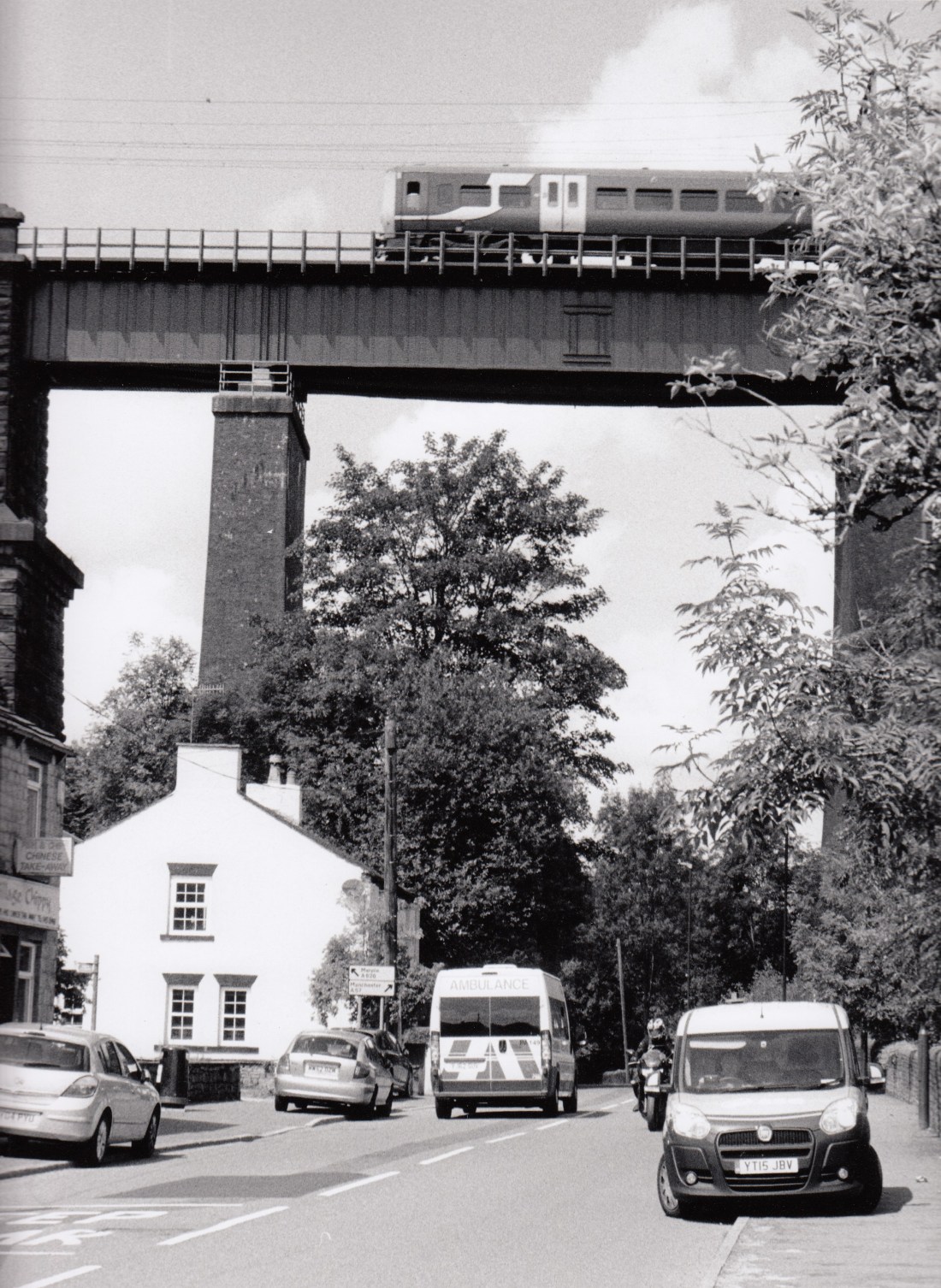
A. The subjects here are the vehicles on the road, the courier and the delivery van – they are positioned against the strong lines of the railway viaduct. These move relative to each other and to the photographer.
B. Meanwhile the train moves across the frame independent of the vehicles below. Overall the relative positions of the train and vehicles remain a unique instant in time.
C. To what extent this reflects the human condition is less clear and strong, however the best evidence of this is the comparison with the image from nearly 100 years earlier by Kertesz of Meudon. The urban environment is markedly different – roads busier and less pedestrians.

The Decisive Moment – Reflection

The Decisive Moment – Reflection

“Check your work against the assessment criteria for this course before you send it to your tutor.”
Assessment criteria:

  • Demonstration of technical and visual skills – Materials, techniques, observational skills, visual awareness, design and compositional skills. (40%)
  • Quality of outcome – Content, application of knowledge, presentation of work in a coherent manner, discernment, conceptualisation of thoughts, communication of ideas. (20%)
  • Demonstration of creativity – Imagination, experimentation, invention. (20%)
  • Context – Reflection, research, critical thinking. (20%)


Demonstration of technical and visual skills

Materials, techniques

I have chosen to use film and make my own prints for this assignment for reasons I have explained previously. The technical quality of the final images is rather variable. In particular the images I made with HP5+ film and telephoto lenses (such as 2019-09-17 #01-13) are not as high a standard as others. The contact sheets show there are many images which were not of a usable standard. However some of these have worked well and the prints are of a satisfactory standard.

Observational skills, visual awareness, design and compositional skills

These elements are crucial to my interpretation of the brief and I have described these in more detail in my description of the final images. However I think that the choice to use film for this was challenging to my observational skills and visual awareness and has helped me to develop this.

Quality of outcome

Content

Because of my reservations about the technical quality of the prints, I think the overall work is weak in this element.

Application of knowledge, presentation of work in a coherent manner, discernment, conceptualisation of thoughts, communication of ideas

I think that I have read and researched this topic and come up with a coherent approach to it. I also believe that my description of this communicates my ideas well.

Demonstration of creativity

Imagination, experimentation, invention

My approach has been to try an emulate the work of HCB and his contemporaries although I have examined the work of modern artists in this respect. As such therefore the work might be considered derivative rather than original. I have found going back to film has been very experimental for me – particularly to have to produce very specific output.

Context

Reflection, research, critical thinking

My account of my approach is based on research – although I am uncertain as to how much depth I need to go into about this.

I also believe I can reflect on my work – as evidenced by this post!

The Decisive Moment – My Final Prints

Subsequently I have taken more images which are in the same style as the earlier ones, (“locations with strong geometric features against which I could capture the ‘unique, fleeting, and meaningful moment’”).

The contact sheets for these are below.


I have printed a selection which I believe reflect the “Decisive Moment” (DM) as I have interpreted it. I have scanned these and the scans are included here. However these are large prints and the scan does not always fully reflect the printed image.

I selected these on the basis that they might demonstrate the concept of the DM as I have interpreted it (Decisive Moment – my conclusions).

To recap:
I suggested that the 10 characteristics of an image of a Decisive Moment proposed by Suler, fell into three groups:

A: The compositional elements of the image produce “balance, harmony, simplicity, and unity” (1) with “meaningful figure/ground relationship” (2) and may incorporate “a visual gap, interval, or suspension of some kind” (3). Overall the effect of this composition is to create “an element of ambiguity, uncertainty, and even contradiction”.

B. The image is captured at a “unique, fleeting, and meaningful moment” (5) in “a precisely timed, unrepeatable, one-chance shot” (6) using “an unobtrusive, candid, photorealistic image of people in real life situations” (7)

C: The final image “arouses meaning and emotion about the human condition” (8)

I stated my aim as to produce a series of images “whose composition possesses such vigour and richness and whose content so radiates outward from it that (each) single picture is a whole story in itself” and that I would test the effectiveness of my submission against the ten criteria of Suler and the principle of Bate, that “the past present and future of the story can be read, summed up at a ‘glance’”.

My Images

2019-07-30 #01-14

2019073001#14
2019-07-30 #01-14

A. Unintended cropping during the scan has cut off the sides of this image. However in terms of the compositional elements of the image there are strong framing elements of the rear wall, road, railway arch to the side and the railings in the foreground. The girl is positioned in this frame and the blurring shows the urgency of her walking. Her foot is about to strike the ground – she is clearly in motion.
B. Because of her movement, the image is certainly captured at a unique moment in time, and the setting shows an unobtrusive location – she seems unaware of the photographer.
C. Whether the image arouses meaning and emotion about the human condition is debatable, however it does capture the tendency to rush from appointment to appointment characteristic of modern society.
Is this a story in itself? It raises more questions than it answers – where is she going? Why is she in a hurry?…

2019-09-17 #01-13

2019091701#13
2019-09-17 #01-13

A. Compositionally there are strong lines across the frame – the beach and the lines of the waves, against these two people watch two dogs in the breaking waves; The people are stationary, huddled against the wind while the dogs run and jump on the beach – clearly in motion.
B. As the people are moving and the pattern of the waves changing, this scene is constantly changing, and the image is one moment in that change. Like the previous the subjects are unaware, and the flattening of perspective suggests a telephoto lens has been used to observe at a distance.
C. This image shows two people indulging in a typical British pastime of enjoying the beach in inclement weather and indulging their dogs who clearly ignore the weather.

2019-09-17 #01-28

2019091701#28
2019-09-17 #01-28

A. There are compositional elements here with the path and the overhanging trees framing the cyclists. They are in motion and the front right cyclist is slightly tilted to the left in an unstable position.
B. They are in motion – not only coming towards the photographer, but also moving relative to each other – evidenced by the tilt of the front cyclist. The left-hand cyclist is looking at something off the frame to the left unaware of the photographer.
C. It looks a sunny day with fairly strong shadows and they are dressed in tee shirts fitting with this – they look like they are out and having an enjoyable ride.

2019-09-17 #02-12

2019091702#12
2019-09-17 #02-12

A. The figures in this image are positioned against a background with strong lines – the vertical lines of the architecture and the horizontal lines of the shadows. There is an unseen line – the line of sight of the two women to the left, watching the child run to the person we assume is its mother.
B. The child is running – any further and we could not see its face; the image has been captured at a moment to show that.
C. It is a sunny day, their postures are relaxed – they all look like they are enjoying themselves on a day out…

2019-09-17 #02-13

2019091702#13
2019-09-17 #02-13

A. Here the subjects are set against strong architectural features, in the middle of an arch. The ambiguity appears to be that they may be a couple, visiting a historical site but they sit apart – each preoccupied with their own mobile phones.
B. There is less motion obvious in this image, but the subjects’ heads are down and they have been captured at a time when they are engrossed in their phones.
C. Does this reflect on the human condition in what it suggests about the distance in their relationship – apart physically and emotionally, a stronger relationship with their phones than each other…

2019-07-30 #01-22

2019073001#22
2019-07-30 #01-22

A. The subjects here are the vehicles on the road, the courier and the delivery van – they are positioned against the strong lines of the railway viaduct. These move relative to each other and to the photographer.
B. Meanwhile the train moves across the frame independent of the vehicles below. Overall the relative positions of the train and vehicles remain a unique instant in time.
C. To what extent this reflects the human condition is less clear and strong, however the best evidence of this is the comparison with the image from nearly 100 years earlier by Kertesz of Meudon. The urban environment is markedly different – roads busier and less pedestrians.

OCA North Meeting, Halifax 10/11/19

OCA North Meeting, Halifax 10 November 2019

Venue: Fletcher’s Mill, Dean Clough, Halifax

The plan for the day was:
• a presentation on his work by tutor, Andrew Conroy (photography tutor)
• general discussion
• presentation by participants of their OCA work

Presentation by Andrew Conroy
Andrew described several aspects of his work. These included a project he has been undertaking for some time about Orgreave, documenting the present state of sites of significance during the period of an active mining industry in these areas. To this end he also showed images of a series of walks he did around Barnsley including former coal mining sites. A theme here was the “re-greening” of these areas – often with little reference to their former uses.

He also described his collaborations with other artists and how his work has then been modified and adapted to create something new.

General Discussion
There was a helpful discussion about “research”, and writing, with particular relevance to the more advanced courses.

Presentation of OCA Students’ work
Several students presented their work). I presented the images I had prepared to date for Assignment 3, Decisive Moment.

Other photography students (Level 2 and 3) presented their work, and there were a set of 4 paintings by another student.


My Aims and What I Learned
I had similar aims from attending to those for previous meetings;

To gain a greater understanding of studying with the OCA
A major point I learned is that there is a librarian for the OCA who is available for advice regarding literature searches and databases of journal etc. This is something I have struggled with greatly since studying with the OCA. I am familiar from bio-medical research with various search techniques but have failed to find these for the arts discipline and resorted to general search engines such as Google, which I think does not have the academic validity of other methods.

Practice my assessment and appraisal skills
I was able to give feedback on four abstract paintings. Of note was that the student presenting the work has four very specific questions to structure the feedback around. I found that I was able to make, to me, apparently sensible and it seemed helpful comments for her. I relied to some extent also on criteria described by Grayson Perry in his book “Playing to the Gallery”, albeit I think a little tongue in cheek.

Gain a better understanding of other art disciplines and influence on photographic work
The collaborative work of Andrew Conroy demonstrated to me how other arts disciplines can use elements of photographic images to create new novel artworks, probably classifiable as “visual art” rather than any more specific discipline. However, his collaboration was not limited to visual art, but also included images as part of a work with a poem, analogous to the collaboration between Fay Godwin and Ted Hughes, Remains of Elmet.

To present my own work and get feedback on it
I took contact prints and prints of the six images I have shown on here.

Suggestions were to crop image 2019-09-17 #02-13

– my own thought is that cropping closer to the couple on the seat implies they are more important than the setting and pattern of the arches, and I will leave as it is for now.

There was a comment about the “tactile” quality of the prints, perhaps particularly because of size and the texture of the paper (pearl finish). This highlighted to me the significance of the uniqueness of a hand printed image.

The image 2019-07-30 #22 was described as “having a lot going on” to the lower left side and I agree this does make it difficult to work out where to look at the image. Its composition does not lend itself to easy examination.


The Decisive Moment: My Approach to this assignment

The Decisive Moment: My Approach to this assignment

Brief

Send a set of between six and eight high-quality photographic prints on the theme of the ‘decisive moment’ to your tutor. 

You may choose to create imagery that supports the tradition of the ‘decisive moment’, or you may choose to question or invert the concept. Your aim isn’t to tell a story, but in order to work naturally as a series there should be a linking theme, whether it’s a location, an event or a particular period of time.

Submit assignment notes of between 500 and 1,000 words with your series. Introduce your subject and describe your ‘process’ – your way of working. Then briefly state how you think each image relates to the concept of the decisive moment.

Check your work against the assessment criteria for this course before you send it to your tutor.


In my previous post I indicated my view that the “Decisive Moment” relies on a compositional style and reflects a particular moment describing the human condition; and my aim for this assignment is to produce a series of images “whose composition possesses such vigour and richness and whose content so radiates outward from it that (each) single picture is a whole story in itself”.

The work of Cartier-Bresson and his contemporaries was made using film. For an exercise like this where the aim is to capture a particular moment and composition, this presents certain challenges over the use of digital cameras. With the latter, it is easy to use a fast continuous shooting mode and subsequently choose an image where the compositional elements and subject meet the photographer’s aim. While the setting and overall timing is determined by the photographer, there is an element of randomness and chance (or luck) involved in this. This is similar to the work of Jon Rathman, Nine Eyes of Google Street View, (https://9-eyes.com/ accessed 11/09/2019), which has been described as a “conceptual meditation on the state of photography in a time of automated imagemaking” (https://anthology.rhizome.org/9-eyes accessed 11/09/2019). There is an element of automated image making involved in the use of continuous shooting.

Thus as this assignment is primarily a learning exercise for me, I have decided to use film for this. In this way I hope to gain an insight into the work of Cartier-Bresson, and the significance of the timing of releasing the shutter in the creation of this image.


Technical Information

I have made most of the images using 35mm film with Olympus OM-1 and OM-2 cameras, although for some I have used a Hasselblad 503CXi medium format  I used Ilford FP4+ and Ilford HP5+ film, the former rated at 125 ISO, and the latter at 800 ISO. This allows both films to be developed with the same development times and gives a slightly wider range of ISO than would the standard rating for HP5+.

Film has been developed in Ilford Ilfotec DD-X, and Ilfostop and Rapid Fixer. Prints have been made on Ilford Multigrade RC paper, developed with Multigrade developer (and Ilfostop and Rapid Fixer).

I have scanned these images for inclusion in this learning log, but will submit the prints to my tutor and for final assessment.


Initial Approach

As an important element of the final image is the compositional elements of the image to produce “balance, harmony, simplicity, and unity”, I have sought locations with strong geometric features against which I could capture the “unique, fleeting, and meaningful moment”.

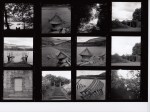
My contact sheets for the first shoots, aimed at identifying suitable locations are shown here.


Larger prints of some of these show that I should be able to capture people against these backgrounds and in a way that provides a compositionally attractive way, incorporating the meaningful moment. This dam wall and other sites near my home have strong lines against which subjects can be photographed.


However first attempts at capturing subjects in these settings have not been particularly successful technically, mainly due to not having suitable telephoto lens for the location.

However I have some images which appear promising and I will discuss later in my final submission.

2019073001#14
2019-07-30 #01-14

I particularly like this in which I try to emulate Kertesz’s image, Meudon and bring it to a contemporary setting with the man and parcel replaced by the motor cycle courier and Amazon delivery van, and steam train by electric suburban train.


2019073001#22
2019-07-30 #01-22

The Decisive Moment: My Conclusions (for now)

The Decisive Moment
The course notes say
Before you go any further, give some careful thought to the ‘decisive moment’ debate and note down where you stand (at the moment, anyway) in your learning log.”

I started this process with an earlier post (Project 3: What Matters is to Look)  (before reading more of the suggested texts). Since then I have read more around the subject and this is the subject of subsequent posts (Project 3 ‘What matters is to look’: L’amour tout court and Project 3: The Decisive Moment Part 2 ).

In my first post I concluded:

Thus I would suggest that there is compositional decisiveness and a narrative decisiveness. The former is illustrated by the position of the train in the image of Meudon, all the elements are arranged. But there is also a moment which is important in telling a story or hinting at it, like the position of the man with the package in the same image.

My construct of “compositional decisiveness” relates to the principles I have elaborated upon with regard to the opinions of Suler (Suler, s.d.)  in a later post .

I suggested that the 10 characteristics of an image of a Decisive Moment proposed by Suler, fell into three groups:

A: The compositional elements of the image produce “balance, harmony, simplicity, and unity” (1) with “meaningful figure/ground relationship” (2) and may incorporate “a visual gap, interval, or suspension of some kind” (3). Overall the effect of this composition is to create “an element of ambiguity, uncertainty, and even contradiction”.

B. The image is captured at a “unique, fleeting, and meaningful moment” (5) in “a precisely timed, unrepeatable, one-chance shot” (6) using “an unobtrusive, candid, photorealistic image of people in real life situations” (7)

C: The final image “arouses meaning and emotion about the human condition” (8)

The first of these groups is clearly about composition while the latter ones, particularly the last, will contribute to the narrative.

Bate (Bate, 2016) links the principle of HCB’s “Decisive moment” to “an older concept from art history of telling a story in a single picture”. He describes the suggestion by Lessing, an eighteenth century dramatist and critic, that the ideal way to depict a complex event is by an image “where the past present and future of the story can be read, summed up at a ‘glance’”. He refers to the moment of this image as peripeteia, from the Greek meaning “dramatic moment”.

There is overlap between this narrative aspect and composition, as Bate acknowledges with regard to HCB’s frequent depiction of a figure whose foot is about to strike the ground. “The striding foot indicates a future event, caused by the past, whose outcome is anticipated by what we see in the picture.”

Bate cites HCB, (Images à la Sauvette, 1952) describing his concept of the Decisive Moment as “one unique picture whose composition possesses such vigour and richness and whose content so radiates outward from it that this single picture is a whole story in itself”.

My current position is that the “Decisive Moment” relies on a compositional style and reflects a particular moment describing the human condition. My aim in the next assignment is (unambitiously) to produce a series of images “whose composition possesses such vigour and richness and whose content so radiates outward from it that (each) single picture is a whole story in itself”

I will test the effectiveness of my submission against the ten criteria of Suler and the principle of Bate, that “the past present and future of the story can be read, summed up at a ‘glance’”.

References

References to the works cited in this post are found in my separate post “References”


Part Three/Project 3: The Decisive Moment Part 2


Project 3: The Decisive Moment Part 2

The course notes direct me to the work of Paul Graham for a consideration of an alternative approach to the issue of the “decisive moment”.

Paul Graham (born 1956) is an English fine-art and documentary photographer whose work has been exhibited, published and collected internationally.
Graham has won the Deutsche Börse Photography Prize, the Hasselblad Award, the W. Eugene Smith Grant, fellowships from Winston Churchill Memorial Trusts, John Simon Guggenheim Memorial Foundation, and won the inaugural Paris Photo-Aperture Foundation PhotoBook Awards prize for best photographic book of the past 15 years.”  (Tate, s.d.)

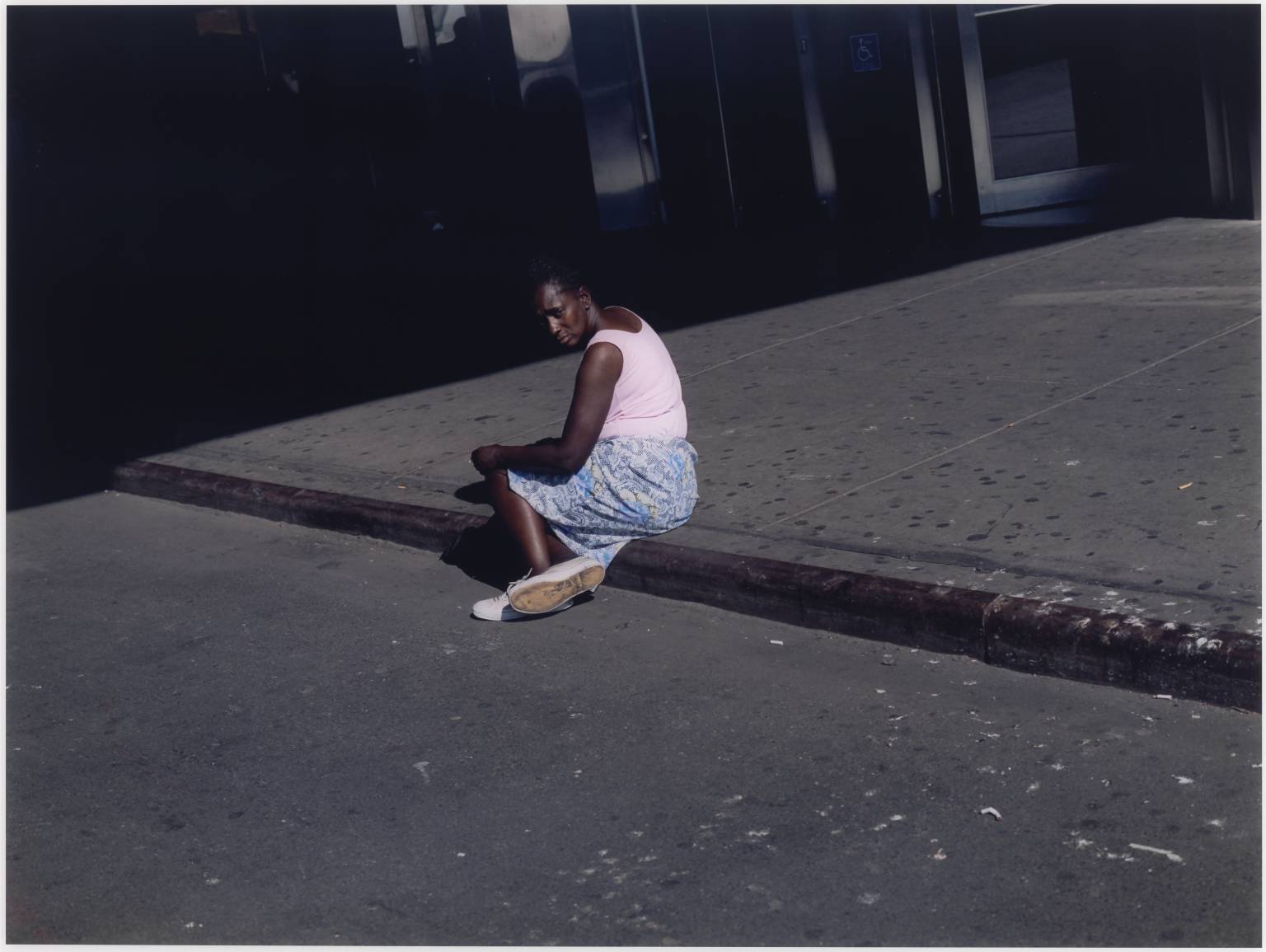
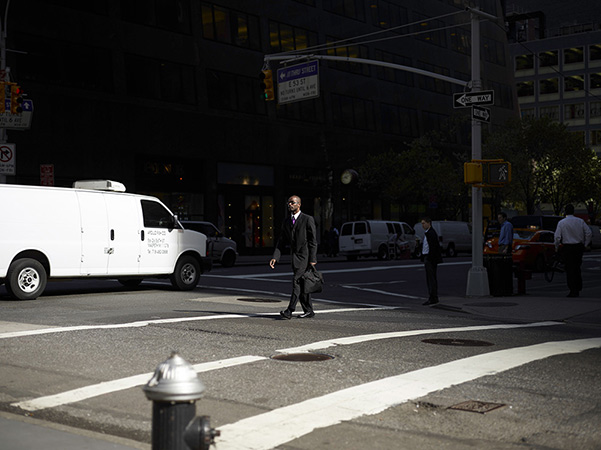
On reviewing Graham’s images on the Tate website I came across this:

Untitled #38, Woman on Sidewalk, New York, 2002 2002 by Paul Graham born 1956
Untitled #38, Woman on Sidewalk, New York, 2002. Paul Graham


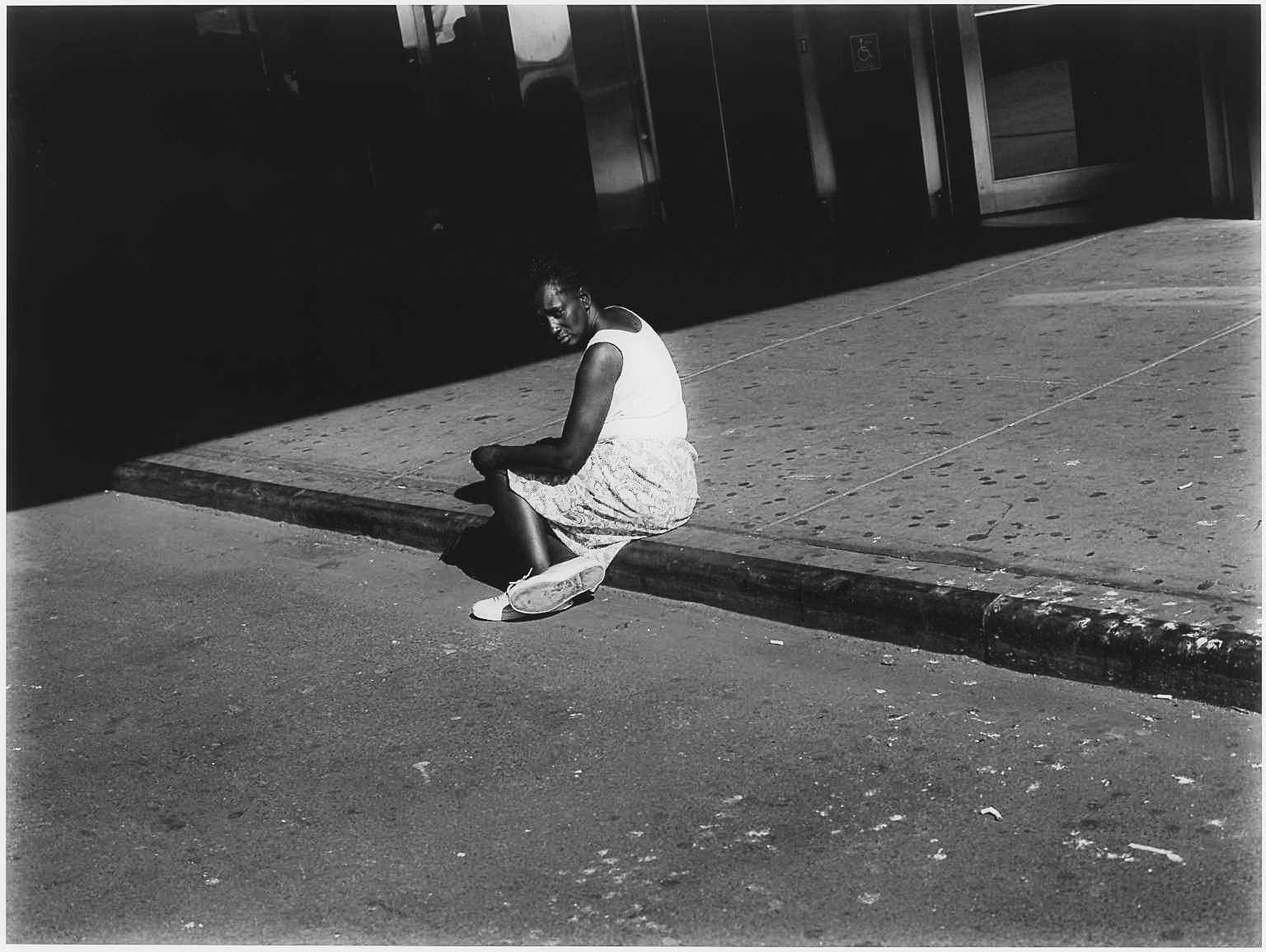
In order to better assess this image in the light of those of HCB, I converted it into black and white.

B&W
Untitled #38, Woman on Sidewalk, New York, 2002. Paul Graham. Rendered monochrome A Procter

I think it shares many features with the images of HCB. I note the strong geometric composition with a diagonal line on which the subject sits. Similarly the subject herself is sitting in a posture apparently unstaged and natural, and the photographer has captured her expression which is the striking aspect of the image. Her head is positioned, apparently carefully, in the image against the dark background. I find her expression and geometric framing very reminiscent of HCB and his principles for producing images of the “decisive moment”.

I also reviewed the images in the photobook “The Present”  (Paul Graham Archive, s.d.)

Similar to my comments on the earlier image, I find it hard to agree with Pantall’s assertion that these are images of “a street with moments so decisively indecisive that we don’t really know what we are looking at or looking for.” (Pantall, s.d.)


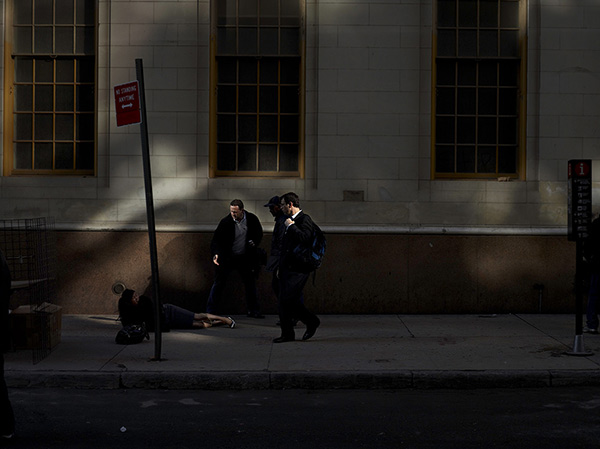
present17
Present 17. Paul Graham

This image of a woman who has fallen on the sidewalk has a formal compositional plan with the bold line on the wall behind the subjects. The woman is positioned in the image so her body is divided by the pole, but her head is clearly adjacent to a grill on the wall behind. The heads of the passers-by are carefully positioned to maximise the illumination and the woman herself has “conveniently” fallen into a pool of light. The photographer here captures the gesture of the outreached hand of the man apparently trying to help her up. This sensitive gesture, is at odds with Pantall’s descriptions of urban life as represented by Graham.

There are a fair few hostile glances in The Present, and a fair bit of blindness, disability, poverty and wealth. The people are… not glamorous or striking or eccentric, but rather they’re harried, harassed and distant; no relationships were struck in the making of this book. These people could be anywhere; they stride purposefully along streets that hold no attractions to jobs that hold no attractions, their faces set into grimaces of urban stress.

People do indeed “stride purposefully” but in many cases they are captured in a moment which has much in common with the images of HCB in terms of the carefulness and style of the composition and the directions of their gaze. This is exemplified by these.


Zouhair Ghazzal (Ghazzal, s.d.)   writing about the work of HCB  also emphasises the importance of gesture is these images. 

Cartier-Bresson’s most well known relics reveals the importance of bodily gestures in each one of them.”

and he considered that the work of HCB relied “instead on the juxtaposition of bodily gestures with symmetries created by light and space.”

He also considers that because of this there is a tendency in the observer to look for meaning in the image. “Hence that sudden urge, when confronted with a Cartier-Bresson image, to narrate it”. Although he considers that “An image does not narrate: it rather creates an unbridgeable abyss between itself-as-frame and the rest of the unframed world”.

Ghazzal also considers the work of other photographers, working after HCB. He considers that many do not incorporate the principle into their work.
Some of the top photographers of the last few decades, which willy-nilly did not base their photography on the decisive moment, would argue that the latter’s major weakness was precisely its sole reliance on gestures.”

However he also suggests that it is not solely the reliance on gesture which underpins this but the nature of modern urban environments. He argues modern cites either in America or Europe or the Middle East, have expanded “indefinitely, and create(ed) for the most part urban landscapes that are so monotonous and dull, that no decisive moment would be able to capture.

Hsu, in his review  (Hsu, s.d.)  of the re-issue of the work by HCB, (Cartier-Bresson and Simon, 2014) , considers that the term “decisive moment” itself may be part of the problem here.

Cartier-Bresson’s moments include not only the dynamic coordination of form, but also acts of looking that consider gesture, expression and a transient connection with his subjects. Paradoxically, the popularity of the term ‘decisive moment’ may have done Cartier-Bresson a form of disservice; while his individual photographs are very much about the ‘simultaneous recognition’ of significance and form,

The Decisive Moment was originally published in the United States by Simon and Schuster in 1952, and simultaneously published in France by Verve as Images à la Sauvette (“images on the fly”, or “images on the run”). This French title emphasises the way the image is captured – rather than the content of the image of a particular moment.

The principles of how HCB captured his images is considered by Suler  (Suler, s.d.) .

Suler also comments on the original French title of the book “In 1952 Cartier-Bresson published Images à la Sauvette, which roughly translates as “images on the run” or “stolen images.” The English title of the book, The Decisive Moment, was chosen by publisher Dick Simon of Simon and Schuster. In his preface to the book of 126 photographs from around the world, Cartier-Bresson cites the 17th century Cardinal de Retz who said, “Il n’y a rien dans ce monde qui n’ait un moment decisif” – “There is nothing in this world that does not have a decisive moment.
Suler also describes what he believes are 10 principles of the decisive moment image.
These are:
1. A sophisticated composition in which the visual coalescence of the photographed scene capitalizes on the principles of Gestalt psychology to create a “prägnanz” atmosphere of balance, harmony, simplicity, and unity.
2. A sophisticated background to the subject that interacts both visually and psychologically with the subject in a synergistically meaningful figure/ground relationship.
3. The visual as well as psychological anticipation of completion and closure, which often surfaces as a visual gap, interval, or suspension of some kind.
4. An element of ambiguity, uncertainty, and even contradiction that rouses the viewer’s curiosity about the meaning or outcome of the scene depicted.
5. The capture of a unique, fleeting, and meaningful moment, ideally one involving movement and action.
6. A precisely timed, unrepeatable, one-chance shot.
7. An unobtrusive, candid, photorealistic image of people in real life situations.
8. A dynamic interplay of objective fact with subjective interpretation that arouses meaning and emotion about the human condition.
9. The overarching context of a productive photography session – or “good hour” – that starts with tension, then culminates in a personal and artistic realization that is the DM image.
10. The DM photo as a product of a unique set of technical, cognitive, and emotional skills developed from extensive training and experience in photography, as well as from a psychological knowledge of people.

It seems to me that these principles fall into distinct independent groups:

A: The compositional elements of the image produce “balance, harmony, simplicity, and unity” (1) with “meaningful figure/ground relationship” (2) and may incorporate “a visual gap, interval, or suspension of some kind” (3). Overall the effect of this composition is to create “an element of ambiguity, uncertainty, and even contradiction”.

B. The image is captured at a “unique, fleeting, and meaningful moment” (5) in “a precisely timed, unrepeatable, one-chance shot” (6) using “an unobtrusive, candid, photorealistic image of people in real life situations” (7)

C: The final image “arouses meaning and emotion about the human condition” (8)

The remaining two principles appear to me to replicate the other principles outlined. A “productive photography session… culminat(ing) in a personal and artistic realization” (9) is surely necessary for all photographic endeavours. The “technical, cognitive, and emotional skills” (10) needed are used to achieve the earlier 8 points.

Applying this to the images of Paul Graham, I would suggest that the images which I showed earlier achieve that compositional technique. They are taken also taken at a particular unrepeatable moment. Most of all they comment on the human condition in modern urban environment, as Pantall recognises (quoted above).


References

References to the works cited in this post are found in my separate post “References”


EYV Zoom Meeting – 28 June 2019


EYV Online Meetup 28 June 2019: The Decisive Moment
Led by Robert Bloomfield

The topic for this meeting was “The Decisive Moment”, the title of the third assignment on EYV, and my next assignment.

In a previous post I have described my initial thoughts about this topic. For the meeting we were encouraged to bring images to discuss in terms of the “Decisive Moment”. I described my thoughts about compositional decisiveness and narrative decisiveness. Robert suggested that the latter is an extension of Cartier-Bresson’s original concept, but one that has been considered by others. He referred me to the writings of David Bates on this.

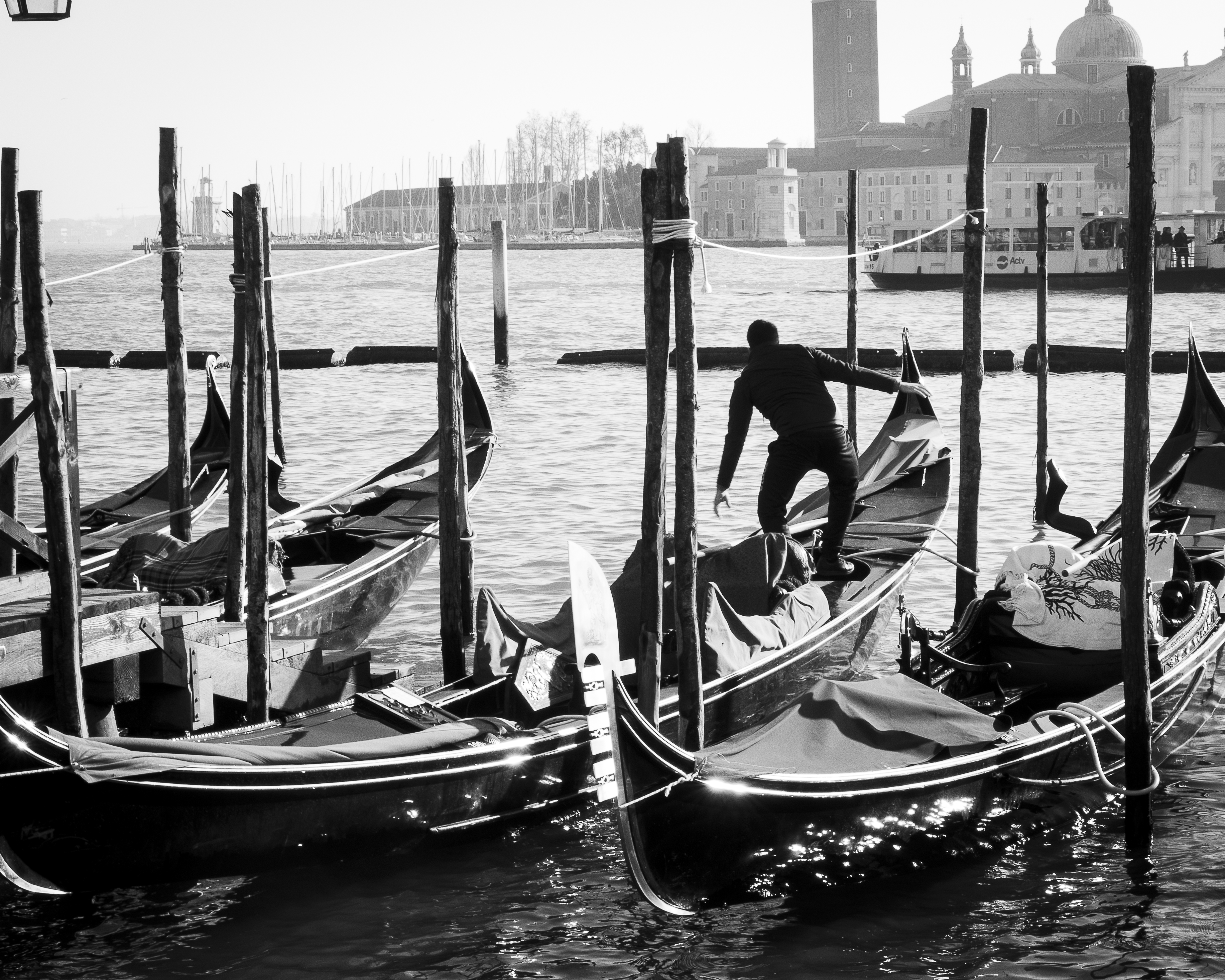
I showed this image which I have previously suggested in this blog as a “decisive moment”.

2018-12-04 Venice-103
Gondolas and gondolier near San Marco

Robert discussed and introduced the concepts of “architectural framing” and “gesture” as characterising the Cartier-Bresson “classical” (my quotes) decisiveness. He pointed out the framing of the figure by the posts and suggested this is a type of architectural framing. He also commented on the posture of the figure, as representing “gesture”. This was a helpful discussion and helped me to understand the way forward with the assignment.

We discussed the use of film for the assignment. I am considering using this medium in order to avoid the temptation to use high speed continuous shooting to obtain the precise moment of decisiveness!

The other learning points I took away are suggestions for further reading including “Camera Lucida” by Roland Barthes.

Part Three/Project 3 What Matters is to Look

The Decisive Moment Part 1 – My First Thoughts

Having looked ahead in the course notes I saw that “The Decisive Moment” was a topic for research and the basis of the third assignment. I have been thinking about the meaning of this for a while, prior to having the opportunity to read the suggested sources about this. This post reflects those initial thoughts.

As I had not read the notes for the course I initially believed I had had a unique and novel insight into the nature of this concept. That is, in making an image, the photographer moves his camera in the three spatial dimensions: to the left or right of the subject, near or far away, and from a high or low view point. In addition there is a fourth dimension of time, and the photographer chooses to open the shutter at a particular moment. The uniqueness of this fourth dimension is that whereas if he moves too far in one of the spatial dimensions, he can always move back, but this is not possible with time. There is a further consideration regarding time, and that is how long the shutter is open when creating the image, and therefore we might better think of the “Decisive Moments” rather than a moment.

Having read more about this I now realise my insight is the principle described by Flusser.

The photographer moves within specific categories of space and time regarding the scene: proximity and distance, bird- and worm’s-eye views, frontal- and side-views, short or long exposures, etc.”  (Flusser, 2012)

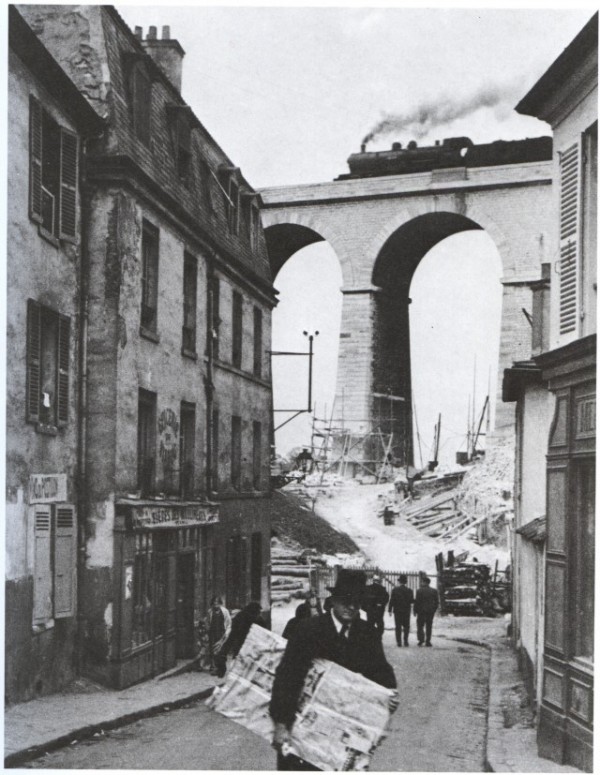
Examples of images where this is prominent include this by André Kertész..

Meudon
Meudon 1928, André Kertész


The image was created when the train was positioned at a compositionally pleasing place on the viaduct, AND the man with the package is prominent in the foreground. Kertész may have planned this with the aid of railway timetables, but the position of the man is probably outside his control.

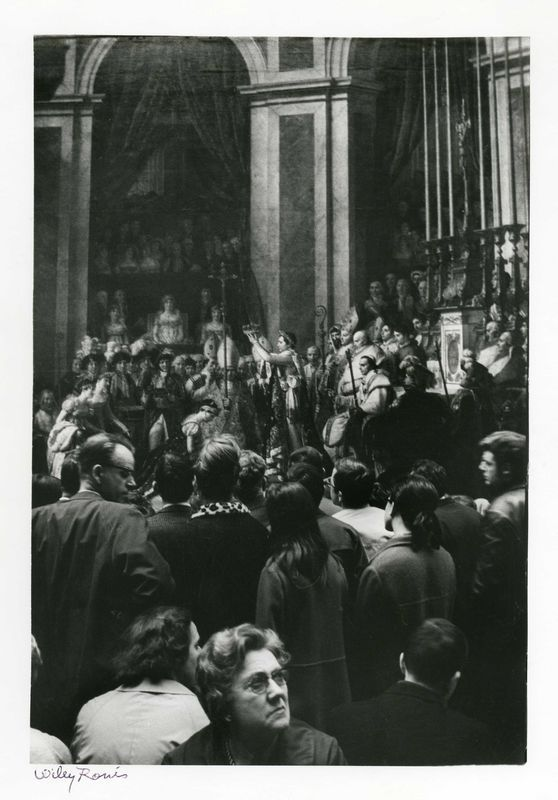
Another image where advance planning has been important is this by Willy Ronis.

Un dimanche au Louvre
Un dimanche au Louvre. Willy Ronis

He has made this image at a time when the lighting in the room matches the direction of the lighting in the painting, and there are sufficient people in the gallery to make a crowd hiding the frame of the painting. As a result it is difficult to determine which are figures in the painting and which are the viewers in the gallery.

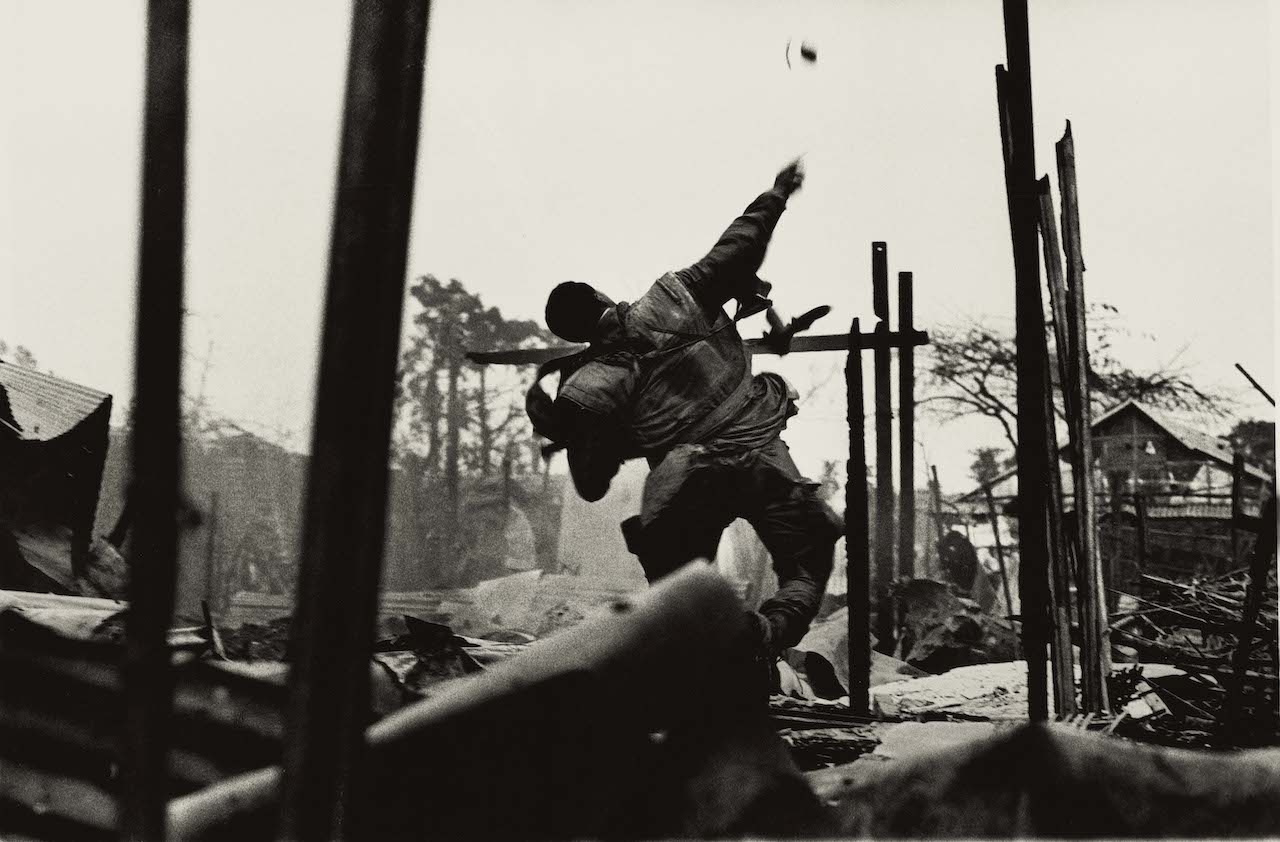
The importance of the duration of shutter opening is exhibited by this image by Don McCullin.

Grenade Thrower Hue Vietnam. Don McCullin

The slight blur of the soldier’s arm emphasises the sense of movement and dynamism in his posture. McCullin has made the image at the decisive moment  To create that composition.

However this image illustrates another aspect of decisiveness about this. The description of this image demonstrates this:

“He looked like an Olympic javelin thrower. Five minutes later this man’s throwing arm was like a stumpy cauliflower, completely deformed by the impact of a bullet.”  Don McCullin as quoted (Baker and Mavlian, 2019).

The moment that the image was made may have been the moment his position was identified by the sniper who shot off his hand.

Thus I would suggest that there is compositional decisiveness and a narrative decisiveness. The former is illustrated by the position of the train in the image of Meudon, all the elements are arranged. But there is also a moment which is important in telling a story or hinting at it, like the position of the man with the package in the same image.

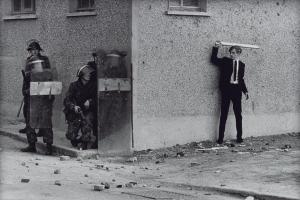
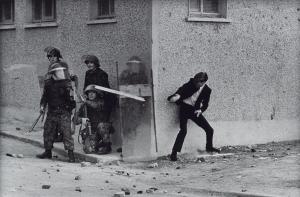
These images by Don McCullin each capture a moment, and are decisive both compositionally and in terms of the narrative.


But what they really seem like to me, are stills from a video that McCullin did not make and each show the development of the interaction, and as such have a narrative quality.

References

References to the works cited in this post are found in my separate post “References”