EYV Online Meetup 28 June 2019: The Decisive Moment
Led by Robert Bloomfield
The topic for this meeting was “The Decisive Moment”, the title of the third assignment on EYV, and my next assignment.
In a previous post I have described my initial thoughts about this topic. For the meeting we were encouraged to bring images to discuss in terms of the “Decisive Moment”. I described my thoughts about compositional decisiveness and narrative decisiveness. Robert suggested that the latter is an extension of Cartier-Bresson’s original concept, but one that has been considered by others. He referred me to the writings of David Bates on this.
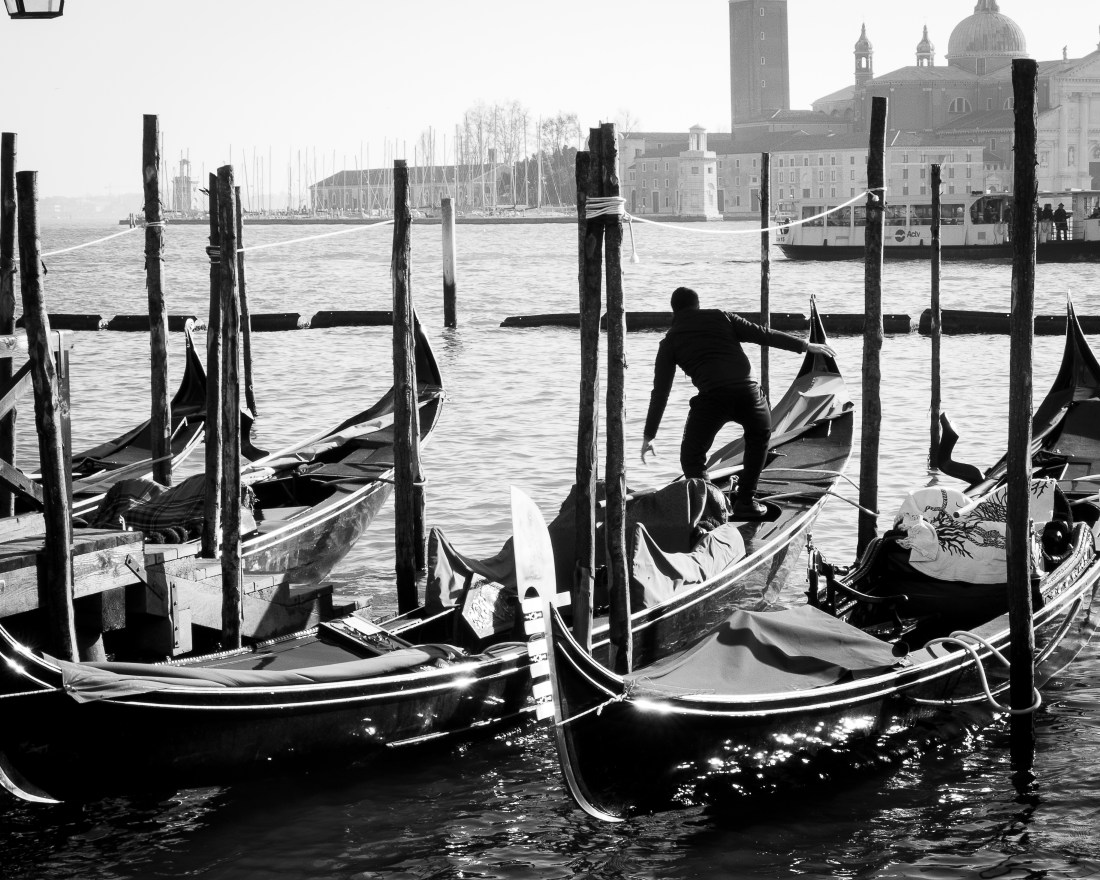
Robert discussed and introduced the concepts of “architectural framing” and “gesture” as characterising the Cartier-Bresson “classical” (my quotes) decisiveness. He pointed out the framing of the figure by the posts and suggested this is a type of architectural framing. He also commented on the posture of the figure, as representing “gesture”. This was a helpful discussion and helped me to understand the way forward with the assignment.
We discussed the use of film for the assignment. I am considering using this medium in order to avoid the temptation to use high speed continuous shooting to obtain the precise moment of decisiveness!
The other learning points I took away are suggestions for further reading including “Camera Lucida” by Roland Barthes.
EYV Zoom Meeting 21 May 2019: Photography is Simple
Led by Robert Bloomfield
This was the second of these meetings I have been able to attend and found the previous one very helpful but omitted to keep notes and record it here on my learning log!!
The meetings are described as:
“This is a new, supportive space for students to meet and share course experiences with each other and the Unit Leader, and to ask any burning questions.”
The topic for this meeting was “Photography is Simple”, the title of the fifth and last assignment on EYV.
I had not had the opportunity to give much thought to this as it is some time in the future and in recent months I have had an enforced gap in my studies for the course. My preliminary thoughts and approach on the subject was to look at the dictionary definition of “simple”. This definition includes two uses of the word “simple” which encompass
easily understood or done and presenting no difficulty and
plain, basic or uncomplicated in form nature or design
So, for example, the work of and artist like Rachael Talibard is not easily created – she goes to great lengths to make her images of storms, both in the planning and her positioning to make the image. However the images appear easy to understand – they are just what they appear, photographs of waves making patterns. On the other hand, the work of someone like Guy Bourdin may be easier to create but with its basis in surrealism is more difficult to understand.
In the meeting I presented this idea, and appeared to have some support for that view.
Other concepts were introduced by Robert Bloomfield with which I was not familiar and fnding out more about these are my objectives to do more work on.
The most significant of these ideas for me was the concept of photography as a mirror or window. In the former the photographer projects himself to the world (Robert associated the work of Francesca Woodman with this approach) and in the latter the world is “explored in all its presence and reality” – a concept attributed to Paul Graham.
The other major learning experience for me was the discovery of the course reading list! As it was at the end of the notes and not referred to earlier, I had not seen it up to now. My next work is to look at some of the suggested works from this.
Having looked ahead in the course notes I saw that “The Decisive Moment” was a topic for research and the basis of the third assignment. I have been thinking about the meaning of this for a while, prior to having the opportunity to read the suggested sources about this. This post reflects those initial thoughts.
As I had not read the notes for the course I initially believed I had had a unique and novel insight into the nature of this concept. That is, in making an image, the photographer moves his camera in the three spatial dimensions: to the left or right of the subject, near or far away, and from a high or low view point. In addition there is a fourth dimension of time, and the photographer chooses to open the shutter at a particular moment. The uniqueness of this fourth dimension is that whereas if he moves too far in one of the spatial dimensions, he can always move back, but this is not possible with time. There is a further consideration regarding time, and that is how long the shutter is open when creating the image, and therefore we might better think of the “Decisive Moments” rather than a moment.
Having read more about this I now realise my insight is the principle described by Flusser.
“The photographer moves within specific categories of space and time regarding the scene: proximity and distance, bird- and worm’s-eye views, frontal- and side-views, short or long exposures, etc.” (Flusser, 2012)
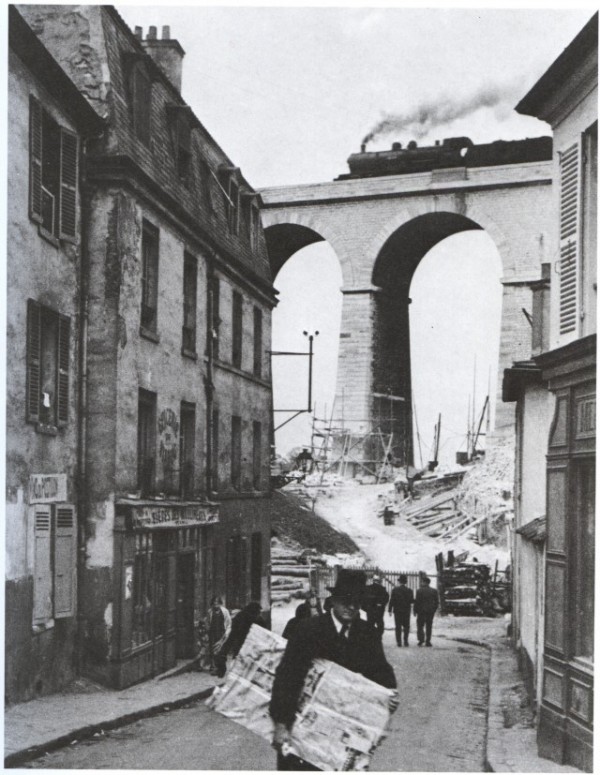
Examples of images where this is prominent include this by André Kertész..
Meudon 1928, André Kertész
The image was created when the train was positioned at a compositionally pleasing place on the viaduct, AND the man with the package is prominent in the foreground. Kertész may have planned this with the aid of railway timetables, but the position of the man is probably outside his control.
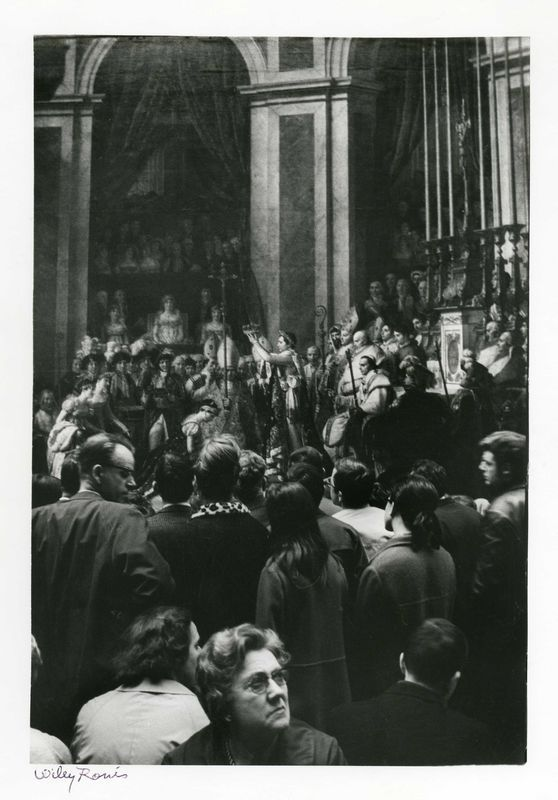
Another image where advance planning has been important is this by Willy Ronis.
Un dimanche au Louvre. Willy Ronis
He has made this image at a time when the lighting in the room matches the direction of the lighting in the painting, and there are sufficient people in the gallery to make a crowd hiding the frame of the painting. As a result it is difficult to determine which are figures in the painting and which are the viewers in the gallery.
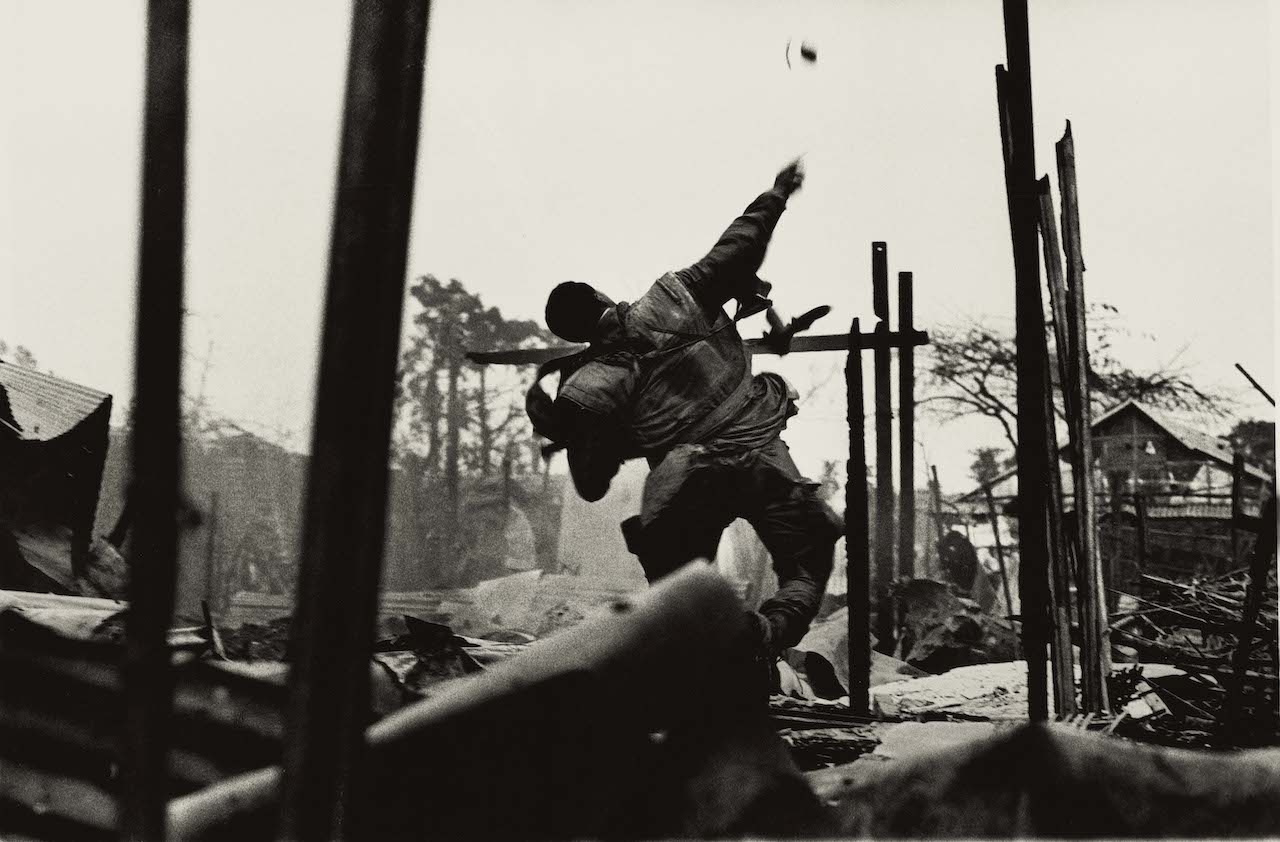
The importance of the duration of shutter opening is exhibited by this image by Don McCullin.
Grenade Thrower Hue Vietnam. Don McCullin
The slight blur of the soldier’s arm emphasises the sense of movement and dynamism in his posture. McCullin has made the image at the decisive moment To create that composition.
However this image illustrates another aspect of decisiveness about this. The description of this image demonstrates this:
“He looked like an Olympic javelin thrower. Five minutes later this man’s throwing arm was like a stumpy cauliflower, completely deformed by the impact of a bullet.” Don McCullin as quoted (Baker and Mavlian, 2019).
The moment that the image was made may have been the moment his position was identified by the sniper who shot off his hand.
Thus I would suggest that there is compositional decisivenessand a narrative decisiveness. The former is illustrated by the position of the train in the image of Meudon, all the elements are arranged. But there is also a moment which is important in telling a story or hinting at it, like the position of the man with the package in the same image.
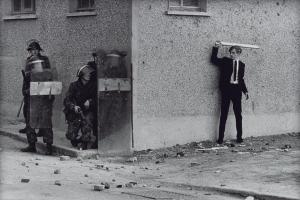
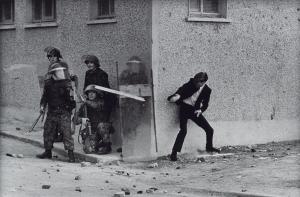
These images by Don McCullin each capture a moment, and are decisive both compositionally and in terms of the narrative.
The Bogside, Londonderry (2). Don McCullin
The Bogside, Londonderry (1). Don McCullin
The Bogside, Londonderry (3). Don McCullin
But what they really seem like to me, are stills from a video that McCullin did not make and each show the development of the interaction, and as such have a narrative quality.
References
References to the works cited in this post are found in my separate post “References”
I saw this article in the paper and realised there was a contrast here between what the sculptor, Emily Young, is doing with her artwork and that which I described by Damien Hirst. Young is creating artworks which she then sinks onto the seabed – and leaves them there to protect the marine environment from illegal trawling. Whereas Hirst created artworks in such a way as to simulate them having been submerged and then recovered.
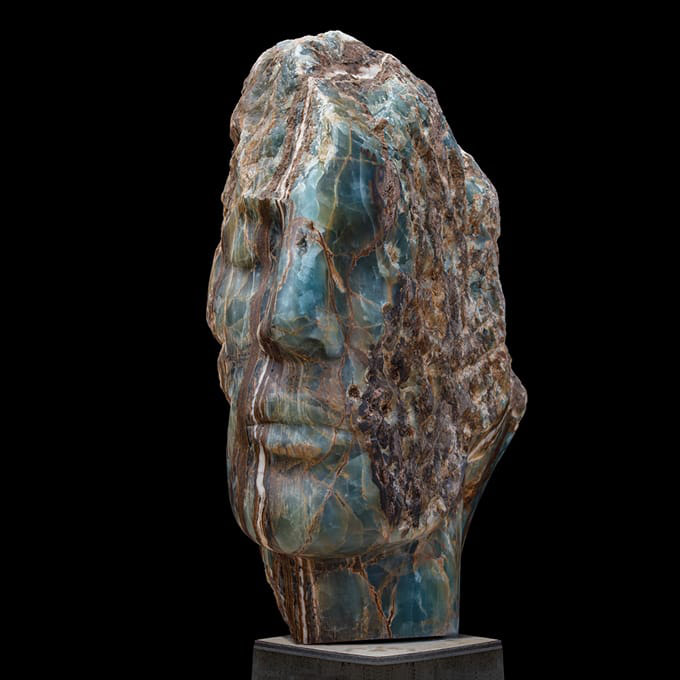
The works by Young, appear to be similar to others she has created without the intention of submerging them – she has made several of “heads” and images of these are on her website (http://www.emilyyoung.com/), such as this:
Blue Sea Head. Emily Young
While the submerged sculptures will be available to view by divers, they will be changed by the marine environment and gradually covered in encrustations and marine life. They will become part of the environment. She is quoted as saying “I use raw, uncut stone that shows its natural weathering, its billions of years of history,” this will then be enhanced by the processes it undergoes with colonisation by marine life.
She describes the work as connecting “us with the planet instead of being separated from it and in charge of it”. This artwork by its positioning is protecting the planet from the influence of humans.
I have had written feedback from my tutor (9/2/2019) about this submission and my course work to date.
He was positive about the technical aspects of the work, and considered the research “fundamentally sound”.
He suggested areas for further development of the theme of the project as he suggested that my work reflects a “photographic expression of the dominant ideology by which public institutions shape our understanding of history, knowledge, and the natural world” and that there is potential to “consider further the ‘normal’ archeological and scientific methods of collecting, ordering, and exhibiting objects”.
Regarding the coursework he suggested adding more detail to the entries about the exercises.
The other elements he commented on and suggested are to expand the range of entries in my learning log to add further experiences/conversations or events. He also suggested I try and expand my thinking across other arts disciplines. He gave me some suggestions for journals and artists’ work to look at including “Oceanmania by Mark Dion.
Feedback from other students
I also posted a link to my site on the student discussion forum and invited any comments from fellow students.
Overall these were positive about the technical aspects of the images. Some colleagues suggested removing some artefacts and replacing with others to create stronger links.
Action Points:
Overall my actions from this feedback are going to be:
Assignment 2:
Find out the process by which I submit my assignment for assessment
Expand the background discussions into a greater examination of how photography is used in the collecting ordering and exhibition of objects
Review the final images and see if there is scope for improvement in quality – where the backgrounds are obvious
Expand my thinking and argument about what is needed to establish these as a series
Coursework and other elements
Expand my entries regarding the coursework
Expand my entries to my learning log to include other experiences
Gain a better understanding of other disciplines and influence on photographic work
Examine the work by Mark Dion, and the publications in Provoke magazine
The following is a summary of what I have already set out in more detail in my learning log at aprocter231.wordpress.com
Background
Shipwrecks as archaeological sites provide valuable insights into the past. They have been considered as “time capsules” containing objects being used at the time of the sinking. Because of the precipitous nature of the sinking there was often no opportunity to remove objects and they remain as they were while in use at that time.
Wooden wrecks such as the Mary Rose (flagship of Henry VIII’s Vice Admiral of the Fleet, sank July 1545) may be preserved for many years allowing recovery and interpretation of artefacts. The systematic exploration of such an archaeological site depends on the careful recording of where precisely each object was found. In this way the spatial relationship of one object to another is recorded and from that spatial information, function may be inferred. The Mary Rose has revealed huge number of artefacts and a unique insight into Tudor life because of this.
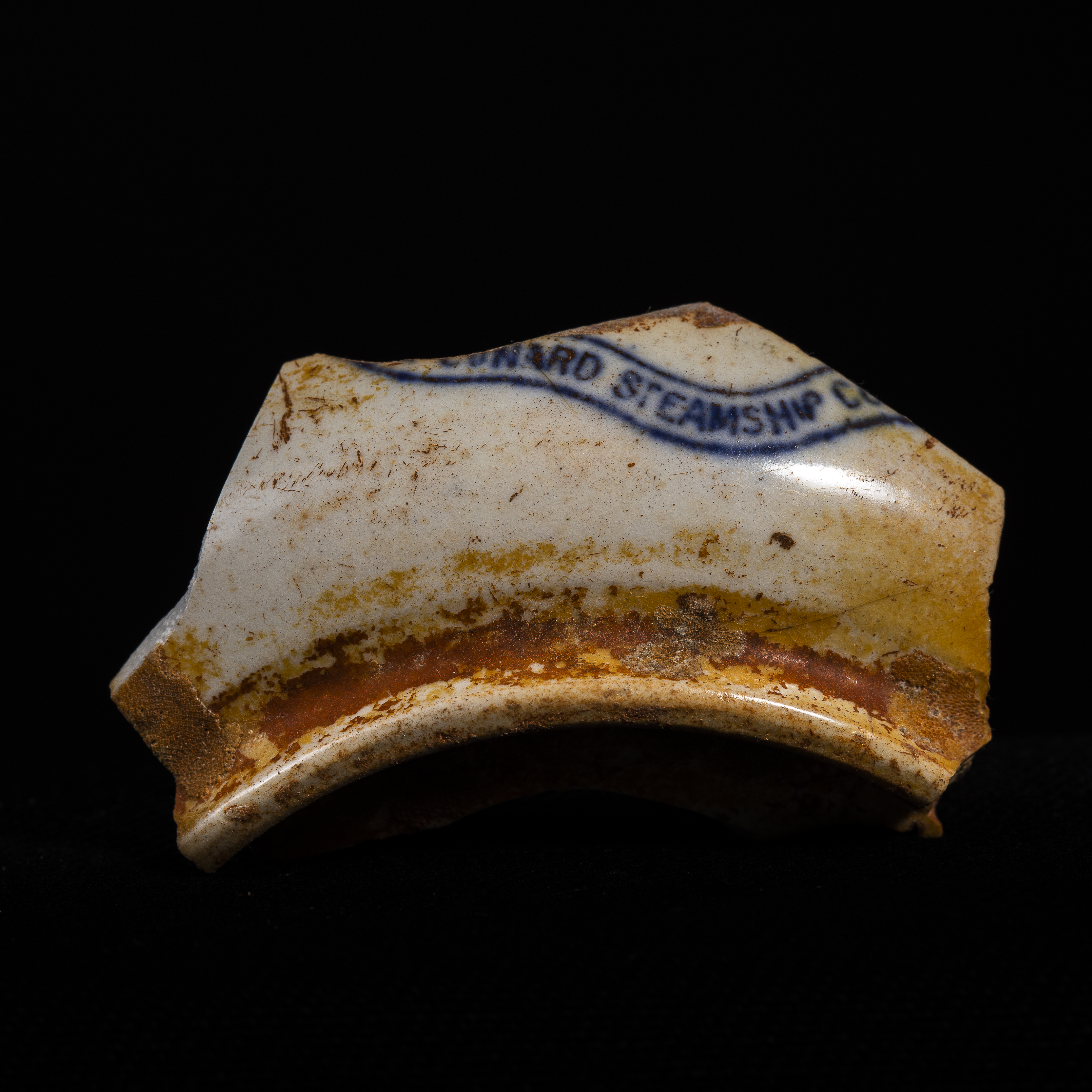
Iron and steel wrecks are not preserved in seawater and decay much more rapidly and as a result there will not be a similar archaeological record for these. Amateur divers regularly dive the wrecks of iron and steel vessels in relatively shallow, coastal waters. Some of them do this as part of systematic investigations of the wreck, but most are informal almost “sightseeing” trips to the wreck. These latter divers often take objects from the wrecks as souvenirs and build up small, unsystematic collections. For many wrecks these collections may soon be all that remain as the iron and steel decay.
These objects recovered by amateur divers lack contextual information and therefore are unable to contribute to knowledge about their use or the wrecksite more generally.
It is the lack of contextual information about the objects in these collections and their isolation and separation from their origins which I want to try and capture in my Project. By so doing I hope to highlight the importance of recording finds so that an effective record of this aspect of nautical history can be recorded.
Approaches
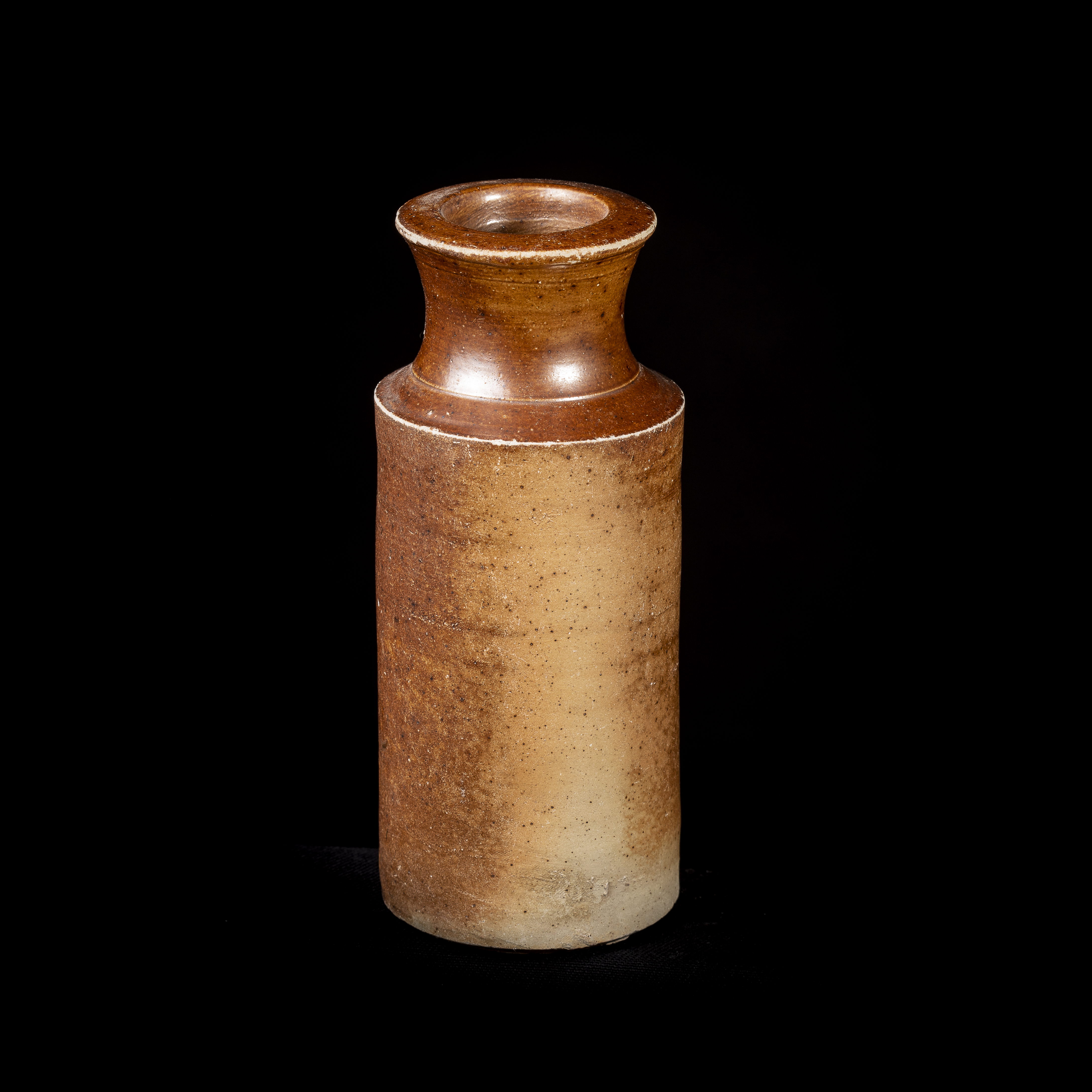
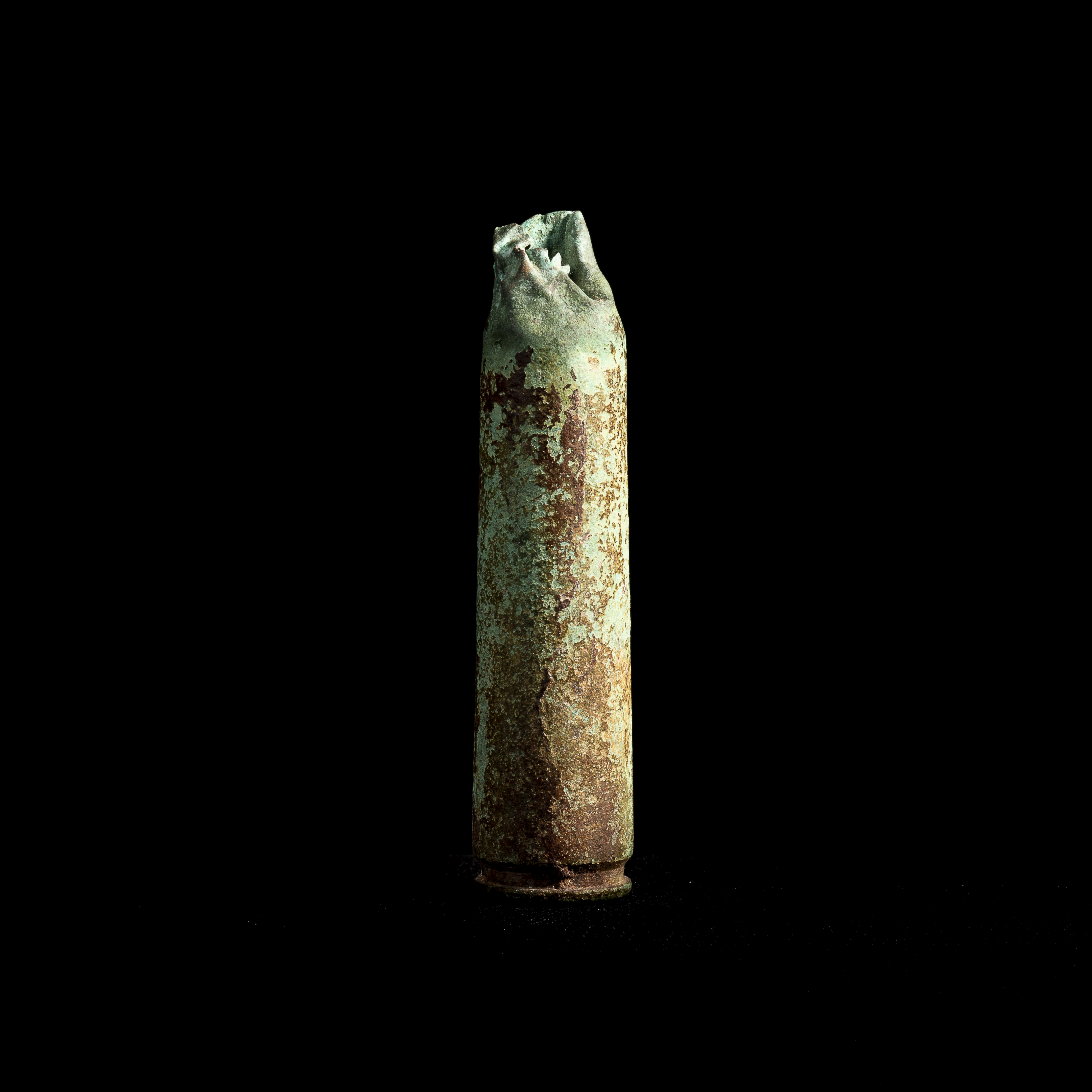
I have obtained a number of objects recovered by amateur divers and I considered several ways of photographing them.
I explored images of the objects as items of interior design, as museum exhibits and as “trophies”. However I believe none of these approaches encapsulated the lack of contextual information about them.
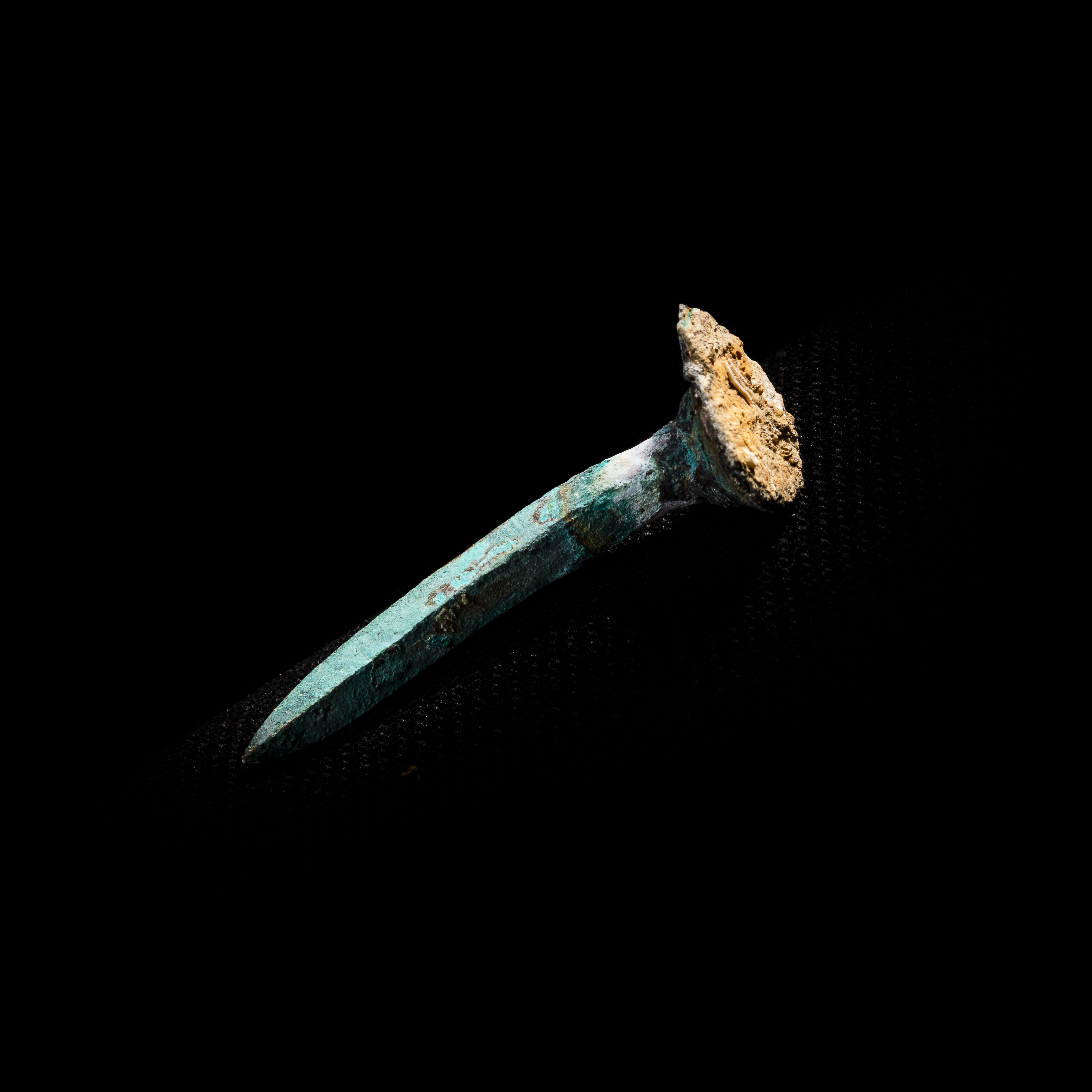
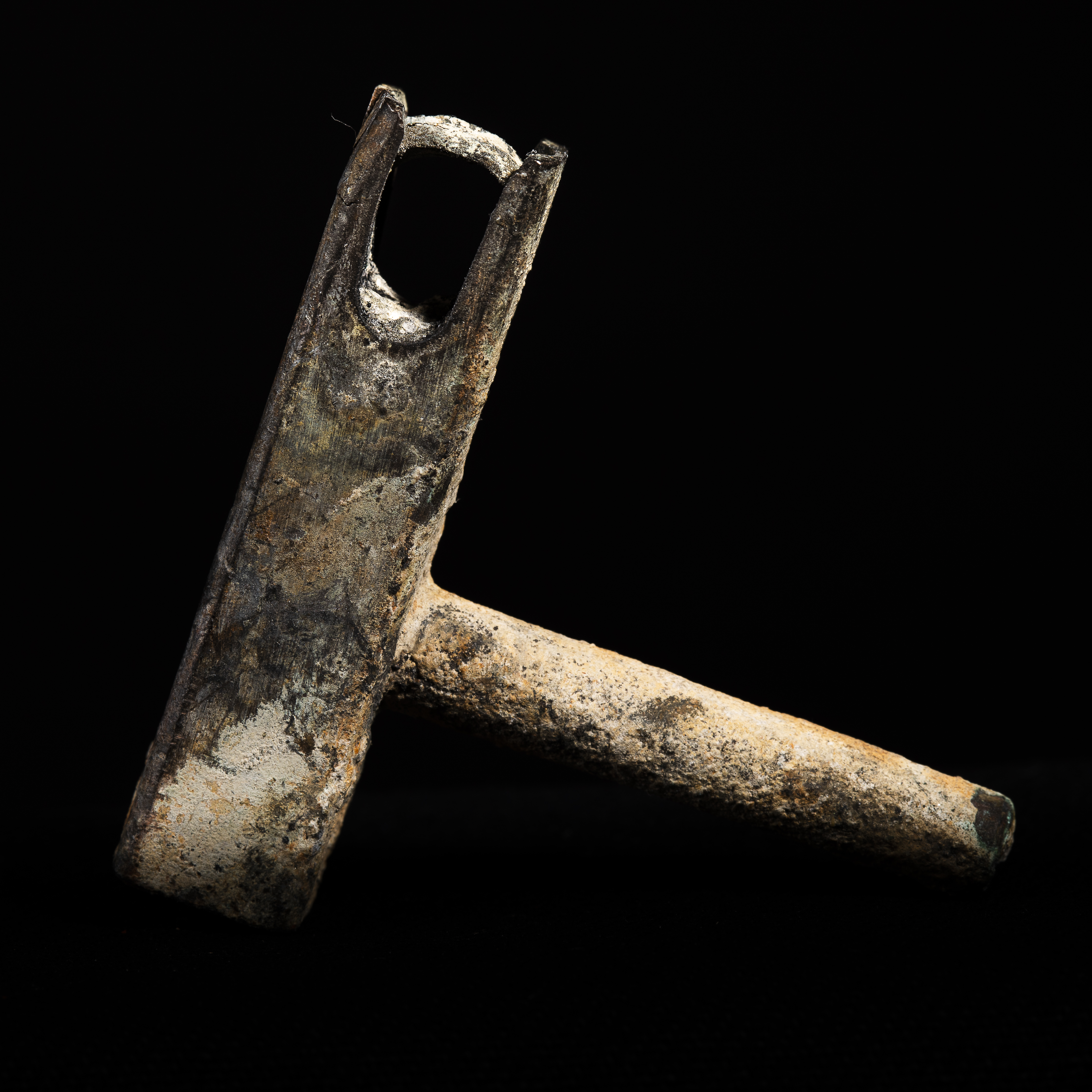
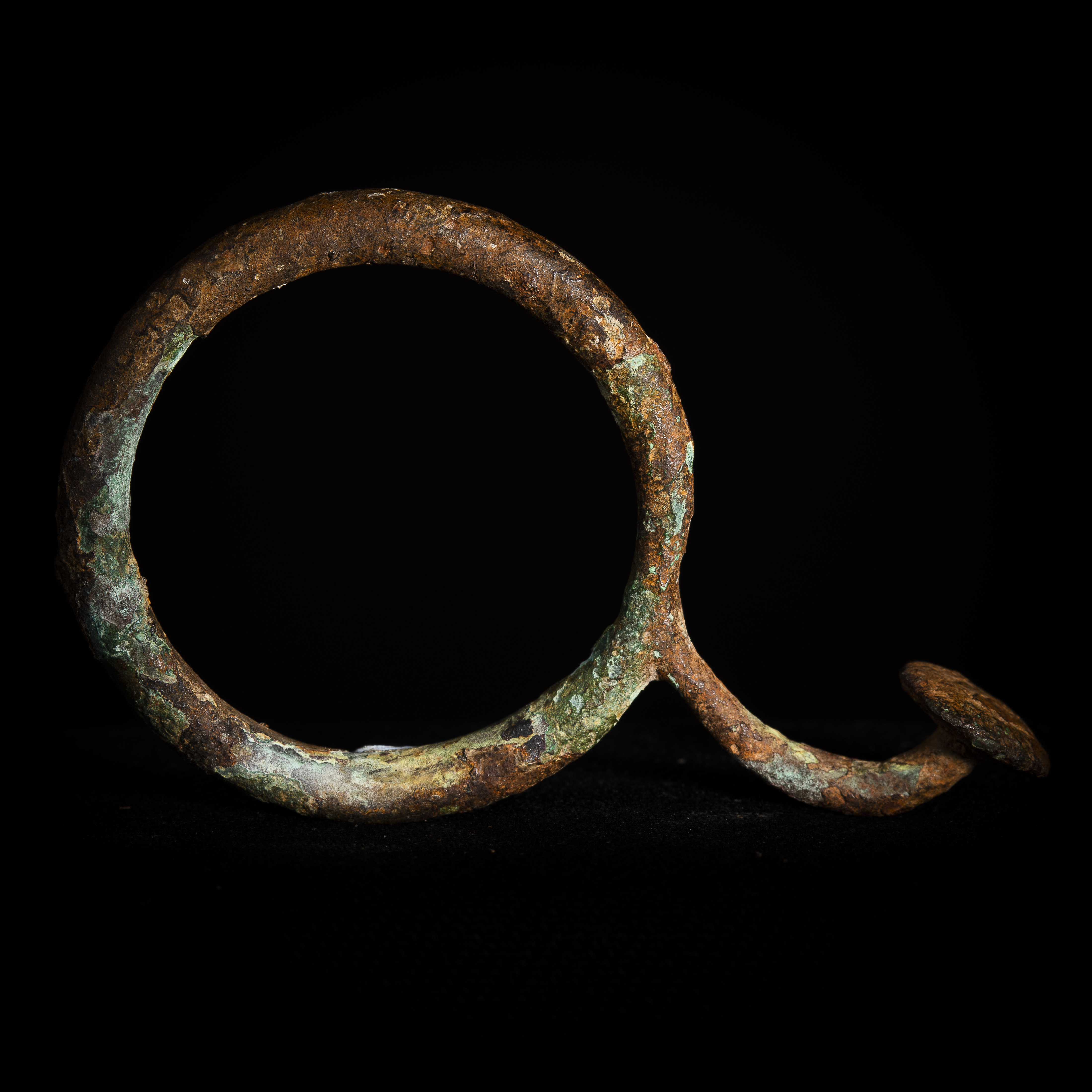
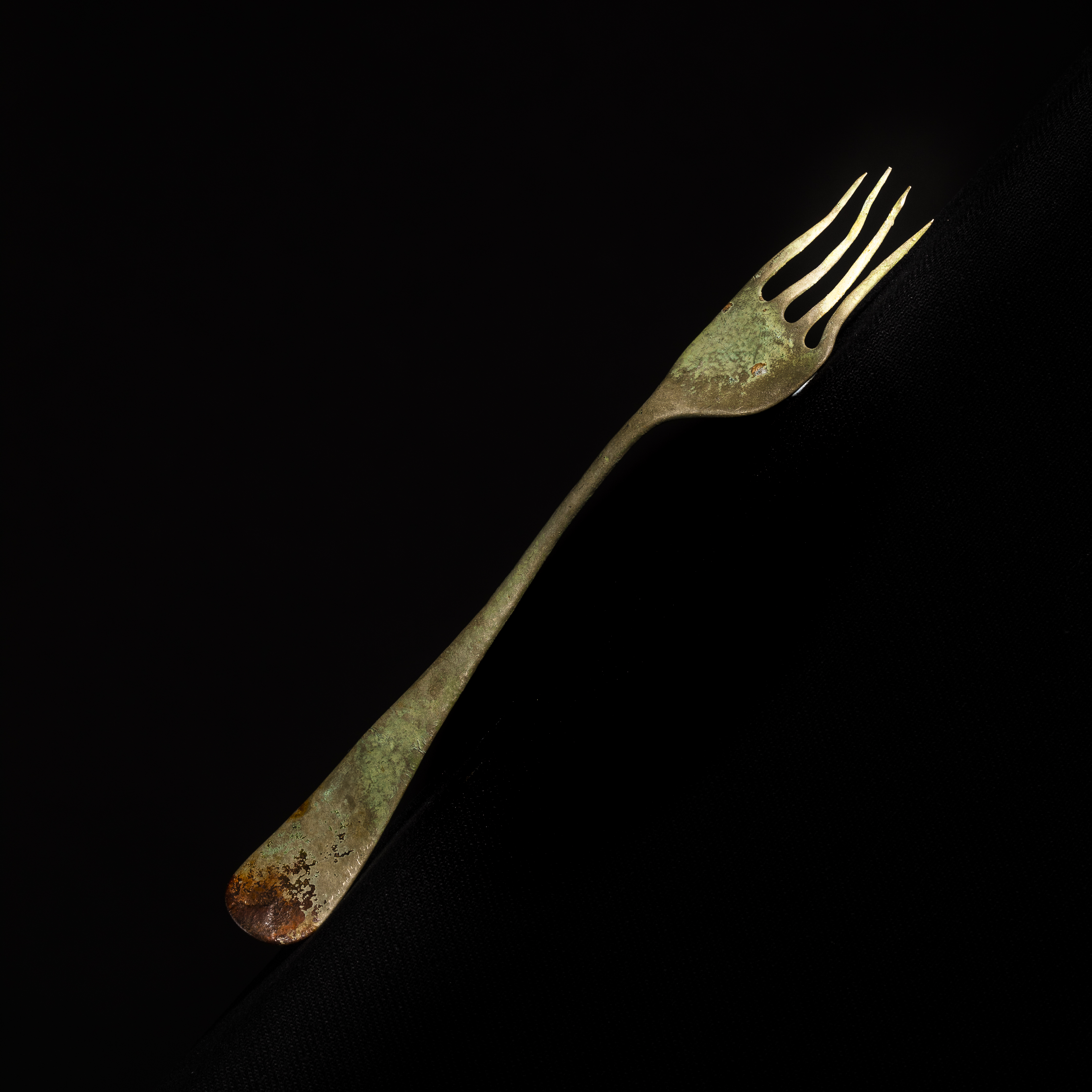
I adopted an approach used by Robert Enoch in his image of cyanide and by Lisa Draycot in images of taxidermied animals. These photographers showed their subjects against a black background removing contextual cues and thereby enabling the observer to bring their own preconceptions to the image. Technical aspects
I adopted a view-point (ie camera position) as if the observer had the object in their hand. This enabled viewing of the object with a “normal” perspective, regardless of the size of the object. The objects vary in size, but are all presented in the images as filling the same amount of the frame. I used small aperture to give a depth of field to have the entire object in focus.
I positioned the objects some distance from a black background and on a black surface. I used two flashes with softboxes to light the objects and minimise the light on the background. Some detail can be seen of the surface on which the objects sit, but I have minimised this with exposure adjustments in Lightroom.
Evaluation What Worked Well
The final images I have made show artefacts recovered by amateur divers on a black surface against a black background. This was the effect I tried to achieve and in general has worked well.
The objects are appropriately lit and focussed.
What didn’t work so well
There are elements of the background apparent in some of the images and in those arranged along the diagonal of the frame may appear somewhat strange. (I composed the image on the diagonal by tilting the camera so as to maximise the size of the image).
In some images traces of a support (“Blutack”) can be seen.
I am not sure that the images in the series are linked in any way, any one image could be removed without it affecting the overall series. These are a random set of objects which were available to me. What I Would do in the Future to Improve This
The major improvement would be to somehow make the objects linked to each other. However, as the whole point of this series is that the objects are now isolated, removed from their original context it is hard to see how this could be achieved and not affect the overall aim of the series.
The other thing I would do is explore more ways of photographing such objects and the technique of displaying, mounting and lighting the objects to most effectively show them separate from their background.
I have tried to analyse the work against the assessment criteria points for the course. • Demonstration of technical and visual skills – Materials, techniques, observational skills, visual awareness, design and compositional skills.
I believe that the images in this series, and those I took in the development of my approach show sound technical skills. I chose a viewpoint to model that of an observer with the object in their hand so as not to distort the perspective. I have photographed the objects in a setting where they are isolated from their backgrounds. I have lit the subjects so that detail is shown and the images are appropriately exposed and in focus.
I could have achieved a separation from the surroundings using post-processing with Photoshop or similar, but have been able to achieve this effect with the setting and lighting. There are images where it is clear the object is sitting on a surface (most obvious in Artefact #2) however I am not sure if this detracts or enhances the effect – what can be seen of the surface lacks any contextual detail, and serves to demonstrate that I have not used a post-processing manipulation of the image.
In terms of composition – I chose a square format to avoid giving any cue as to the orientation of the object. The composition is of its nature very simple.
• Quality of outcome – Content, application of knowledge, presentation of work in a coherent manner, discernment, conceptualisation of thoughts, communication of ideas.
In my blog I have explained the background to the work, and the effect I have tried to achieve. I have not yet sought other people’s views on this, but will be doing so.
• Demonstration of creativity – Imagination, experimentation, invention.
I have not used these techniques of lighting and composition in a “studio” before – so for me this was quite experimental. I cite similar works in my influences, but do not know the techniques those photographers used to achieve their result. The initial approach I had to the subjects of images of the objects in their normal locations and as museum displays is perhaps an obvious way to show these, but I believe fails to highlight the lack of important context which characterise these objects.
• Context – Reflection, research, critical thinking.
I have tried to reflect on my project as I developed it and looked at some other types of image of these types of collections.
What Worked Well
The final images I have made show artefacts recovered by amateur divers on a black surface against a black background. This was the effect I tried to achieve and in general has worked well.
The objects are appropriately lit and focussed.
What didn’t work so well
There are elements of the background apparent in some of the images and in those arranged along the diagonal of the frame may appear somewhat strange. (I composed the image on the diagonal by tilting the camera so as to maximise the size of the image). In some images traces of a support (“Blutack”) can be seen.
I am not sure that the images in the series are linked in any way, any one image could be removed without it affecting the overall series. These are a random set of objects which were available to me.
What I Would do in the Future to Improve This
The major improvement would be to somehow make the objects linked to each other. However, as the whole point of this series is that the objects are now isolated, removed from their original context it is hard to see how this could be achieved and not affect the overall aim of the series.
The other thing I would do is explore more ways of photographing such objects and the technique of displaying, mounting and lighting the objects to most effectively show them separate from their background.
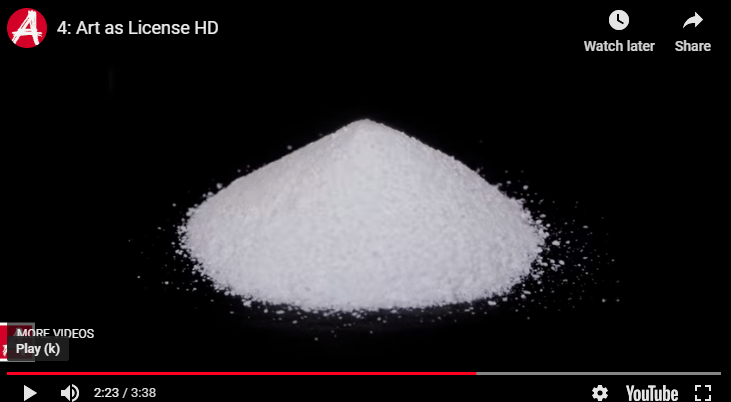
The image of cyanide by Robert Enoch appears that of an anonymous white powder. As such it is then open to the observer to put his or her own interpretation and expectations onto that image. There are no clues in this image as to what the substance is. It is on a black base with a black background with no other detail than the powder itself.
Cyanide. Image by Robert Enoch, screenshot from his OCA Lecture: “Key Ideas in Photography – part 4, Art as Licence”
The work of Liza Dracup in her work “Re Collections” is of taxidermied birds and animals. These are also set on a black background with no context included. As I have previously cited critic Michael Prodger as describing Lisa Dracup’s work as “not about capturing a particular moment in time but about timelessness.” In this case the lack of context relates not only to what something is and where it is from, but also when it was in existence.
‘Stoat’ – Liza Dracup
‘Greenfinch and Weasel’ – Liza Dracup
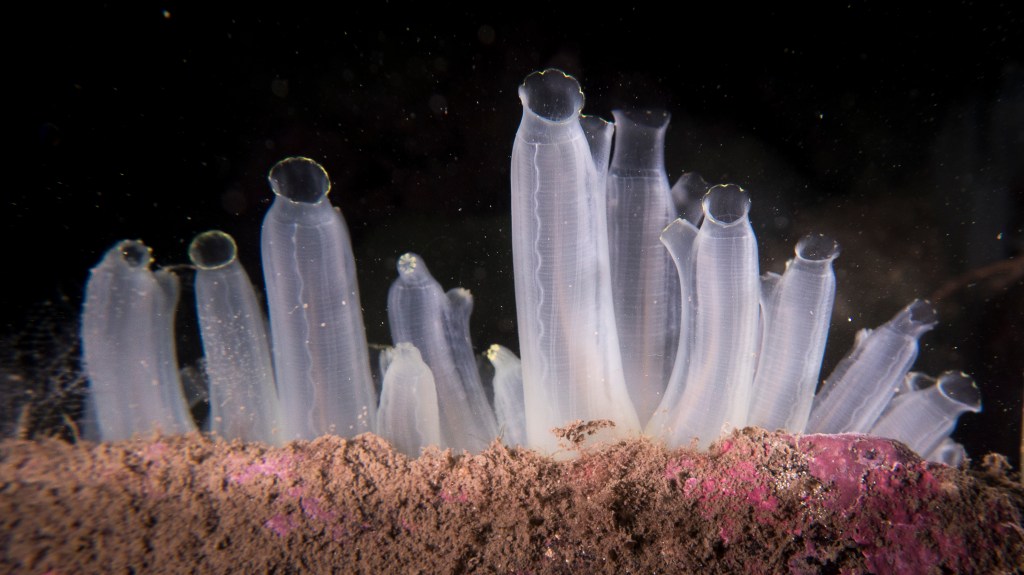
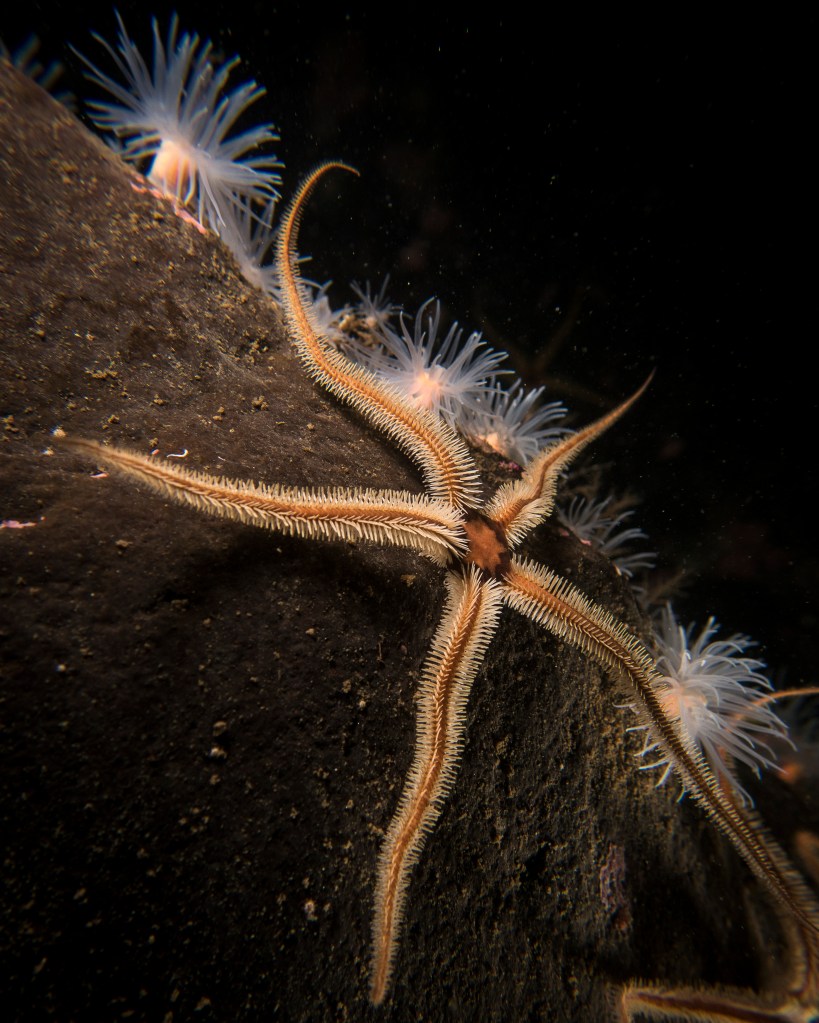
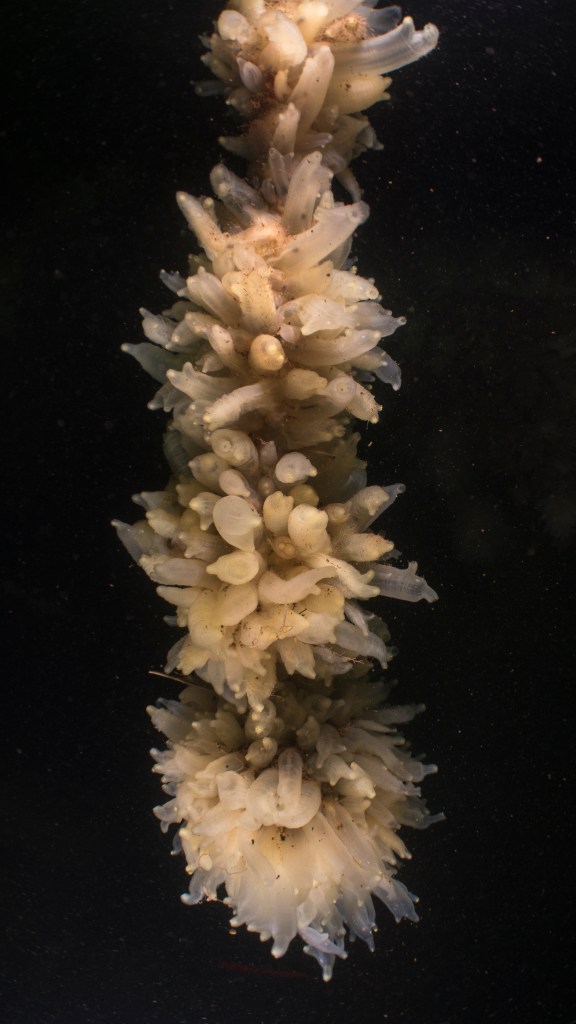
Setting the subject against a plain dark background takes away some of the contextual cues for the observer. I have used this technique in other photographs I have taken of marine life underwater.
Sea Squirts, Loch Nevis
Brittle Star, Loch Duich
Loch Duich
Sea Squirts, Port Napier – Kyle of Lochalsh
Thus it is my aim to replicate aspects of these images in a studio with the artefacts. This approach will not only take them out of any context, but model the appearance of a subject underwater. Technical Details
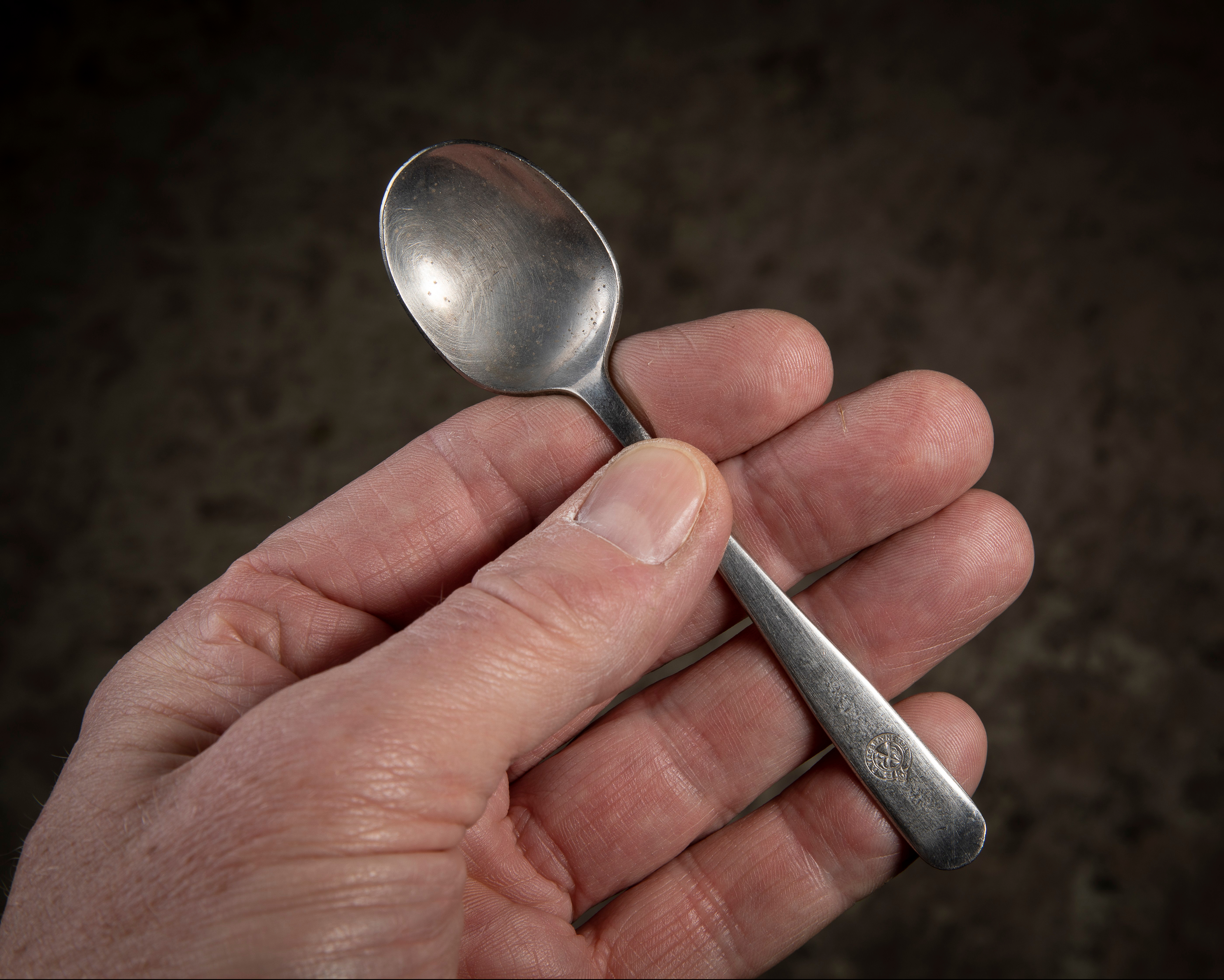
I have chosen a subject to camera distance to make the object look as if it is in the observer’s hand – like this.
Spoon – D Macbrayne Ltd.
That is about 500mm, so have adjusted the focal length accordingly to compose the shot. I have also used an aperture to keep all the subject in focus, but render the background out of focus.
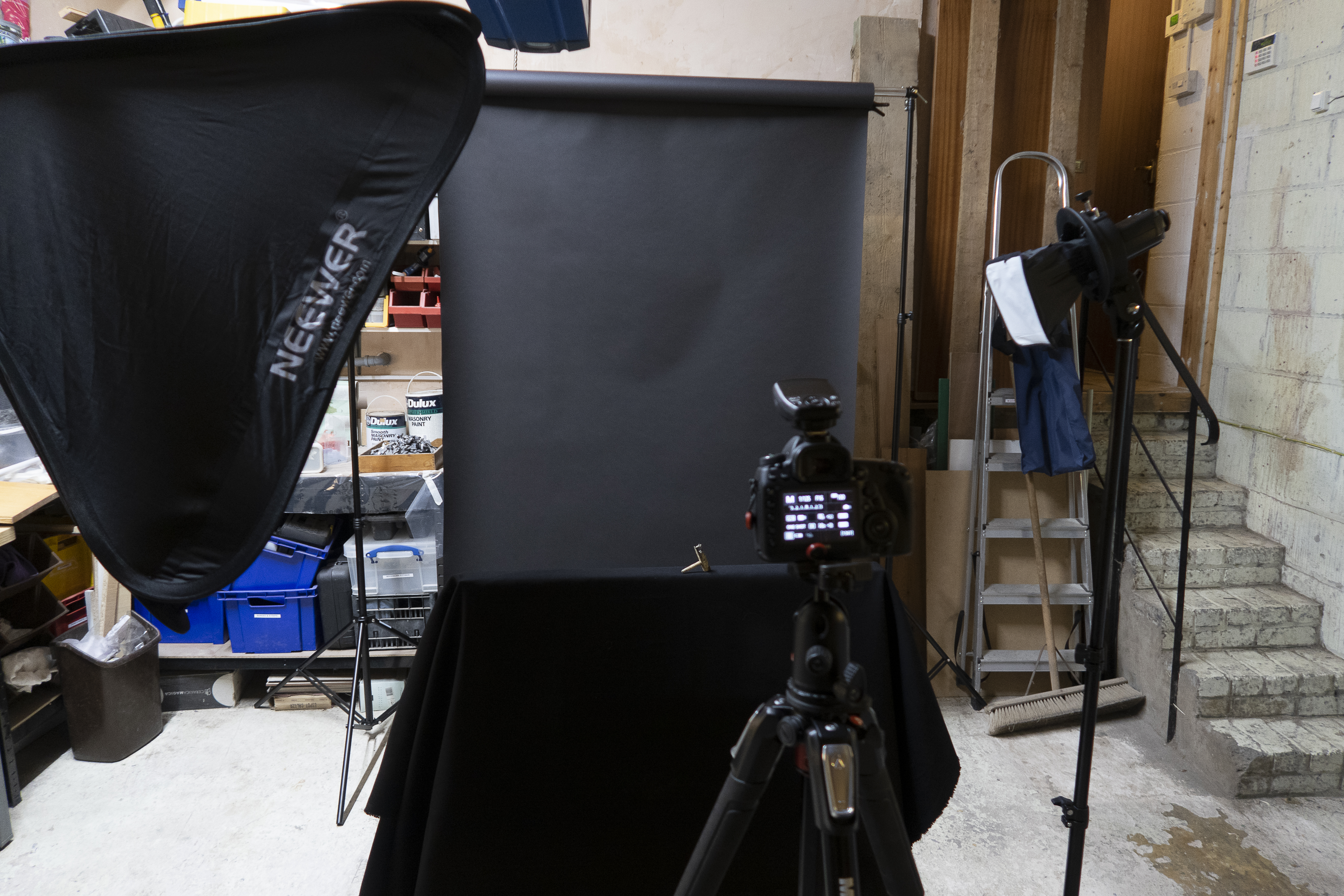
I have set up a black background some distance behind my subject and photographed the subjects on a black cloth. I have lit the subject with flash, and modelled the two flash arrangement I used in the underwater images. For the glasses I used a combination of direct light and some back light. To minimise shadows I have used softboxes on my flashes. The arrangement is shown below.
My garage “studio”
The images are shot in RAW and processed in Lightroom with minor adjustments of local exposure. I have chosen a square format for all the images as this seems deliberately ambiguous and removes any clues about orientation.
I considered representing my artefacts as objects from historical collections (which they are).
Examples of how such objects may be displayed include the images from the Mary Rose Collection. Some of these are shown below.
Tally Stick. Image reproduced with permission of the Mary Rose Trust
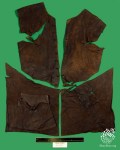
Leather Jerkin. Image reproduced with permission of the Mary Rose Trust
Candleholder and candles. Image reproduced with permission of the Mary Rose Trust
These images show the objects catalogued (with reference numbers included) and a scale bar to show their size. They are against a neutral background and show the detail of the objects.
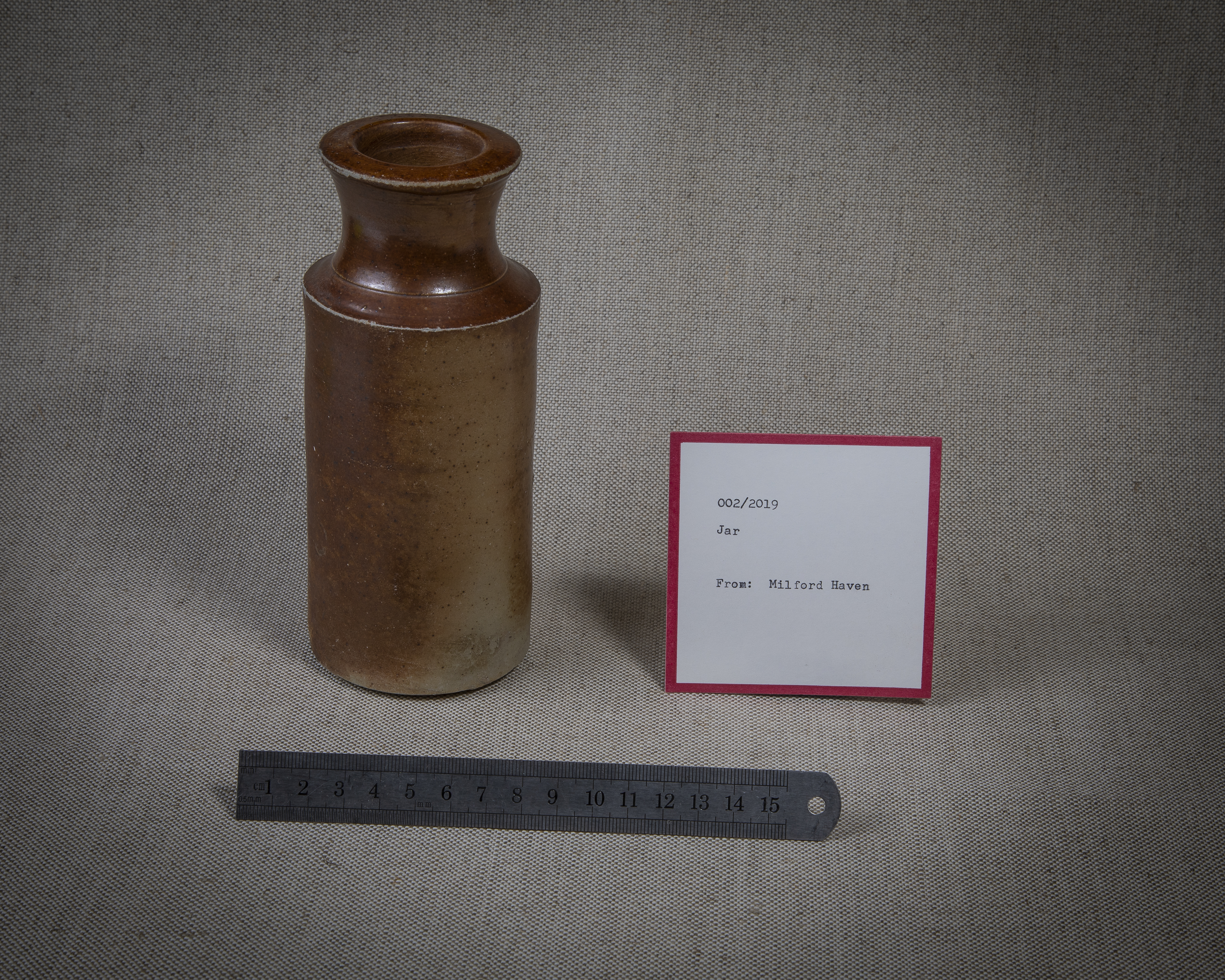
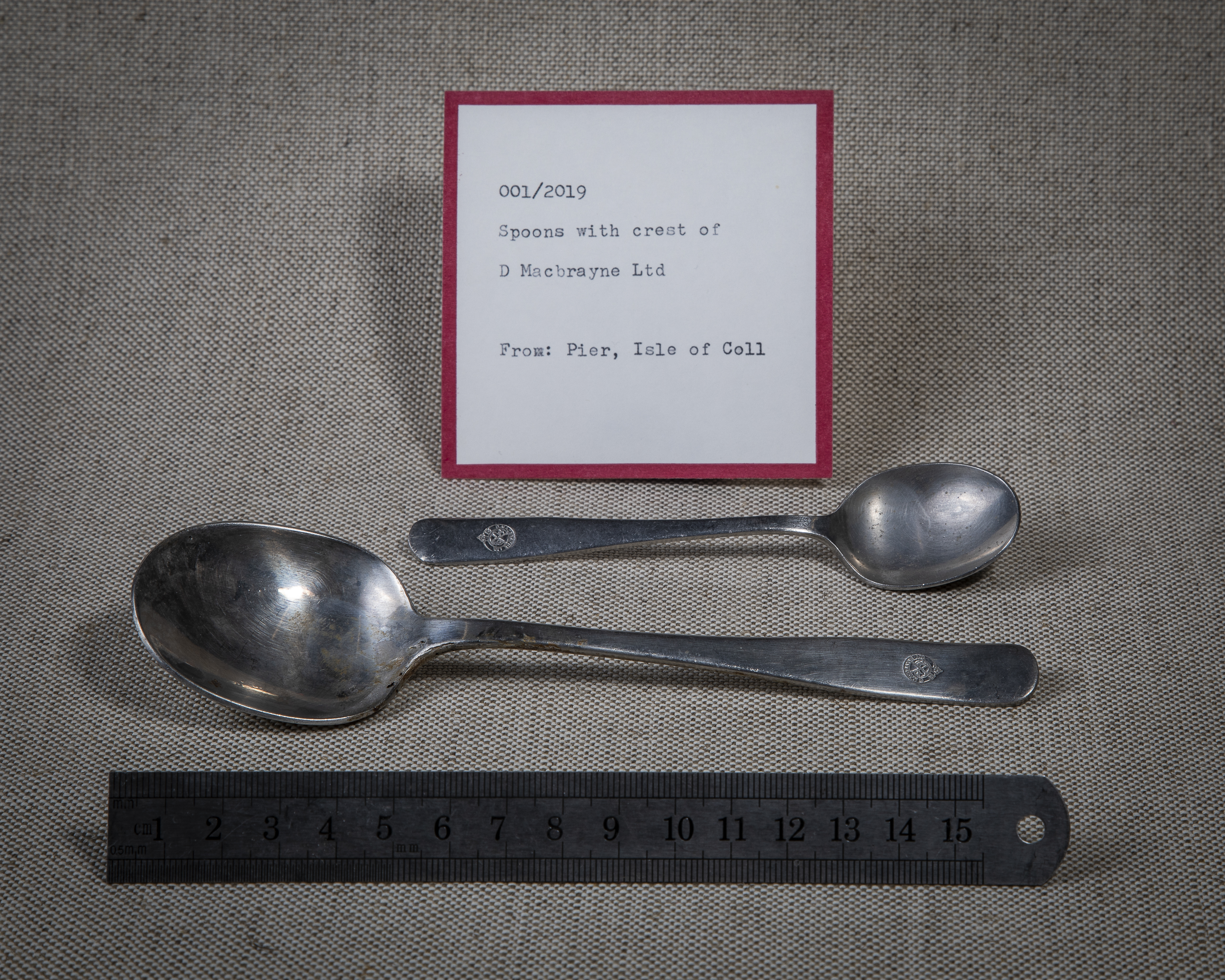
I tried to replicate this with images of some of the objects I have. I have made catalogue labels and typed these on an old typewriter to attempt to model the appearance of an old collection. These are show below.
Jar from Milford Haven
Spoons from Pier, Isle of Coll
Technical Information
Again, I chose a focal length of lens adequate to fill the frame, but show the object from a distance comparable to that which someone would view this as an exhibit in a museum. I have used an aperture to maintain a depth of field to have the object, scale bar and label in focus. I have used flash lighting as these were indoors and I wanted control of the lighting to best demonstrate the features of the objects.
Critique
Technically, these images appear to me to meet the aim I had set myself. They show the objects in a similar way to those from the Mary Rose collection. There are some shadows, but these highlight the detail especially on the spoons. My main concern regarding these images is the composition – I have had difficulty positioning the elements in a satisfactory arrangement the horizontal and vertical elements are not all in line, and this could warrant further work.
The other critique I have of these images and this approach is that depicting these objects in this way implies that we know more about them than we do. That they are catalogued and recorded systematically. However the fundamental aspect of them that I am trying to capture is that they have been removed from their background and origins, and we have therefore lost the contextual information to make sense of them.
For this reason I have tried another approach.







 Andrew Procter