Collections: My Approach to the subject (contd)

I began by considering that the amateur diver collects artefacts as souvenirs or trophies. Extending the concept of trophy I considered depicting these objects in a manner analogous to the trophies of big game and other hunters.

There are two approaches to this which I examined:

The first is the formal portraiture of the hunter with his trophy and I found examples of early depictions of these.

The historical image by Mollard, shows a pair of hunters with their catch.

12315_molard
Baron Louis-Adolphe Humbert de Molard: The Hunters. Paper negative, 185 x 235 mm, C1848

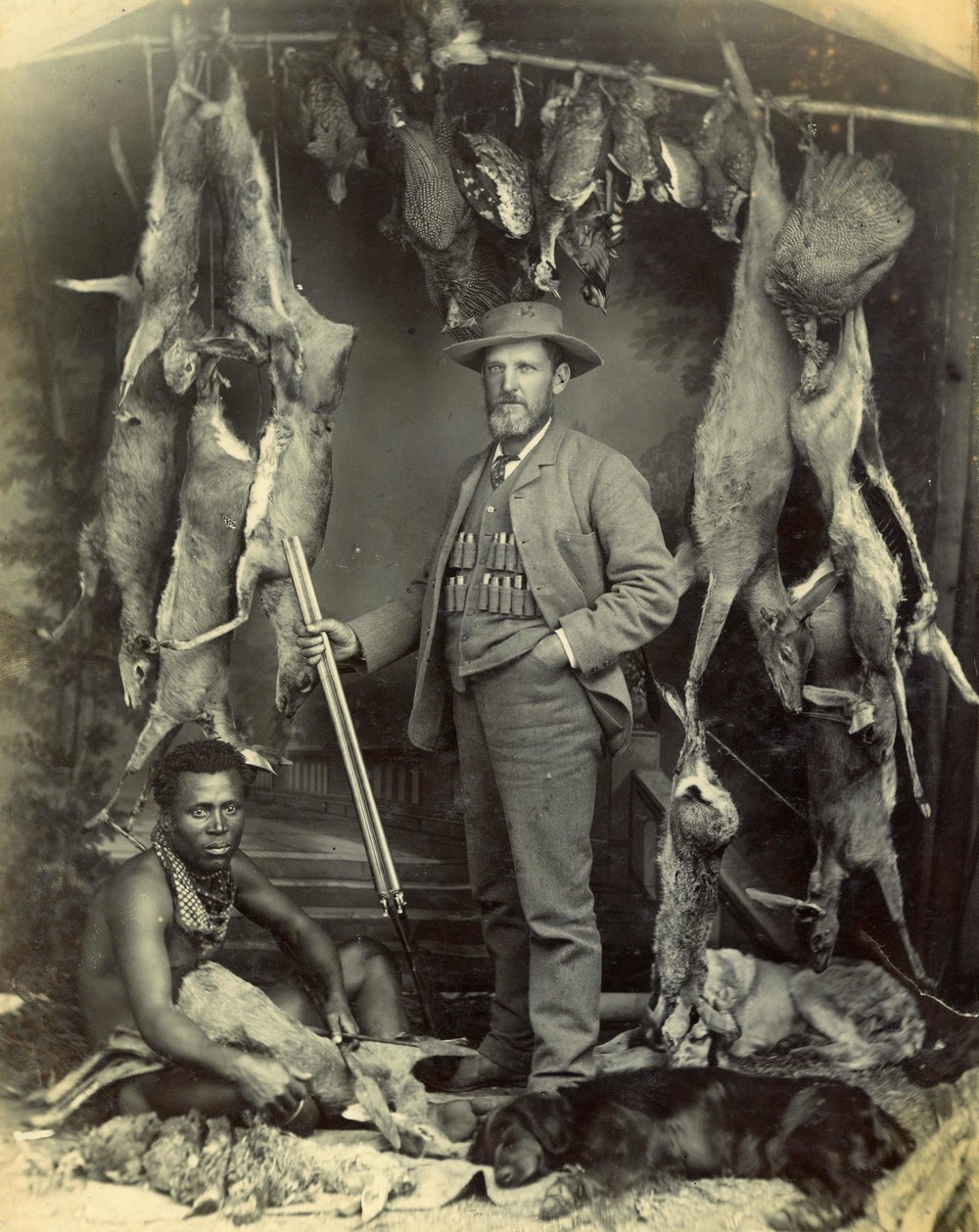
A later image by Barnett of a African big game hunter also shows the game and from his stance and bearing, we infer the pride he has in his achievement.
0_cd37f_a7b25f6_orig
BARNETT, J. Unidentified big game hunter with his servant, dogs and trophies in Africa, circa 1900.

One approach I have considered was to replicate this type of image with the diver holding his “trophy”. I have had offers from subjects who are willing to sit for such portraits, but have not yet had the opportunity to do this.

The trophies of hunters have often been displayed in houses and form an iconic aspect of the grand country house. This feature of interior design continues to be employed by contemporary designers – even if the owners of the house did not shoot the animal themselves. Thus taxidermy heads may be used to create a impression of the classic country house and I show an example below.

1m2b0629_1024x1024 dig haushizzle
Interior design by Dig Haushizzle: dig-haushizzle.co.uk


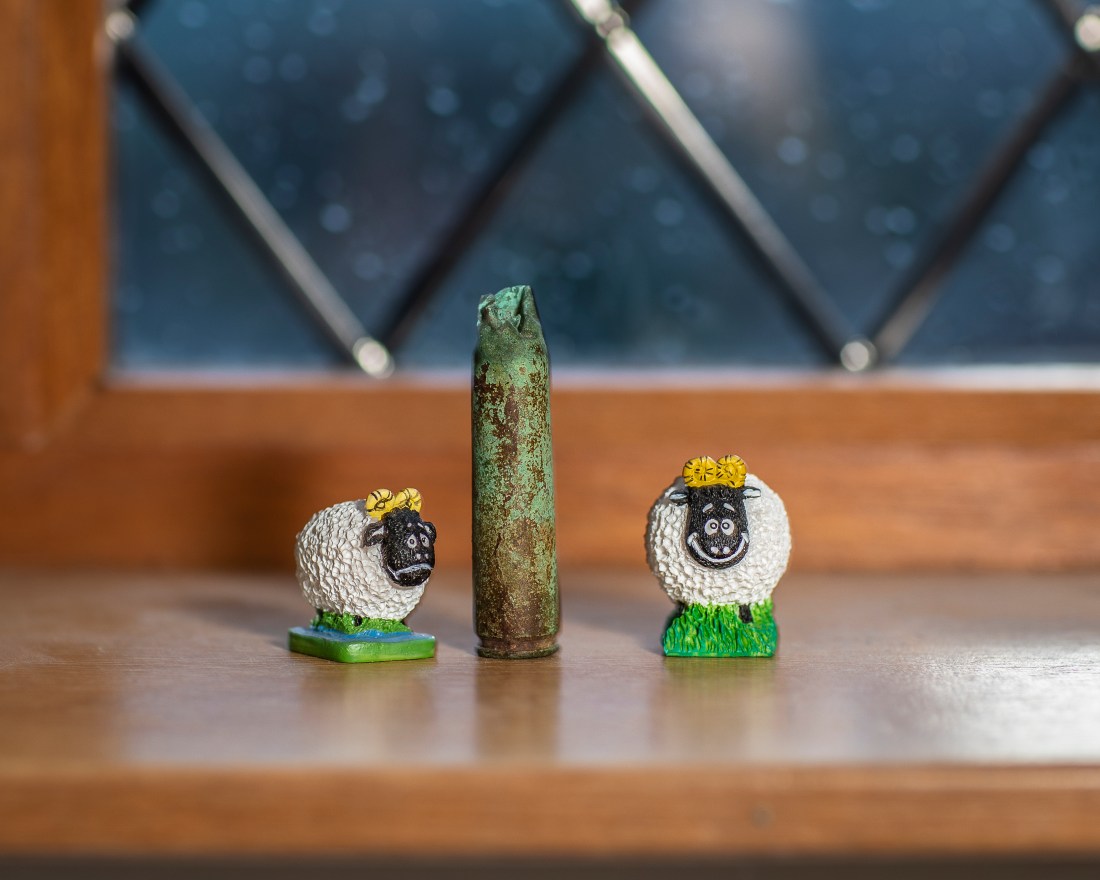
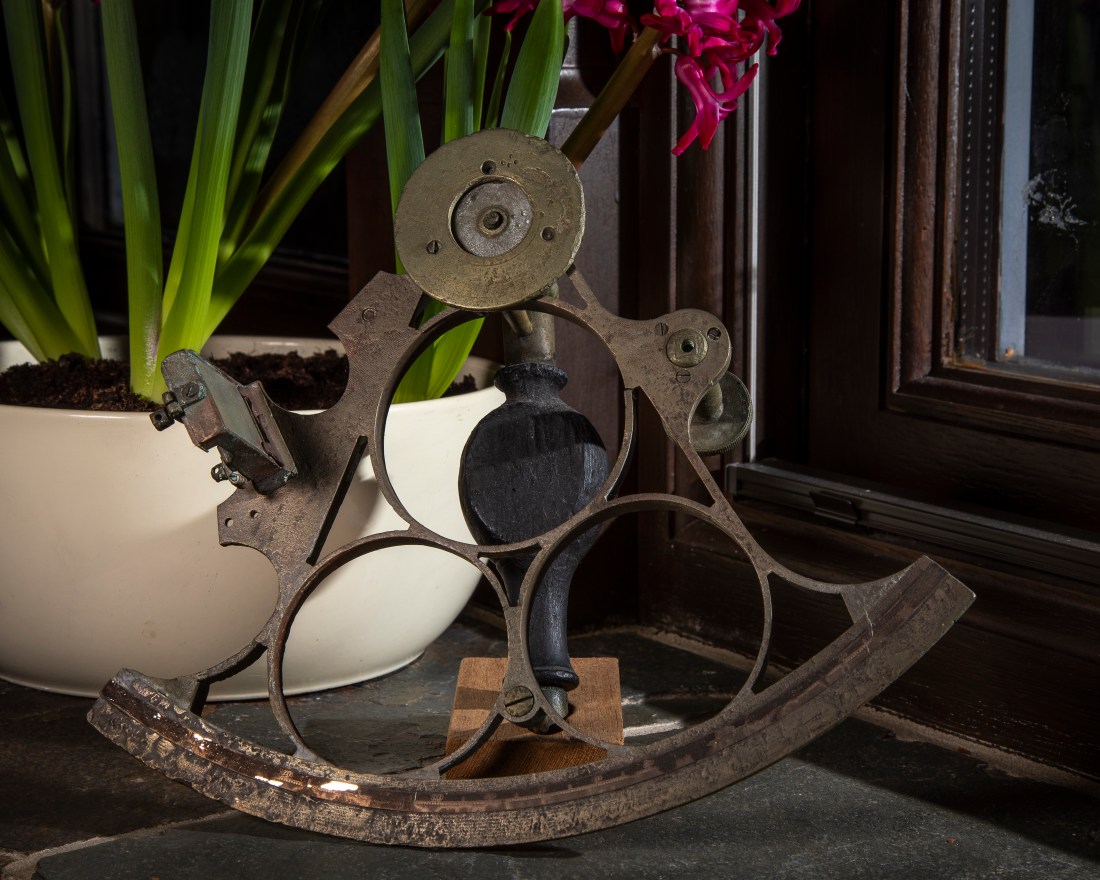
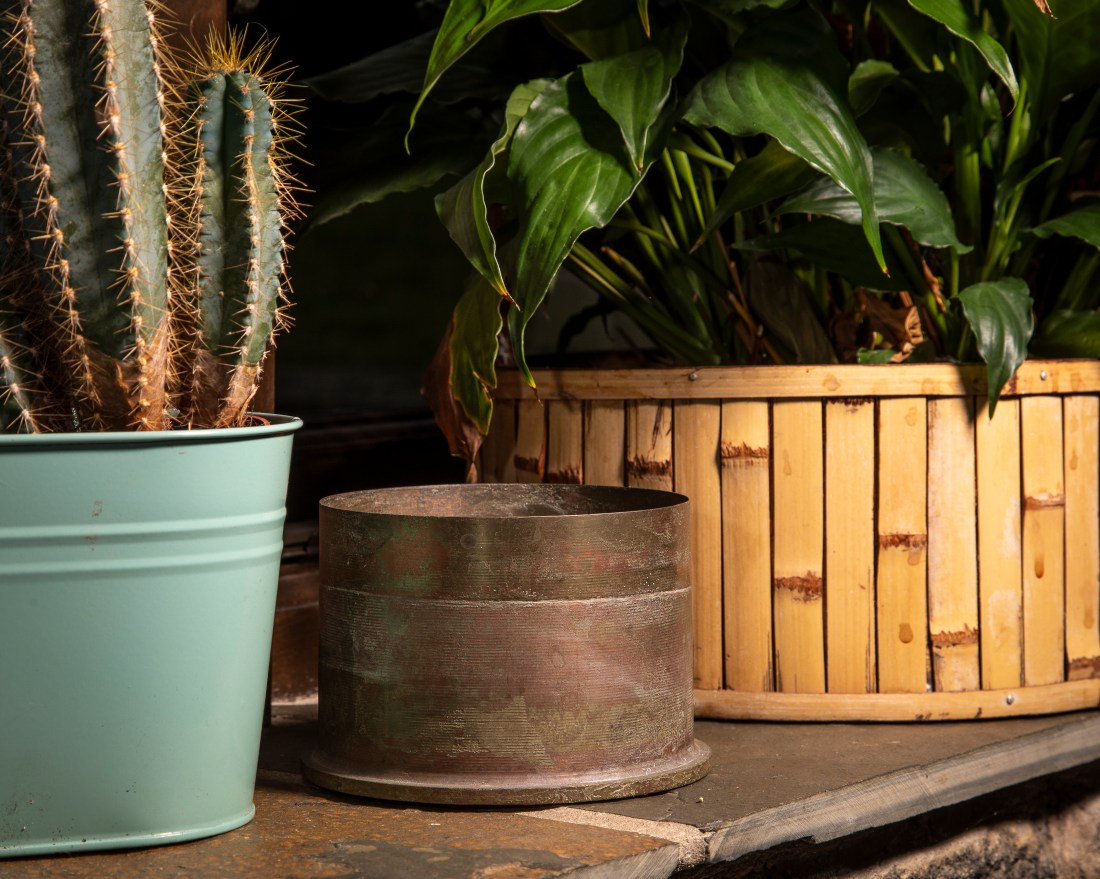
I have tried showing the artefacts as they are displayed in the divers’ homes, and examples are below.
2019-01-12 oca collections-19
Ornament 1
2019-01-12 oca collections-30
Plant pot holder
2019-01-12 oca collections-52
Ornament 2

This approach has the advantage of showing how out of context the artefacts are – how they have lost their connection with their origins and are now reduced to objects of interior design.

Technical Information

These are images of artefacts in the divers’ homes in the position where they are normally displayed. They were all on window sills so back lit. I chose to use flash to supplement the ambient light to better display the objects.

I have chosen viewpoints at a distance where they might normally be viewed, so have selected a focal length of lens to match this. This gives the object itself a relatively “normal” perspective. In the images of “ornament 1” and “plant pot holder”, I used an aperture to give a depth of field sufficient to have the surrounding objects in focus as I considered these to be show the important context in which the objects are displayed. In “Ornament 2” I have used a larger aperture and thereby have shallow depth of field to render the detail of the window out of focus and allow the observer to concentrate on the artefact and surrounding two objects.

The images have been shot in RAW and processed in Lightroom, to crop to a 10×8 landscape format for each which is consistent and frames the objects and their surroundings appropriately. I made minor adjustments of exposure only.



Collections: My Influences and Approach

Damien Hirst: Treasures of the Unbelievable”

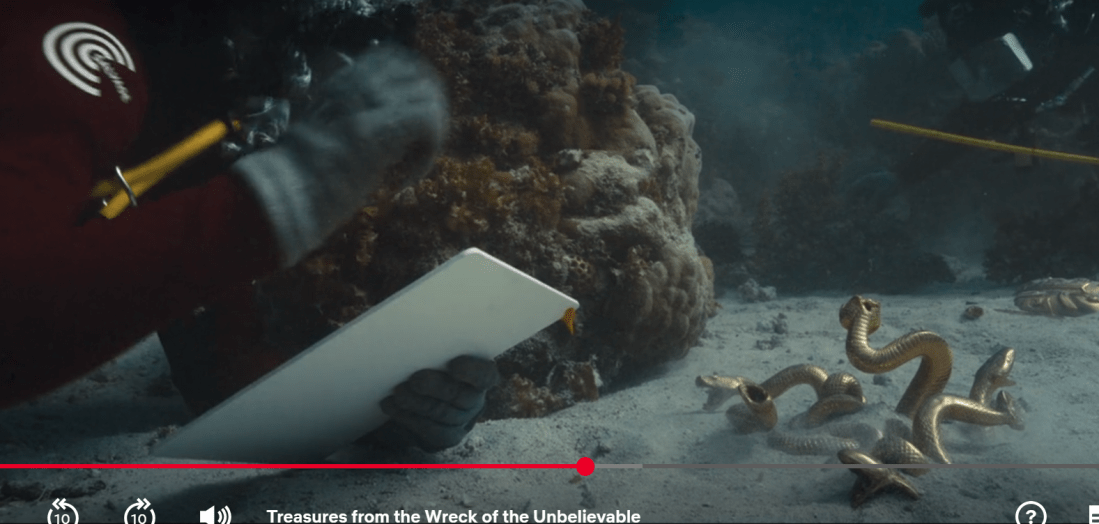
The exhibition by Damien Hirst “Treasures of the Unbelievable” was an exhibition of objects supposedly recovered from a wreck off the East African coast (https://news.artnet.com/art-world/damien-hirst-review-918074). The exhibition included film and photographs explaining the back story to these objects, and their “recovery” is described in Hirst’s film of the same name (https://www.netflix.com/title/80217857). While the works in the exhibition and the style are not a direct influence on my project, this series of works by Hirst demonstrates the importance of context in interpreting and explaining the significance of objects.

The objects look as if they have been recovered from a shipwreck, they are covered in coral and encrustations. However they are given meaning by the elaborate descriptions of the discovery and recovery of the wreck and its “history” which was set out in other elements of the exhibition and the subsequent “documentary” film.

ITALY-ART-HIRST
People look at Lion Woman of Asit Mayor by Damien Hirst. Photo by Miguel Medina AFP Getty Images.


capture unbelievable
Screenshot from “Treasures of the Unbelievable” Dir. Sam Hobkinson

The “Lion Woman of Asit Mayor” is covered with encrustations, like a real recovered artefact. The film includes scenes showing the “excavation” of the wreck, and the same attention to detailed recording as would be made in an archaeological survey.

The importance of this work to my project is that these objects were never underwater, but are given meaning by the context Hirst has created. The objects I will photograph, were underwater and are from real wrecks but many have now lost their contextual information and background and tell us little.

Shipwrecks and artefacts

Shipwrecks as archaeological sites provide valuable insights into the past. They have been considered as “time capsules” containing objects being used at the time of the sinking. Because of the precipitous nature of the sinking there was often no opportunity to remove objects and they remain as they were while in use at that time.

One such example is the wreck of the Mary Rose; flagship of Henry VIII’s Vice Admiral of the Fleet. The Mary Rose sank in the Solent on 19 July 1545 with the loss of hundreds of lives. Despite attempts at salvage by Venetian salvors, much of the Mary Rose sank into the soft sediments of the seabed and was eventually covered by hard mud and protected from erosion. Following the re-discovery of the wrecksite in the 1960’s the wreck was systematically excavated and mapped until it was raised in 1982. The wreck has revealed a remarkable collection of objects and a substantial part of the hull as well as the bodies of the men who died during the sinking.

Wooden wrecks like the Mary Rose may be preserved for many years allowing such recovery. This is illustrated by the recent discovery of the wreck of a Greek vessel in the Black Sea, which is thought to have sunk 2400 years ago (https://www.bbc.co.uk/news/world-europe-45951132 accessed 09/01/2019). However iron and steel wrecks are not preserved in seawater and decay much more rapidly. Reports of the condition of the Titanic indicate it is decaying due to a combination of several factors including the effects of ocean currents, chemical reactions between sea water and the iron and steel, and the effect of marine organisms. (eg https://news.nationalgeographic.com/news/2010/08/100818-titanic-3-d-expedition-shipwreck-science-collapsing/)

Similarly the less high profile, but popular dive site, the wreck of the Thesis in the Sound of Mull, Scotland, is similarly decaying. Following a major collapse of the bow of the wreck a few years ago, a survey in 2015 by the Scottish maritime archaeology project, SAMPHIRE, concluded this was due to the “fragile and highly corroded nature of the surviving elements of the bow structure” (http://blogs.wessexarch.co.uk/samphire/2015/07/06/defending-the-thesis/).

The artefacts recovered by projects such as the Mary Rose Trust provide an insight into the functioning of the ancient ship and life on board at that time. However if the iron and steel wreck decay as they appear to do, there will not be a similar archaeological record for these.

Amateur divers regularly dive the wrecks of iron and steel vessels in relatively shallow, coastal waters. Some of them do this as part of systematic investigations of the wreck, but most are informal almost “sightseeing” trips to the wreck. These latter divers often take objects from the wrecks as souvenirs and build up small, unsystematic collections. For many wrecks these collections may soon be all that remain as the iron and steel decay.

Wreck Policies and Legislation
There is legislation regarding the removal of objects from wrecks. Under the Merchant Shipping Act 1995, all wreck material regardless of size or significance must be reported to the Receiver of Wreck if it is recovered from within UK territorial waters or recovered outside the UK and brought within UK territorial waters. Reporting requires completion of a Report of wreck and salvage form which is then sent to the Receiver of Wreck within 28 days of the recovery of the object.

The National Governing body for Sport Diving, The British Sub-Aqua Club, BSAC) has a policy to remind divers about the legal position, “Respect our Wrecks” ( https://www.bsac.com/advice-and-support/respect-our-wrecks/respect-our-wrecks-policy/). This BSAC policy also however promotes that divers should explore wrecks but not damage or disturb them and take photos rather than souvenirs. Because many wrecks have an important history, reporting finds to the Receiver of Wreck, enables such information to be passed to archaeological experts.

Archaeological Interpretation
The systematic exploration of an archaeological site depends on the careful recording of where precisely each object was found. In this way the spatial relationship of one object to another is recorded and from that spatial information, function may be inferred.
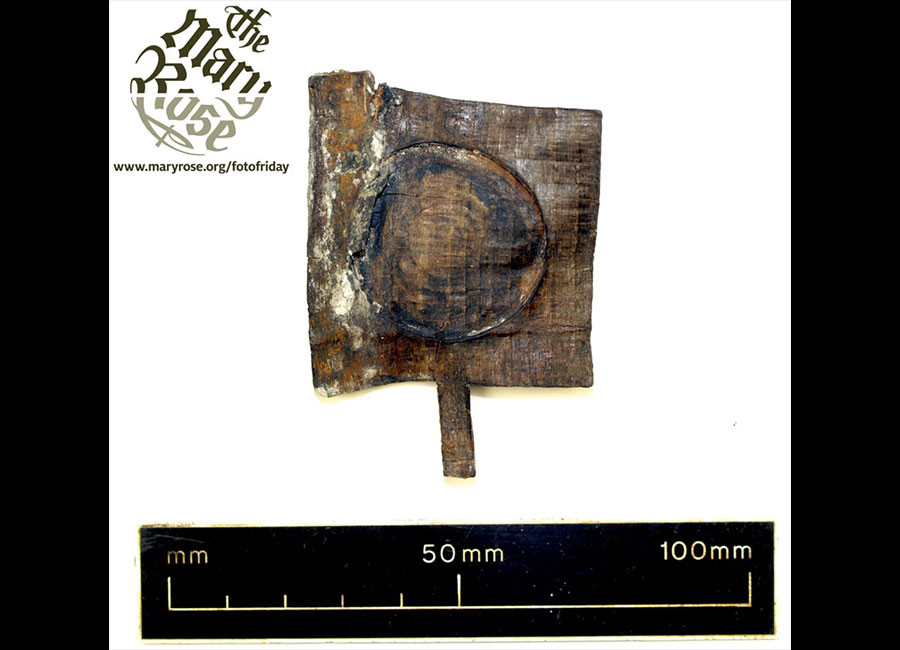
An example of this is that of a shaving mirror recovered from the Mary Rose.

shaving-mirror
Shaving mirror: “This tiny mirror was found in a chest outside the carpenter’s cabin, alongside a razor and a shaving brush, so we believe it to be a shaving mirror. Although none of the mirroring itself has survived, fragments of glass were also recovered.” Image and caption reproduced with permission of the Mary Rose Trust


This was found in a chest outside the carpenter’s cabin, possibly indicating who it belonged to and their social status. There was no glass in the mirror when found, but fragments found nearby indicating that this object, which in itself does not look like a it, was indeed a mirror. Alongside it was a razor and shaving brush indicating it was likely to be a shaving mirror rather than some other type. This wealth of knowledge about a small, apparently unassuming object has only been pieced together by knowing the spatial context of the object and what surrounded it.

The objects recovered by amateur divers as “souvenirs” lack this context and therefore are unable to contribute to knowledge about their use or the wrecksite more generally.
It is the lack of contextual information about the objects in these collections and their isolation and separation from their origins which I want to try and capture in my Project. By so doing I hope to highlight the importance of recording and declaring finds to the Receiver of Wreck so that an effective record of this aspect of nautical history can be recorded.

Assignment two: Collecting – Brief and choice of subject

The notes for this assignment read:

“On OCA photography courses you’ll often be asked to submit a series for an assignment. Like the examples in Project 2, a series should reflect a single coherent idea, even though the individual photographs will be unique. For this assignment you’ll make a collection of photographs using a combination of lens techniques that you’ll decide for yourself. Your tutor will evaluate the series in terms of its technical skill but also on how well the  assignment works as a whole.”


Brief:

“Create a series of between six and ten photographs from one of the following options, or a subject of your own choosing:

  • Crowds
  • Views
  • Heads

Use the exercises from Part Two as a starting point to test out combinations of focal length, aperture and viewpoint for the set. Decide upon a single format, either vertical or horizontal. You should keep to the same combination throughout to lend coherence to the series.”


My Choice of Subject

As an enthusiastic amateur sport diver I am aware that many divers have small collections of objects they have found on ship-wrecks and recovered to the surface. I have decided to choose my own subject for this project and photograph objects from such collections. The background to this and the reason I consider it important I will explain in my next post.

2018-10-05 Video Feedback with Andy Hughes: Assignment 1

2018-10-05  Assignment 1 Feedback Meeting
Call with Andy Hughes

This was the second video call with my tutor and followed me submitting my assignment “Square Mile” for his consideration.

Feedback on my assignment:
Andy told me that the technical quality of the images I had submitted was good and at the standard required for the course.
He commented particularly about the inclusion of map extracts to illustrating the location of some of the images he drew my attention to the concept of “GIS” Geographic Information Systems, and suggested I look into this more as it applies to my work. This is a concept being used extensively to describe social history and geographical concepts.

He considered that some of the images of the area around the confluence of the rivers has many of the visual aesthetics of classical English Landscape painters and suggested that I research more into this, not confining myself to photographers. In particular he mentioned John Virtue
Other artists he suggested I look at include
• Rebecca Solnit and her book “Wanderlust” with regards to walking as an activity
• The “New Topographics”, in particular Lewis Baltz
This is in relation to the tension between urbanisation and the rural environment.

The next assignment is collections – I described some initial thoughts I had about this.
As a sport diver, I am aware that the wrecks of iron and steel ships deteriorate underwater. Wrecks of wooden ships like the “Mary Rose” may be preserved for centuries in sediment which protects them from the effects of tides and weather. As a result the archaeological record of iron and steel ships is likely to be less complete than that of well preserved wooded wrecks.
Many amateur sports divers who dive these iron wrecks collect souvenirs and will have small collections of artefacts from the wrecks. In the future these may be the major remaining artefacts from many of out historic ship wrecks.
I suggested I collect images of such collections for my next assignment.
Andy suggested I look at the historic use of photography to record collections . Other artists he suggested I look at were
• Mark Dion and his work “Oceanmania”
• Michiko Kon

Further study topics
Geographic Information Systems
John Virtue – B&W Landscape painter
Rebecca Solnit “Wanderlust”
New Topographics
Lewis Baltz

Assignment 2 “Collections”
Use of photography to record collections
Mark Dion and his work “Oceanmania”
Michiko Kon

Final Submission

I had many images to chose from these are what I submitted.

2018-08-25 Shelf Stones-33
On Shelf Moor

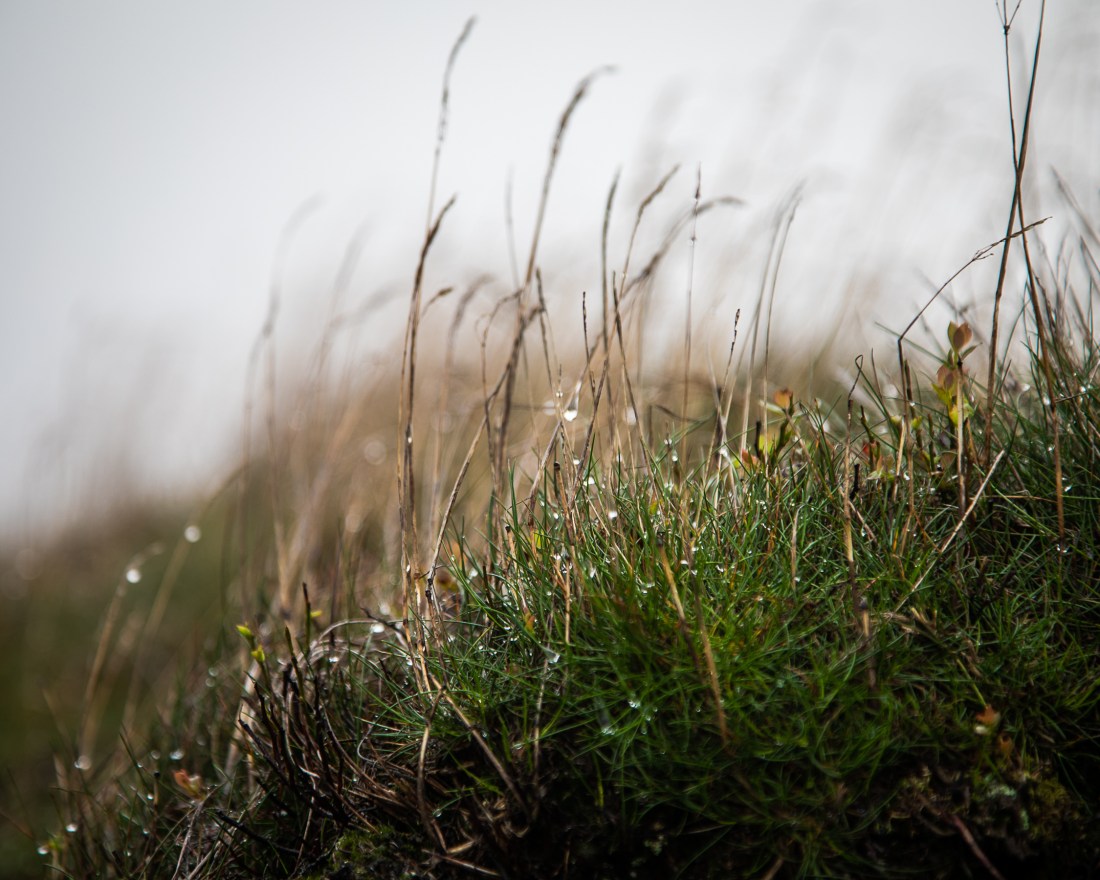
This is water droplets forming on grass and moss on the moors above Glossop when covered by cloud. I chose it because it reflects the source of the waters of Glossop Brook and the humid atmosphere that attracted the cotton spinning industry to the area.

It is taken against the light to catch the light as it passes through the droplets. I would have liked better lighting of the droplets to emphasise them and make them stand out, but the sun never broke through while I was there, and I had no artificial light with me.

2018-08-25 Shelf Stones-6
Pennine Way near Shelf Moor

Paving slabs from the floors of old mills have been used to pave eroded parts of footpaths on the moors. This image shows those and reflects to me the cycle of regeneration as those parts of the old mills are now used to protect the moors that have been damaged in the past by their smoke.

It is taken on a very cloudy day and the light is quite flat, but this enhances the atmosphere of the moors.

2018-08-25 Shelf Stones-61
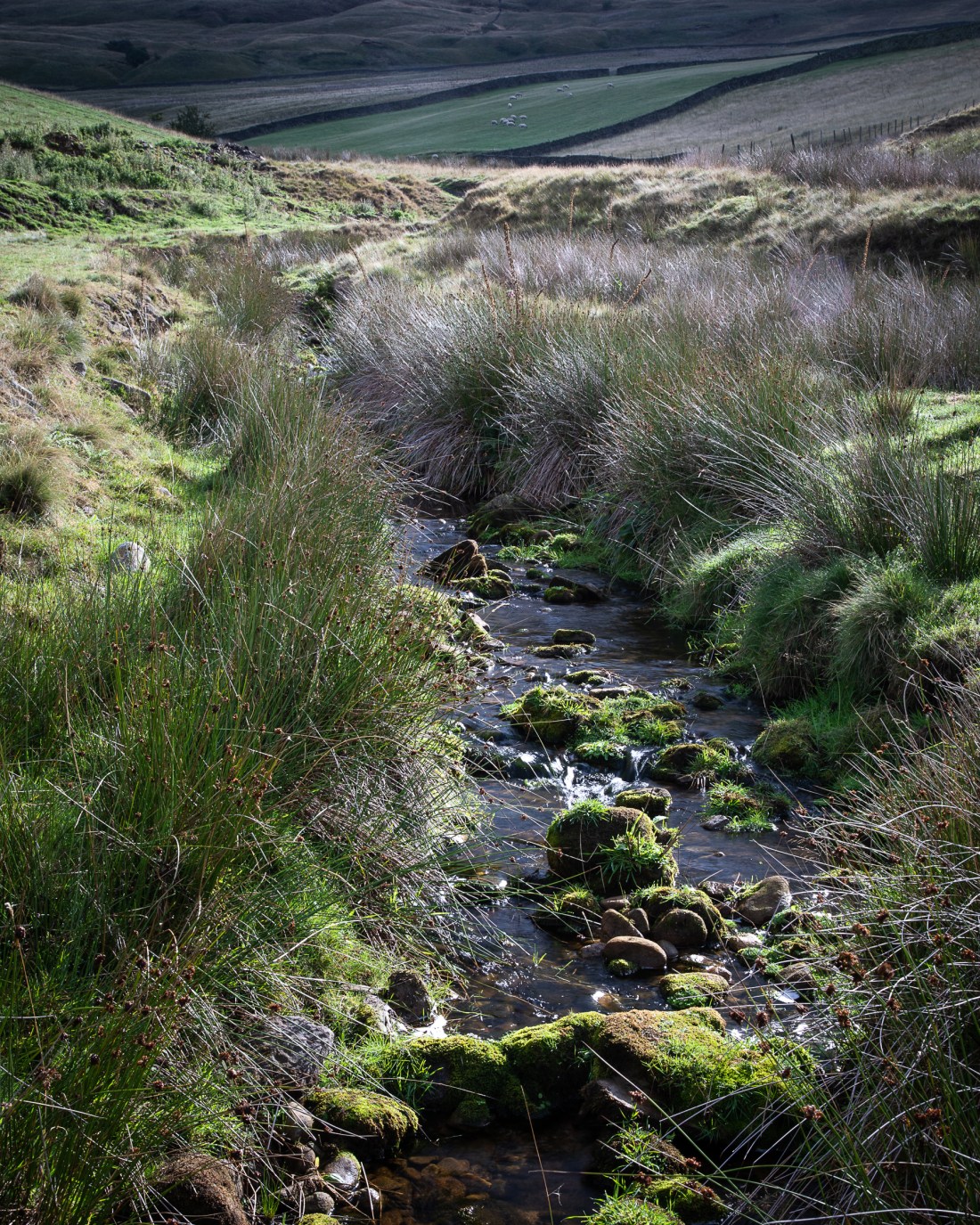
Yellowslacks Brook

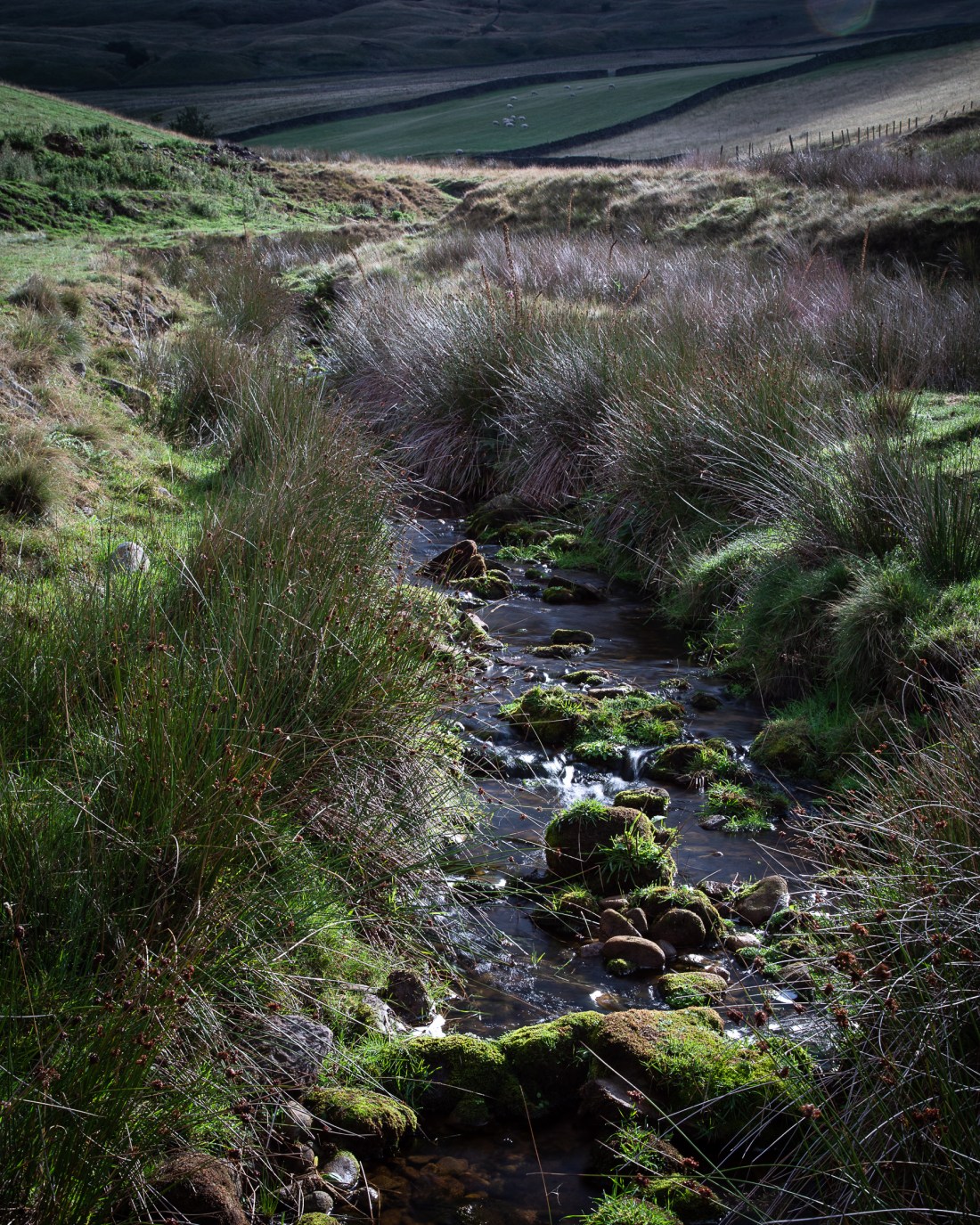
As the rivers descend from the moors there is the evidence of hill farming. In the background the sheep. It is the sheep farming which has created the landscape we see today. That landscape apparently natural, is as artificial as the industrial landscape of the town.

2018-08-25 Shelf Stones-87
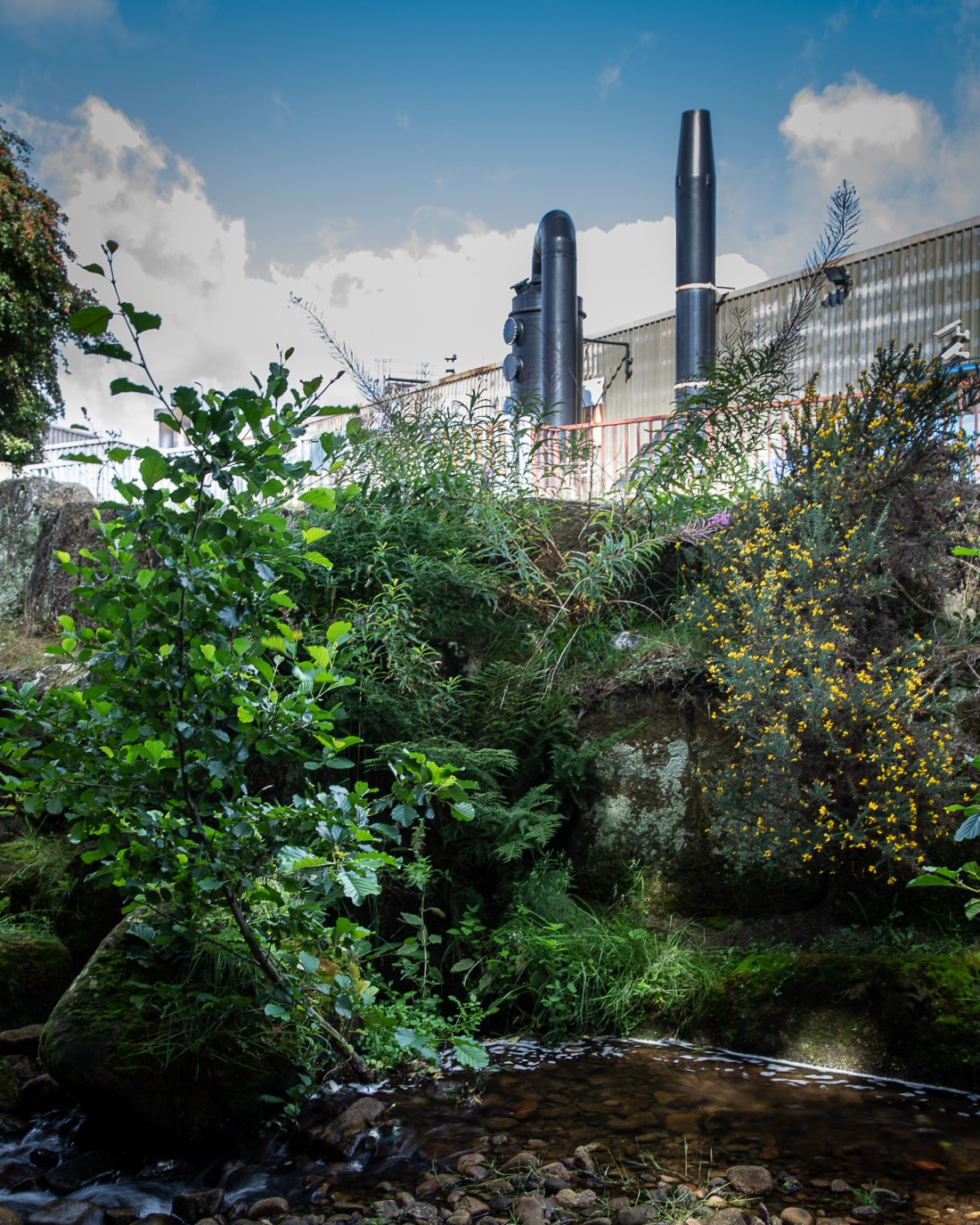
Factory, Old Glossop

Entering the town the river passes modern factories such as this. I tried to reflect here the contrast between the force of nature as reflected by the river and vegetation, and the modern industrial plant.

I struggled finding a location to get a composition of this to get the juxtaposition of the two elements. In this image I think that the foreground is cluttered and messy, and there may not be a position to get that from. It might be better to just include the modernistic appearing black factory elements.

2018-07-12 Milltown-325
Glossop Brook at Milltown

This is Glossop Brook in the centre of the town, passing through what was a huge development of mills. Here all that can be seen in an old pipe in the bed of the river and the walls on the left of the mill complex. This apparently rural river was in fact the centre of an industrial complex, again showing the power of regeneration.

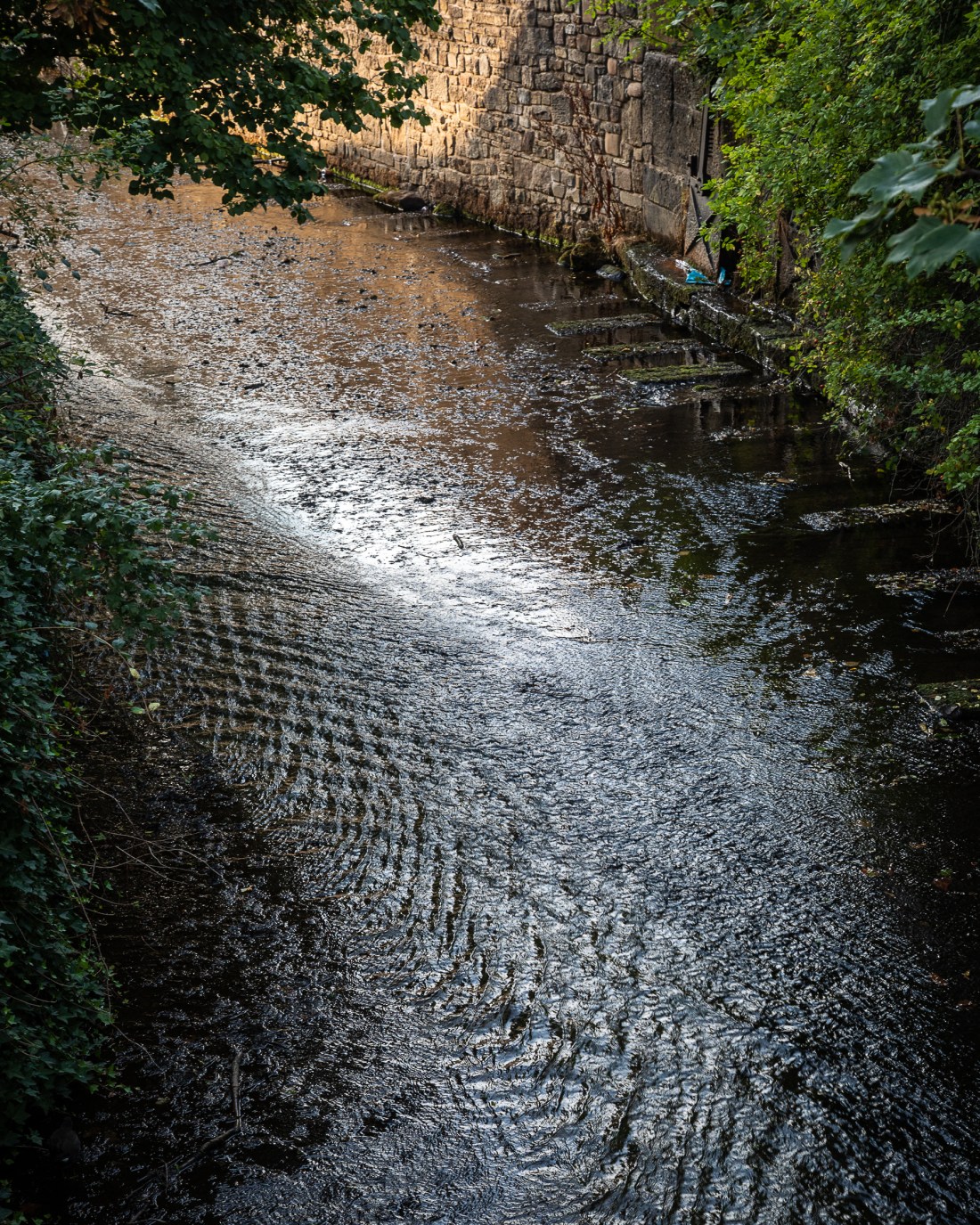
2018-08-21 Glossop EYV-41
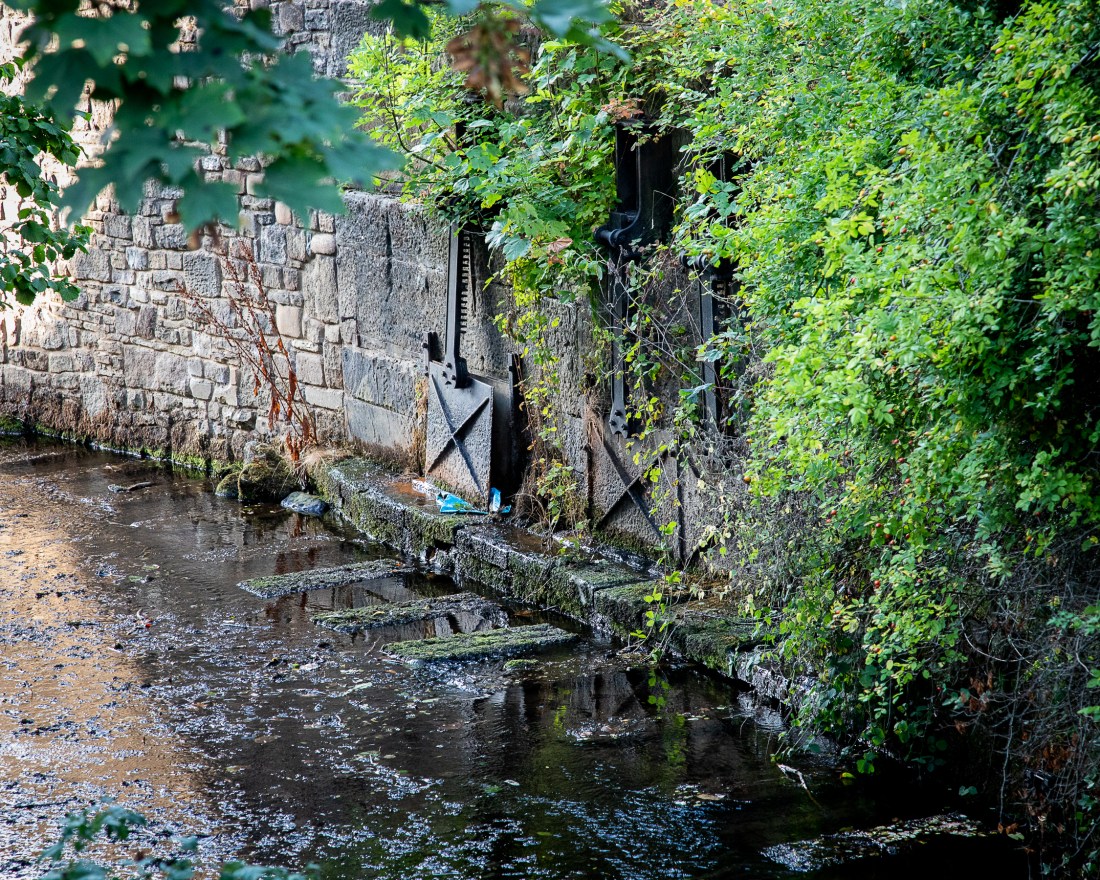
Glossop Brook and sluices for mill race

Further into the Mill complex the river is forced into artificial water course with paved bed. As it flows over that these patterns are formed, and I was attracted to the aesthetic element of this.

The patterning is perhaps small in relation to the size of the image and might be improved by better position and camera angle to enhance this.

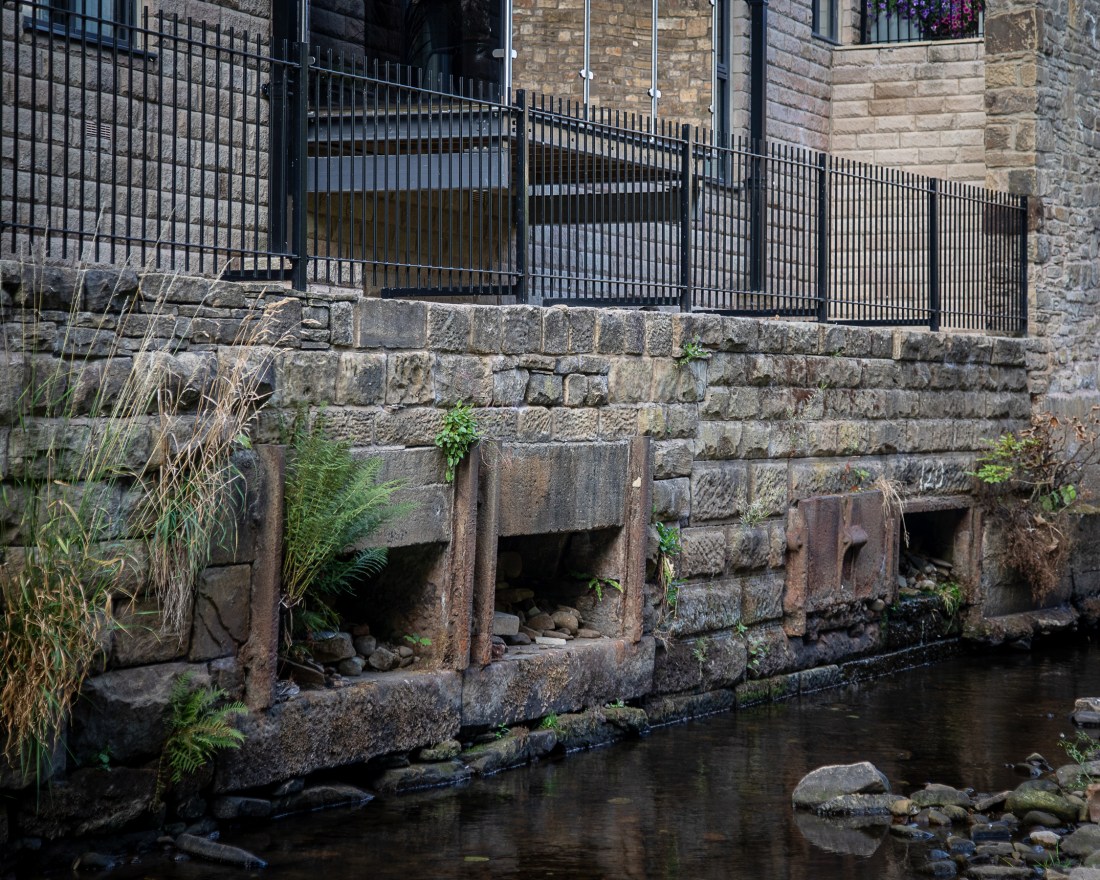
2018-08-21 Glossop EYV-4
Glossop Brook near Calico Court and the base of old mills

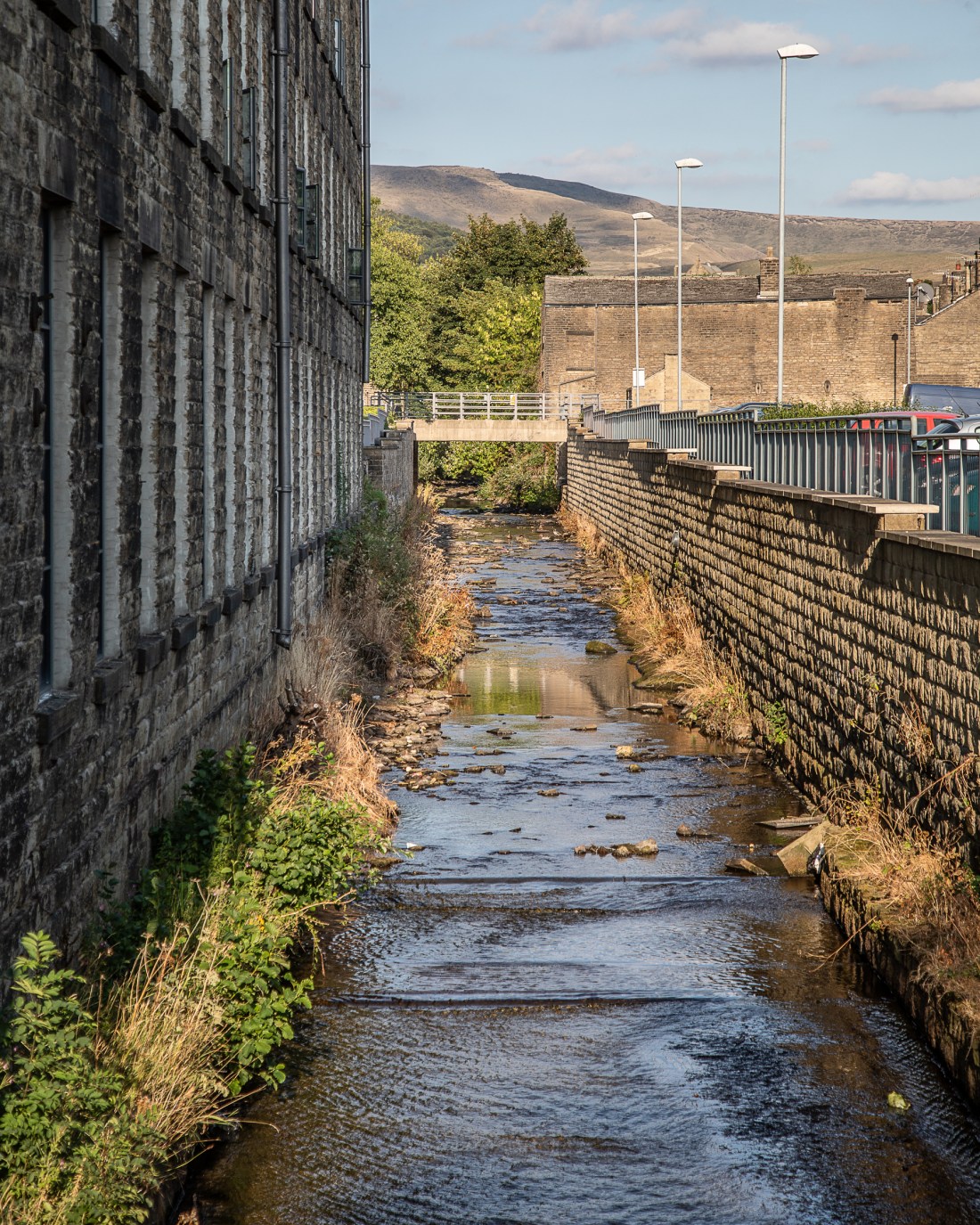
I like to think this image encapsulates what I am trying to show in my project. At the bottom is the river. This is what caused the mills to be built here, and the remains of old buildings can be seen in the centre. On the remains of these have been built new apartments with contrasting clean straight lines.

2018-08-21 Glossop EYV-25
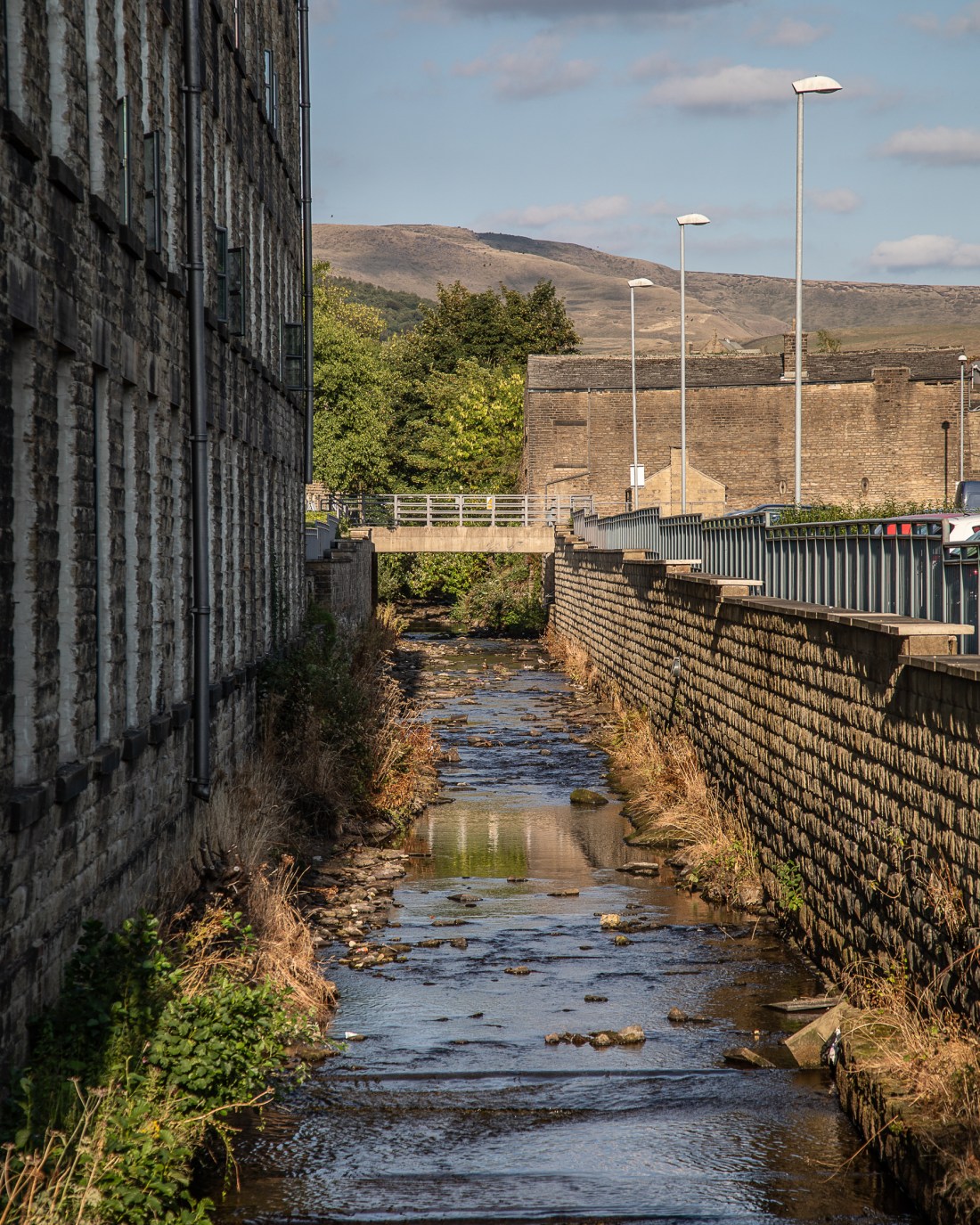
Glossop Brook at Wren Nest Mills

Similarly near this mill the river is forced into a man-made course, here the contrast between the old mill building and the modern carpark is enhanced by the quality of the light. The mill in the shadow is cool and blueish, whereas the right of the image is lit by the evening sun and is warmer. The background is important as it shows where this has all come from.


2018-08-21 Glossop EYV-34
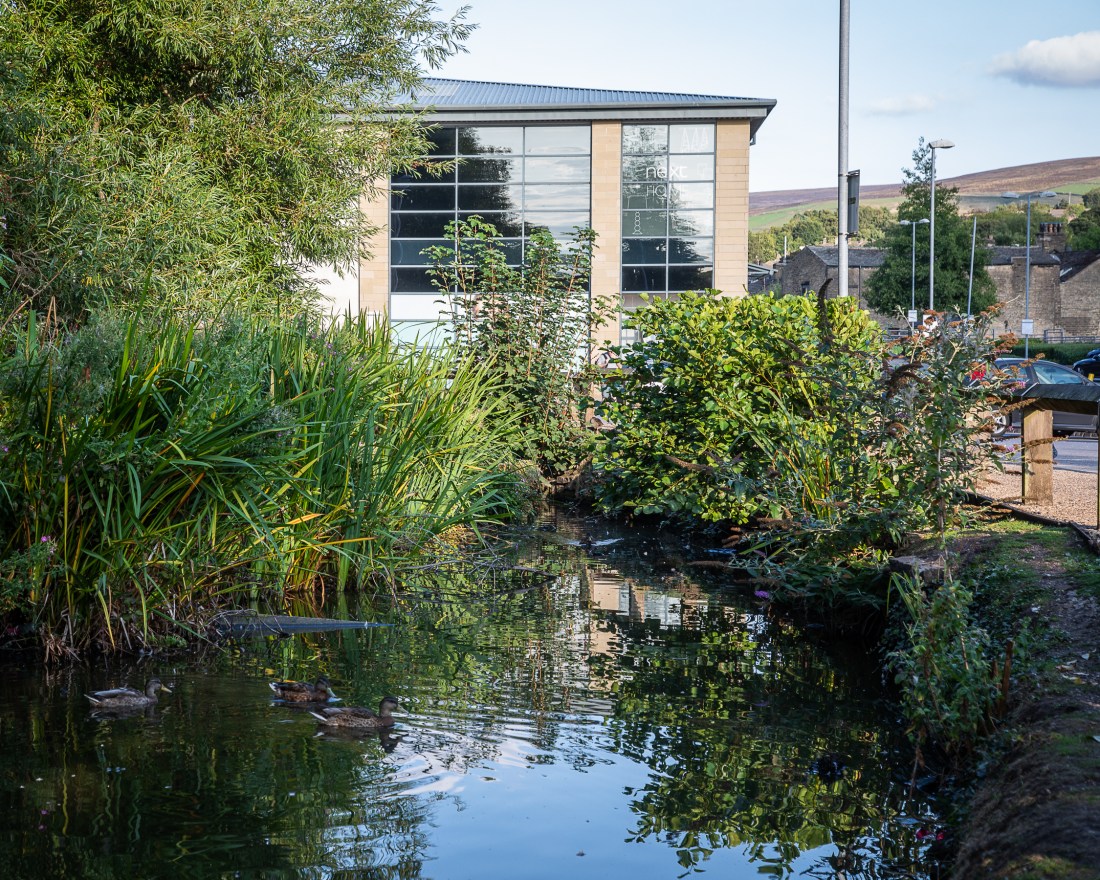
Old mill ponds and modern retail park
2018-08-21 Glossop EYV-36
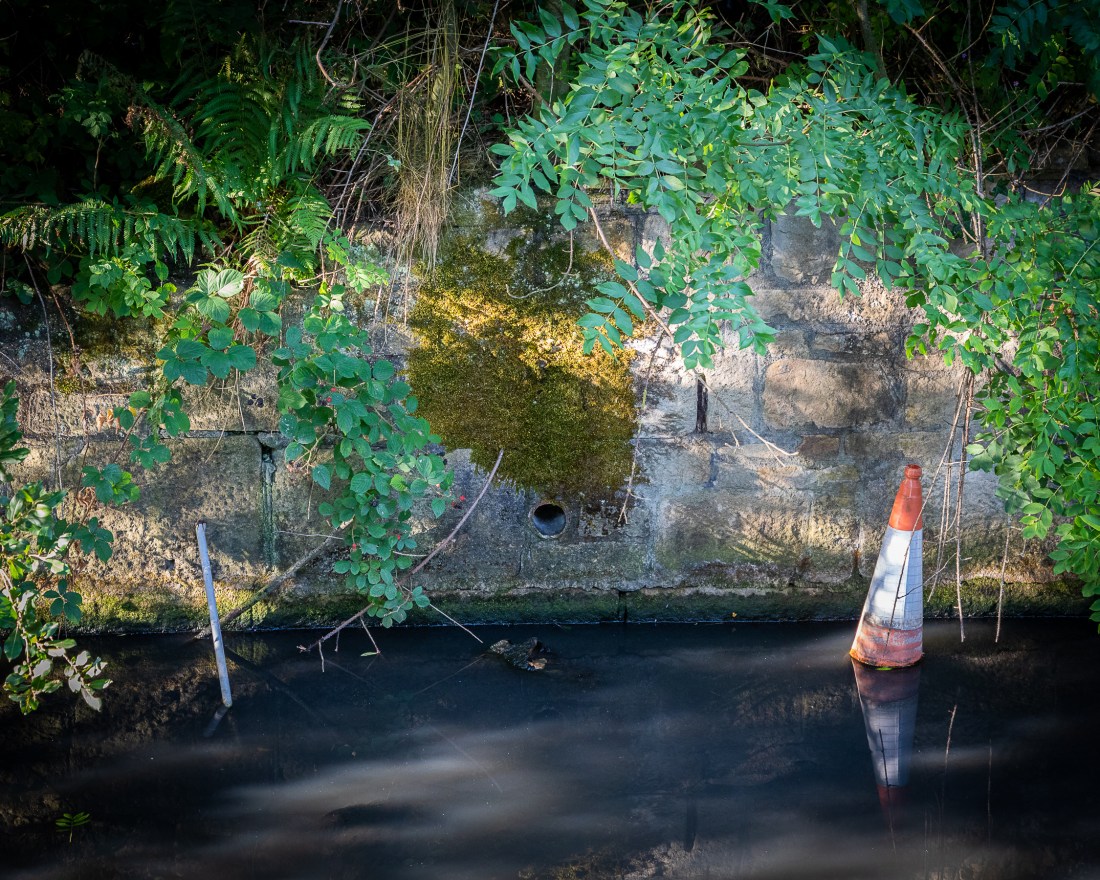
Wren Nest Mill Pond – behind Next

These images are a pair. The left shows a modern retail development with clean straight lines and the incorporation of the old mill pond into the landscaping around it. The right is taken behind the buildings where the mill pond is still there, but overgrown and including the archetypal image of urban decay, a discarded traffic cone.

2018-08-20 Glossop EYV-29
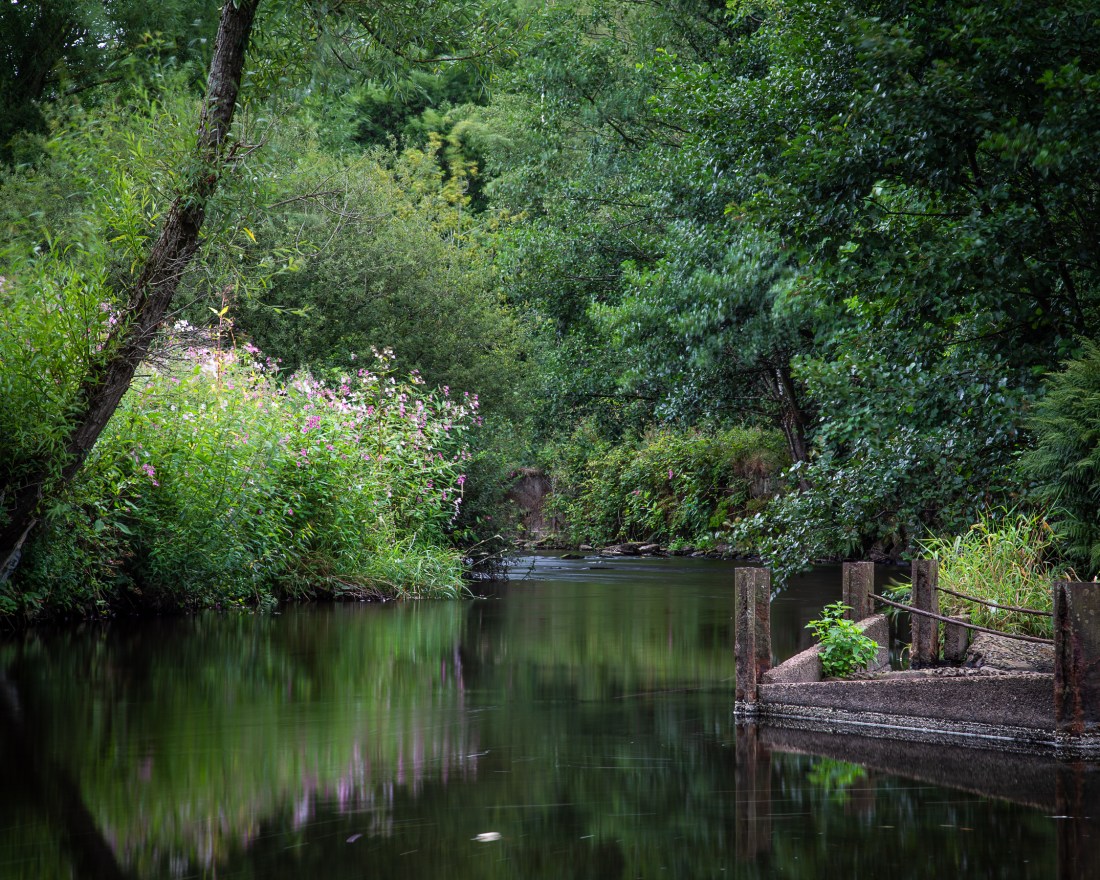
Etherow at the site of the Riverside Line

This shows the confluence of Glossop Brook with the River Etherow. Here the nature of the rivers has changed and they are bigger and slower flowing. Superficially this looks like a rural river with lush vegetation. However to the left of the image is the course of the Riverside Branch line which ran along the edge of the river here to other mills. Remains of the supports for a viaduct can be seen. The course of the railway is  bridle path and the landscape remains as heavily managed now for recreation, as it was for industry.


2018-08-20 Glossop EYV-3
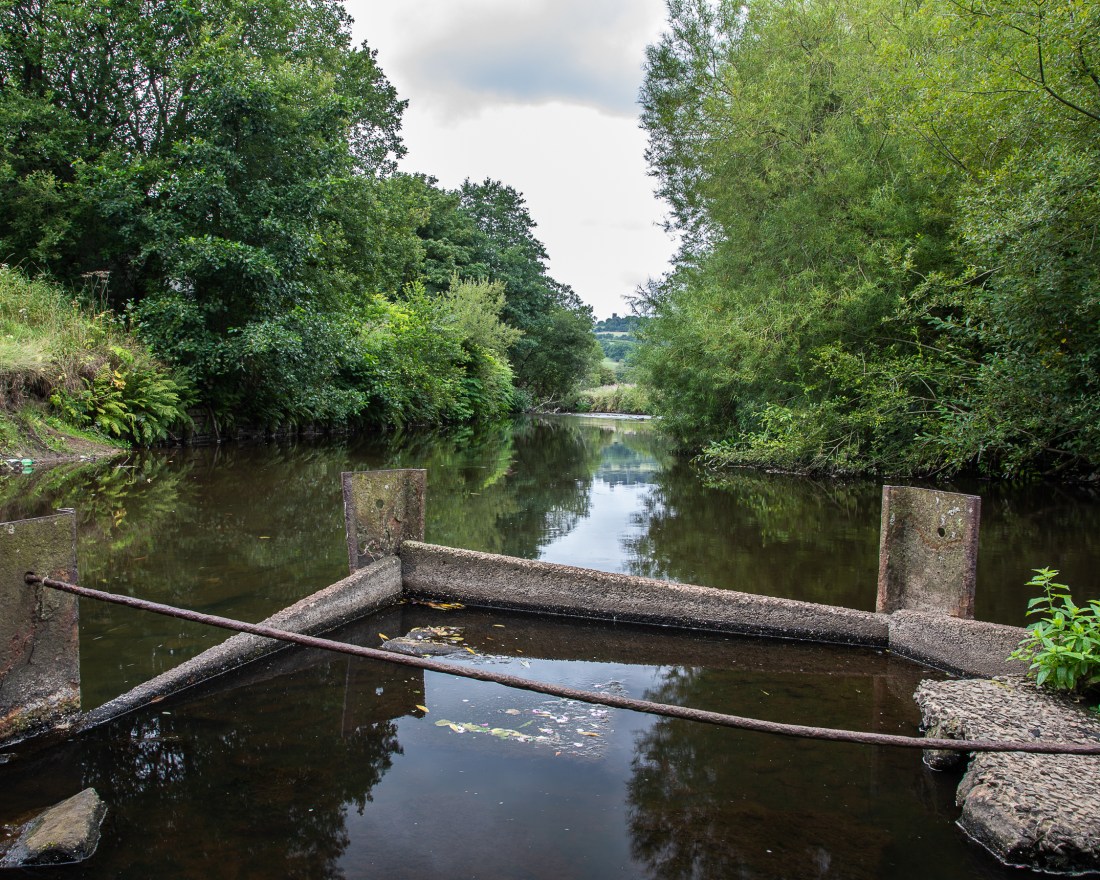
River Etherow looking to Mottram Church

Looking down the River as it flows out onto the plain , it looks like a long standing rural landscape. However the traces of the old iron work, show that this remains a changing and evolving landscape.

My Learning so far!

I have a number of images now which I think enable me to fulfil my interpretation of the brief.
My biggest learning experience, has been to not leave it to the last minute. Unfortunately, since registering for the course, I have been away a lot with work and other commitments. I have also spent a lot of time on the course sorting out my organisation and work flow pattern to keep notes and be easily able to produce my final submissions.

I have referred to some other artists for sources of influence, but recognise that this is an area in which I need to do more work.
I have chosen several sites for my images and because of the way I have interpreted the brief they are very different. I think it would be better for my own development had I concentrated on one style for this exercise and had more opportunity to explore different ways of approaching one setting.  As a result of this I think my submission will be weak in the creativity and novelty of approach. I will adapt this in my future exercises.

The image “Glossop Brook near Calico Court and the base of old mills” is the one I believe best encapsulates the concept I was trying to show. At the base is the river, which was there before the town and the establishment of the town was dependent on it. Above this are the remains of the old mills, which brought about expansion of the town, all dependant on the river. As these have declined, they have been replaced by new buildings such as the Calico Court apartments in the upper part of the image.
The modern factory in Old Glossop, has interesting futuristic shapes, but I found it difficult to find an angle where I could juxtapose this with the river. I think that maybe it would be more effective without the river in the image, and it is enough for me to know it is there, rather than have to explicitly include it.
Overall I think the project shows different facet of the river at different points, and in that respect goes part way to illustrating the points I have tried to make. However, because they are all different locations I am not sure they fit as a coherent whole and the “backstory” needs to be explicitly stated to make sense.
I think that the images are pleasant, but not particularly striking and do not all make a strong visual impact. The Old Mill Ponds and Modern Retail Park is an example, but is in contrast to the image of the mill pond at the back of the retail park.

I would like to explore more view points and angles of the sites, to try and improve the compositions to become more visually striking. This would need more visits to each site, and going at different times to get different lighting effects. The lighting of Glossop Brook at Wren Nest Mill shows a warm light to the right of the image, associated with the modern carpark, and a cooler shadow of the old mill on the left. This use of light was accidental, but an area for more development.


The Source

To complete my images of the river as it passes through Glossop, I walked up on to the moors above the town and followed the course down to the hill farms and into Old Glossop.

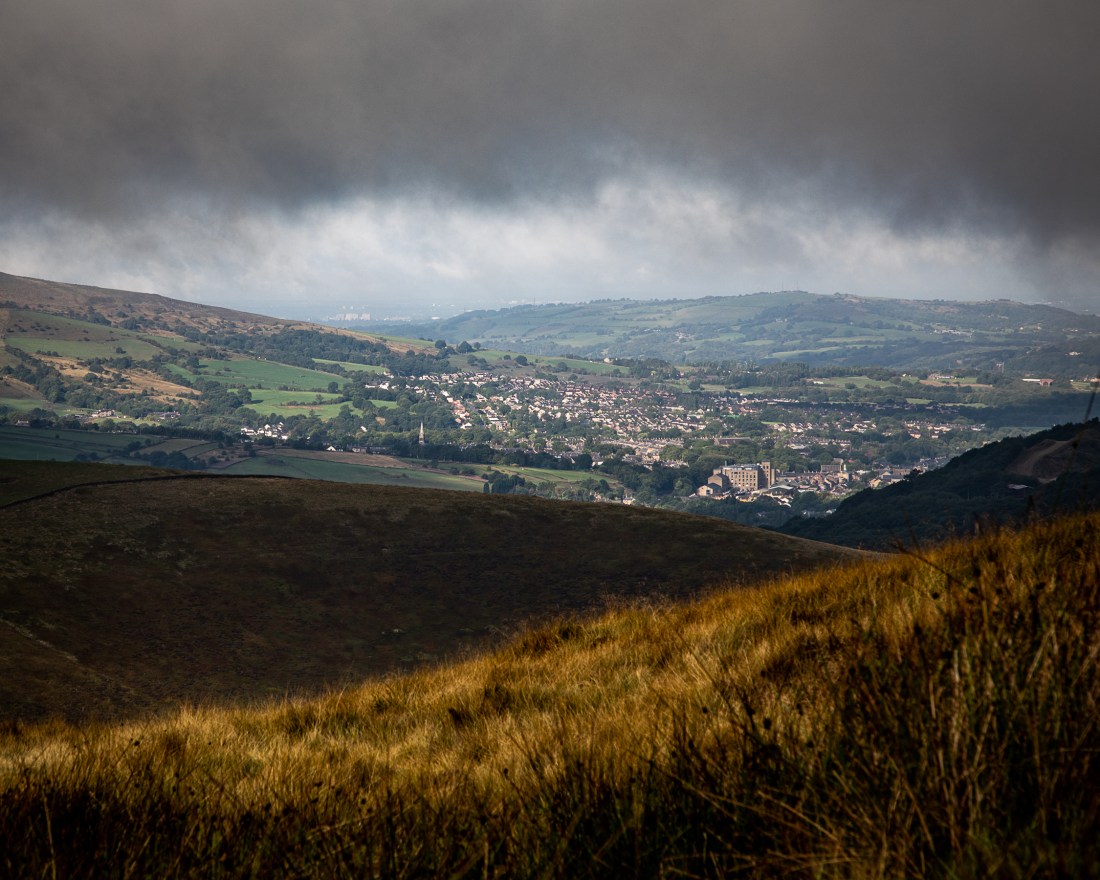
I had hoped to get images as I envisaged in my story board, of Glossop sitting between the moors and the plain. However there was heavy cloud and I only found this lower down.

2018-08-25 Shelf Stones-43
Glossop from Shelf Moor


While waiting for the cloud to clear, I noticed the droplets of water on the grass and thought this encapsulated the source of the rivers, and the humidity of the atmosphere that allegedly attracted cotton spinners to the area.

2018-08-25 Shelf Stones-33
On Shelf Moor


I also noticed the paving of the footpaths. Many of these are reclaimed flagstones from old mills. These images illustrate how the fabric of the old mills is now being used to protect the peatland which was so damaged by the pollution from those same mills when they were in use. This underpins the cycle of regeneration and regrowth I am trying to show.


Down in the valley, the river passes through agricultural land. This is a sheep farming area and it is the effect of their grazing which has produced the landscape we now see: apparently natural, but in its own way as artificial as the industrial landscapes of the town.

2018-08-25 Shelf Stones-60

Yellowslacks Brook

In Old Glossop the brook returns to the industrial landscape. But here it is of new, working factories, not the derelict mills of the town centre.


Glossop Town Centre

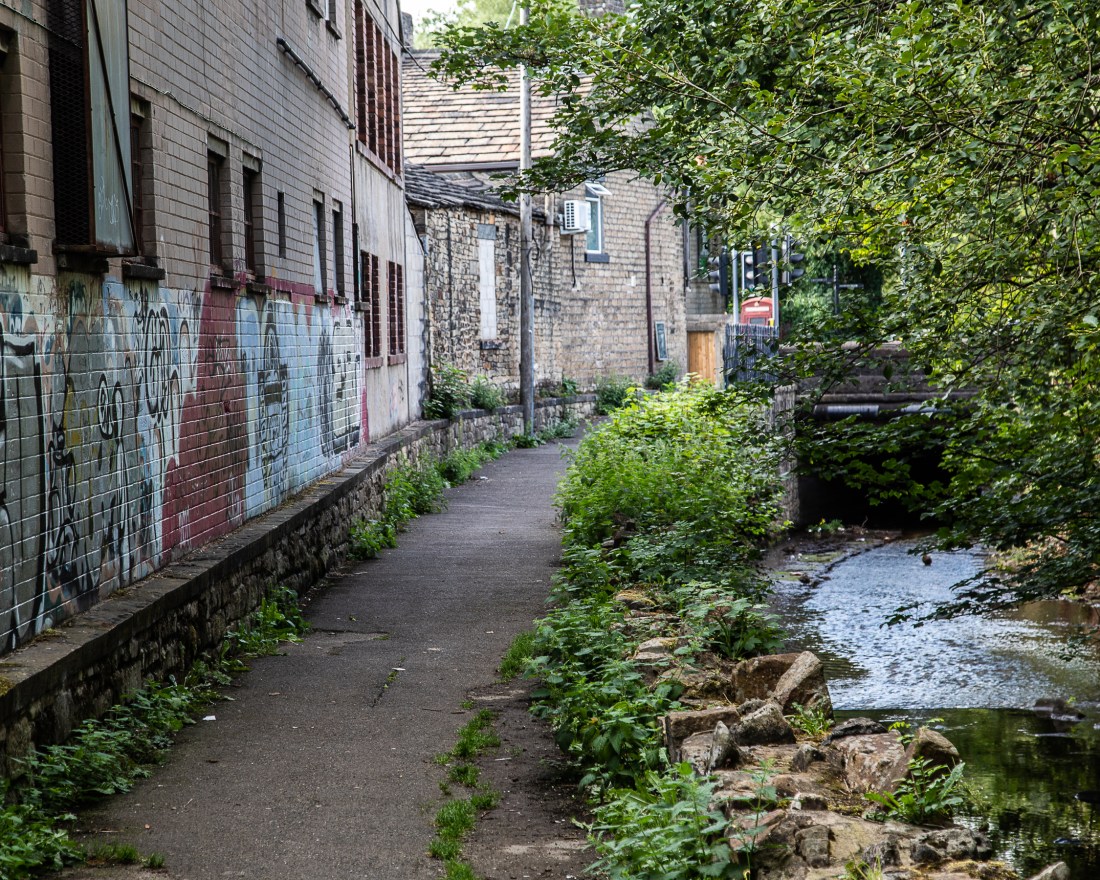
Glossop Brook flows through the centre of the town and is a feature of many elements of the urban scenery. I took a series of images to try and depict how the river fits into this and adjacent to old buildings and new and “regenerated” buildings. I have also tried to emphasise how the river brings the more natural environment into the town as a base for the growth of plants – planned and unplanned.

2018-08-21 Glossop EYV-4

Glossop Brook near Calico Court and the base of old mills

In these images I tried to emphasise the juxtaposition of the new development and its clean straight lines with the base of the old mills underlying it with more irregular edges.


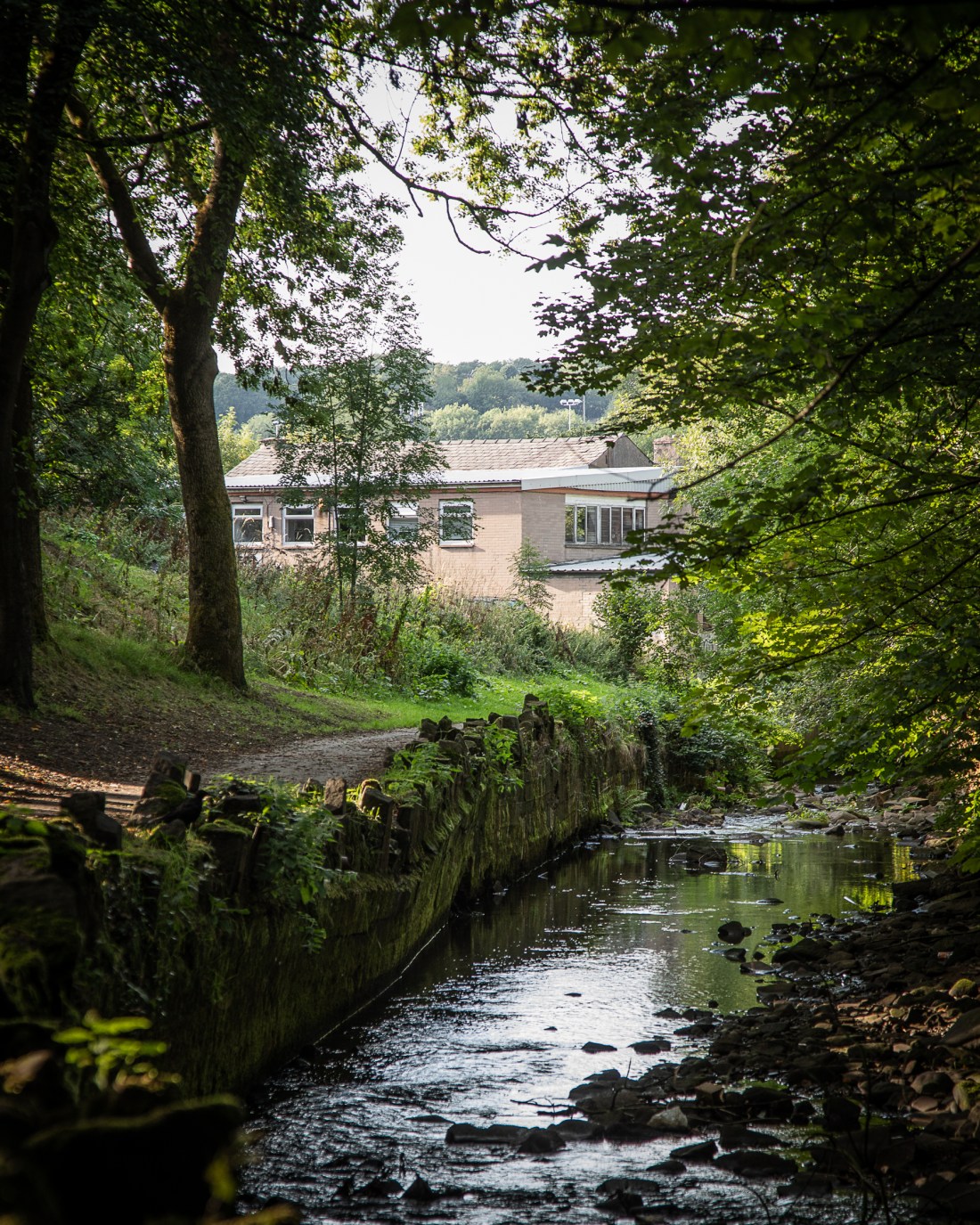
As the river flows through the riverside park, it can be seen that this is a resource used by residents for exercise and recreation.

2018-08-21 Glossop EYV-15
Glossop Brook near High Street West

2018-08-21 Glossop EYV-14

Near Wren Nest Mill, a mill now converted into appartments and a retail park, the river is forced into a narrow channel, but still forms a reserve for plant growth.

2018-08-21 Glossop EYV-22
Glossop Brook at Wren Nest Mills


2018-08-21 Glossop EYV-34
Old mill ponds and modern retail park

The retail park appropriates the old features of the Mills by landscaping the old mill pond and incorporating this into the car park. However behind the shops the signs of urban decay still remain.


2018-08-21 Glossop EYV-36
Wren Nest Mill Pond – behind Next

However, I think that the interaction of light and the pattern of the water flow on the paved river bed still creates aesthetically pleasing patterns. I tried to create a monochromatic image similar to those I saw in Phoebe Kielty’s work from her series “These were my Landscape” which I referred to in my account of my visit to Hit the North exhibition.

2018-08-21 Glossop EYV-41
Glossop Brook and sluices for mill race


2018-08-21 Glossop EYV-43
Glossop Brook and sluices for mill race


Old Glossop

I went to look for images around Old Glossop in line with my proposed story board.

Unfortunately I again got distracted by the old industrial relics on the site of the Hawkshead Mill, which I think are interesting images in their own right and serve to put the changes I am trying to depict in to context.

This section is still a work in progress for the final images!