It has been suggested to me by my tutor that I try using medium format film for my images.
I have recently obtained a medium format film camera and am exploring this medium. At present I have not got my darkroom back in service and have only just found a medium format enlarger, so my initial attempts have been processed and printed commercially.
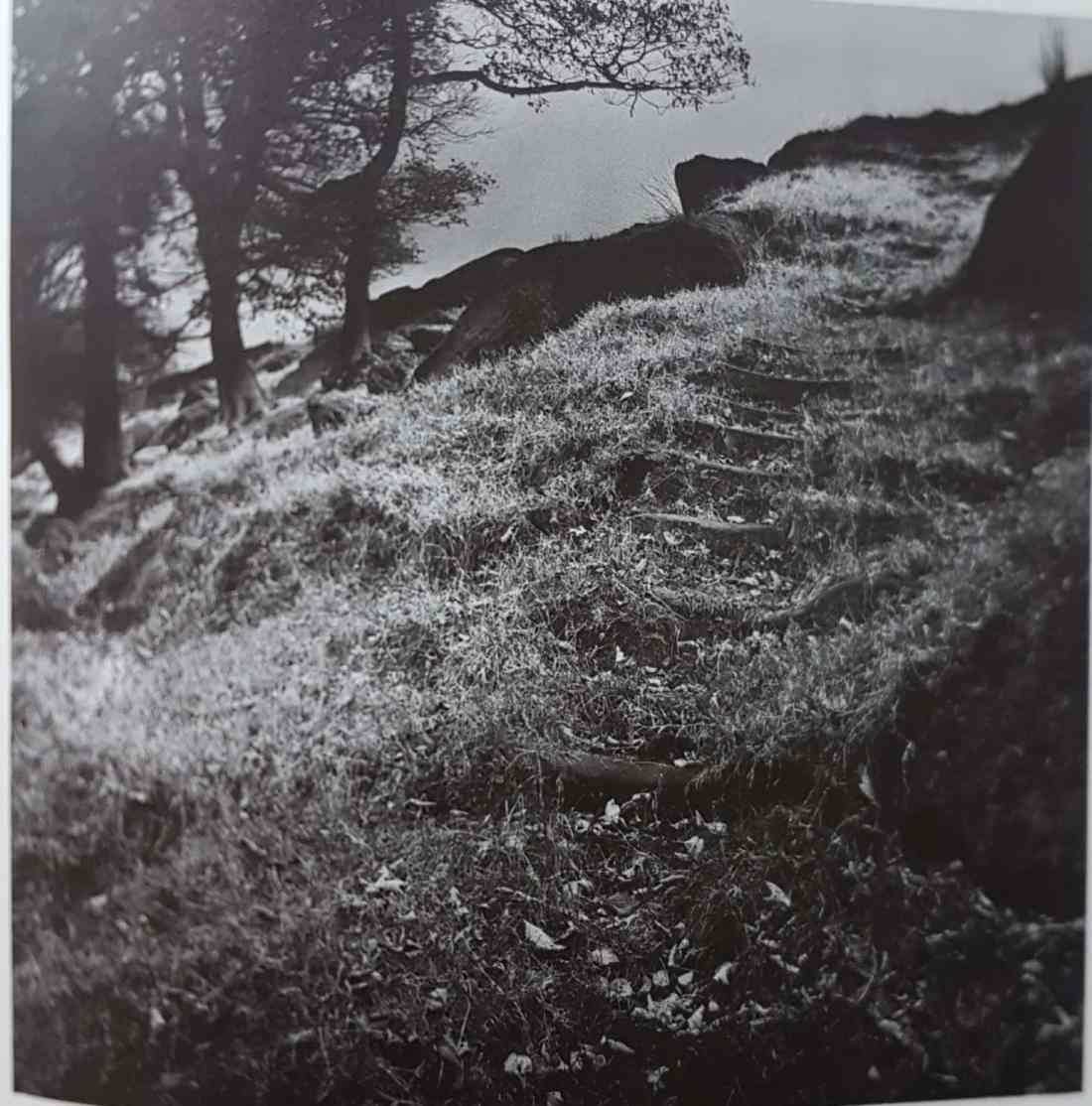
In the shots I took with my first film have tried to emulate some aspects of the work of Fay Godwin. In particular I have used a long exposure with a small aperture to maximise the depth of field. In this way the viewer is able to explore all the image. I have composed the images to emulate some of the images of Fay Godwin from “Remains of Elmet” and “Land”, such as this:
Two, Remains of Elmet. Fay Godwin
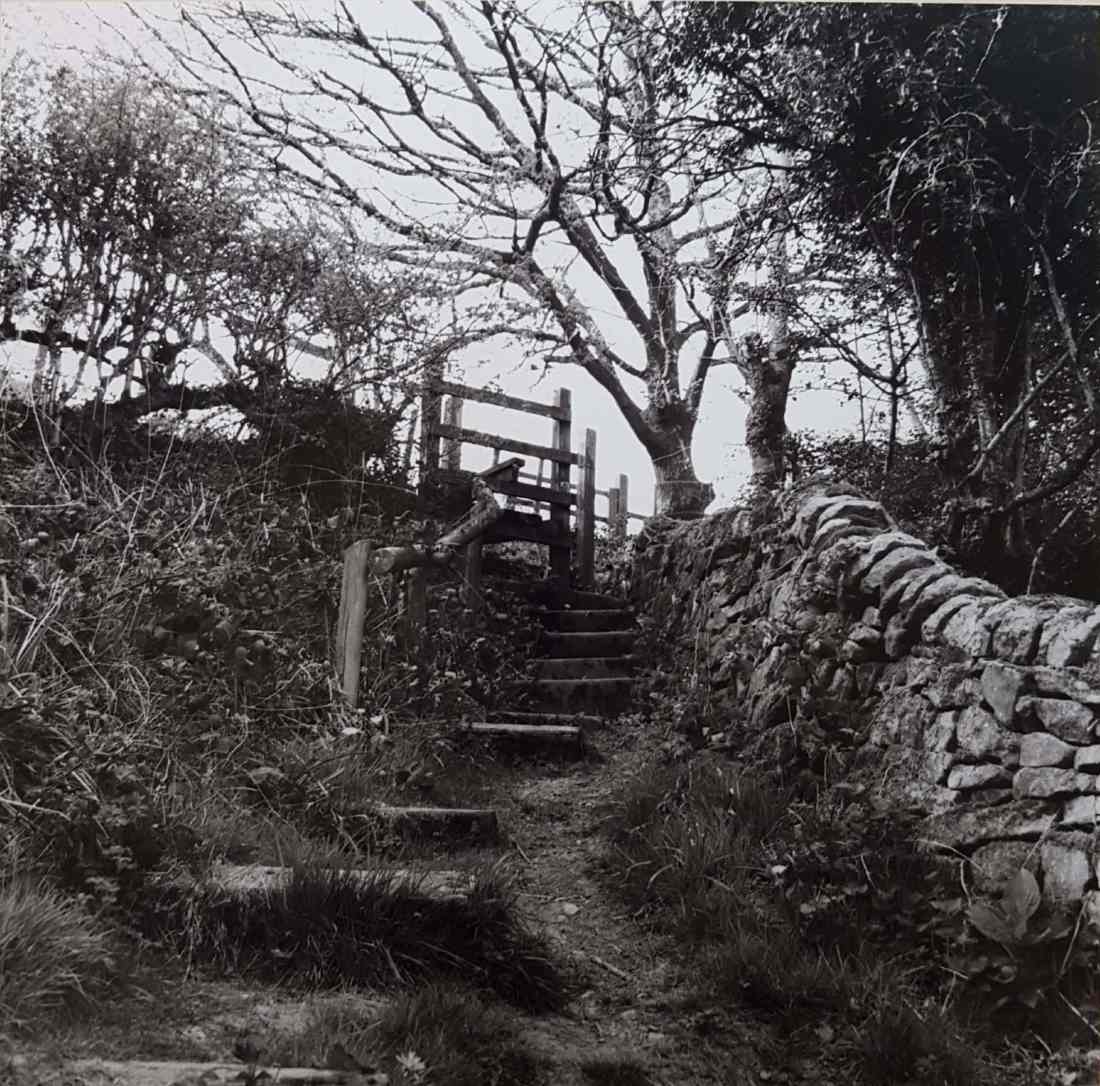
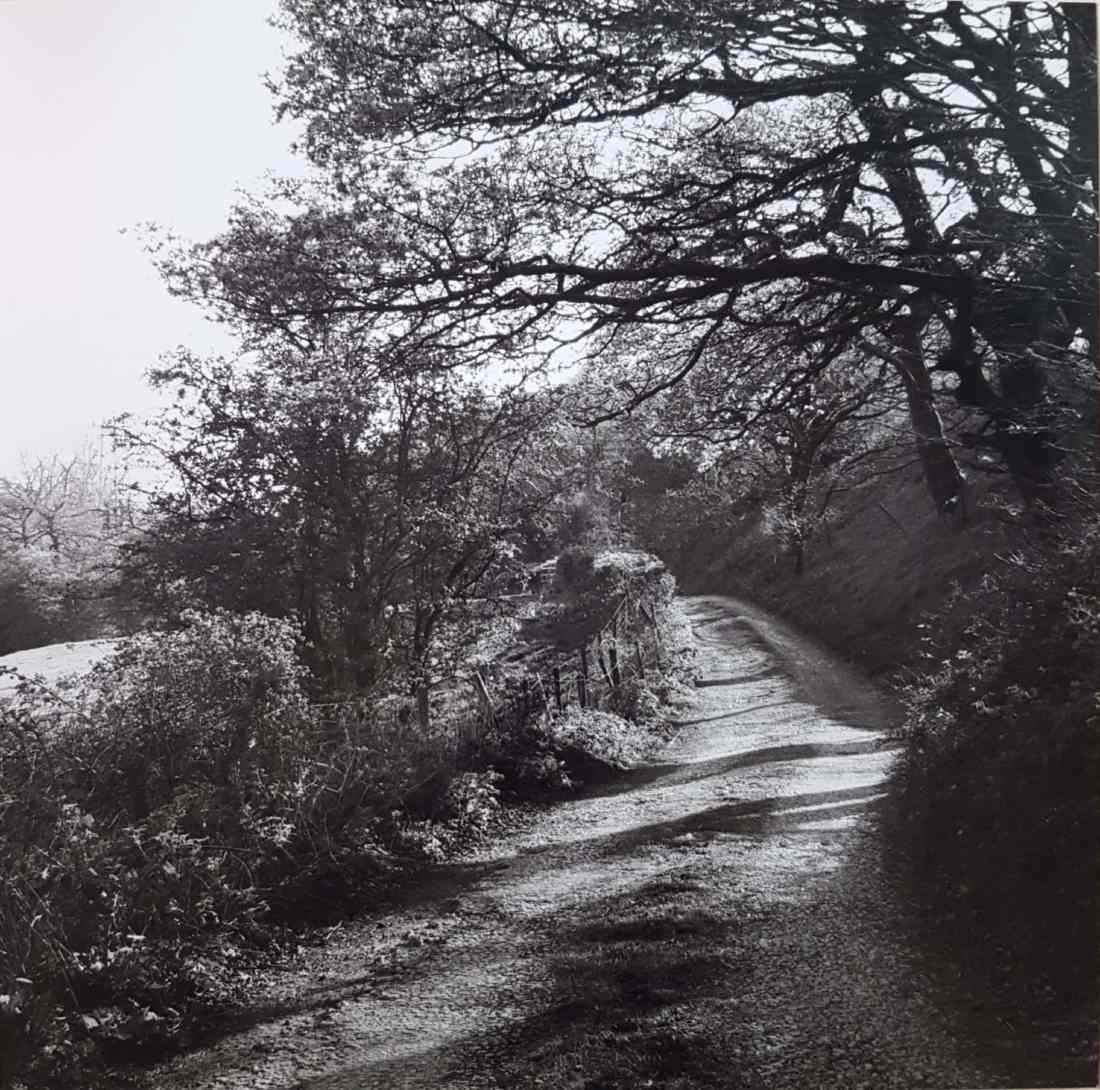
My own images were taken quickly on a short walk along lanes near to home.
Towards Pingot LaneHague Lane
Overall I think that my basic aim has been achieved, there is a deep depth of field. I think there is scope for more work in the printing of these and that is my next step.
Do your own research into some of the photographers mentioned in this project. Look back at your personal archive of photography and try to find a photograph that could be used to illustrate one of the aesthetic codes discussed in Project 2.
“Because human vision doesn’t normally see the world in deep focus, the effect of total depth of field in a photograph can be used to create psychological tension”
I have chosen a number of images with a deep depth of field and I feel that all show some aspect of psychological tension.
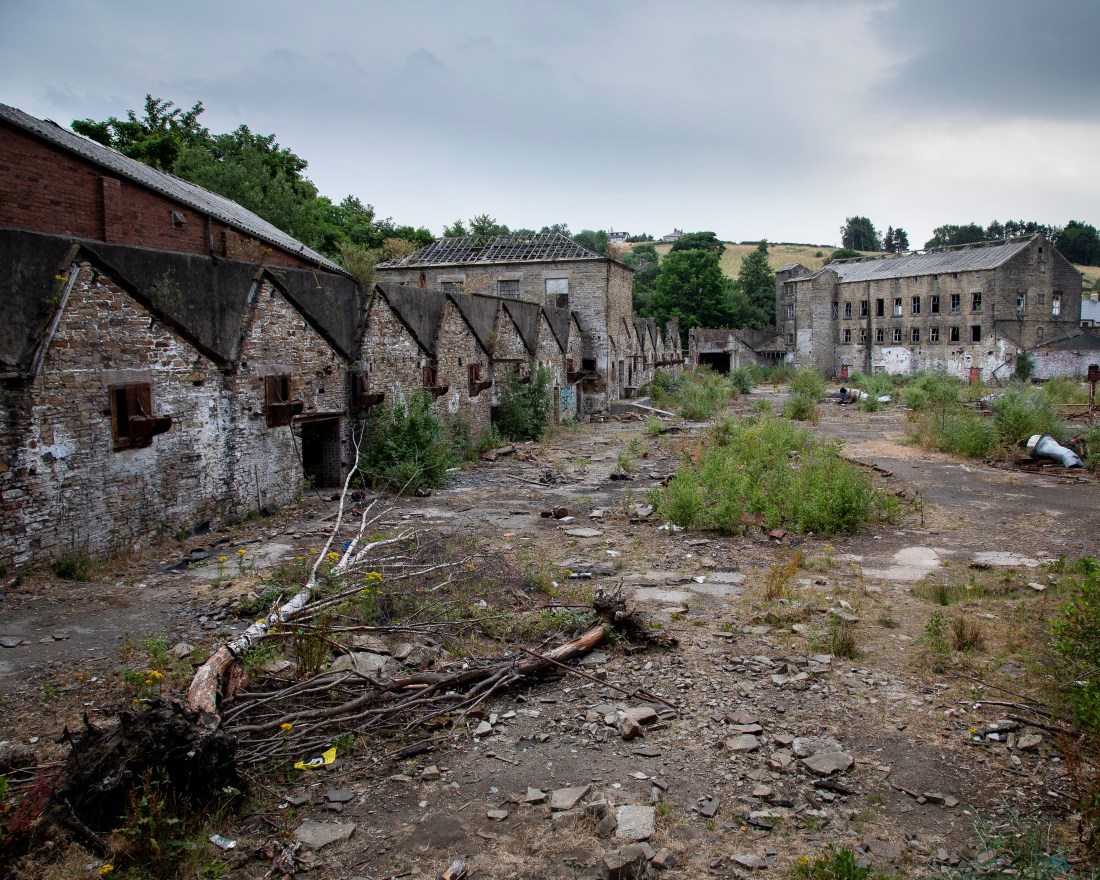
Milltown
In this image we can see the whole of the ruined factory and it raises questions to us, “What was it?” “What is there now in the ruins?”
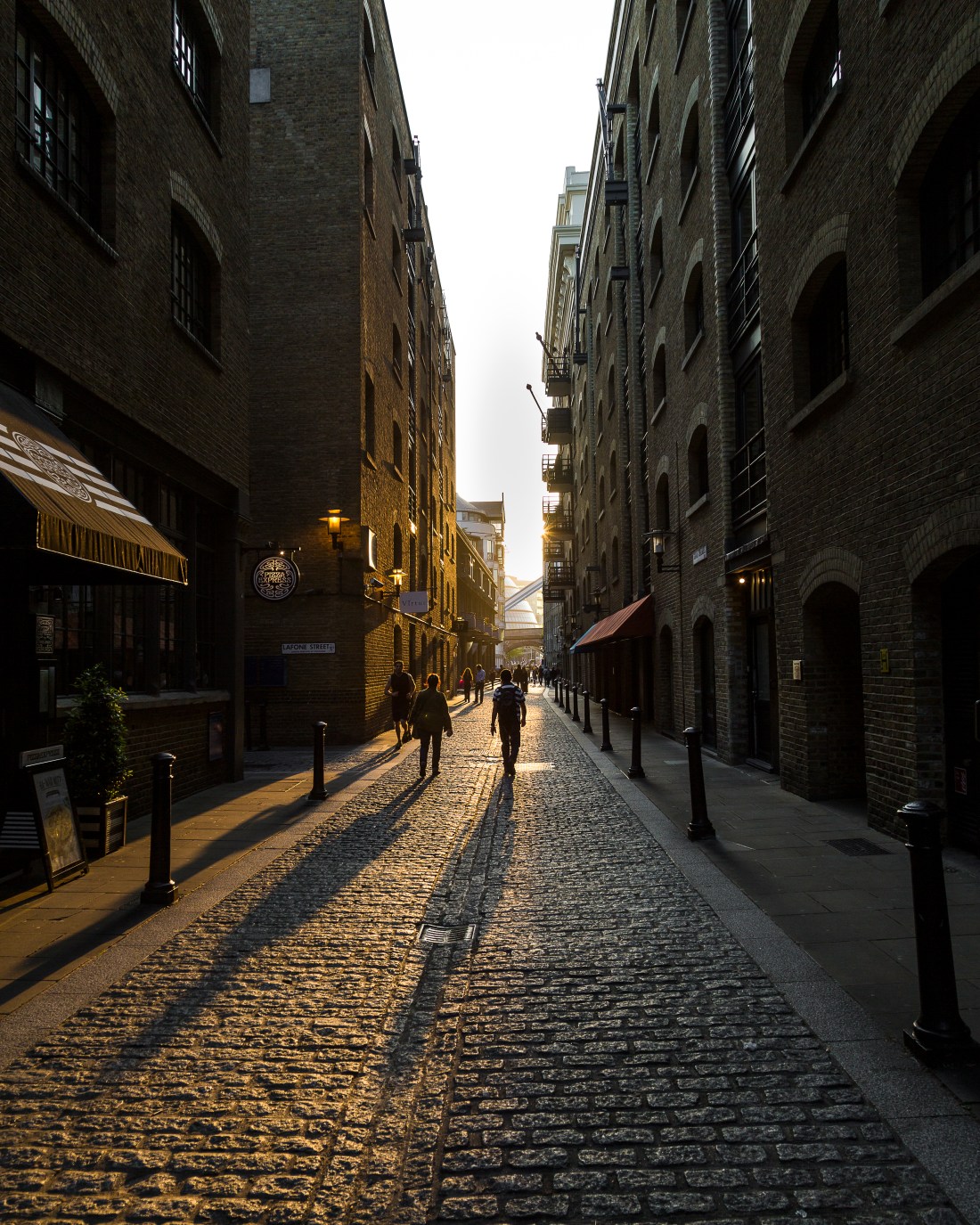
Shad Thames
Similarly this also raise the question “What is there in the shadows ?” or “Who are they coming towards me?”
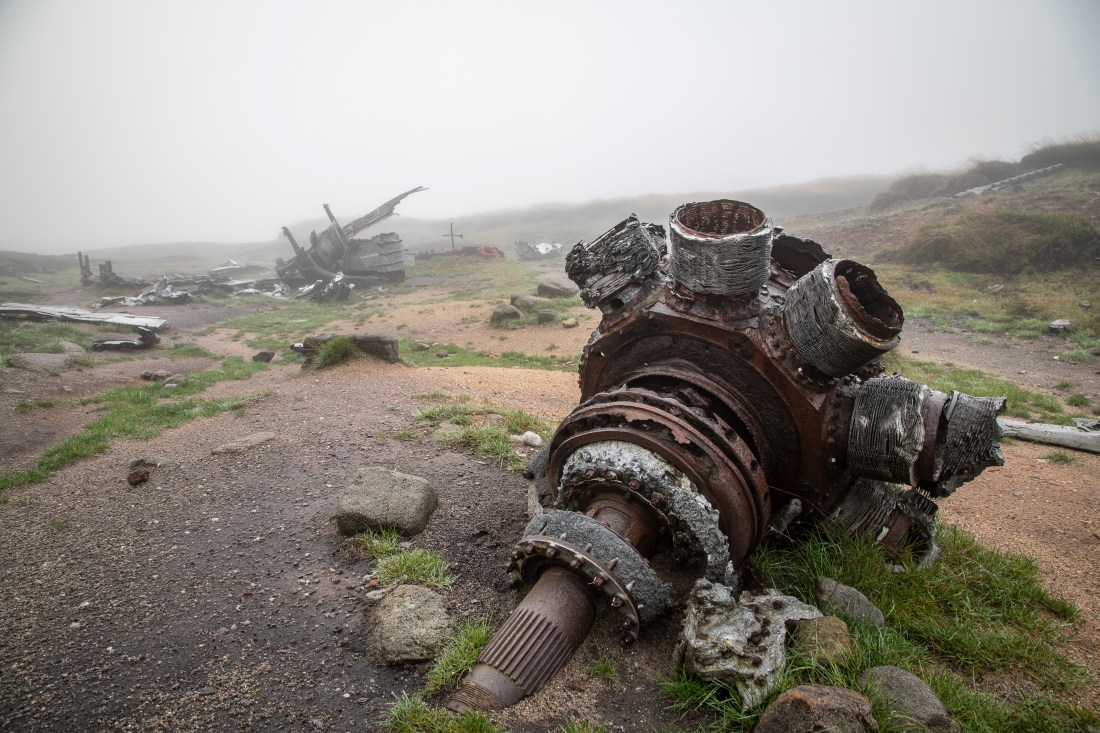
Shelf Stones Fortress
“What is this place?” “What happened here?” This is made all the more tense by the mists and the lack of visibility to the horizon – is there anything there?”
Spain
This landscape to me is also has psychological tension as it seems other worldly with a deep blue sky and strong colours on the land.
“Shallow depth of field shots can have a freshness and vitality to them; they present a simple and attractive aesthetic statement… Another of the aesthetic codes of shallow depth of field is intimacy.”
The shallow depth of field does produce a sense of intimacy in these images.
This is obvious in this interaction between a woman and her horse.
Ruby and Carol
But in these images the shallow depth of field gives us a sense of sharing the joke between these two at festival.
Cusco 1
Cusco
And similarly we have the sense of prying on these two, and on the incongruity of their modern objects against their traditional dress.
I had been directed towards examining the work of Fay Godwin by my tutor and then later in Part 2, Project 2 of EYV.
My research of her biographical details and published works is in my written notes and I will not reproduce here for conciseness.
Fay Godwin was a photographer who started her career photographing her children and then making portraits of literary figures in the 1970’s and 80’s. However her first published works were of landscapes, and it is in this genre she is most regarded.
In my research for this element, I have examined:
“Remains of Elmet” (1979), her collaboration with Ted Hughes
“Our Forbidden Land” (1990)
I also made a research visit to the Museum of Science and Media, Bradford (15 February 2019) and examined the archive material there. This material includes that displayed in the exhibition of her work “Land Revisited” which closed on 27 March 2011. It includes material included in her publication “Land” (1985) as well as other material. I have been able to photograph some of these images and they are reproduced here for study purposes.
I have several thoughts about the work, regarding what I have learned from this exercise.
Use of depth of field
All the images I viewed in Bradford had deep depth of field such that no part of any image was out of focus.
This was obvious in wide landscape images such as “Markerstone on the old London to Harlech road 1976”
Markerstone on the old London to Harlech Road. Fay Godwin (NSMM 1994/5015/52)
In this image the foreground grass is shown in precise focus and detail. I assume that a small aperture was used to take the image to give such a deep depth of field, and therefore a long exposure. In other images this results in blurring of those parts of the subject which move during the exposure. This is obvious in “Stream and Birch, Glen Bheinn Sutherland” (National Science and Media Museum, 1994/5015/87) where the branches of the tree have moved and are depicted as a blur.
Stream and Birch, Glen Bheinn. Fay Godwin (NSMM 1994/5015/87)
Detail- Stream and Birch, Glen Bheinn. Fay Godwin (NSMM 1994/5015/87)
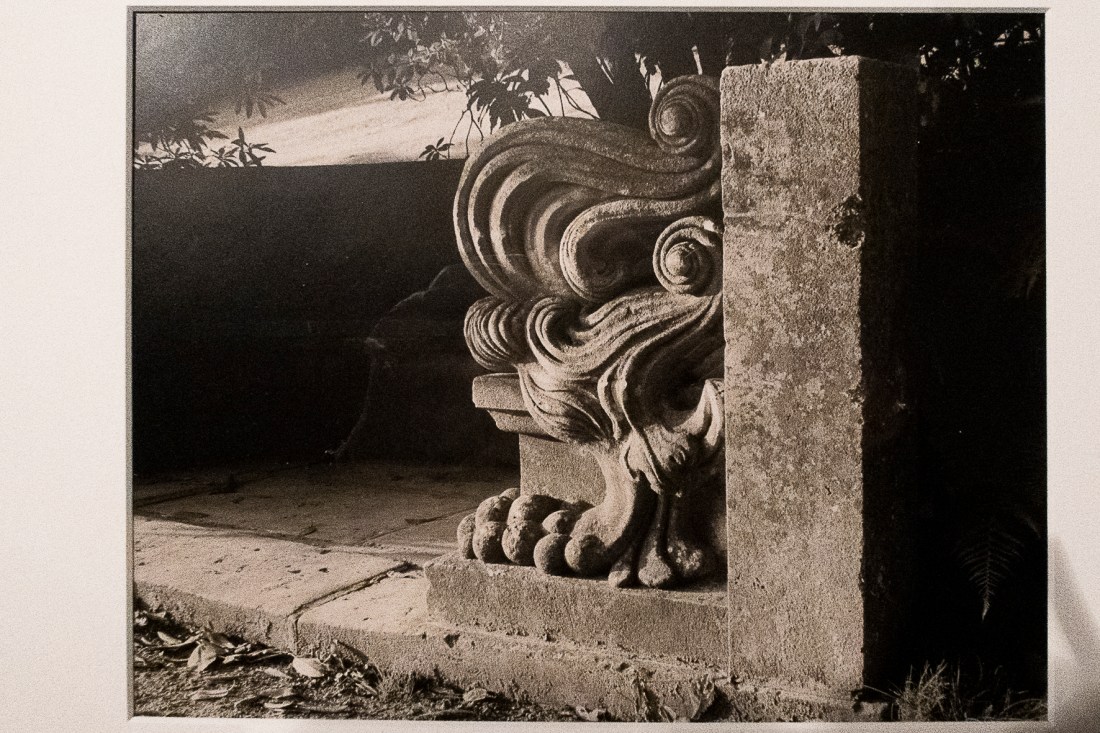
Godwin also used this technique in other images where other artists might has used a shallow depth of field to emphasise part of the subject. I saw this in “Carved Bench, Stourhead” (National Science and Media Museum, 1994/5015/70) where both the foreground grass and the leaves in the background are in sharp focus.
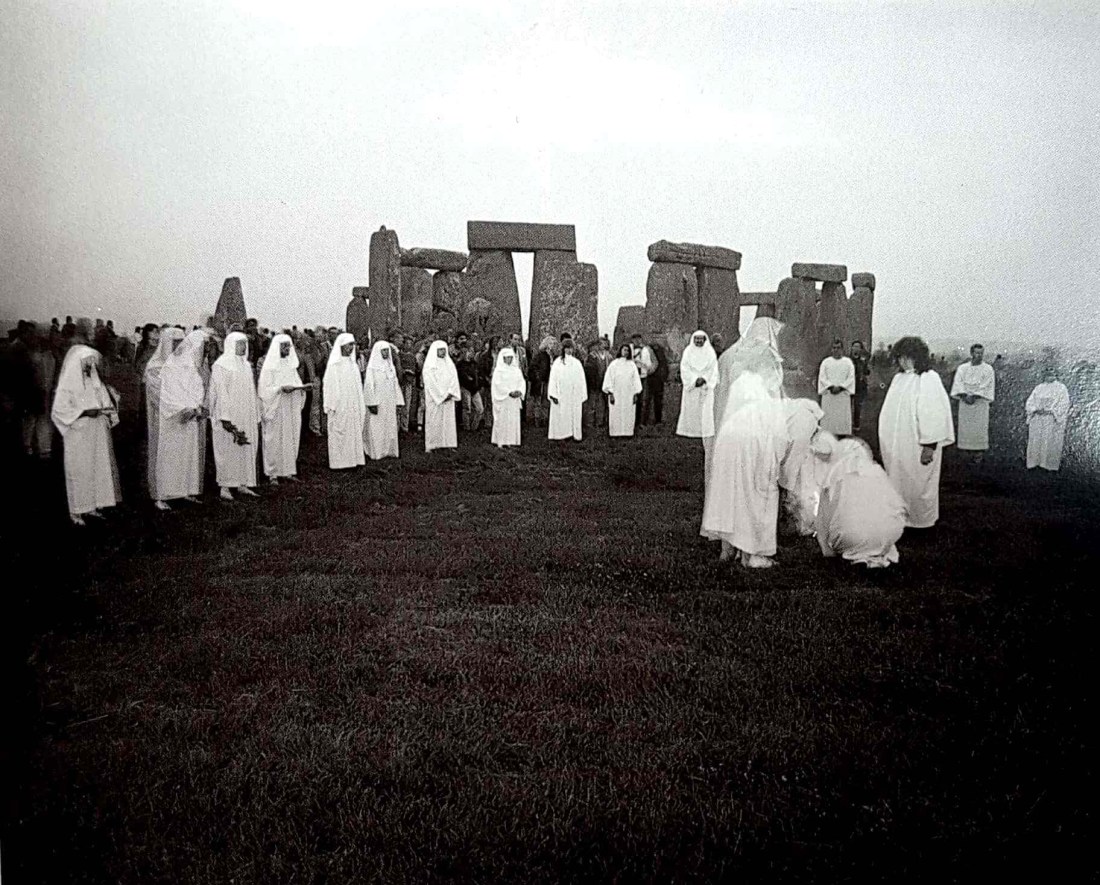
She also uses a long exposure in what might be a more documentary image “Free the Stones”. The foreground and background are in sharp focus, but the people photographed have clearly moved during the exposure. I am unclear what her aim was in producing this image, but it remains atmospheric and the blurring of the people captures their movement.
Free the Stones. Fay Godwin
In terms of this exercise, our course notes suggest that “depth of field was also a political decision for… Fay Godwin”. She appears to use a deep depth of field in virtually all her images. In this way she depicts the entire scene and does not emphasise any one part. I would suggest that this is consistent with her answer to a question put in an interview in 2002:
“Interviewer: Your photographs are often seen as being politically active. Is there a hidden agenda in your photography? Godwin: The viewer must bring their own view to a photograph.”
Godwin sets out the scene in her image and allows the observer to make of it what they will. Nonetheless her choice on subject and viewpoint determine what she wants to show to the observer.
Compositional technique
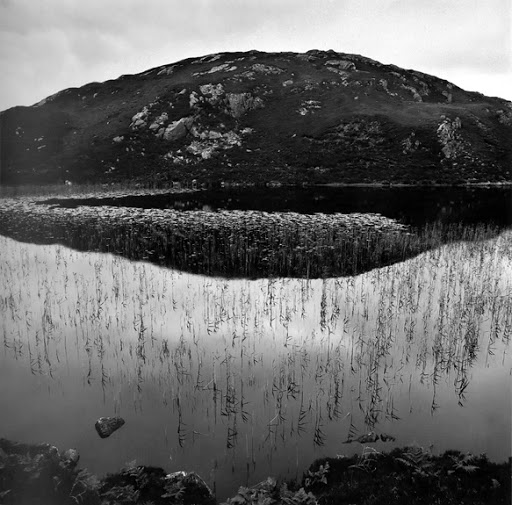
The wide depth of field she uses allows the use of foreground objects and features to contribute to the composition. This is the case in images such as “Reedy Loch” where the detail of the reeds attracts the eye to the foreground.
Reedy Loch. Fay Godwin (NSMM 1994/5015/95)
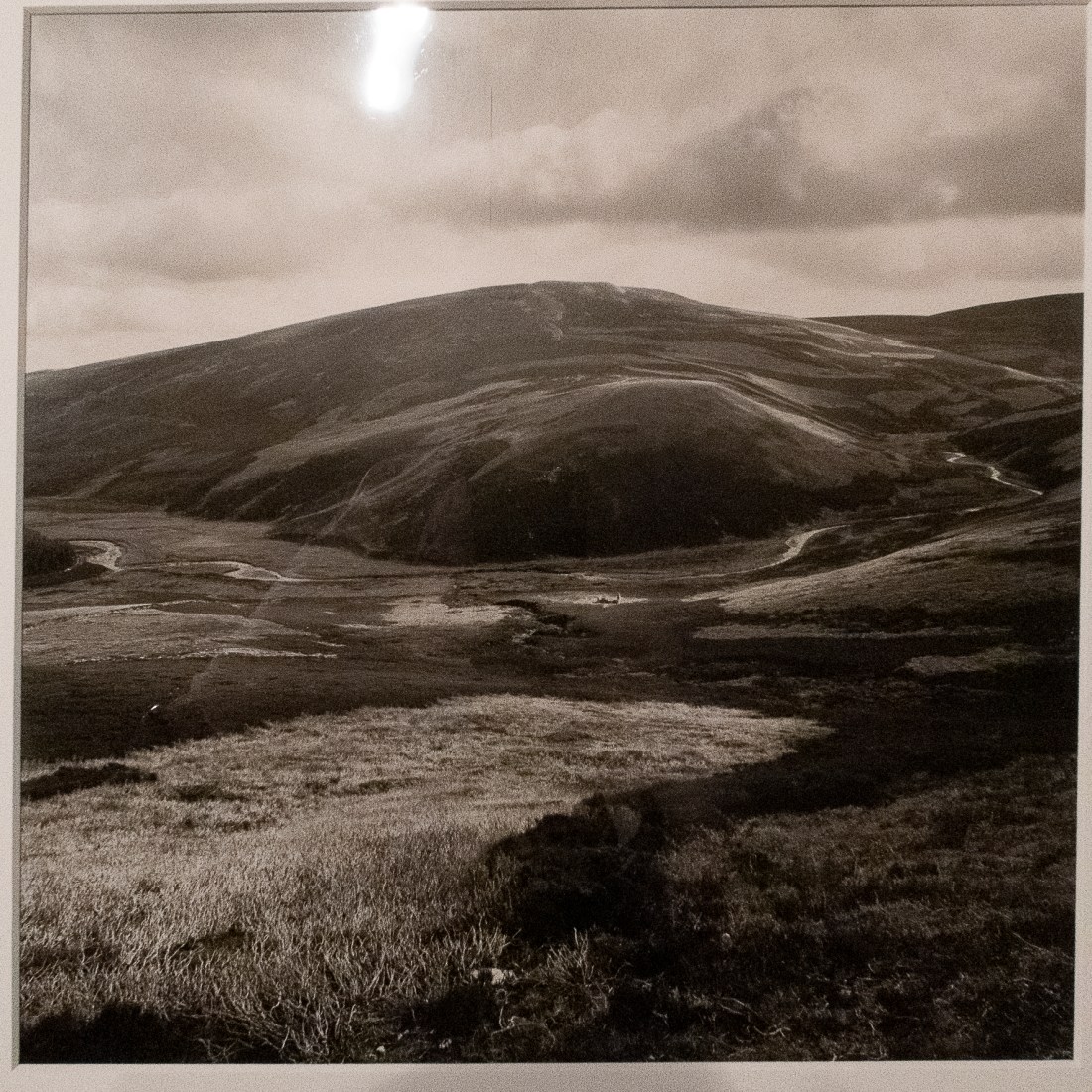
Other compositional techniques I was aware of was the use of patterns in the landscape revealed by the lighting which make an interesting image of a wide panorama of moorland. Examples of this include “View from Duffdefiance, Glen Buchat” (National Science and Media Museum, 1994/5015/74) where patterns in the vegetation provide light and dark on the otherwise featureless moor.
View from Duffdefiance, Glen Buchat. Fay Godwin (NSMM 1994/5015/74)
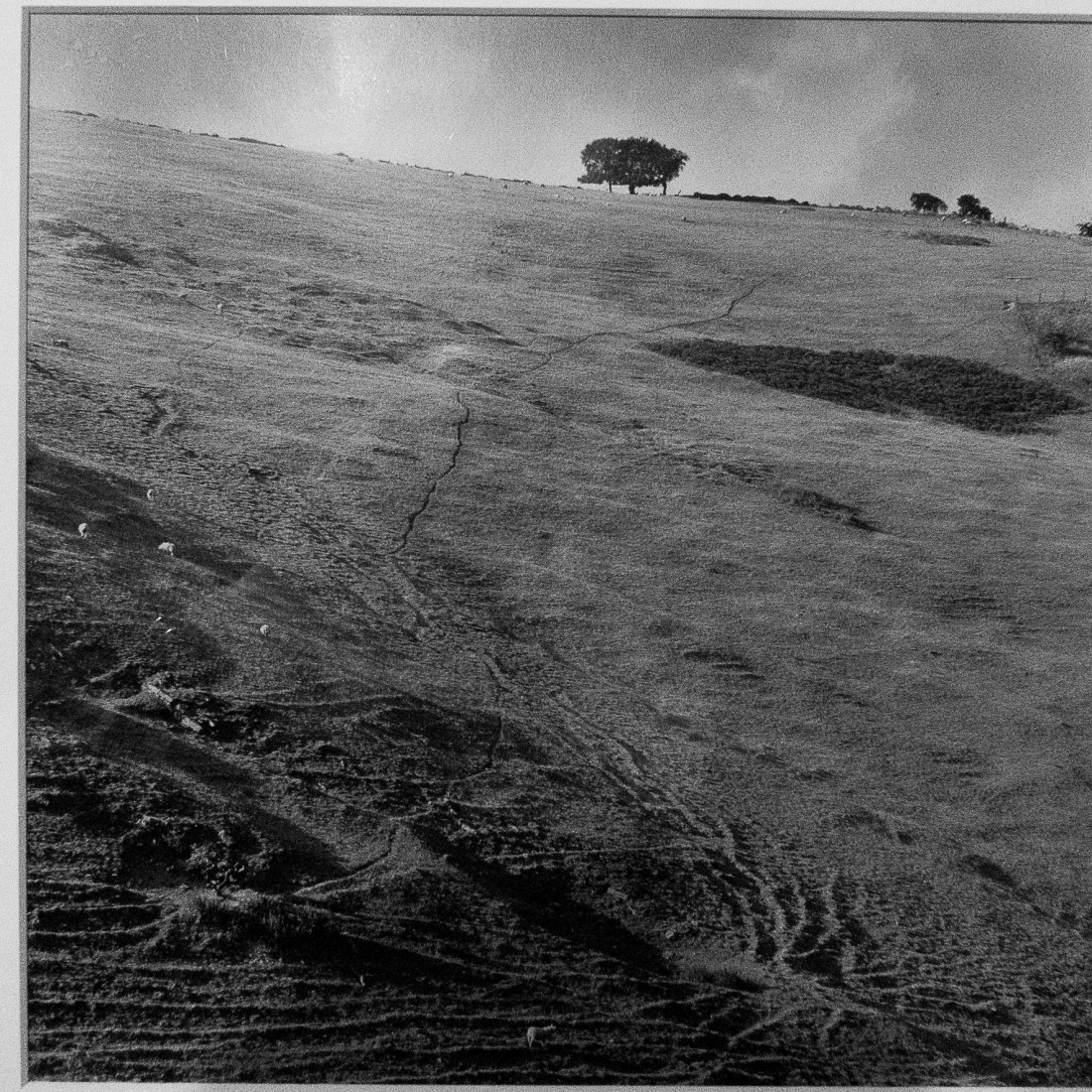
Similarly in “Haven Hill, Bradbourne” (National Science and Media Museum, 1994/5015/72) the angle of the light has emphasised the path erosion and provided lines across the hillside.
Haven Hill, Bradbourne. Fay Godwin (NSMM 1994/5015/72)
Sparse use of darkening of the sky
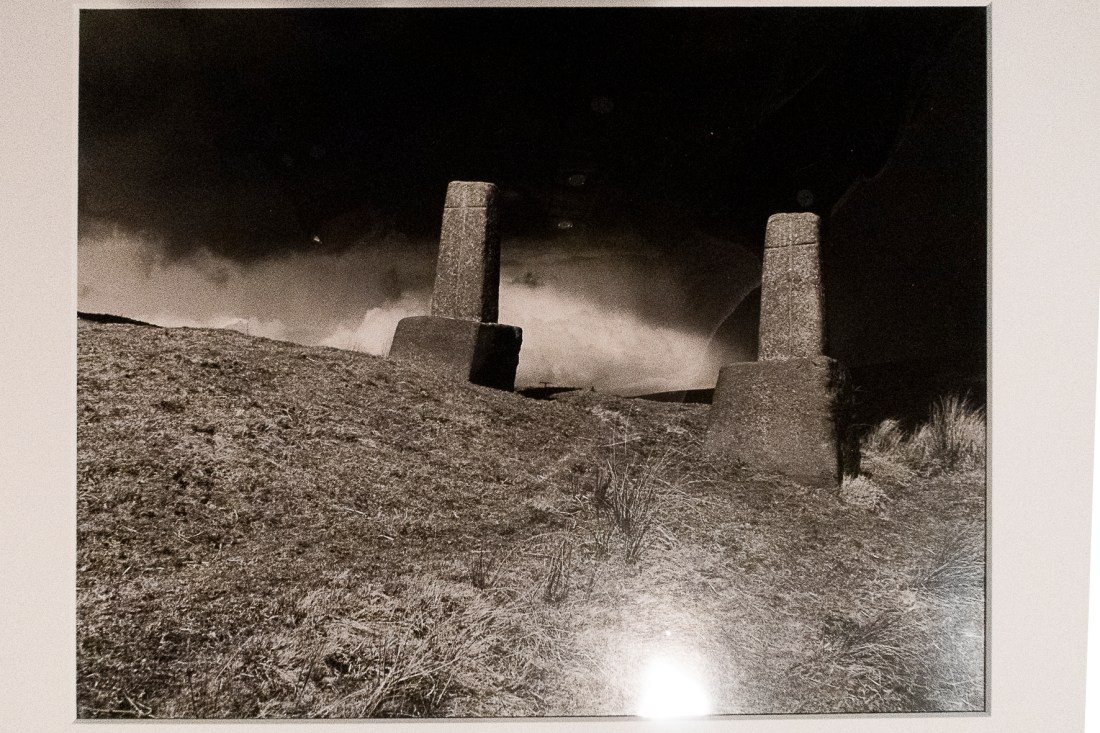
Godwin presents her images with a very naturalistic feel. The tonal quality of the skies is very natural and with a few exceptions is not darkened. These exceptions provide dramatic contrasts such as in the image of “Abel Cross” (National Science and Media Museum, 1994/5015/2)


 Andrew Procter