Exercise 4.4: Personal Voice
Brief
“Make a Google Images search for ‘landscape’, ‘portrait’, or any ordinary subject such as ‘apple’ or ‘sunset’. Add a screengrab of a representative page to your learning log and note down the similarities you find between the images.
Now take a number of your own photographs of the same subject, paying special attention to the ‘Creativity’ criteria at the end of Part One…
Add a final image to your learning log, together with a selection of preparatory shots. In your notes describe how your photograph or representation differs from your Google Images source images of the same subject.”
The course notes for this exercise indicate that one of the aims of this exercise is to demonstrate a personal response and willingness to experiment. The example subject discussed is different approaches to photographing Mount Fuji.
I have looked at the portfolio, “Mount Fuji” by Chris Steele-Perkins. He comments on the portfolio that:
“The work considers the place of Mount Fuji, the iconic symbol of Japan, in our modern times, and references the works of the great Japanese artists, Hokusai Katsushika and Utagawa Hiroshige, whose series of woodblocks, 36 Views of Mount Fuji, were a record and commentary on Mt Fuji in relation to the society of their times; the early to mid 1800′s. The images were constructed in a way that Fuji was ever-present, ‘observing’ the landscape and society around it, a discipline I have continued.”
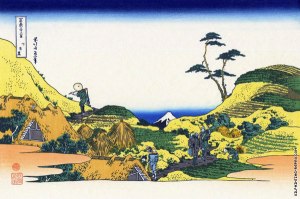
This idea of Fuji “observing” in an ever present way is apparent in Hokusai’s image “Below Meguro”. When seen against this image by Hokusai, Steele-Perkins’ image “Preparing Rice Fields near Gotemba” makes complete sense with the present day farmers going about their business, not paying attention to the iconic mountain in the background, in the same way as the farmers in Hokusai’s print.

The notes also refer to the approach by John Davies in his series “Fuji City”. My reading about the work of Davies indicates that a substantial body of his work has involved documenting the industrial and post-industrial landscape of Britain. Against this background, his series Fuji City, begins to have a different meaning, in which again Mt Fuji, is a backdrop to the industrial landscape.
Davies is quoted on his website as being “not so much interested in entertaining an audience or providing vehicles for escape but in delivering a highly crafted detailed image conveying a sense of reality. A reality that shares a recognition of aspects of urban living. But importantly, making images of a landscape that attempts to question our acceptance and perception of the inevitable consequences of living in a post imperialist society and within a post industrial landscape”.
In his series “Green and Pleasant Land”, Davies made images of the landscapes in the immediate vicinity of my home and of locations which I have photographed. This includes this image of Dinting Vale, taken close to my house, from the viaduct I photographed in this image.
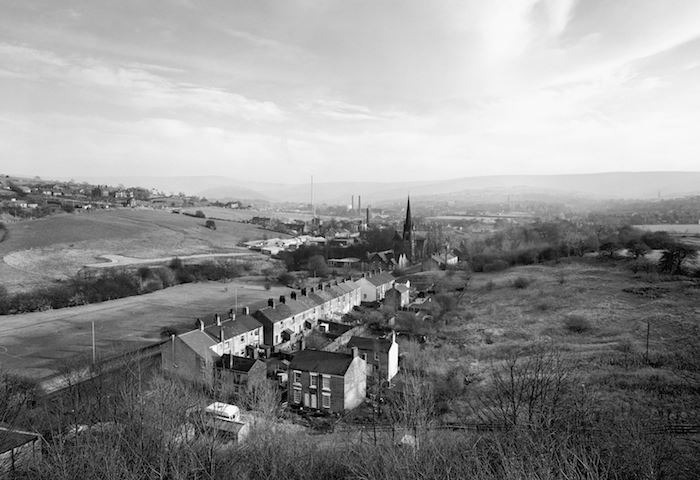
I thought that Davies’ images in this series are documentary in their representation of the industrial and urban landscape. They are depictions of the landscape, and as such differ from the depiction of the human experience of living in these environments such as those I have shown in this blog from photographers such as Don McCullin and Ian MacDonald.
My Approach to the Brief
I have chosen “Peak District Landscapes” as my broad category for this exercise.
A Google search for images using this term results in these images and many similar.
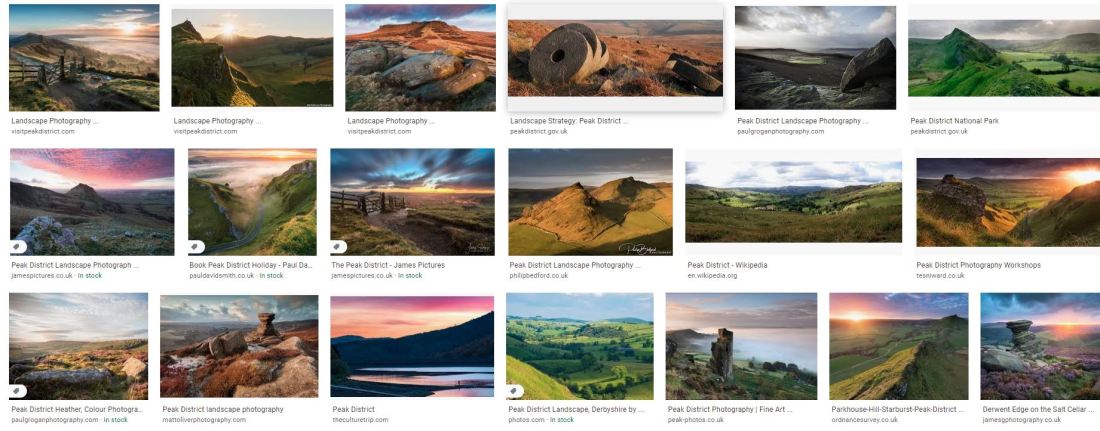
These images all show a very rural image, generally without any buildings, or, if they are present, exclusively farm buildings. The landscape is of the moorland, with vibrant colours of the vegetation. Almost all the images include examples of the gritstone outcrops which are common and a hallmark of this landscape. That rocky outcrop, may be replaced in the image by millstones, produced from that millstone grit.
These images to me seem to be created with the intention of “entertaining an audience or providing vehicles for escape”(Davies, s.d.) In terms of what I have so far understood about aesthetic codes, all these images appear to represent pictorialism. The lighting is dramatic and the colours intense. While they capture some aspects of the rural Peak District, to me they only show one aspect.
The Peak District has been a managed landscape for hundreds of years. The land has supported agriculture and mining, and in the last couple of centuries, grouse shooting. Since the industrial revolution, the moorlands of the High Peak have been very close to large centres of population and industry. Perhaps because of this latter point, it has been the site of high profile events to gain better access to open spaces, away from the industrial cities. In particular the Kinder Mass Trespass, is generally considered to have been the first of a series of actions leading to the foundation of the UK National Parks and the Countryside and Rights of Way Act of 2000 (Wikipedia contributors, 2020).
My approach to this exercise is to try and show the Peak District landscape from the perspective of those living in the industrial centres who would aspire to spend time on the adjacent moorlands.
I have tried to create landscape style images. Rather than have the moors used as a backdrop, “ever-present, ‘observing’ the landscape and society around (them)” (Chris Steele-Perkins; Mount Fuji, s.d.), I wanted to create an image more like the industrial landscapes of John Davies.
Method
I have used a digital SLR for these images, but also used a medium format film camera to capture the similar scenes in monochrome with film. Those images will be the subject of a later post.
My digital contact sheets are at:
From these I have selected these which I think show how the moors encircle the now post-industrial town. As such they perhaps do not encapsulate the contrast between the working environment and the rural open space.
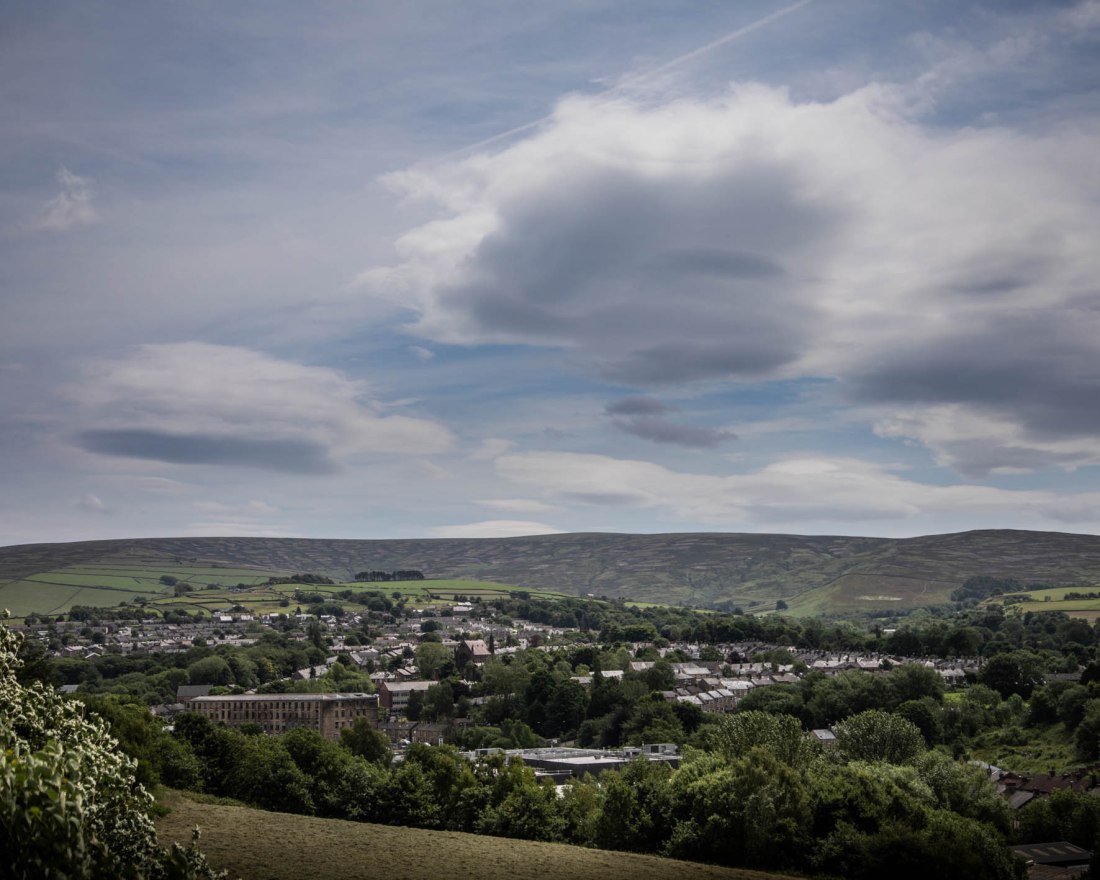
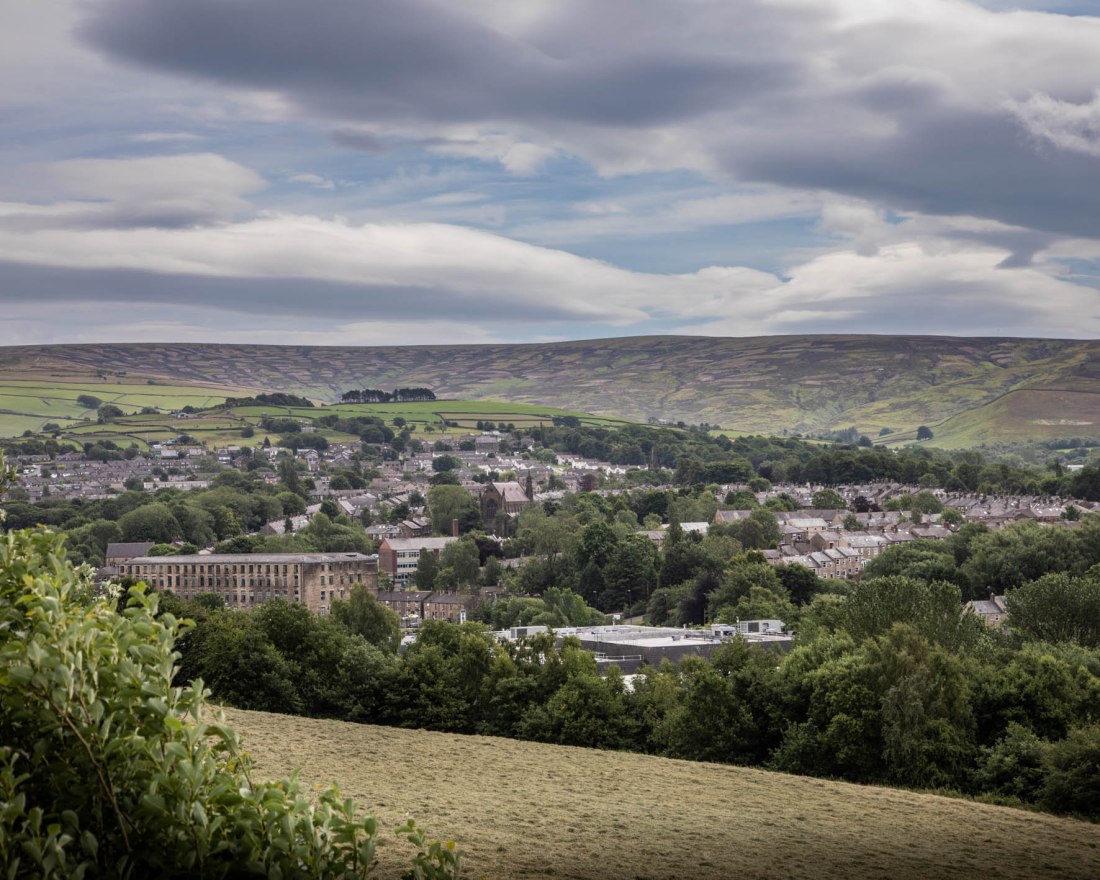
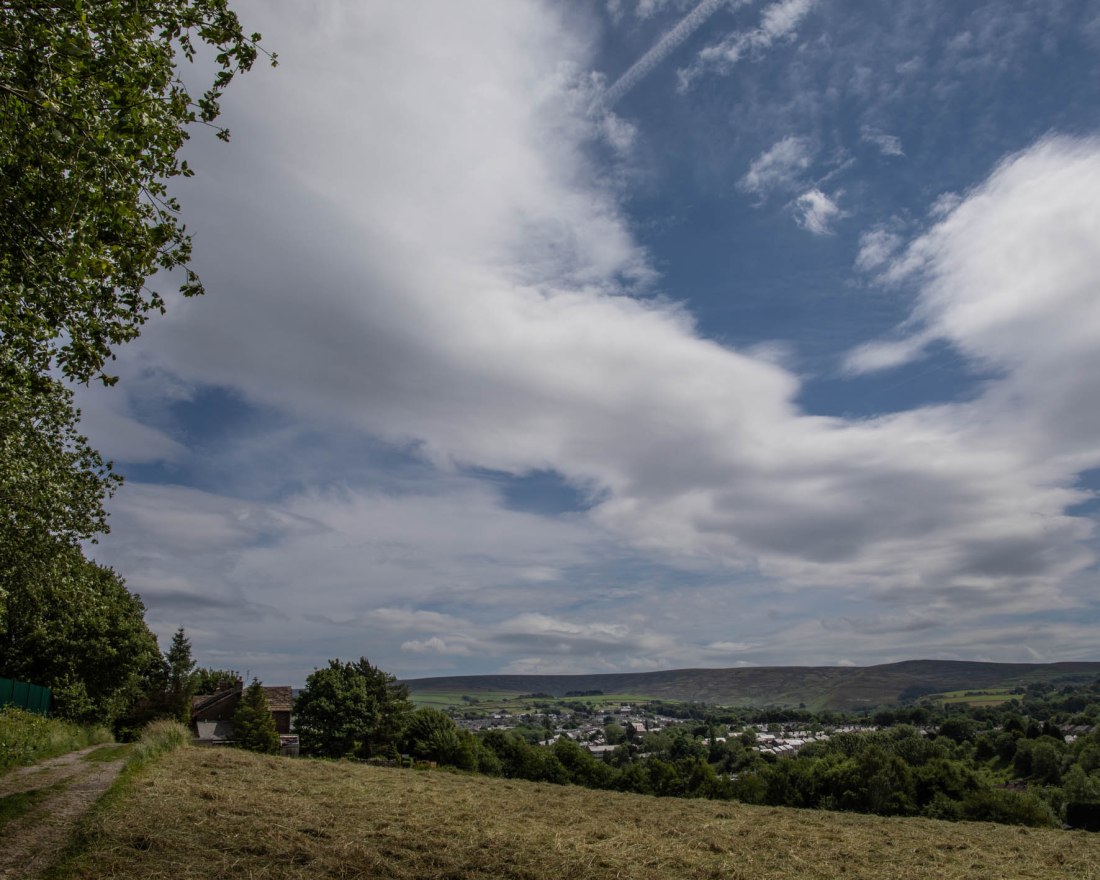
Closer to that aim are these with modern industrial units in the foreground.
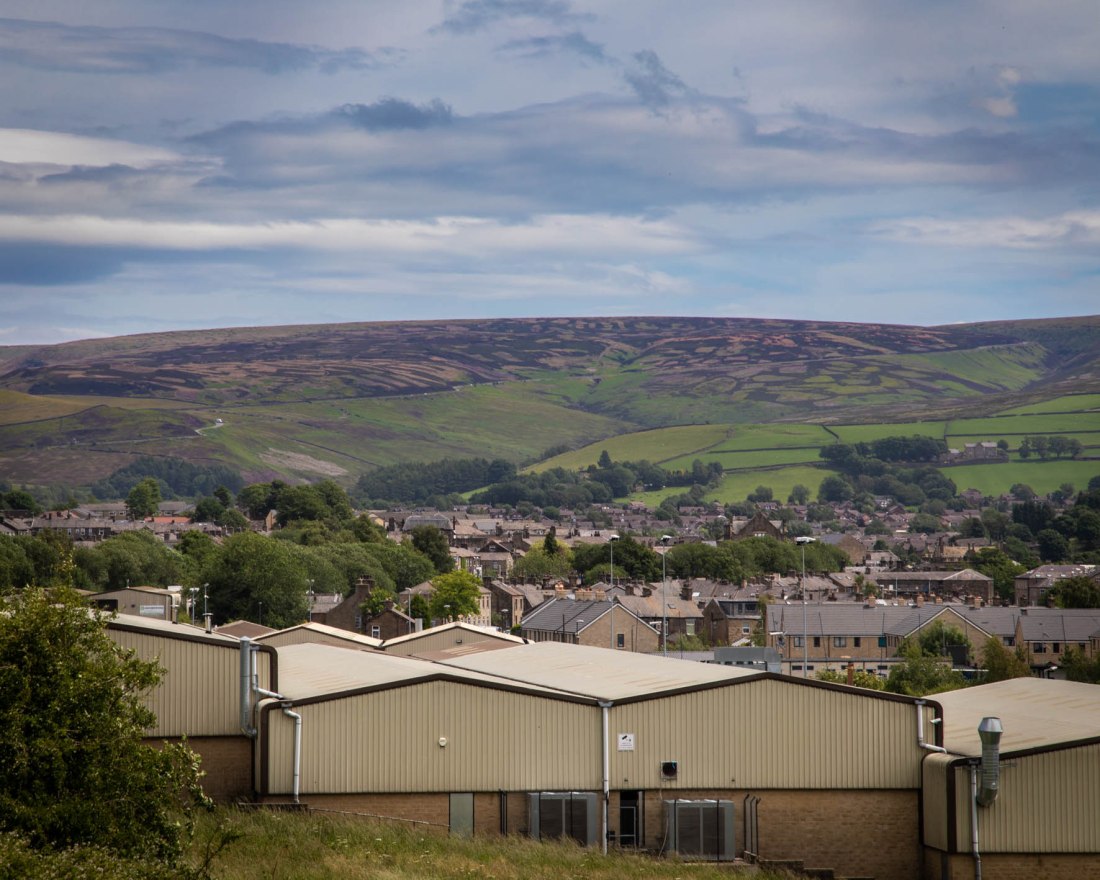
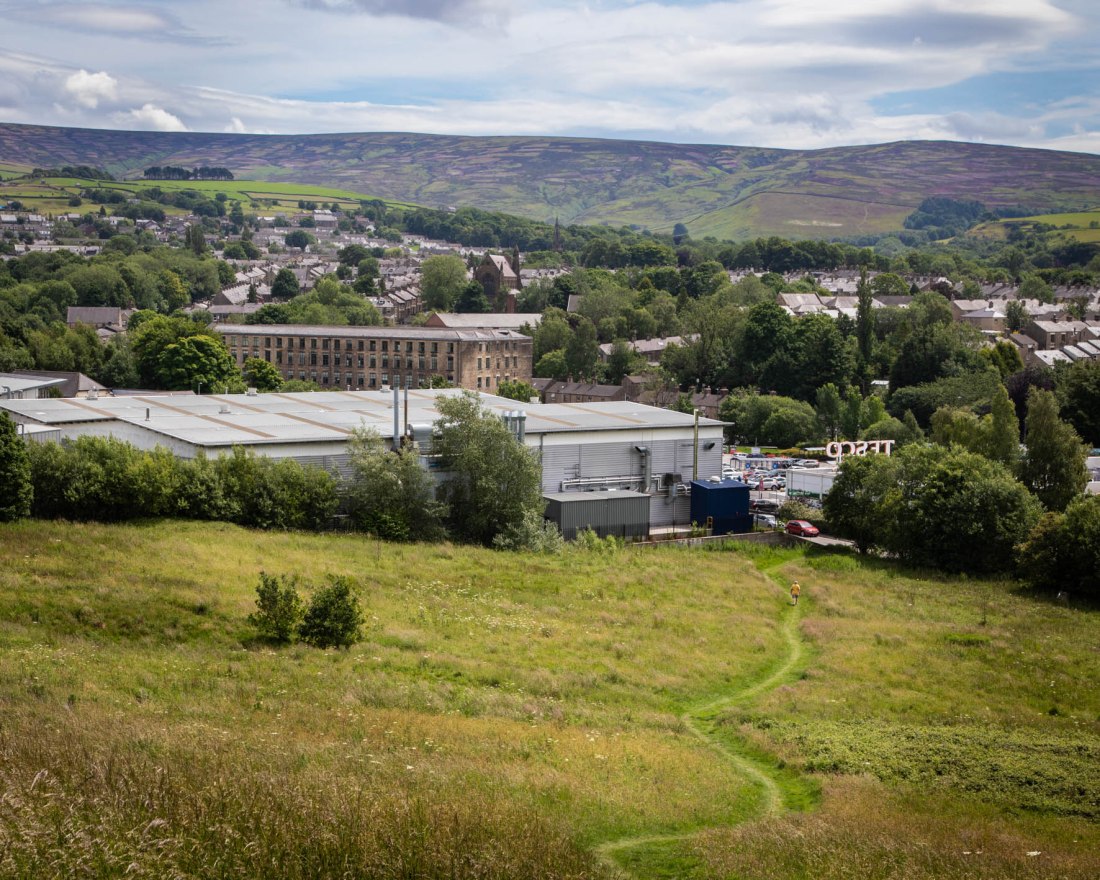
Overall I think the images go some way to what I was aiming for. However, in retrospect it may have been more effective to have gone into the town and had the moors in the distance, more like Steele-Perkins has positioned Fuji in his images. However the images do share a style and expansive viewpoint in common with the images of “Peak District Landscapes” I found on the Google search.
References
References to the works cited in this post are found in my separate post “References”
 Andrew Procter