I was referred to this work by my tutor in response to my images of the Woodlands Valley Plantation which I included in my images for Exercise 4.1.
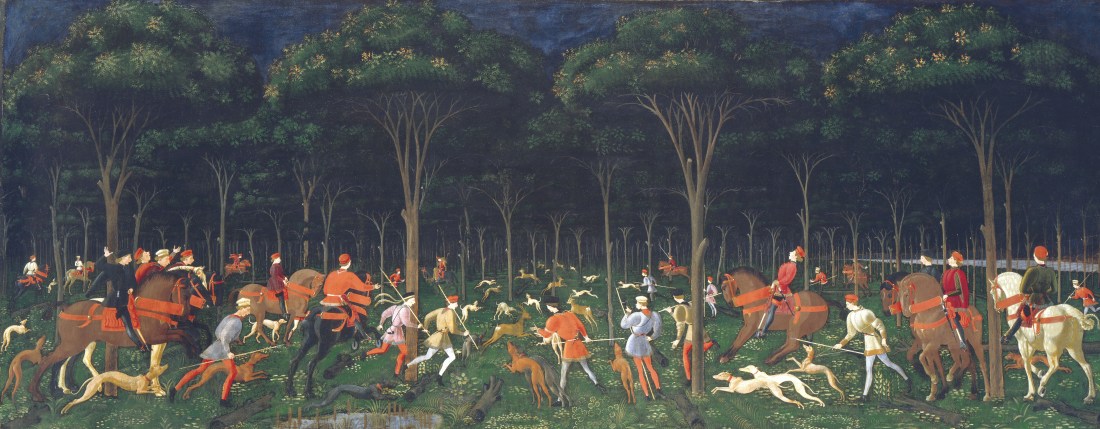
Hunt in the Forest, Ucello
The Hunt in the Forest (also known as The Hunt by Night or simply The Hunt) is a painting by the Italian artist Paolo di Dono; his nickname, Uccello (‘Bird’), alludes to his depictions of the natural world. He was celebrated in his lifetime as a master of perspective, and of animals and landscape. The painting is an early example of the effective use of perspective in Renaissance art, with the hunt participants, including people, horses, dogs and deer, disappearing into the dark forest in the distance. (THE HUNT IN THE FOREST, s.d.)
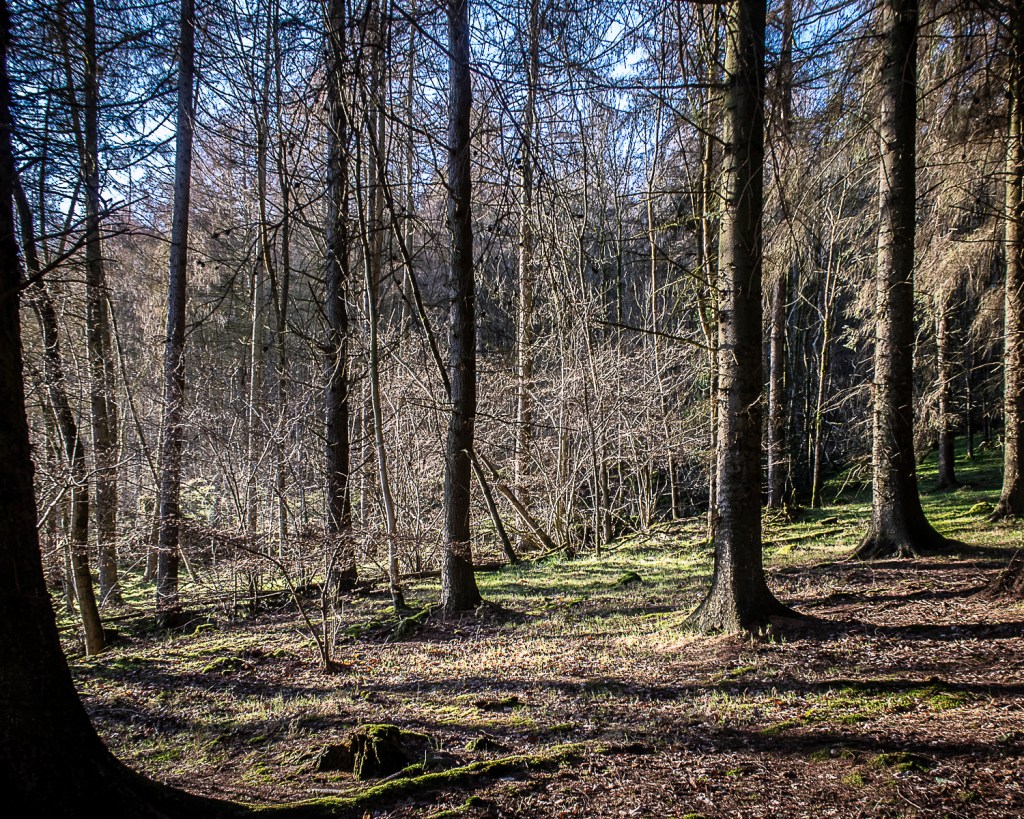
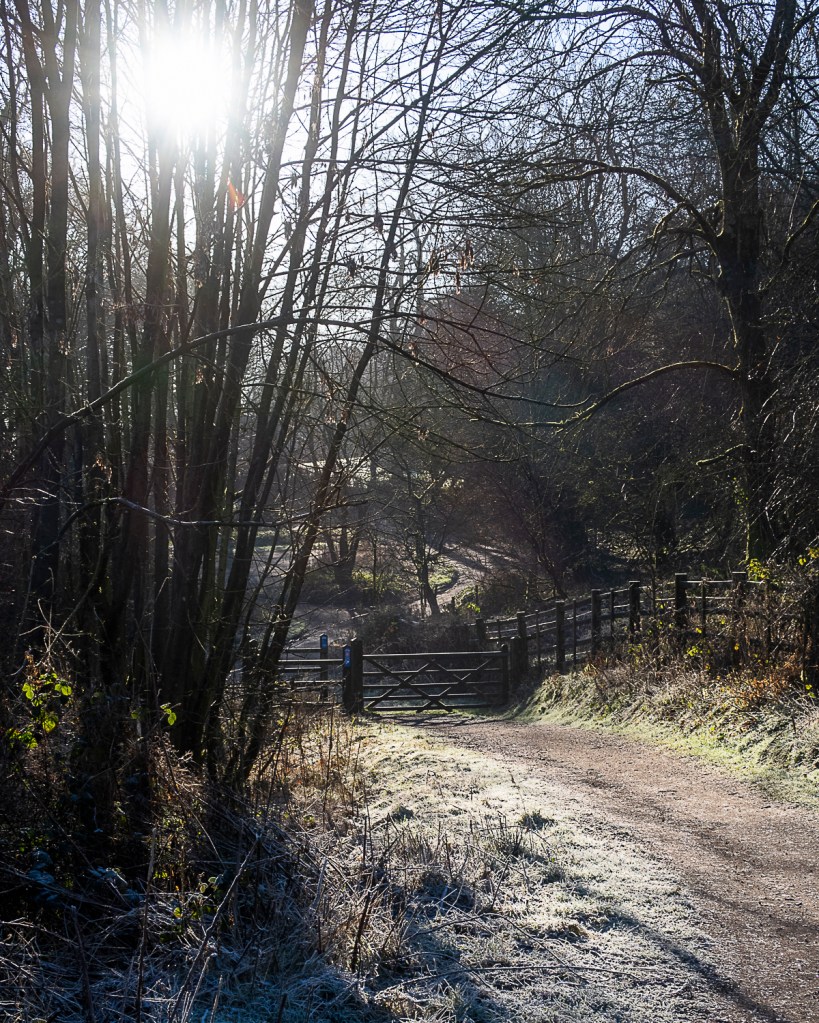
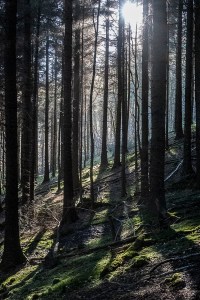
My tutor suggested I look at this with a view to examining his use of perspective, but also to explore the nature of shadows and the iconography of shadows as mysterious and dangerous places. My images which most closely resemble the viewpoint and perspective of Ucello, include these
Woodlands Valley Plantation 01
Woodlands Valley Plantation 02
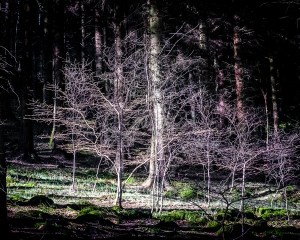
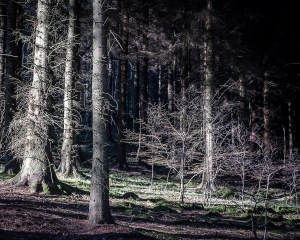
However as the light is coming through the trees, these images seem less mysterious than images such as this, where we are looking into the darkness of the forest.
Woodlands Valley Plantation 01
Woodlands Valley Plantation 03
References
References to the works cited in this post are found in my separate post “References”
‘Layered, complex and mysterious…’ is a quote from American photographer Sally Mann from an interview for Chinese Photography magazine in 2010, and reproduced on American Suburb X website (Rong and Mann, 2013). In this interview Mann describes how she perceives the difference between the quality of the light in the Southern states of the USA, as compared to the “North”. I interpreted her use of the term “North” here to refer to the northern states rather than the far north and high latitudes of the Arctic regions.
In this interview Mann emphasises her aims as being “less interested in the facts of a picture than in the feelings” and that “the facts don’t have to be absolutely sharp. I can get information across by appealing to viewer’s emotions.” (Rong and Mann, 2013)
The mysterious feeling she achieves in some of her work seems to be exemplified by her images of “Southern Landscapes”, such as this image, Deep South 03.
Deep South 03, Sally Mann
In this monochrome image the composition is achieved with areas of light and deep darkness, the shadows suggesting mystery. However the light areas of the image are hazy and unclear suggesting a mist.
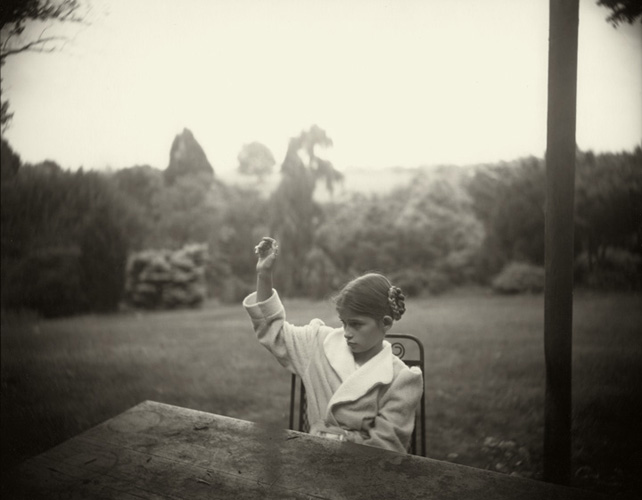
I would argue that she achieves a similar effect in some of the images in her series “Family Pictures”, such as this Family Pictures 12.
Family Pictures 12, Sally Mann
The background is similarly hazy and the light of the landscape diffuse. Whereas the subject is lit by a much more direct light on her hair.
However I also note from the extended biography on her website (Mann, 2020), that many of her black and white, have been created with photography’s antique technology. She has used an 8×10 bellows camera, and a variety of printing processes to produce pictures that “almost seem like hybrids of photography, painting, and sculpture”. In her 2010 interview she also says that “there is no coating on the lens of my old camera, which permits a much softer and more luminous light”.
It seems to me that Mann is achieving her objectives of communicating emotional and spiritual aspects of a subject by the use not only photographing with the optimal light for her intention but this is enhanced by the choice of equipment and techniques.
The course notes refer me to the work of Atget. The notes (p 83) cite Washington’s National Gallery of Art website as describing his late photographs, as:
“frequently marked by subjective light and deep shadows. Often made early in the morning, these pictures – such as Parc de Sceaux – use light and shadow to create a mood rather than to describe a place”
I was unable to find this description of his work on that website (Eugène Atget, 2020). I have, however, found other descriptions of his late work and his approach to lighting conditions which indicate this technique:
“Among the qualities that characterize Atget’s work are… a willingness to work in a wide variety of lighting conditions, even (especially during the last five years of his life) shooting almost directly into the sun, a practice that was religiously avoided by conventional photographers.”(Szarkowski, 2020)
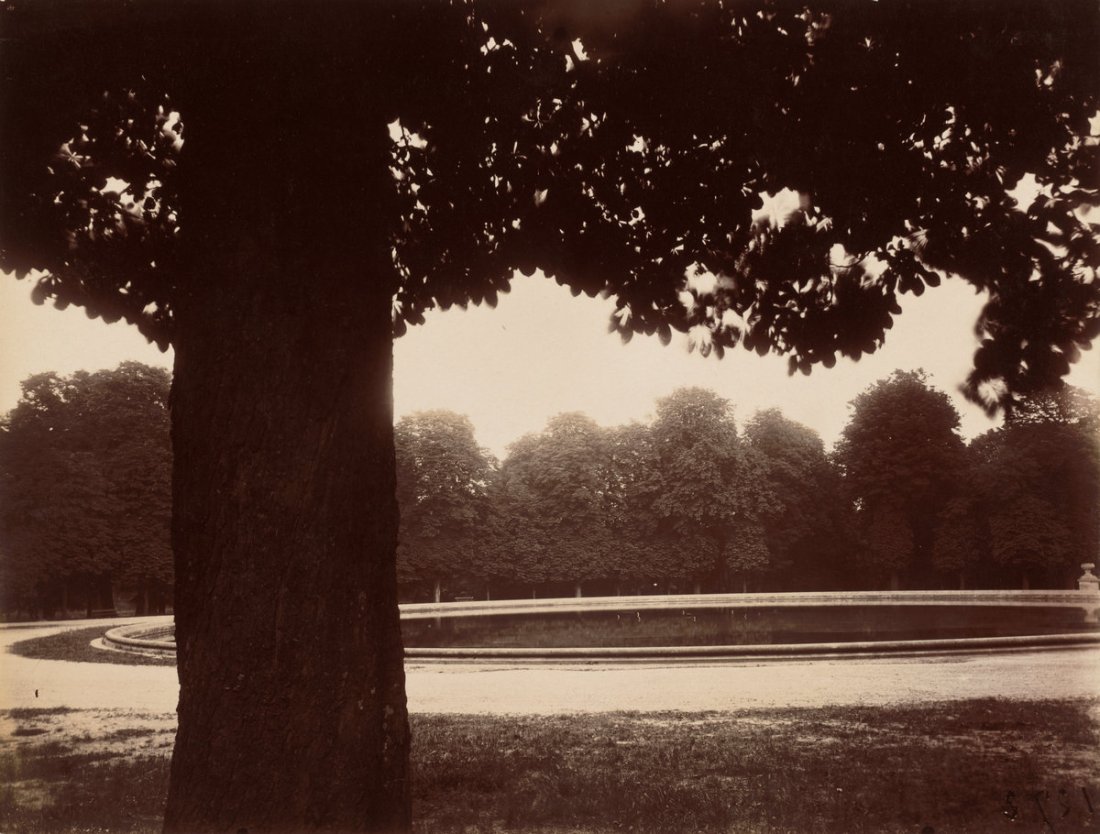
This is illustrated by this image, where shooting into the sun gives deep shadow behind the foreground tree.
Saint-Cloud, Eugène Atget
Other images of the parks have similar qualities to those I have shown above by Mann. Here the lighting also enhances a mood, rather than providing a documentary description of a scene as in Atget’s earlier work.
Parc de Sceaux 2, Eugène Atget
Parc de Sceaux 02, Eugène Atget
Like Mann, Atget used equipment and techniques which also enhanced that approach and added to the emotion and subtlety of the scene..
“Atget used a large view camera that held 7 x 9 inch glass negatives, standard when he began to photograph but antiquated by the end of his career, when smaller and more versatile cameras were available. He developed the negatives in his workroom and contact-printed them in sunlight on the roof of his apartment building. He usually printed on albumen papers, even well after most photographers had abandoned the process in favor of platinum and silver papers.” (Eugène Atget, 2020).
This is distinct from the approach of Michael Schmidt described in the course notes which quote from an interview with Schmidt in Camera Magazine #3, March, 1979. (Editorial @ ASX, 2010).
In the interview, Schmidt states his aims as “to achieve a maximum of objectivity and thus create a photograph which possesses credibility and authenticity as a document”.
Unlike Mann in particular, he sets out to create images such that “The viewer must allow the objects portrayed in the photograph to take their effect upon him without being distracted by shadows or other mood effects.”
He achieves this by photographing in a neutral diffused light. Furthermore he shoots in black and white.
“I prefer black and white photography because it guarantees the viewer a maximum amount of neutrality within the limits of the medium. It reduces and neutralizes the coloured world to a finely nuanced range of greys, thus precluding an individual way of seeing (personal colour tastes) by the viewer. This means that the viewer is able to form an objective opinion about the image from a neutral standpoint independent of his subjective colour perception. He is thus not emotionally distracted.” (Editorial @ ASX, 2010)
These principles are illustrated by images from his portfolio for the 2014 Pris Pictet, Lebensmittel (Michael Schmidt | Prix Pictet, 2013), such as this.
“Taking the photography of Mann, Atget or Schmidt or a photographer of your own choosing as your starting point, shoot a number of photographs exploring the quality of natural light. The exercise should be done in manual mode and the important thing is to observe the light, not just photograph it. In your learning log, and using the descriptions above as your starting point, try to describe the quality of the light in your photographs in your own words.”
In addition to the work of Mann, Atget and Schmidt, the course notes for this exercise also refer to a light with no mystery described by Brian Catling in the fantasy novel, The Vorrh (Catling, 2012)
‘The vulgar gate of the day gives no quarter and its insistent brightness will tell lies about all, forcing the subtlety back into the interiors of trees and the other side of the sky.’
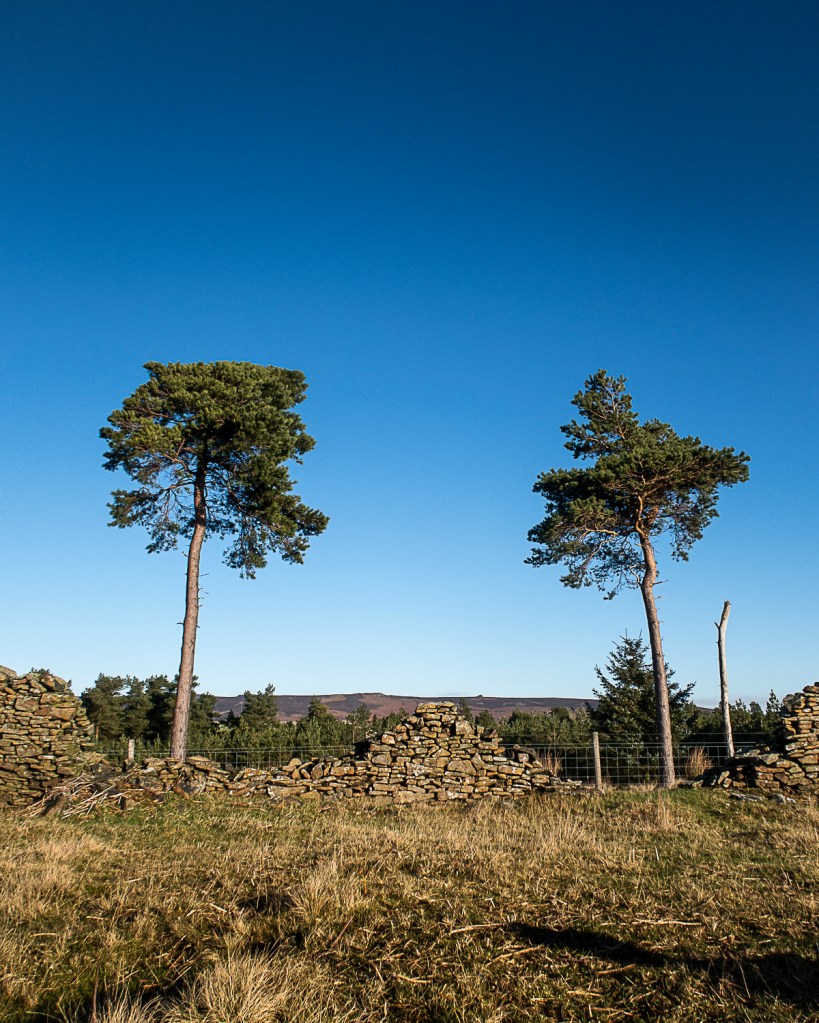
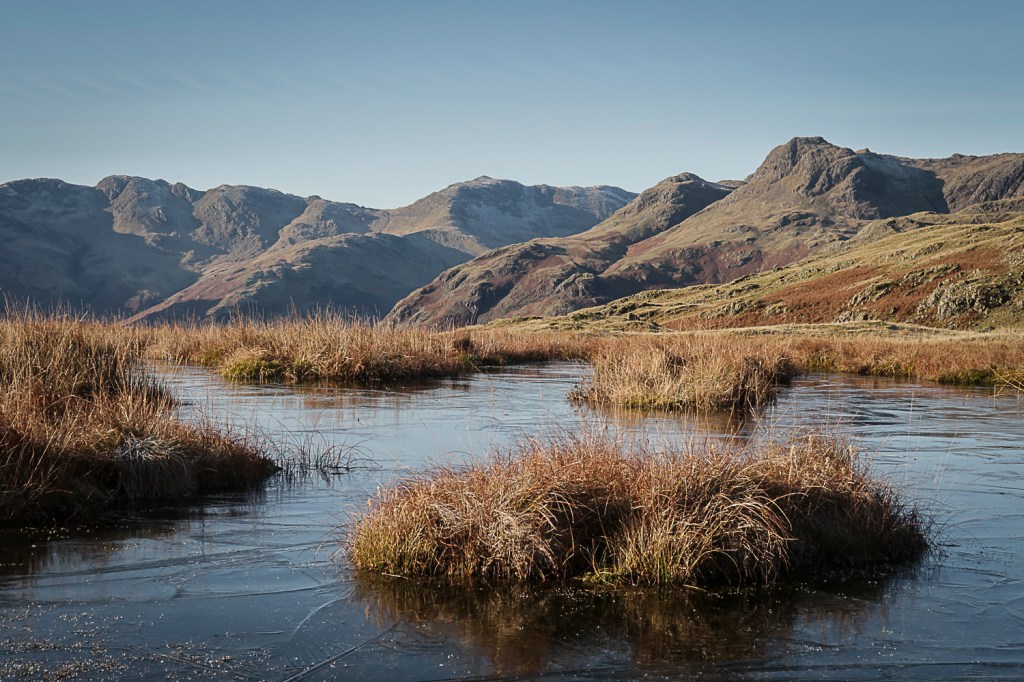
I have taken a series of images to address this exercise, all taken on hill walks in the Lake District and Peak District in winter. The contacts for these shoots are at
The light during the day on both these occasions was bright and the weather clear. As a result the light in many of the images has, to me, the characteristics of that light described by Catling. It is an “insistent brightness” and there is no subtlety in the image – nothing is hidden or mysterious about these images.
Wooler Knoll 01
Wooler Knoll 02
Langhow Tarns 01
Woodlands Valley Plantation 01
The colours are bright and intense, and the shadows do not seem to hold any mystery.
Rendering this type of image into black and white enables a contrasting pattern to emerge and I like to think of this as similar to images made by Fay Godwin (whose work I have described elsewhere in the blog).
Langdale 02
Reedy Loch. Fay Godwin (NSMM 1994/5015/95)
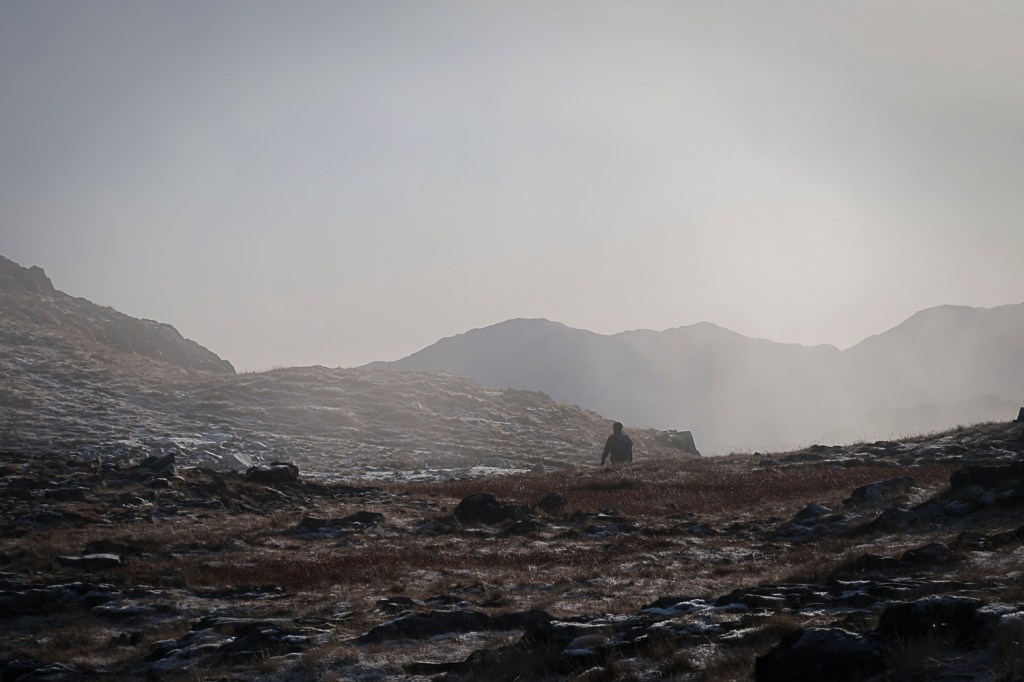
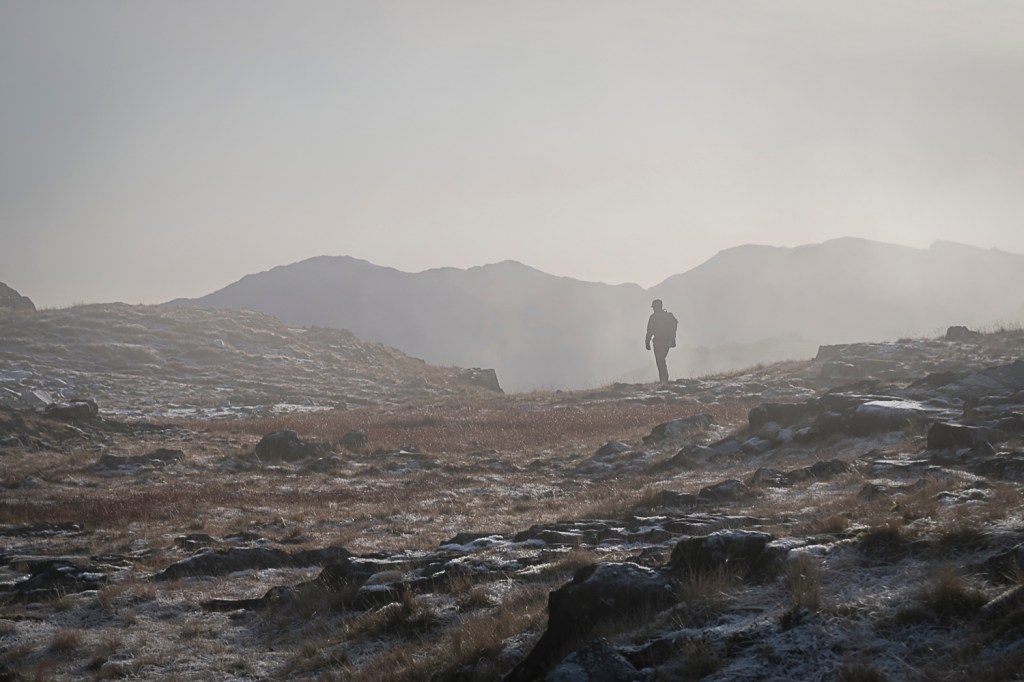
However on the same days and in different settings a more subtle image can be found. Drawing on the technique of shooting into the sun used by Atget, more nuanced images can be achieved.
Langdale 01
Langdale 03
Derwent Valley Way 01
In these images the contrast is reduced and the colours muted – reducing the amount of information in the image. This in itself adds to the mystery of the image and allows the observer to add their own interpretations to the image.
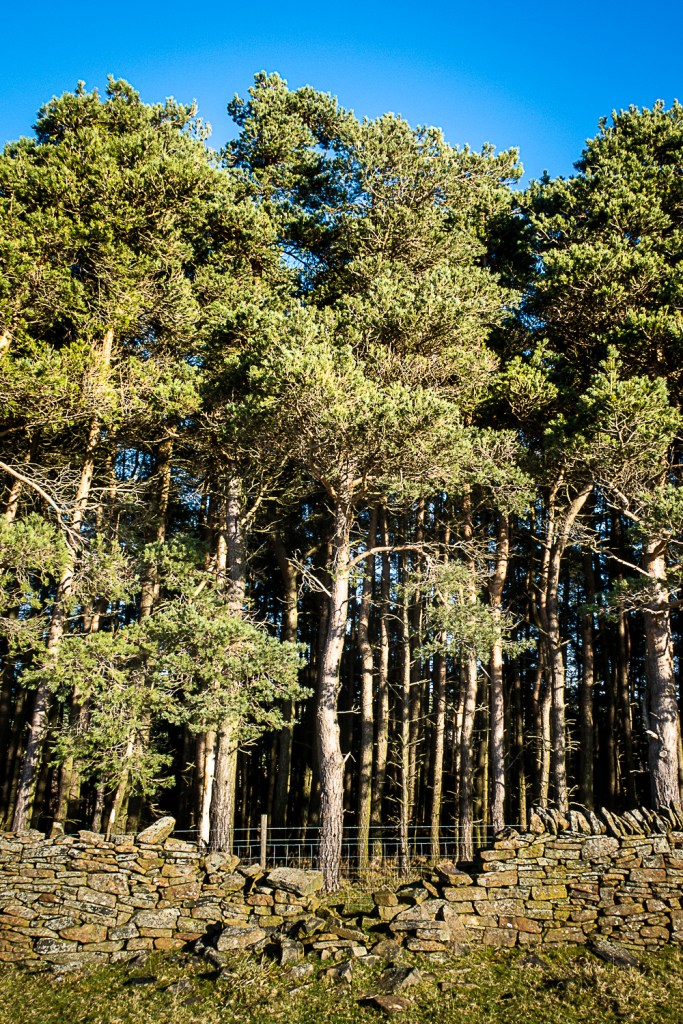
Finally, I have a small series in plantations where the light is altered by being diffused through the trees. Here there is more mystery, reminiscent of the images by Mann.
Woodlands Valley Plantation 01
Woodlands Valley Plantation 02
Woodlands Valley Plantation 03
Woodlands Valley Plantation 01
I note however that all the images I have produced here are on digital cameras and are sharp without the degradation of the image that the equipment and techniques used by Mann (and Atget) produces. I would argue that the atmosphere in their images is a combination of the use and representation of the light together with the loss of detail associated with their techniques.
References
References to the works cited in this post are found in my separate post “References”






 Andrew Procter