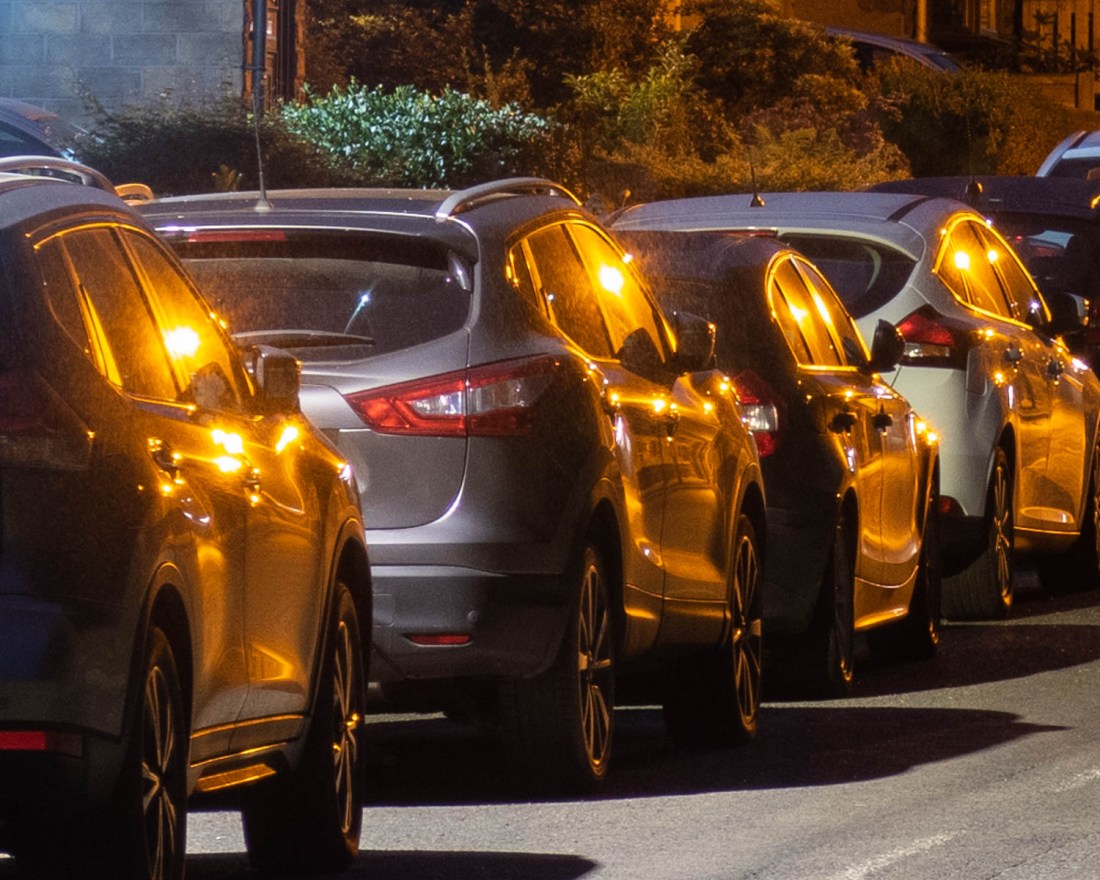
I would like to try and capture more of the interaction between the light and water, as I have highlighted previously. In a similar way, the reflection of lights from different surfaces creates interesting patterns, unique to the night time. Detail from this image shows the sort of effect that I would like to explore further in another shoot.
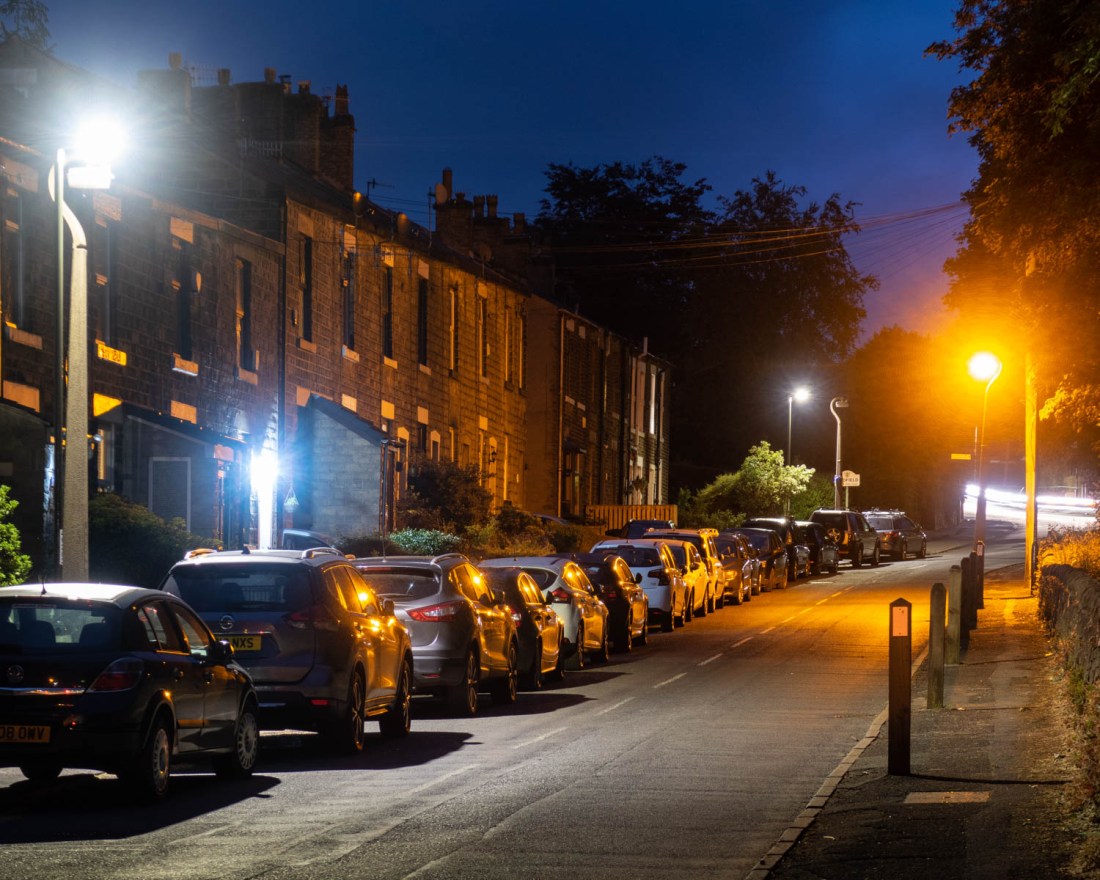
2020-06-03 OCA Ex4.2 #31
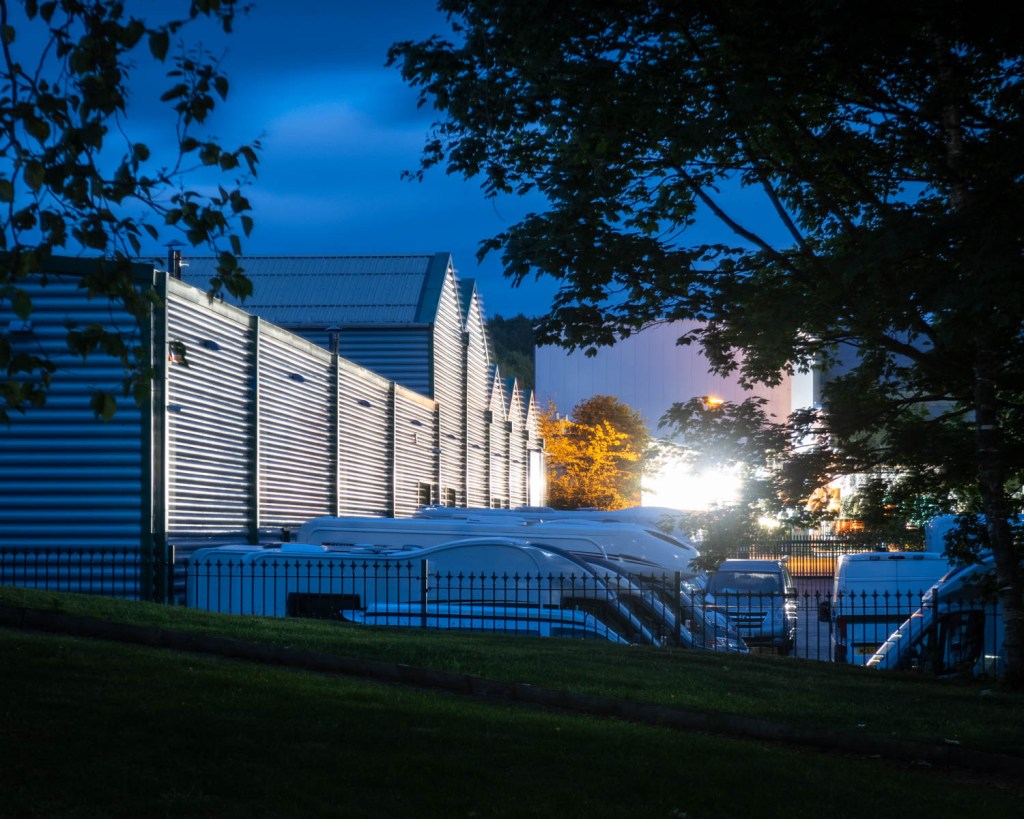
The reflections of the street lights in different colours on the parked cars gives an almost abstract feel to this.
2020-06-03 OCA Ex4.2 #31 (detail)
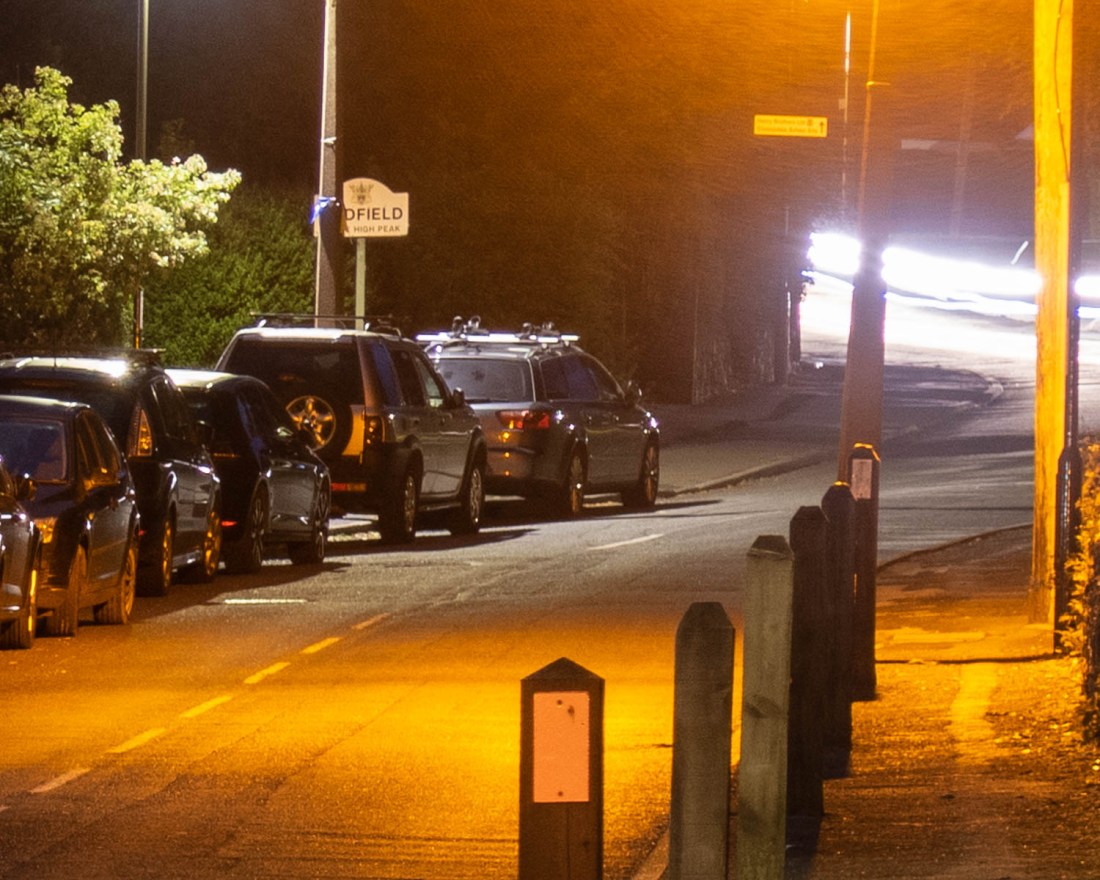
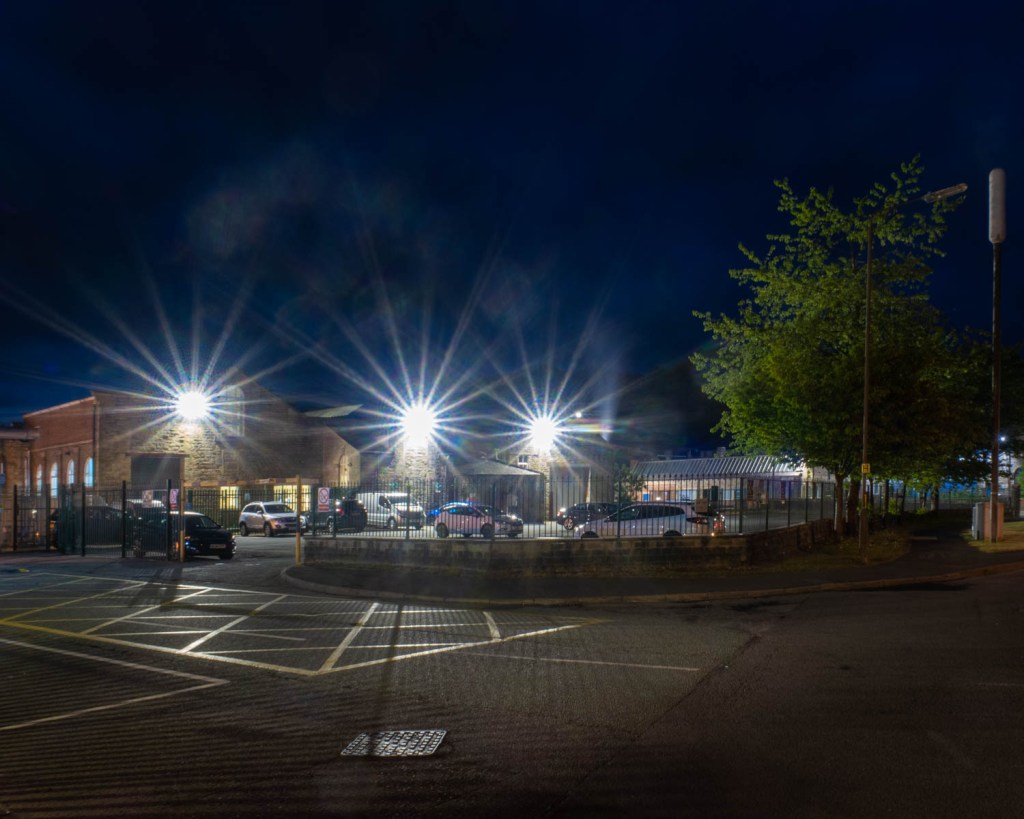
The pools of different types of light on the ground here make patterns which could be the subject for further exploration.
2020-06-03 OCA Ex4.2 #31 (detail)
These effects are reminiscent of the images of London in Rut Blees Luxemburg’s “Liebeslied: My Suicides” (Luxemberg and Duttman, 2000). It is this type of image I would like to develop more in future shoots.
“Capture ‘the beauty of artificial light’ in a short sequence of shots (‘beauty’ is, of course, a subjective term). The correct white balance setting will be important; this can get tricky – but interesting – if there are mixed light sources of different colour temperatures in the same shot. You can shoot indoors or outside and the light can be ambient or handheld flash.
Add the sequence to your learning log. In your notes try to describe the difference in the quality of light from the daylight shots in Exercise 4.1.”
I approached this exercise by taking an evening walk close to my house to make some images of scenes familiar to me, but illuminated by the street lights. In this way I was trying to see how the resulting images differed from those I might have expected when made in the daylight.
My objective here was not to create “definitive” final images, but to gain a better understanding of the technical aspects of photographing in these conditions and to examine those elements of the final images which might be used to produce a series which do indeed capture the “beauty of artificial light”.
As I wanted to explore a range of locations, and used lightweight equipment for this reason. I used a Canon Powershot G7x Mkii for these images rather than my DSLR. It still enables me to use manual, as well as aperture and speed priority shooting modes and for this exercise I used manual mode. I made the images between 2100h and 2300h GMT when sunset was at 2029h.
I used manual shooting mode with a setting of “auto white balance” for all the images. Post-processing of the images is confined to modest cropping to a 4×5 aspect ratio (chosen because I have been using 10×8 printing paper for my film work and wanted a degree of consistency with this). There are also local exposure adjustments but no alteration in the white balance or other colour adjustments.
Initially I used the camera hand-held with a fast ISO. This image shows considerable grain so at subsequent locations I used much longer exposures on a tripod.
2020-06-03 OCA Ex4.2 #6 ISO6400, f/4.0 1/60sec
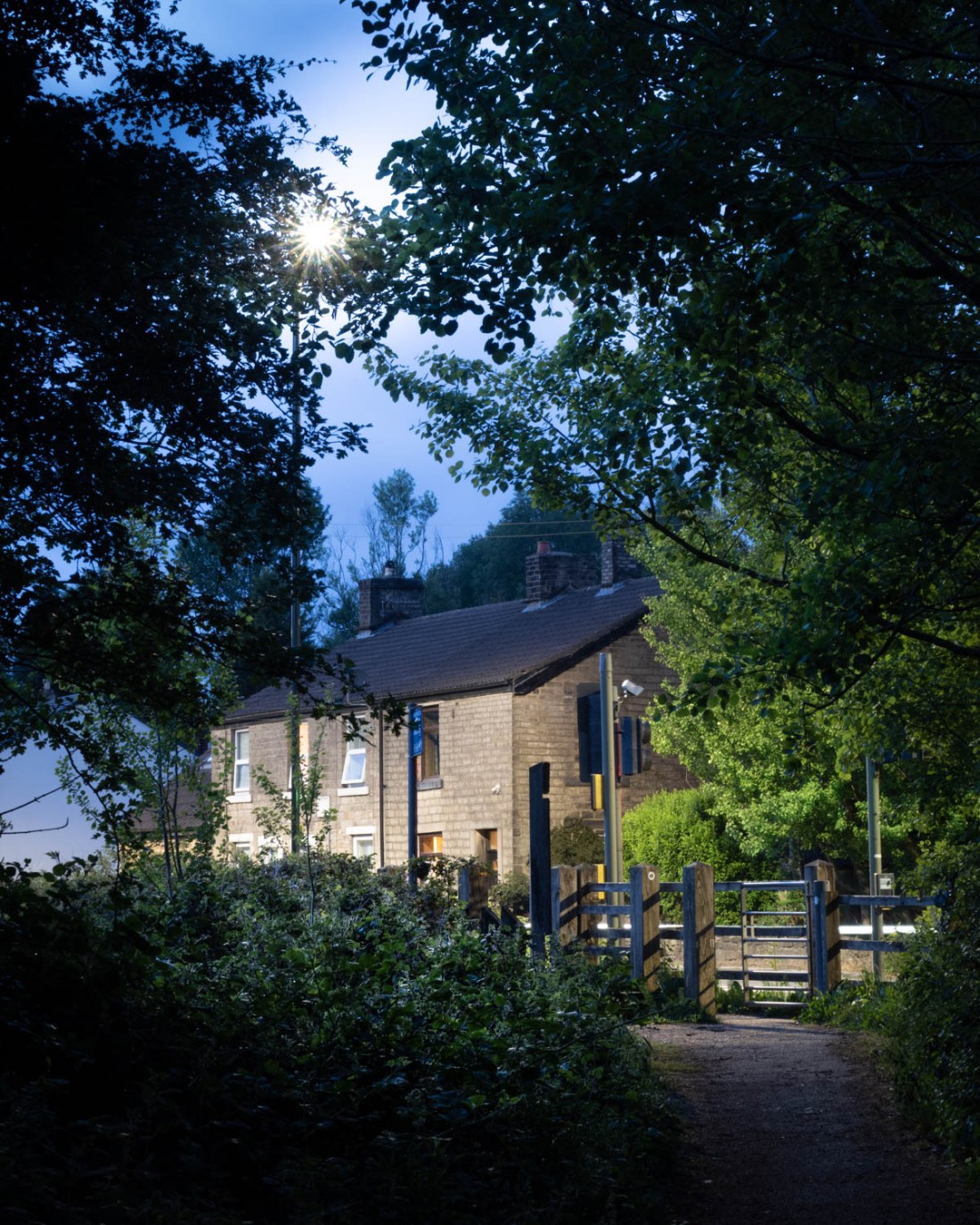
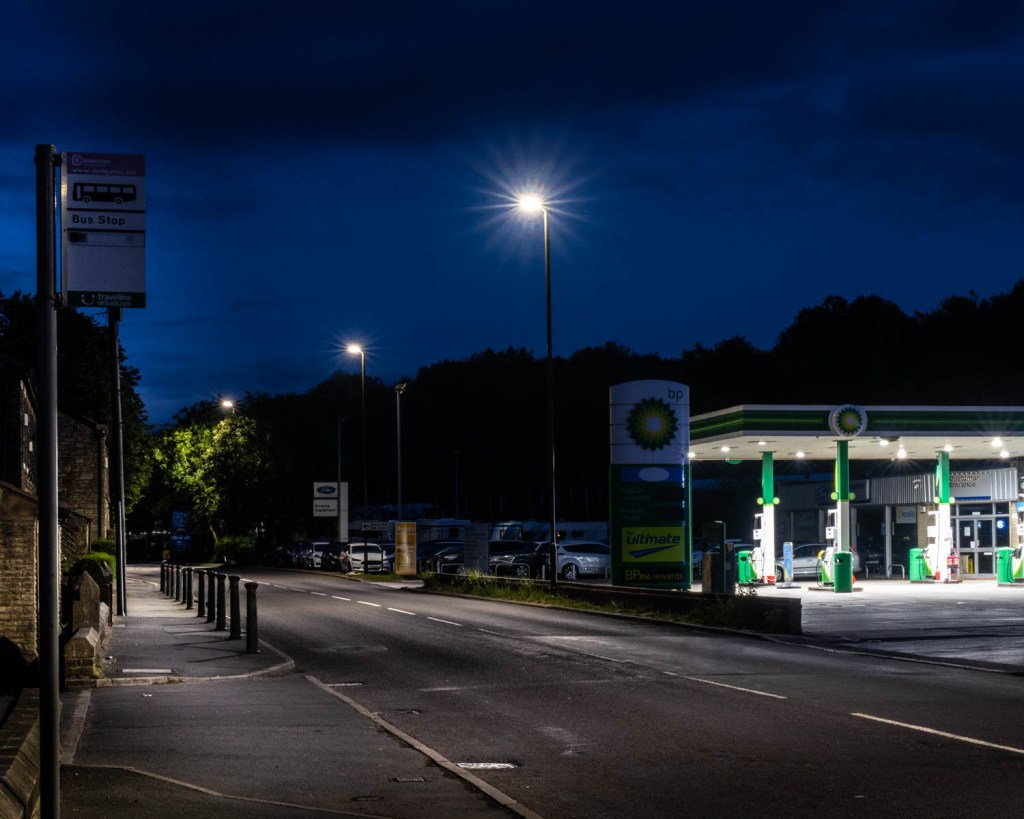
In most of the images the sky is not totally black and in this it almost looks like daylight. However, the major difference in this image is the direction of the lighting, rather than any other quality of the light.
2020-06-03 OCA Ex4.2 #13 ISO125, f/11 30.0sec
Where there are many light sources, this effect is more striking and the differences in the colour of the lights adds a difference in the mood and atmosphere of the scene.
2020-06-03 OCA Ex4.2 #16
ISO125, f/11 4.0sec
2020-06-03 OCA Ex4.2 #24
ISO125, f/5.0 15.0sec
2020-06-03 OCA Ex4.2 #27
ISO125, f/5.0 15.0sec
2020-06-03 OCA Ex4.2 #28
ISO125, f/11 15.0sec
The long exposures used enabled the incorporation of the moving lights of vehicles, even though the vehicle itself does not appear in the image. This adds a different quality to the image, and an effect I think I might develop more in the future. I do not think that in these images this effect adds much.
2020-06-03 OCA Ex4.2 #22
ISO125, f/7.1 4.0sec
2020-06-03 OCA Ex4.2 #35
ISO125, f/4.0 15.0sec
2020-06-03 OCA Ex4.2 #36
ISO125, f/4.0 15.0sec
The camera makes it very obvious that different types of street light have very different colour qualities, and this golden effect is reminiscent of that in the images of Rut Blees Luxemburg. The reflections of the lights from parked vehicles and pools of light and dark give these images a mystery and I think show a type of beauty of which we are not normally aware.
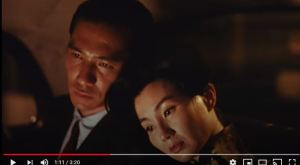
The course notes for this section attribute the phrase “the beauty of artificial light” to the cinematographer, Christopher Doyle who the notes say, “recommended studying the ‘beauty of artificial light’ on people’s faces.” I was unable to find the source for this quotation, but did look at his film, “In the Mood for Love” (Dir Wong Kar Wei, 2000). This film set in Hong Kong, is shot almost entirely in artificial light, either in-doors or at night. Indeed, the lighting of the faces is very atmospheric, and conveys some of the emotional content of the scenes. Such as these stills which I selected
The Mood For Love – Capture 1
The Mood For Love – Capture 2
The Mood For Love – Capture 3
The Mood For Love – Capture 4
The course notes direct me towards examining the work of Sato Shintaro, and his series “Night Lights”.
Night Lights 29, Sato Shintaro
These are a series of images of the Tokyo streets, illuminated by neon signs. The images are all bright and colourful, even though shot at night.
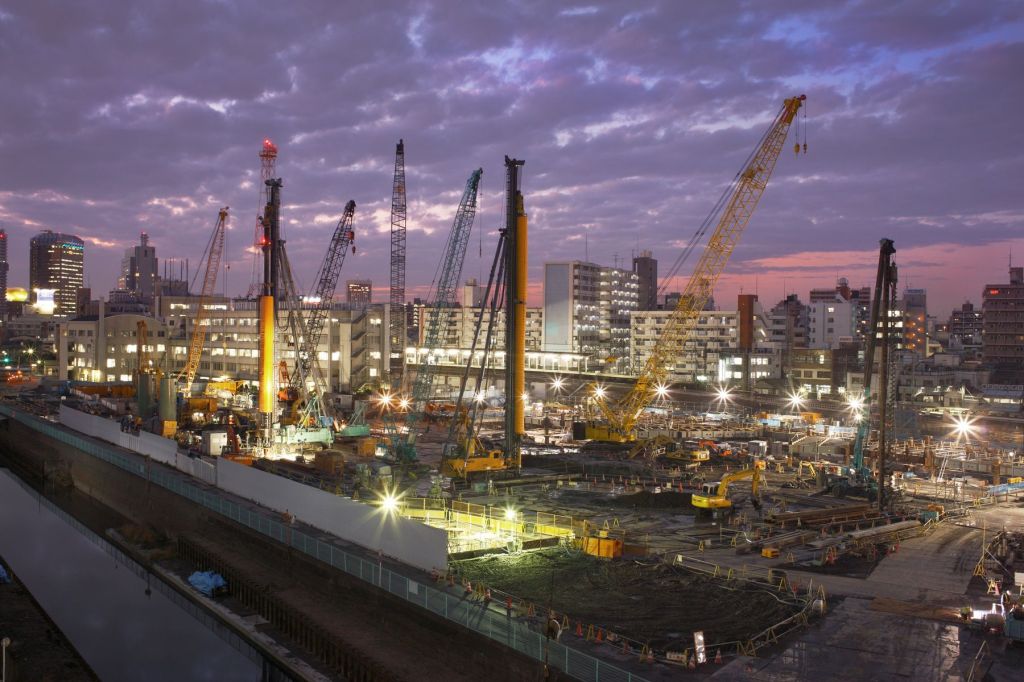
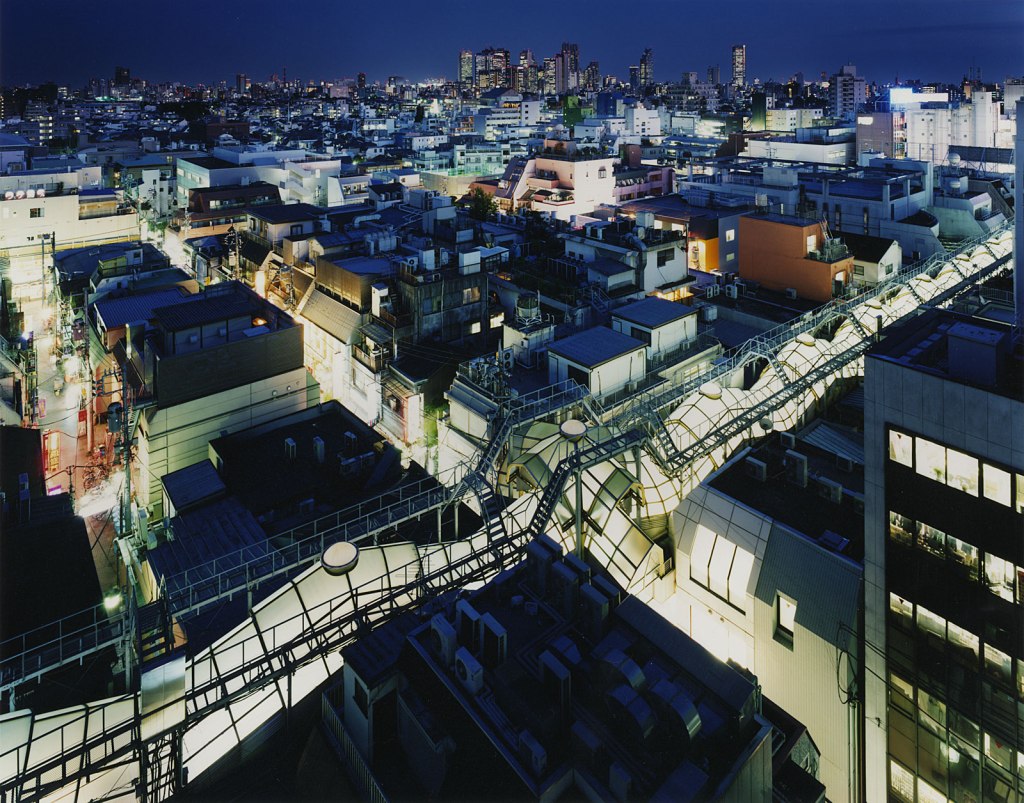
Shintaro also has made images of Tokyo lit by a combination of artificial light and the dawn or dusk light of the sky, in his series, “Risen in the East” and “Tokyo Twilight Zone”. Such as:
Risen in the East – Tokyo Dec 10 2008, Sato Shintaro
Tokyo Twilight Zone – Tokyo 2006, Sato Shintaro
Personally I found a greater resonance with these images as I think they show a greater degree of subtlety in the colouration and depiction of the city. However I recognise that the vibrant bright primary colours of the neon street signs serve to depict a vibrancy of the city itself.
The images of neon signs in Tokyo may soon be a thing of the past, as reports about Hong Kong suggest (Fernández, 2018). Like Tokyo, Hong Kong has had a proliferation of neon signs, but regulations have made it more and more difficult for these to remain and they are being replaced by LED lights.
A point which I did not highlight in my record of my research for the last exercise, “Daylight”, is that as well as emphasing the importance of “the quality of the air and light (as being)…so layered, complex, and mysterious”, Sally Mann also refers to “the refulgence or the reflection when light and water interact” (Rong and Mann, 2013). This is also the case with artificial light.
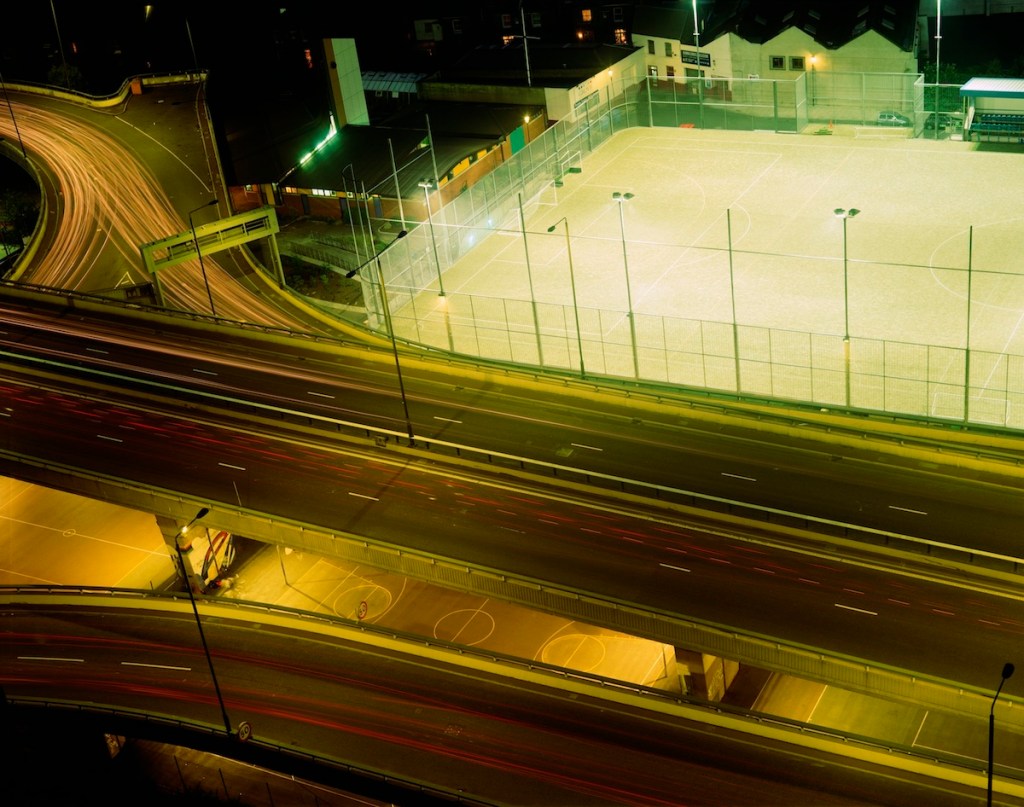
Rut Blees Luxemburg has made many images of London at night, all lit with artificial light from street and other lighting.
A Modern Project, 1996; Rut Blees Luxemburg
Towering Inferno, 1995; Rut Blees Luxemburg
However in her series “Liebeslied: My Suicides” (Luxemberg and Duttman, 2000) she also examines the interaction between the light and water. “From rain collecting in gutters, to overspill from the Thames, water exists as an emblem of this throughout.” (Abel-Hirsch, 2018).
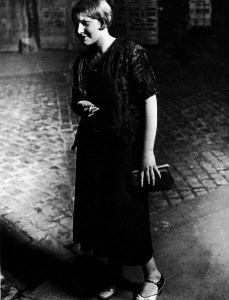
A Girl From Elsewhere, 2000; Rut Blees Luxemberg
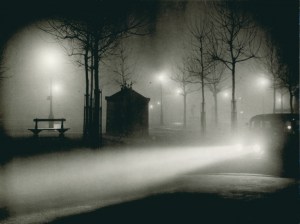
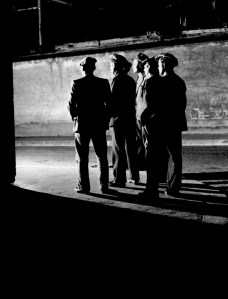
The course notes refer to the work of Brassai , and in particular his book “Paris by Night”. While many of the images in this record the life of the city at night and its inhabitants such as these.
From Paris Nuit, Brassaï
From Paris Nuit, Brassaï
From Paris Nuit, Brassaï
From Paris Nuit, Brassaï
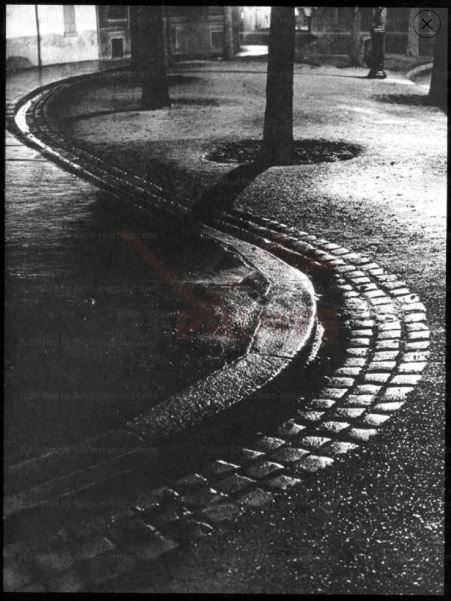
There are others which also look at the almost abstract images created by the reflection of light on wet surfaces, in a manner developed many years later by Rut Blees Luxemberg.
Open Gutter, From Paris Nuit, Brassaï
References
References to the works cited in this post are found in my separate post “References”
I have recently become very aware of how ubiquitous sources of artificial light are in our environment. I have recently re-started developing and printing film. As I was about to load a film into a developing tank, I saw that I was wearing fitness tracker on my wrist which lit up as I moved, and had a green light displaying all the time, my phone was on the worktop and would light up if I was called. All round my darkroom were battery chargers and other items with LED displays.
This prompted my to do two things. The first very practically, was to remove all the light emitting objects and put them in a metal box, and cover up others with black tape; before loading my film…
“Man Ray made his “rayographs” without a camera by placing objects-such as the thumbtacks, coil of wire, and other circular forms used here-directly on a sheet of photosensitized paper and exposing it to light.”
Another Rayograph is shown from their collection, here with those from the Peggy Guggenheim collection:
Rayograph, untitled. Man Ray. Peggy Guggenheim Collection
Rayograph, untitled. Man Ray. Peggy Guggenheim Collection
Rayograph 1922, Man Ray. From the collection of the Metropolitan Museum
I wondered how a similar technique might be applied to modern everyday objects which themselves emit light.
Method
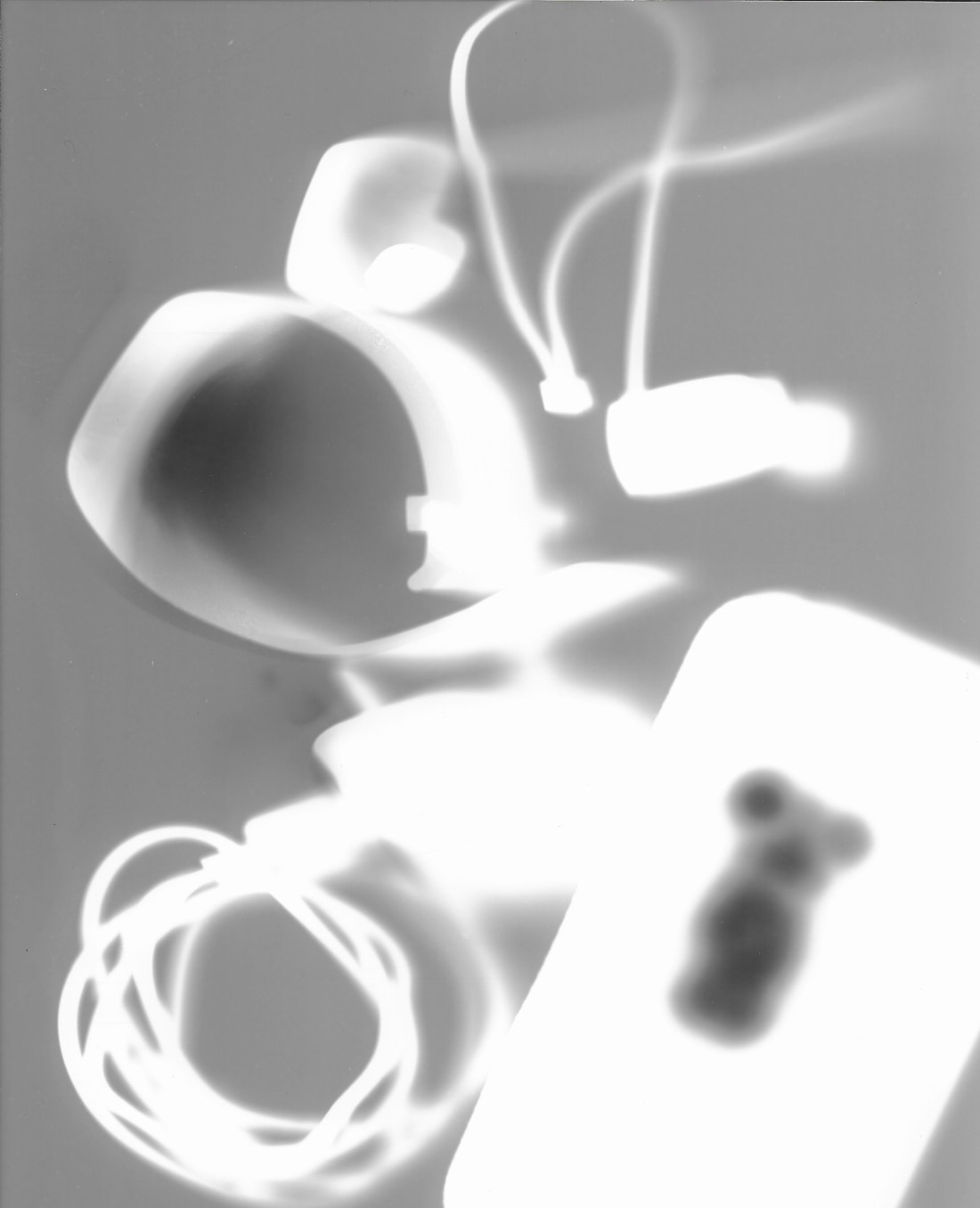
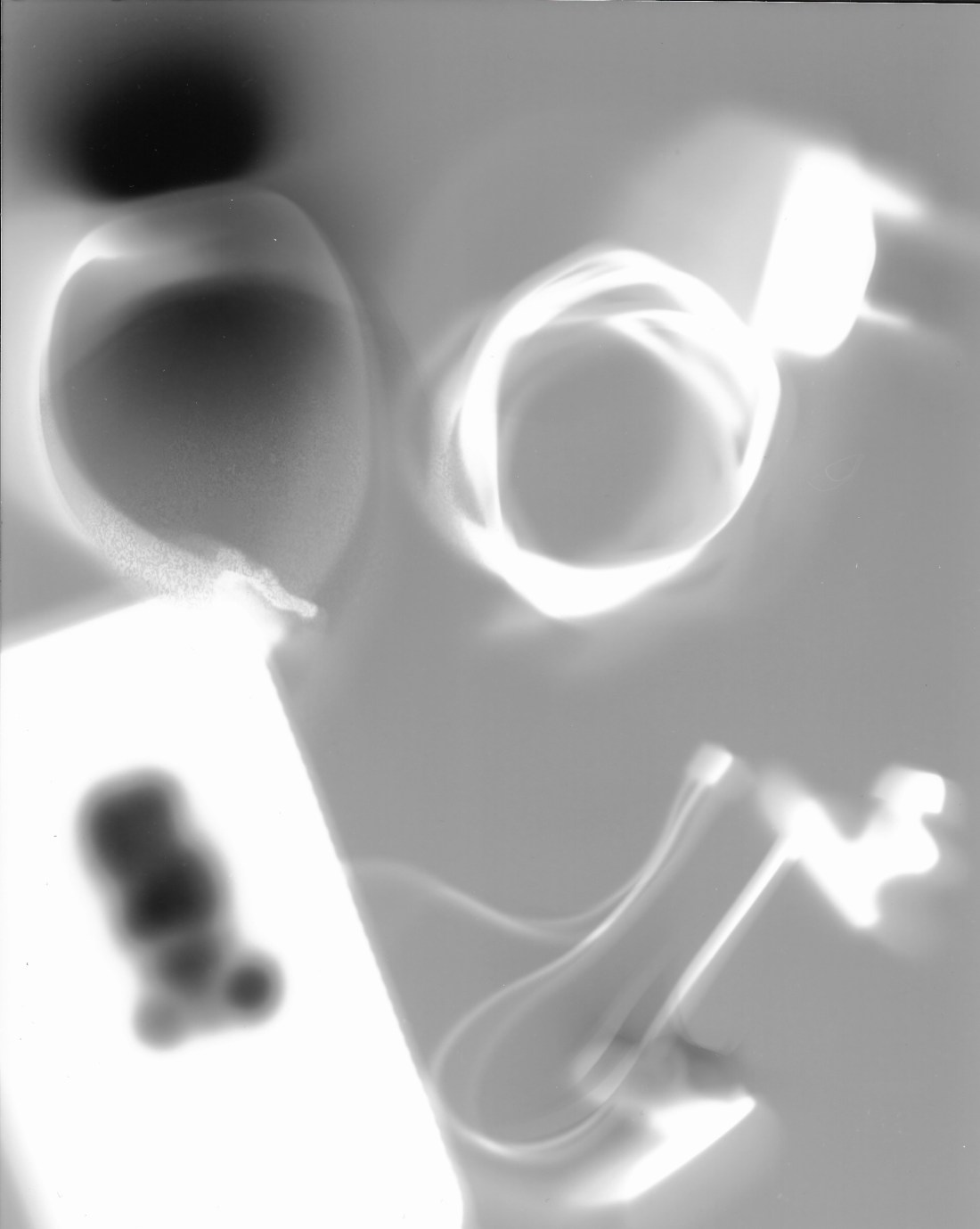
I selected some of the common objects which had so concerned me in the darkroom (including mobile phone, “Fitbit”, bluetooth earphones, phone charger) and arranged them on a sheet of photographic paper (Ilford Multigrade IV). I made sure the displays and LEDs were illuminated, and then exposed the paper with the objects to the light from a tablet. I then developed the paper normally.
I conducted a series of test exposures to ensure the exposure from the tablet light gave a mid-grey tone, and left the objects in place for long enough to produce a darker tone. (I was surprised as to how sensitive the paper was to the light of the tablet display (it only required a 4 second exposure from a distance of 120cm).
The final images are shown below:
2019-07-30 Image 12019-07-30 Image 2
Overall I think these show an interesting contrast to the approach by Man Ray, and show the effect of the intrinsic light of the objects. The images of Man Ray have much sharper edges to the shadows, and I think this is due to them being closely in contact with the paper. If I try this technique again, I might try to put the objects closely in contact to the surface of the paper, perhaps by pressing them down with a sheet of glass.
This meeting was led as usual by Robert Bloomfield and the topic was “ Languages of Light” and Robert planned to discuss Part 4 and the 4th Assignment.
There was a presentation of work by two students who were about to submit their work for the 4th assignment and had both chosen to do this on “The Beauty of Artificial Light”. There were two aspects of the discussion about these images which I found particularly interesting as they had themes which I have been considering.
The first of these was an image of someone looking at their mobile phone at night, illuminated by the light from the screen and the reflected light from outside lights. The quality of the two types of illumination was strikingly different, in particular with regard to the colour temperature of the light, the phone was a very blue/white light and had a stark quality to it, whereas the external light, although from an LED light had a warmer, softer quality as it was reflected off other surfaces. I had previously been considering how ubiquitous objects with light sources have become and how these influence our environment. I have started a consideration of this in another post and may develop it further for my assignment.
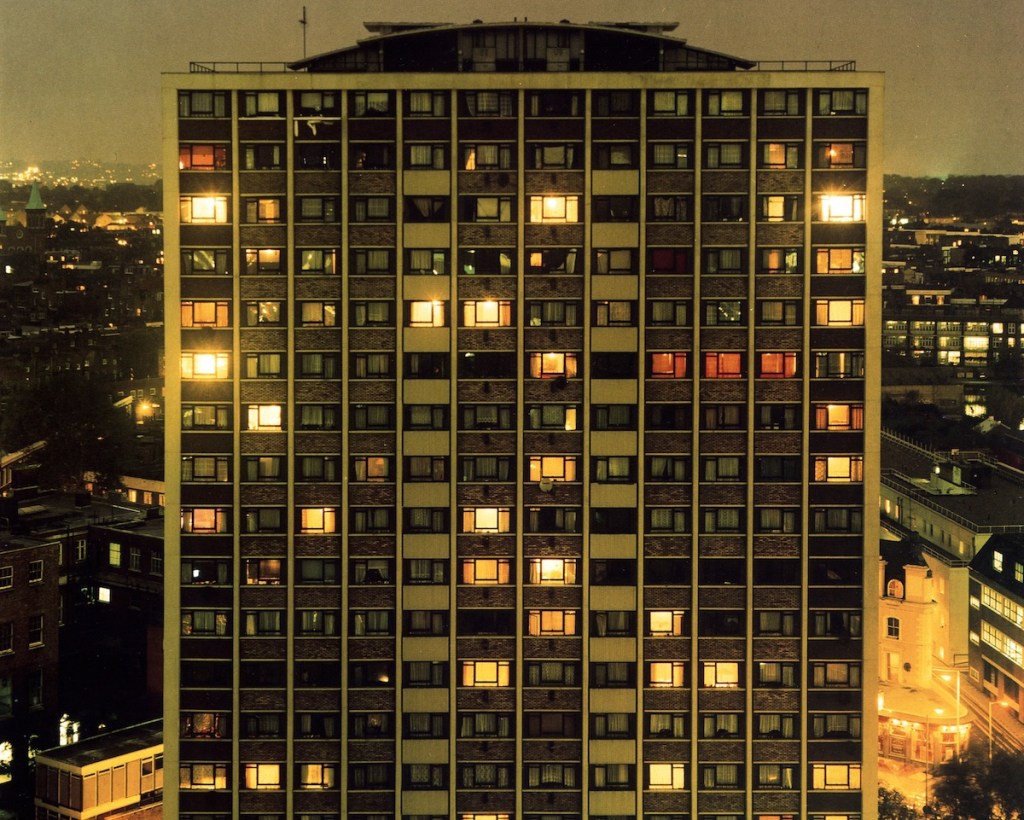
The other aspect of the student work which I found interesting was an image of a tower block with a sign across the windows. The wording was very prominent and gave a strong message in the image. However there were other aspects of the image which could be interpreted in many different ways. The incorporation of words into images is something I have considered before, and an area I need to research and consider more.
Robert gave a presentation about the concept of “Beauty” with the aim of making it a less subjective concept. He gave a historical view of the classical construct of “beauty” which equated to “perfection” and as such had a generally agreed definition and was not therefore subjective. However he then described the attack by the suffragette, Mary Richardson, on the “Rokeby Venus”, a painting by Valaquez in the National Gallery. My understanding of the rationale she gave for this was that the picture was an depiction of “beauty” but her own concept of beauty included the concept of “justice”, which she saw as missing from the contemporary treatment of women.
My own thoughts on this are that while the incorporation of other constructs besides perfection are important, there remains then an element of subjectivity as across societies, different people and groups are likely to have different understanding of concepts like “justice”, and value other constructs as defining beauty. For example in many elements of modern society, an artificial light source could only be considered to demonstrate “beauty” if it does not harm the environment.
Following the meeting I have briefly researched more about the attack on the Rokeby Venus by Mary Richardson. A description of this is at:
Richardson is quoted as saying “I have tried to destroy the picture of the most beautiful woman in mythological history as a protest against the Government destroying Mrs Pankhurst, who is the most beautiful character in modern history. Justice is an element of beauty as much as colour and outline on canvas”
There are other aspects of this painting and its subject which may have made it a target for such an attack as Richardson is quoted as saying several years later “I didn’t like the way men visitors to the gallery gaped at it all day”. Furthermore in the article, the authors cite descriptions of the painting as “’a body for Don Juanesque fantasies’ in a country (Spain) in which extreme machismo was the hallmark and women were regarded as ‘inferior, voiceless and … easy prey’”. This suggests to me that at the time of its painting the concept of beauty in that society included these aspects too. All of which shows how the subjectivity of the concept is influenced not only be an individual’s taste, but also societal values.
Other sources and writers to which Robert directed us in the meeting include Susan Sontag, “On Photography” in which she examines the development of the photograph beyond being a idealised image, and thereby a development of a set of aesthetic values by which a photograph can be judged. This is something I need to read more about.











 Andrew Procter