Review of My Objectives: 10 June 2020

Review of My Objectives: 10 June 2020

In my last review I considered that “My over-arching objective now is to re-establish an effective, regular pattern of working in order to be able to complete the course with a view to submission for assessment in November 2020.

To achieve this I have made a number of innovations.

These include that I have read the course notes in detail for those elements which I still need to complete. Based on this, I have drawn up a timetable with interim deadlines for myself for completing each exercise. That is in addition to having deadlines for submission to my tutor of the two remaining assignments.

Objectives Identified Previously:

Skills:

Film Photography

My current plan is that I will complete Exercises 4.1, 4.2 and 4.3 using a digital camera so as to have colour images and can explore the effect of that on the images. However Exercise 4.4: Personal Voice, does lend itself to completion using film so I will be resuming work in this medium shortly.

Better documentation of the technical elements.

I will be incorporating this into my work with film cameras and have included technical data into my presentations of the exercises with digital cameras..

Use of Web-based and other Electronic Learning Tools:

Development of Learning Logs and Information systems

I have set up a Paperfile account and am adding new research references to this. I have also started using Google Docs, rather than Word for drafts of my blog posts. I have found that this is a much more efficient method as I can not only incorporate the reference and citations, but can then import the post with formatting into WordPress very easily.

Overall I am now happy with the structure of my learning log, and think I have a very effective way of creating posts appropriately and easily. Going forward I will be using this and do not see any need to have this as an area for development, but just to maintain what I am doing.

Use of other Work Sharing Websites (eg Padlet)

I have identified I need to visit the EYV Padlet regularly and use the materials there, contribute to discussions and share my work as appropriate. I have been looking at this, but not as yet contributed to the discussions or shared work.

Engagement with Electronic Web-based learning events

I have attended OCA web-talks but as yet not joined in any other electronic learning experiences, either from the OCA/UCA or other organisations.

Assessment and appraisal skills

This remains ongoing task and other than my research and assessing my own work, I have not had opportunities to do more of this.

New Skills needed:

Studio Lighting

Project 3 Ex nihilo, involves the use of studio-type lighting. This is not a technique which I commonly use. Although I have in the past attended a workshop on lighting, and used studio lighting (with Speedlights) for Assignment 3, I think this is an area for further work, to not only develop my skills, but also gain a theoretical knowledge of how different artists have used controlled lighting to achieve certain effects.


Knowledge:

My objective was to gain a better understanding of other art disciplines and influence on photographic work. The feedback I have from my tutor is that I am “starting to connect other art forms to your method and approach to research”. However, this remains an ongoing learning objective.

To gain an insight into more contemporary and historical approaches to photography

This is another ongoing objective, and I have done little since my last review of my objectives. However the feedback from my tutor is to concentrate on more contemporary practitioners.

Studio Lighting

Better theoretical knowledge of this is needed (see above)


Attitudes:

My objective was the “Demonstration of creativity – Imagination, experimentation, invention”

This remains an objective and I hope with better understanding of the creative process used by other artists I will develop this more.
Susan Bright: Collaboration & Creative Practice

Virtual study event: Susan Bright | Collaboration & Creative Practice

2 June 2020

Open College of the Arts, Photography & Moving Image, International Guest Lecture:

Susan Bright | Collaboration and Creative Practice, Followed by in conversation with Arpita Shah and Dan Robinson.

I watched the on-line lecture by Susan Bright and attended the conversation session

From the OCA description of the session:

Susan Bright is a curator and writer based in Paris. She has curated exhibitions internationally at institutions including: Tate Britain, The National Portrait Gallery in London and The Museum of Contemporary Photography, The Photographers’ Gallery and the Foundling Museum Chicago amongst others.

This lecture asserts that photographic practice is inherently collaborative…Drawing on recent projects where she has developed relationships and friendships with artists, writers and editors, Bright considers what curating can be and its possibilities when working with others. Examples including Elina Brotherus’ solo exhibition Playground and her Guest Curation of PHotoESPAÑA 2019. Both projects highlight the in-flux nature of her work and the various roles a curator and her collaborators play.


From this lecture I think I gained a better understanding of the role of the curator – both in an institution and, like Bright, as a freelance curator.

A second aspect of this was the interplay between curator and artist – which in the course of the conversation after her lecture, she described as analogous to that between and writer and editor. ie a collaboration to produce the finished works.

References

References

This post contains full references to all the works cited in other posts in this blog.

Abel-Hirsch, H. (2018) London: A visual love song. At: https://www.bjp-online.com/2018/02/rut-blees-luxemburg-modern-project-liebeslied/ (Accessed 02/06/2020).

Alexia Clorinda (s.d.) At: https://www.alexiaclorinda.com/home/about/ (Accessed 02/07/2020).

Baker, S. and Mavlian, S. (2019) Don Mccullin. (s.l.): Tate Publishing, Limited.

Barrett, T. (1997) Photographs and Context. At: http://terrybarrettosu.com/wp-content/uploads/2017/08/B_PhotAndCont_97.pdf (Accessed 13/06/2020).

Bate, D. (2016) Photography: The Key Concepts. (s.l.): Bloomsbury Publishing.

Brassaï Artworks & Famous Photography (2020) At: https://www.theartstory.org/artist/brassai/artworks/ (Accessed 04/06/2020).

Cartier-Bresson, H. and Simon, R. L. (2014) The decisive moment. (s.l.): Steidl Göttingen.

Catling, B. (2012) The Vorrh. London: Honest.

Chris Steele-Perkins; Mount Fuji (s.d.) At: https://www.prixpictet.com/portfolios/earth-shortlist/chris-steele-perkins/ (Accessed 18/06/2020).

Davies, J. (s.d.) John Davies Biography. At: http://www.johndavies.uk.com/abiog.htm (Accessed 18/06/2020).

Diprose, G. and Robins, J. (2012) Photography – The New Basics: Principles, Techniques and Practice. London: Thames & Hudson.

Duncan Hill Photo (s.d.) At: https://www.duncanhillphoto.com/about (Accessed 24/06/2020).

Editorial @ ASX (2010) Michael Schmidt: ‘Thoughts About My Way of Working’ (1979). At: https://americansuburbx.com/2010/10/michael-schmidt-thoughts-about-my-way-of-working-1979.html (Accessed 31/05/2020).

Eugène Atget (2020) At: https://www.nga.gov/collection/artist-info.13548.html (Accessed 31/05/2020).

Fernández, E. (2018) ‘Hong Kong’s fight to save its neon shimmer – a photo essay’ In: The Guardian 25/07/2018 At: http://www.theguardian.com/travel/2018/jul/25/hong-kong-neon-lighting-threat-chinese-regulations (Accessed 04/06/2020).

Flusser, V. (2000) Towards a philosophy of photography. London: Reaktion.

Flusser, V. (2012) ‘Towards a theory of techno-imagination’ In: Philosophy of photography 2 (2) pp.195–201.

Franco Fontana (s.d.) At: http://francofontanaphotographer.com/tablet/biography.html (Accessed 14/08/2020).

From the Rokeby Venus to Fascism Pt 1: Why did suffragettes attack artworks? (s.d.) At: http://www.artinsociety.com/from-the-rokeby-venus-to-fascism-pt-1-why-did-suffragettes-attack-artworks.html (Accessed 28/06/2020).

Ghazzal, Z. (s.d.) decisive moments. At: http://zouhairghazzal.com/photos/aleppo/cartier-bresson.htm (Accessed 18/09/2020).

Goldblatt, D. and Brown, L. (eds.) (1997) Aesthetics: A Reader in Philosophy of the Arts. Upper Saddle River: Prentice Hall.

Hal Roach comedy clip with Oliver Hardy cameo in 1920s. | Huntley Film Archives (s.d.) At: https://www.huntleyarchives.com/preview.asp?image=1099739 (Accessed 22/07/2020).

Henri Cartier-Bresson | Behind the Gare Saint-Lazare (1932) | Artsy (s.d.) At: https://www.artsy.net/artwork/henri-cartier-bresson-behind-the-gare-saint-lazare-4 (Accessed 22/07/2020).

Higgins, A. (2017) Woodhead’s forgotten tragedy. At: http://www.historyhome.co.uk/peel/railways/woodhead2.htm (Accessed 09/07/2020).

Hsu, L. (s.d.) The Decisive Moment — Fraction Magazine. At: http://www.fractionmagazine.com/the-decisive-moment (Accessed 18/09/2020).

Jean Baptiste Huynh – Site officiel (s.d.) At: http://www.jeanbaptistehuynh.com/ (Accessed 11/06/2020).

Little, W. et al. (1973) The shorter Oxford English dictionary on historical principles. Oxford: Oxford University Press.

Luxemberg, R. B. and Duttman, A. G. (2000) Liebeslied: My Suicides. London: Black Dog.

Mann, S. (2020) Sally Mann. At: https://www.sallymann.com/new-page (Accessed 31/05/2020).

Matthew Murray (s.d.) At: https://www.matthewmurray.co.uk/saddleworth (Accessed 28/06/2020).

Michael Schmidt | Prix Pictet (2013) At: https://www.prixpictet.com/portfolios/consumption-shortlist/michael-schmidt/ (Accessed 31/05/2020).

Murray, M. (2017) ‘Matthew Murray’s atmospheric landscape images inspired by walks on Saddleworth Moor’ In: British Journal of Photography: Journeys (7865) pp.20–21.

NGV Melbourne (2017) The four seasons | David Hockney. At: https://www.youtube.com/watch?v=ijndJWCJzoo (Accessed 17/08/2020).

O’Byrne, R. (2014) H. Cartier-Bresson: l’amour tout court. At: https://vimeo.com/106009378 (Accessed 18/09/2020).

Pantall, C. (s.d.) photo-eye Book Reviews: The Present. At: https://blog.photoeye.com/2012/05/photo-eye-book-reviews-present.html (Accessed 18/09/2020).

Paul Graham Archive (s.d.) At: https://www.paulgrahamarchive.com/thepresent.html (Accessed 18/09/2020).

Rong, J. and Mann, S. (2013) An Exclusive Interview with Sally Mann – ‘The Touch of an Angel’ (2010). At: https://americansuburbx.com/2013/01/interview-sally-mann-the-touch-of-an-angel-2010.html (Accessed 29/05/2020).

Schmidt, M. and Schleef, E. (1987) Waffenruhe. Berlin: Dirk Nishen Verlag.

Shintaro, S. (s.d.) Night Lights, Sato Shintaro. At: http://sato-shintaro.com/work/night_lights/statement.html (Accessed 02/06/2020).

SR Contemporary Art (2018) At: http://www.photography-in.berlin/sr-contemporary-art-franco-fontana-deep-in-colors/ (Accessed 14/08/2020).

Steward, J. C. (2000) ‘The camera of Sally Mann and the spaces of childhood’ In: Michigan quarterly review 39 (2) p.365.

Suler, J. (s.d.) Photographic Psychology: The Decisive Moment. At: http://truecenterpublishing.com/photopsy/decisive_moment.htm (Accessed 18/09/2020).

Szarkowski, J. (2020) Eugène Atget. At: https://www.britannica.com/biography/Eugene-Atget (Accessed 31/05/2020).

Tate (s.d.) Paul Graham born 1956. At: https://www.tate.org.uk/art/artists/paul-graham-2337 (Accessed 18/09/2020).

THE HUNT IN THE FOREST (s.d.) At: https://www.ashmolean.org/hunt-forest (Accessed 26/07/2020).

The Irving Penn Foundation (s.d.) At: https://irvingpenn.org/biography (Accessed 11/06/2020).

V, C. E. N. and Canon Europe Ltd 2002- (s.d.) White Balance – Canon Professional Network. At: https://cpn.canon-europe.com/content/education/infobank/white_balance/white_balance.do (Accessed 29/06/2020).

Weston, E. and Newhall, N. (1961) The Daybooks of Edward Weston, Vol II (California). Vol. 1961. New York: Horizon Press. p.20.

Wikipedia contributors (2019) Pepper No. 30. At: https://en.wikipedia.org/w/index.php?title=Pepper_No._30&oldid=916517181 (Accessed 11/06/2020).

Wikipedia contributors (2020) Mass trespass of Kinder Scout. At: https://en.wikipedia.org/w/index.php?title=Mass_trespass_of_Kinder_Scout&oldid=961817357 (Accessed 22/06/2020).

Wikipedia contributors (s.d.) Friedrich Seidenstücker. At: https://de.wikipedia.org/w/index.php?title=Friedrich_Seidenst%C3%BCcker&oldid=170721804 (Accessed 18/07/2020).

Review of My Objectives: 27 May 2020


Review of My Objectives: 27 May 2020

Once again for personal reasons, I have not been able to add to this log for longer than I had planned, so this review is later than the monthly reviews planned. Following an episode of illness last year and subsequent health issues, I have been granted an extension for completion of this course. My completion date is now August.

I am now able to work and study more effectively and am very aware that the deadline is not long away!

My over-arching objective now is to re-establish an effective, regular pattern of working in order to be able to complete the course with a view to submission for assessment in November 2020. To this end I will be incorporating techniques and suggestions from Andrea Norrington’s Zoom meeting in January.

Since I last reviewed my objectives in November I have received feedback from my tutor on Assignment 3.

Also, there has been a major change in our methods of working associated with adaptations to the restrictions for the COVID-19 pandemic restrictions. This has been associated with greater use of web-based experiences.
Objectives Identified Previously
Skills:
Film Photography
The feedback I have had about my submission for Assignment 3, indicates to me that this has been a worthwhile exercise and development. There remain areas for further work.

  • Better documentation of the technical elements
  • Continued improvement in the practical aspects of shooting the images and making the prints.

I plan to continue to use film for remaining exercises, but may not use this for my next assignment in order to be able to examine all parameters of light – not just black and white.
Videography
This area remains something I want to explore more, but is not a priority for me until I have completed the course and submitted Assignments 4 and 5. I will not carry this forward to my next review, except where it would shed insights into other objectives.

Use of WordPress
I previously described that in general I can achieve what I need with this. My tutor is encouraging about the structure I have developed for my Learning Log. The weakness I have identified for this is the use of references and a system for recording these. I think this will be important for future courses and I need to develop a system for recording references and generating bibliographies. In addition, there are other digital formats with which I need to interact.

I will re-define this objective as Use of Web-based and other Electronic Learning Tools, which in turn has subdivisions:

Development of Learning Log and Information systems
I need to develop a reference database and will be testing the use of Paperfile for this. I have already set up a paperfile account and will be importing those references I have used to date into it.

Use of other Work Sharing Websites (eg Padlet)
There is a new EYV Padlet and I have identified I need to visit the EYV Padlet regularly and use the materials there, contribute to discussions and share my work as appropriate.

Engagement with Electronic Web-based learning events
Access the sites suggested on the EYV Padlet for podcasts etc for useful background reading/learning. In addition I will be looking for other electronic learning experiences, either from the OCA/UCA or other organisations.

Assessment and appraisal skills
This remains an ongoing task and by accessing the EYV and OCA North Padlets I will have opportunity to do this.

Knowledge:
My objective was to gain a better understanding of other art disciplines and influence on photographic work. The feedback I have from my tutor is that I am “starting to connect other art forms to your method and approach to research”. However this remains an ongoing learning objective.

To gain an insight into more contemporary and historical approaches to photography
This is another ongoing objective, and I have done little since my last review of my objectives. However the feedback from my tutor is to concentrate on more contemporary practitioners.

Attitudes:
My objective was the “Demonstration of creativity – Imagination, experimentation, invention”
This remains an objective and I hope with better understanding of the creative process used by other artists I will develop this more.
 

Assignment 3 – Formative Feedback from Andy Hughes

Assignment 3: The Decisive Moment – Formative Feedback from Andy Hughes

Rather than reproduce Andy’s feedback document I will present sections from it that will enable me to recognise specific elements to maintain and those which need development.

Overall Comments

In his overall comment he wrote that of the prints I submitted, “each shows clear attempts to fulfil the brief requirements”; and that in my written analysis I had a “well-written descriptions of … how the depicted subjects relate to the decisive moment.”

This is an important message for me as I initially found the “decisive moment” a difficult concept to capture (as evidenced by my discussions of the concept at the beginning of my posts on this assignment).
Feedback on assignment
Demonstration of technical and Visual Skills, Quality of Outcome, Demonstration of Creativity
Use of traditional composition elements provided for you the basis of a series of strong images.” It is reassuring that Andy finds these “strong” images, as I was uncertain about this myself as I had had hopes of more geometric images with some of the settings.

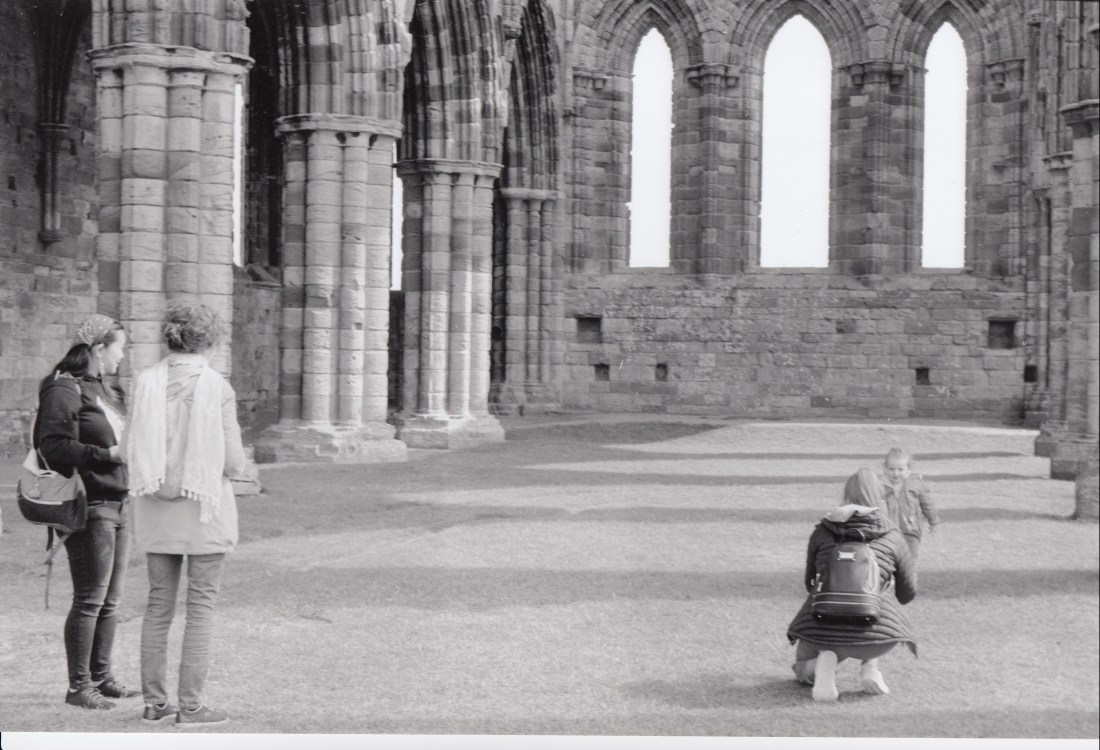
He also picked up on some technical shortcomings of which I was also aware. “There are one of two technical elements to bear in mind: #02-12 might have benefited from a faster shutter … there’s strength in the depiction but the framing is very tight to the edge with the figures.”

2019091702#12
2019-09-17 #02-12

I was aware of the tight framing, particularly of the figures to the left of the image. To me it is this image which emphasised the difficulty of working with film and the importance of anticipating the movement of the subjects. The contact sheet shows that these figures are at the edge of the negative – I have a distinct recollection of wanting to catch the image of the child as he ran to (?) mother and pressed the shutter instinctively but had not paid enough attention to the others in the frame!
I chose to use film in order
to gain an insight into the work of Cartier-Bresson, and the significance of the timing of releasing the shutter in the creation of this image.” In the creation of this image I think I gained that insight!!

Andy also added that it “would be good to have added a little more specification (film stock and camera settings etc.)” I will bear this in mind for the future – however again things seemed to happen so quickly that I could not make notes of my camera settings before the next shot presented itself! (unlike digital where this is recorded automatically).
Coursework
Demonstration of technical and Visual Skills, Demonstration of Creativity

Given what I have commented on above, Andy’s comment that “Coursework seems more expressive in terms of subject matter; this is probably due to familiarity with the DSLR” is not surprising!

I plan to continue working with film and making my prints, however the nature of the next assignment (Languages of Light) lends itself to working in colour so I will be using digital cameras for that. I recognise that there is much I can do in black and white relevant to the topic, but taking a medium which prevents me using colour and the changes in colour temperature and balance means I am missing learning opportunities.

Andy referred to my incorporation of my objectives pages into my learning log “There’s some great elements across the site which reveals good planning and strong structure going forward. Objectives page sets goals with subject specific areas to tackle in terms of practical and thinking elements.”

I am pleased about this as I have added this to the suggested OCA template – but it works for me and I have incorporated it from other learning portfolios with which I am familiar. (eg https://portfolioonline.zendesk.com/hc/en-gb/articles/115000949949-The-Personal-Development-Plan-PDP accessed 27.05.2020).

Andy also makes a positive comment about my incorporation of other art forms.
It’s good to see an ability to connect other art forms and relay back and forth between your interests and subject matter… It’s clear that you’re starting to connect other art forms to your method and approach to research.

Again I am pleased that he is supportive of this as a specific objective of mine is

to gain a better understanding of other art disciplines and influence on photographic work”. It was an area with which I have not been familiar or entirely comfortable.

He also suggested “It might be worth using a notebook for annotations and sticking in small prints, cutting etc”. This is a theme he has mentioned in the past and I am still struggling with, but doing some work on.

He has directed me to other sources – particularly for contemporary artists.

Overall:
Strengths
“Good notes and supporting commentary” – I am pleased that the level of discussion I have written is satisfactory and I will aim to continue to work at this level

New experiences gained by attending events, shows and talks etc.” I have made an effort to seek these experiences, so clearly need to continue.
Areas for development
Consider technical elements and keep a record.” I will aim to record more technical details for my images.

Look at contemporary work” This will be a focus for my choice of events, shows and talks etc which I attend.
My next steps before submission:

I found capturing these images very much more time consuming using film rather than digital, and I am not sure I will have time to re-shoot any. However I think there are some that could be stronger and I will attempt to get a couple more – now I have more confidence that these are suitable.

The printing of some could be improved in terms of contrast and I had to cut the border off one, as there was some fogging due to a failed safelight. Again if I have time I will reprint them.

Zoom Meeting 26 May 2020 – EYV Padlet

Zoom Meeting 26 May 2020 – EYV Padlet
Led by Robert Bloomfield

In recent weeks there has been a number of emails and notifications from the OCA regarding arrangements for improved distance working in part it would seem as a general development of the courses and also as adaptation to the COVID-19 pandemic. In his emails prior to this meeting Robert had described part of this work involving the establishment of a Padlet to support EYV.

I have previously come across padlets to support the OCA North Group and enable sharing of work when we are unable to meet in person.

( https://oca.padlet.org/emma516150/go12xthllg7r20p7)

However I am generally unfamiliar with the concept and how best to make use of them.

I had examined the EYV site (  https://oca.padlet.org/robertbloomfield/eyv)   prior to the meeting. During the meeting Robert shared his screen and showed how he had set up the layout of the padlet but was seeking opinions as to the best way to use it.

There was some discussion about this and I familiarised myself with the new layout.
Robert suggested incorporating links to sites with useful podcasts and other general material can be found. Other students suggested
https://mackbooks.co.uk/pages/live
https://grainphotographyhub.co.uk/portfolio-type/online-talks-programme/

My objectives from this meeting are to:

  • Visit the EYV Padlet regularly
  • Use the materials there
  • Contribute to discussions
  • Share my work as appropriate
  • Access the sites suggested for podcasts etc for useful background reading/learning


Library Webinar 27 May 2020 – Referencing Software

Library Webinar 27 May 2020 – Referencing Software

Led by:
Matthew Parfitt – UCA Epsom Campus
Ian Badger – UCA Canterbury Campus

Objectives and Content
Overview of types of referencing software
Creating Paperpile account
Using Paperpile
Adding references
Creating bibliography
Other features

My reaction to this session
I have previously recognised that I need to have a more structured and systematic approach to recording work which I reference in my research for this course. Because of my previous research experience (PhD thesis and post-doctoral research in bio-medical science) I am aware of the need for a system for this and that need will continue throughout this undergraduate course. I have therefore identified this as a learning and developmental need.

Matthew and Ian gave an introduction to Paperpile, the reference managing software supported by the UCA/OCA. They also mentioned Zotero, which is a locally held database, rather than a web-based system.

During the course of the webinar, I was able to set up a Paperpile account and explore the basic functions they described.

As this software has support from the UCA/OCA library, it is my intention to use this and incorporate it into my learning log.

Light metering

Light metering
Part 4 of the course begins with a suggested exercise to complete “If you’re not completely sure how your light meter works…”

When I first started using a DSLR, I completed a course with the Jessops academy which included discussions about metering. This included the various metering modes available on the cameras – on mine these are
• Centre weighted average
• Evaluative
• Partial
• Spot

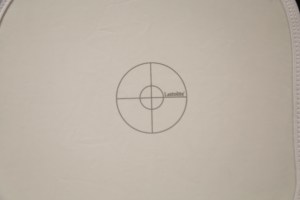
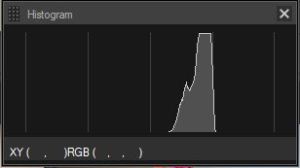
In addition we completed an exercise of photographing a white card using exposure determined by the camera – the result was a grey image.

Whereas when the metering was made for a grey card and then the image of the white made at the exposure, the card appears white.

Having completed these exercises I feel I am confident with the basic skills of the use of exposure metering, and exposure lock in order to be able to expose the image for which I aim. This is of particular importance with my film cameras as I am unable to confirm the correct exposure on site and only on developing the film. For this work I use three types of exposure metering: my 35mm SLRs have through the lens metering, I also use a hand held meter (for the medium format camera) and then I often check the exposure with the meter in my DSLR.

OCA North Meeting: 12 January 2020


OCA North Meeting, Halifax 12 January 2020

Venue: Fletcher’s Mill, Dean Clough, Halifax

The plan for the day was:

  • a presentation on her work by Miranda Richmond
  • general discussion
  • presentation by participants of their OCA work

I have previously read a little about Miranda Richmond’s background and work, and have described this in my log.

Presentation by Miranda Richmond
Miranda described several aspects of her work. These included her work produced during a recent residency on Iona. She also described her influence by her late husband the artist, Miles Richmond; and in turn his influences including Bomberg. She described this as “English Constructivism”.

She referred to a principle advocated by Miles to “find a subject that is too big for you”. My understanding was that by doing this it forced you to look at the entirely of the subject. Thereby it may be possible to get a sense of the “essence” (my term) of the subject rather than focus on small details.

Miranda also brought along her sketch books and it was helpful to see how work produced in the field was translated into a sketch. I have tried using sketch books in the past and found difficulty in that I try to produce a “finished” image. I saw that this is not the purpose but rather to capture key points to develop further later.

General Discussion
There was a general discussion about future meetings, the direction of the group and the possibility of an exhibition.

Presentation of OCA Students’ work
Several students presented their work from the textiles courses.
My Aims and What I Learned
I had similar aims from attending to those for previous meetings.
Practice my assessment and appraisal skills
Gain a better understanding of other art disciplines and influence on photographic work

Seeing the work of Miranda Richmond and hearing her describe her approach and the background to it, enabled me to understand a little better what an artist is trying to show by more abstract images.

New Objectives

To find out more about the work of Miles Richmond and Bomberg, as well as the school of “English Consructivism”.

To try and use sketch books again to help my visual skills

“The Corridor” by Jill Chaloner


IMG_0001c
The Corridor. Jill Chaloner

I receive the British Journal of Psychiatry each month. The editors “are always looking for interesting and visually appealing images for the cover of the Journal”.

B J Psychiatry 2020, 216(1) cover

I received the January 2020 copy while working on Part 4 of this course “Languages of Light”. The cover has a reproduction of a painting, The Corridor by Jill Chaloner.

Chaloner is described in the Journal as “an East Anglian artist trained at the Norfolk Painting School who previously worked as a Consultant Psychiatrist in the NHS for 20 years”. (B J Psychiatry (2020) 216(1): A2).

She describes the painting:
This painting arose out of memories of working and training in several old asylums, Claybury, Bexley and Warley hospitals among others. Also at the back of my mind was a paper I read in the yellow Journal more than 30 years ago entitled “The Corridor People”. It was a study of patients whose main activity was daily wandering in the main hospital corridor and who were not in receipt of any other “therapy”. It was argued that their seemingly purposeless activity could in fact be part of a healing process. In my picture though the human figures seem to inhabit deep darkness, bright light is never far away hinting at the possibility of transformation.

Like Chaloner, I trained and worked in an old asylum, Bexley Hospital. The subjects of the painting and their situation has a resonance for me. In terms of how Chaloner depicts this, I was struck by the use of bright light and deep shadow. This is not only visually appealing and adds to the interest of the image, but is also here used as a metaphor for chronic mental illness and recovery.

I include this post in my consideration of my assignment as an additional way artists use light – as a metaphor.