Exercise1.3: Line

Brief:

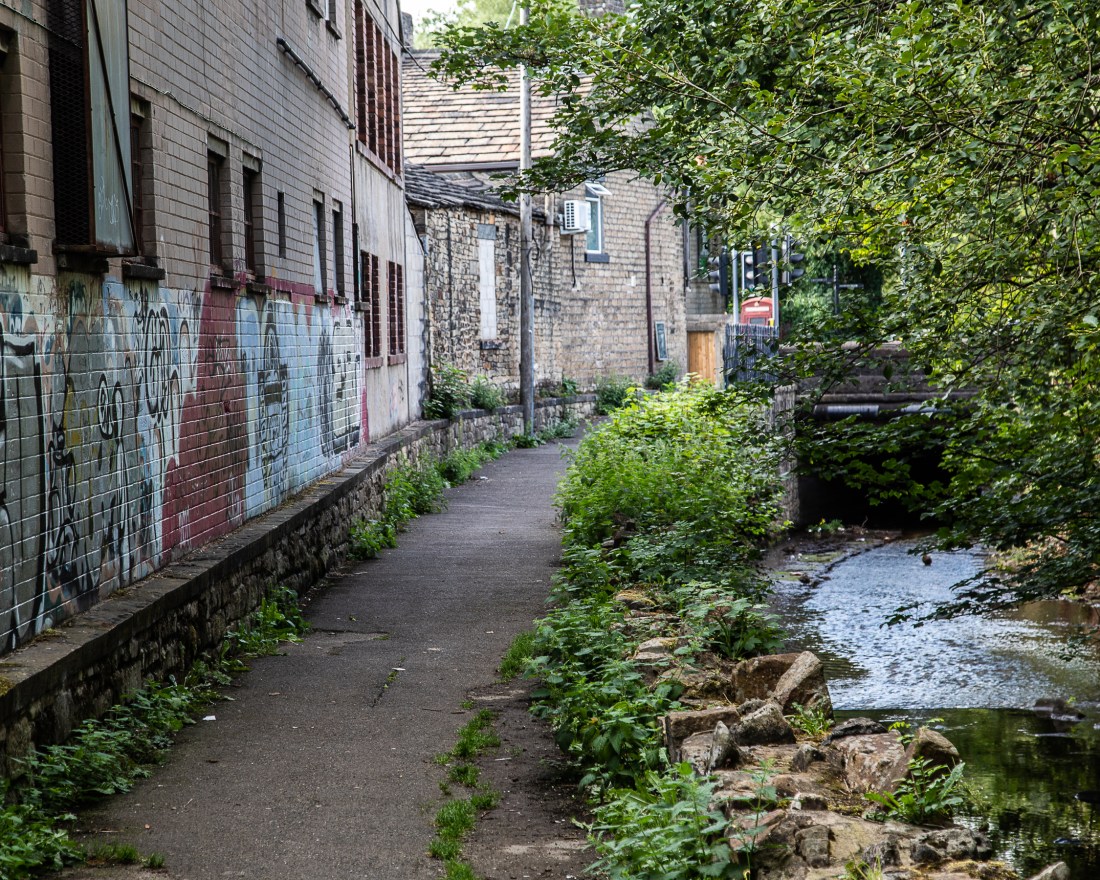
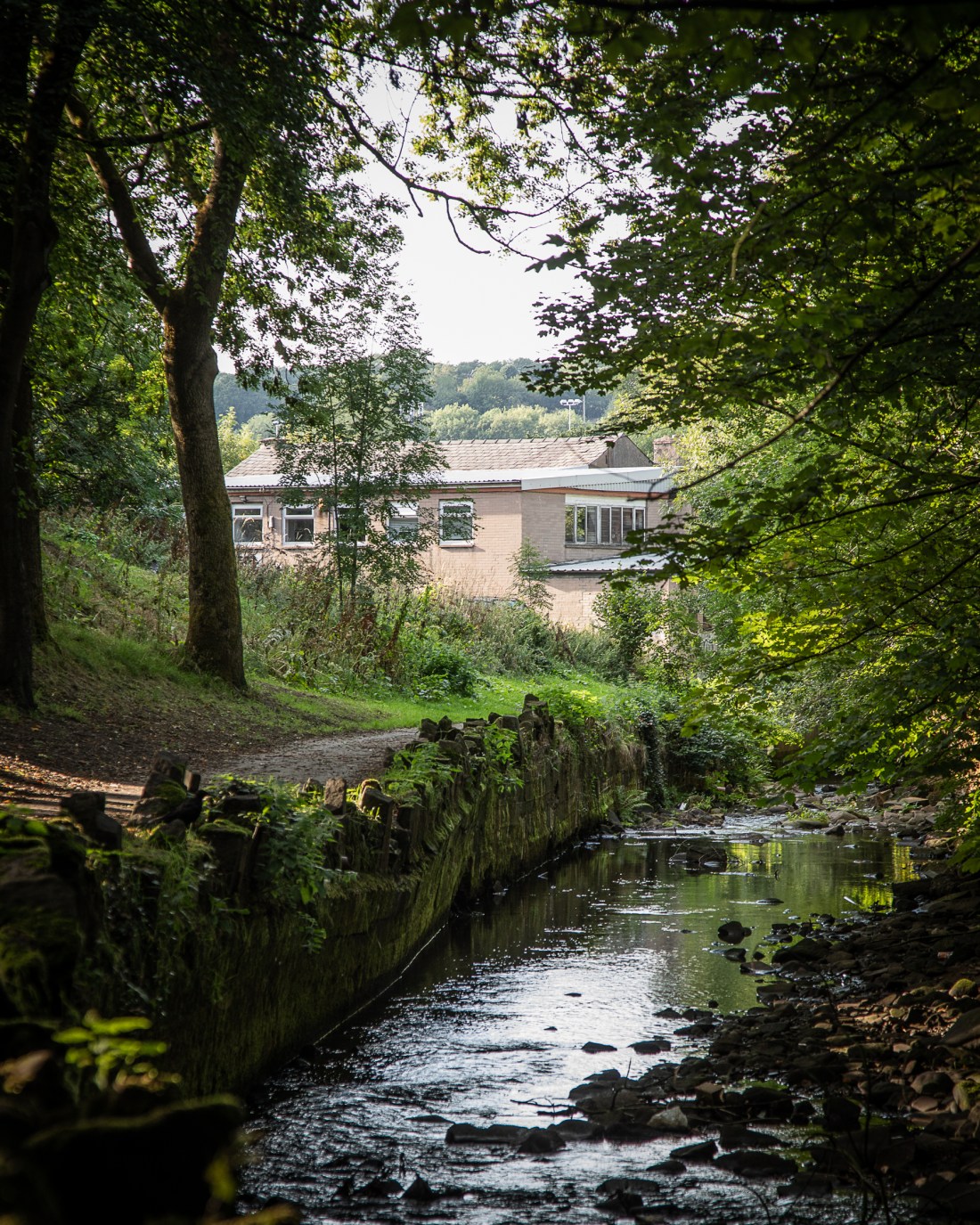
Ex 1.3 (1): Take a number of shots using lines to create a sense of depth.

Ex 1.3 (2) Take a number of shots using lines to flatten the pictorial space.

I chose a site I had previously visited for my Assignment Square Mile. The image in this assignment of “Glossop Brook at Wren Nest Mill” has a very linear composition and my tutor commented on the strength of the leading lines in this image.
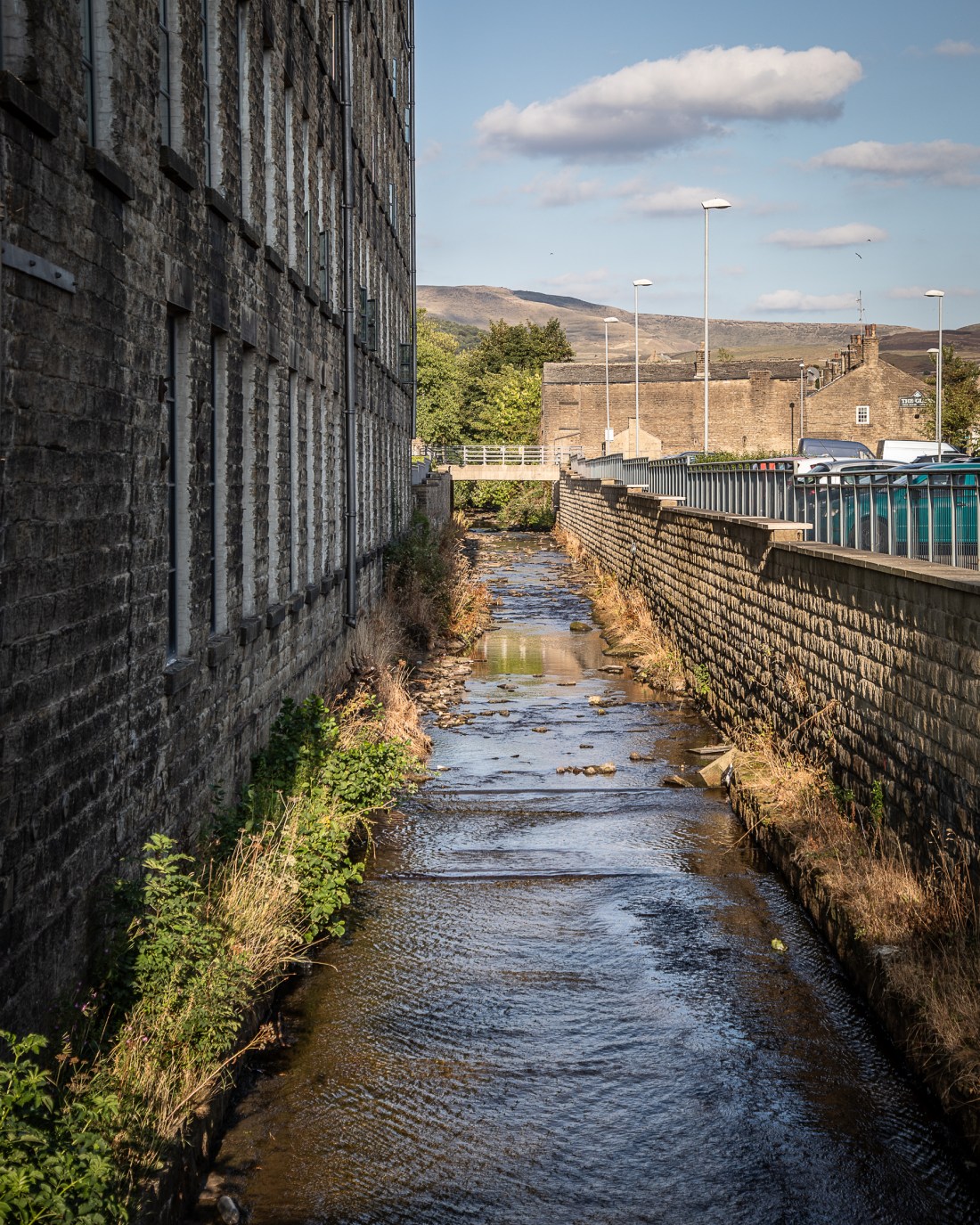
2018-08-21 Glossop EYV-23
Glossop Brook at Wren Nest Mills

I revisited this area to get further images of this. Contact sheets for this exercise Ex 1.3(1) and Ex 1.3(2) are attached

Contacts Ex 1-3

Exercise 1.3 (1)

I took some shots looking the other way than I had for the image for the Square Mile. They have had minor developments in Lightroom to alter the exposure settings. The images have not been cropped, except where stated.


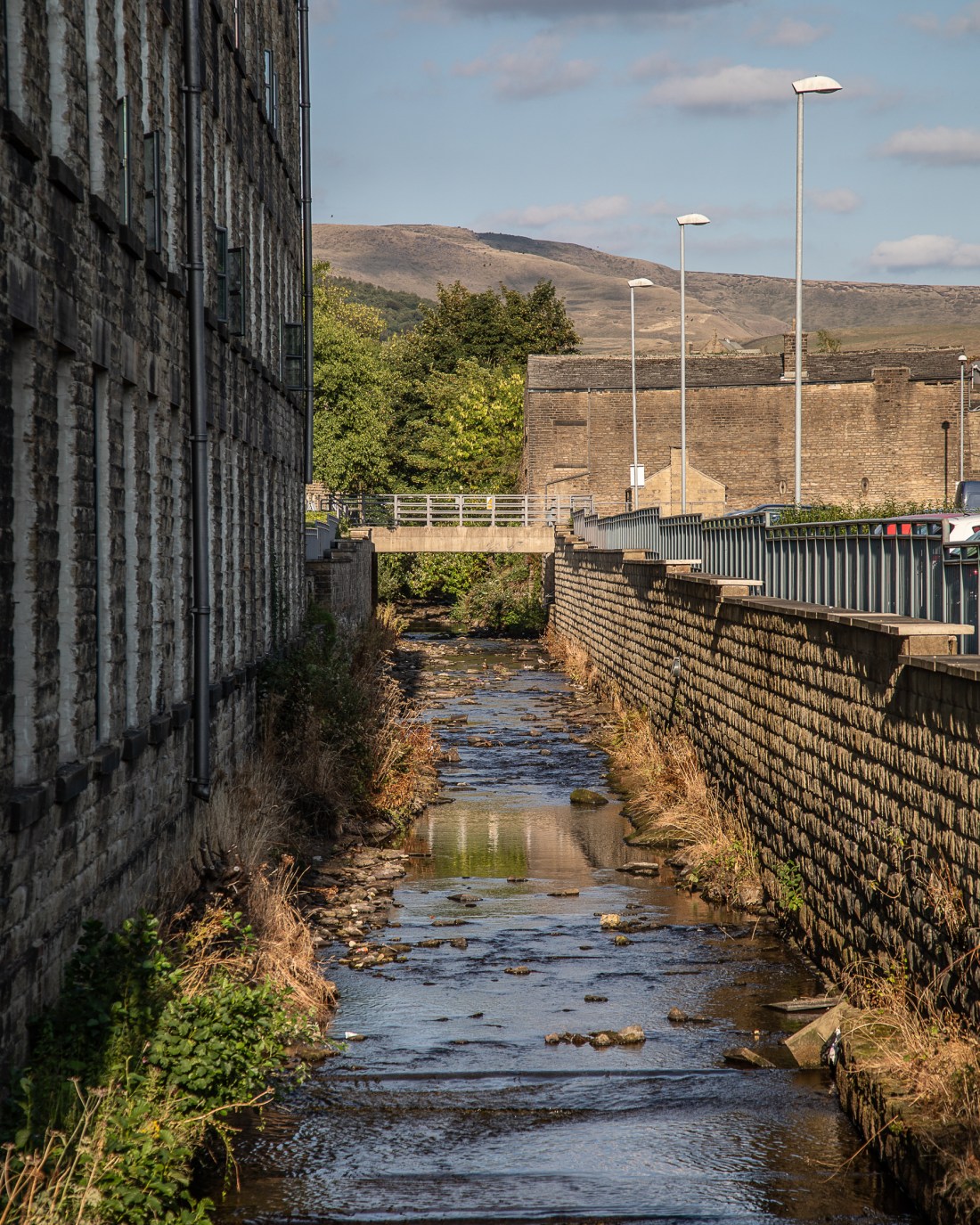
In these images the lines of the walls at the edge of the Glossop Brook, draw the eye into the image. This seems accentuated by the strong vertical lines of the mill to the right and the lamp-posts to the left, which enhance the image. In the zoomed image (lowest above) the eye is drawn past the bridge to the dark tunnel under the trees.

However, these images are all almost symmetrical with the brook central in the frame. I tried to compose an image with it across the frame.
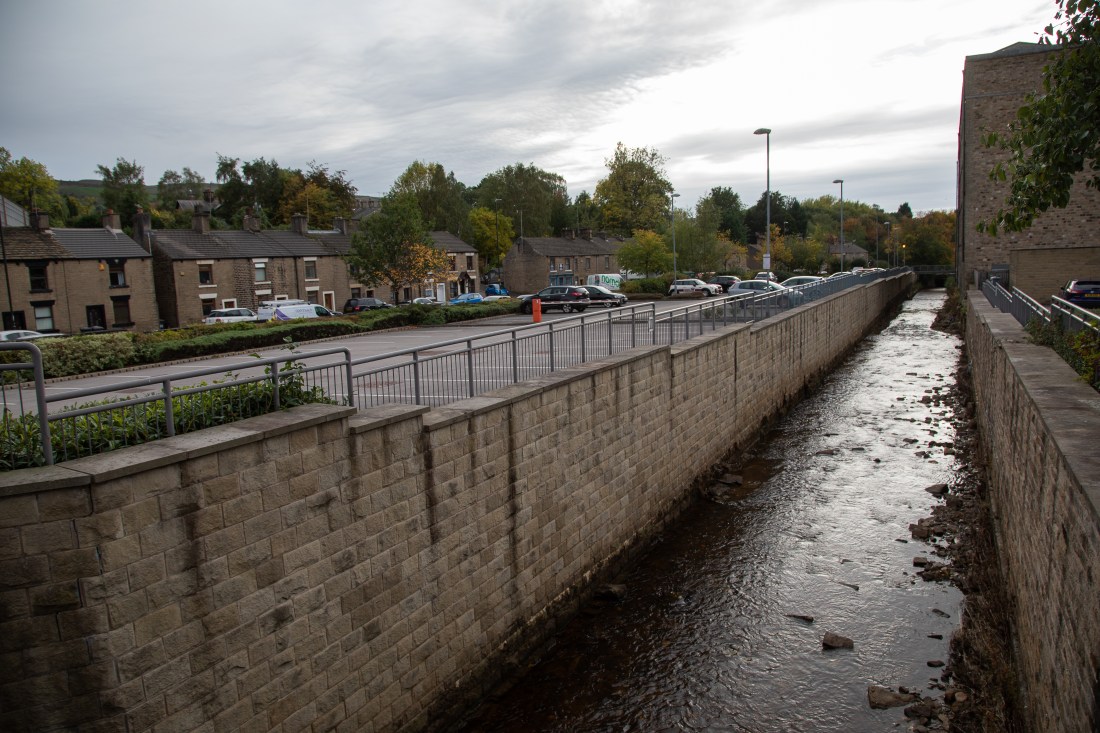
2018-10-07 EYV Ex1-3-4
Glossop Brook at Wren Nest Mill, looking towards High Street West

Here, the wall on the left bank of the brook is more prominent and the end of the brook is to the edge of the frame, I find my eye is not drawn into this image in the same way, but the wall tends to act as a barrier.

When I cropped this image to square, this block seems removed and the eye is better drawn into the frame.
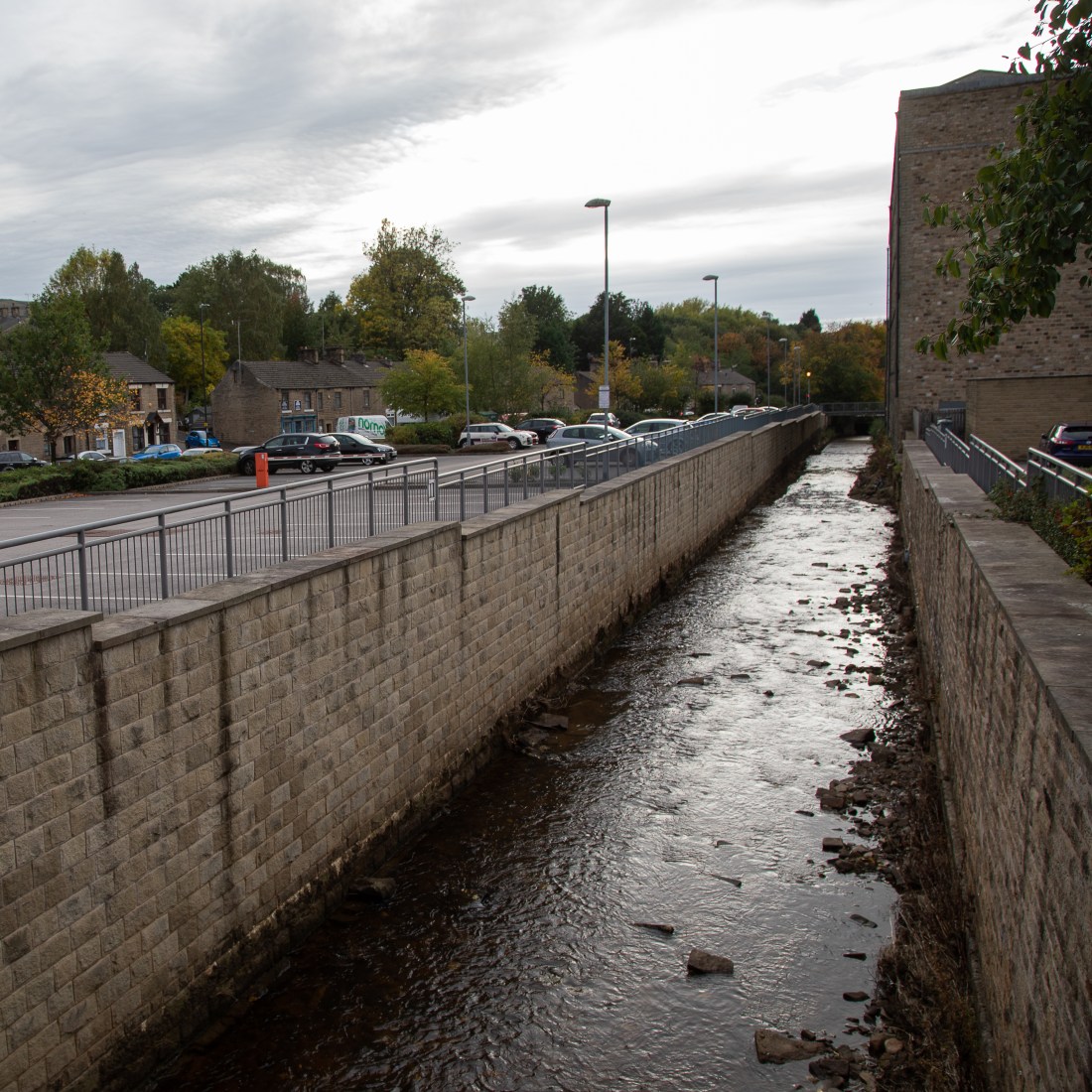
2018-10-07 EYV Ex1-3-4-2
Glossop Brook at Wren Nest Mill, looking towards High Street West

Exercise 1.3 (2)

The uncropped version of the previous image begins to show how line can be used to flatten the space, and prevent the eye exploring all the image.

I took further images with prominent lines, which I consider demonstrate this futher. Some of these images have been corrected in Lightroom to adjust the effect of vertical perspective and render the upright lines in the image parallel.
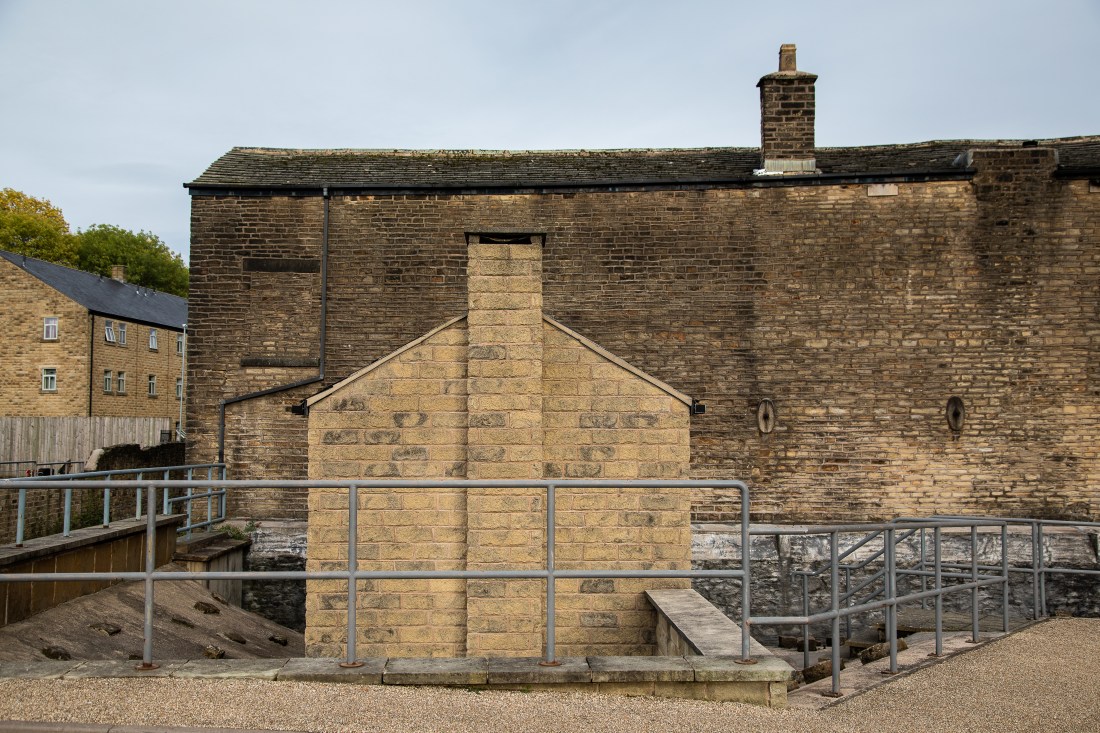
2018-10-07 EYV Ex1-3-6
The back of The Globe, Glossop

Although this image clearly includes buildings at different distances from the camera, the railings in the foreground appear to me to effectively prevent the eye from exploring that aspect, but instead allow appreciation of the blocks forms by the different buildings.

Similarly with a slightly differently framed image of the same subject.
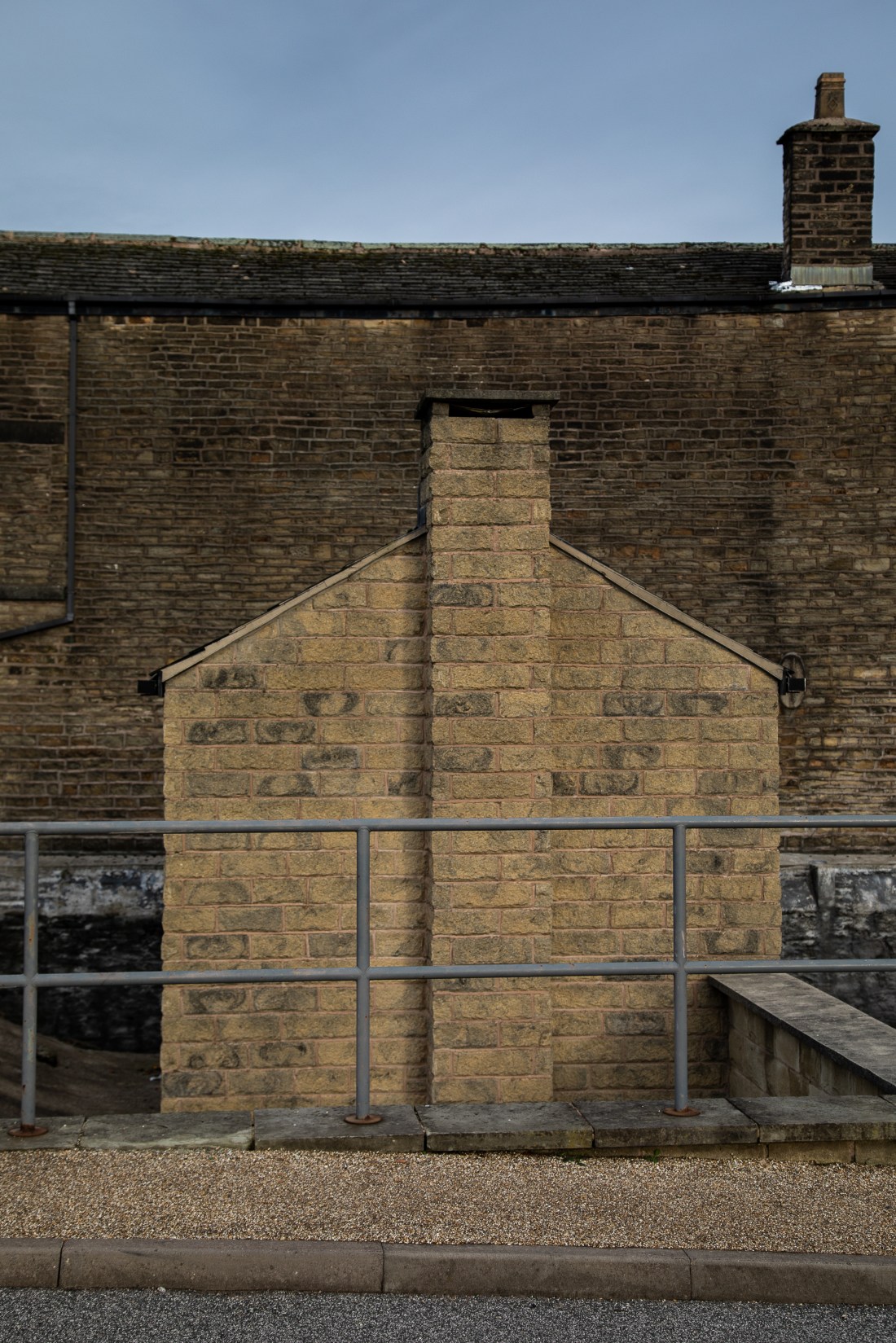
2018-10-07 EYV Ex1-3-7
The back of The Globe, Glossop

The mill which formed a leading line into the earlier images, can also be rendered flatter by emphasising the horizontal and vertical lines.

2018-10-07 EYV Ex1-3-9
Wren Nest Mill, Glossop

Here the railings in front of the brook appear flattened against the front of the mill, and again the eye can appreciate the blocks of detail of the windows and pattern formed by the stonework (significantly damaged in a fire as can be seen by the smoke staining above the windows).

2018-10-07 EYV Ex1-3-10
Wren Nest Mill, Glossop

Here the railings again seem to be a real barrier to going closer into the image.


Exercise 1.2 Point

Brief

“1. Take two or three photographs in which a single point is placed in different parts
of the frame.

2. Take a number of images in which a point is placed in relationship to the frame.”

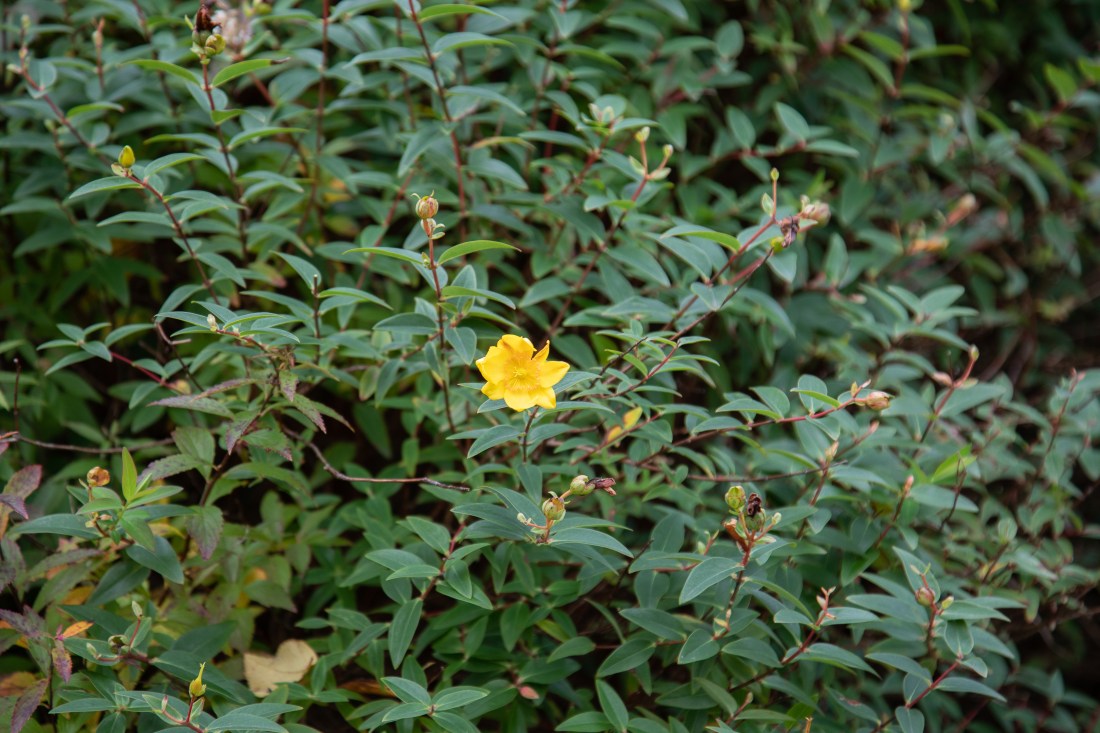
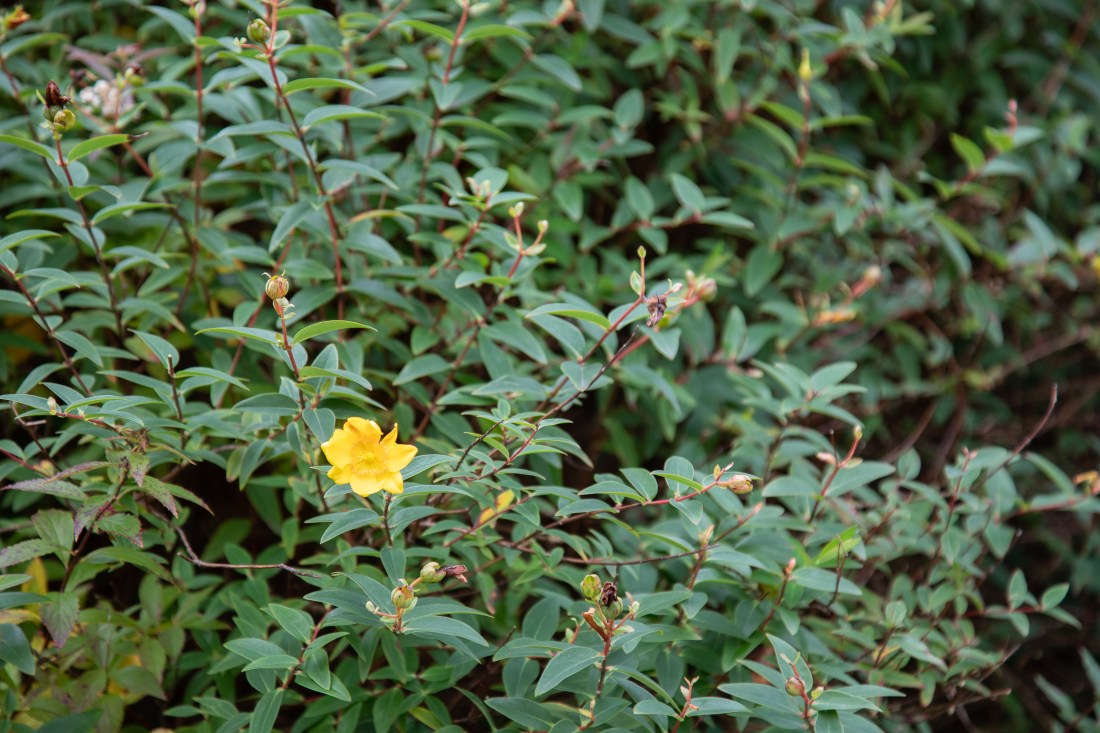
For this exercise I chose to photograph a shrub in the garden with a single yellow flower. I composed the images with the flower in various positions in the frame. I have included here a contact sheet of all the images I took. They are taken with the camera set on Automatic and I have applied slight development settings in Lightroom, to bring out the detail in the petals of the yellow flower. Otherwise there is no post-processing manipulation of the image. In particular, the images are not cropped from the camera.

Contacts Ex 1-2

Evaluation:

The foliage in general was fairly uniform. I found that depending on where the yellow flower was positioned, to a greater or lesser extent my eye is drawn to different areas of the foliage.

2018-10-07 EYV Ex1-2-2
Exercise 1.2 Point: Image 1

In this image (Image 1) the composition seems balanced: the flower is balanced by a darker area of foliage to the right of the image. I had not noticed this when I took the shot. Ther is also a suggestion of a diagonal line running top left to bottom right, formed by the buds of the nearest branches, behind which the foliage is out of focus – again not deliberate.
2018-10-07 EYV Ex1-2-4
Exercise 1.2 Point: Image 2

Similarly with this image where the flower is placed higher in the frame, but again about one third in from the left edge of the frame. It feels balanced and again my eye sees pattern in the rest of the foliage which I had not noticed when I took the shot.

2018-10-07 EYV Ex1-2-3
Exercise 1.2 Point: Image 3

In this image (Image 3) the flower is central and symmetrically balanced by darker areas at each side of the frame. However, I do not find this as satisfactory as the two previous one – I think because of the symmetry removing a feeling of tension in the balance.


In these images (Image 4 and Image 5) the flower is placed at the edge of the frame, and I find my eye almost overlooks it and is drawn to find pattern and interest in other parts of the image. In Image 5 the lighter area to the left has other less contrasting features, but they seem to draw greater attention than I thought they would when I took the shot.


2018-10-07 EYV Ex1-2-6
Exercise 1.2 Point: Image 6

In image 6, the  flower is at the edge of the frame, but unlike the two previous images, further medially, and the eye notices it more. I notice that I see the yellow flower at the top of the image even though it is in the distance and out of focus. I think that this is because my eye goes from the prominent lower flower along a line to the higher one.


Exercise 1.1 My Images – Etherow Lodge Park

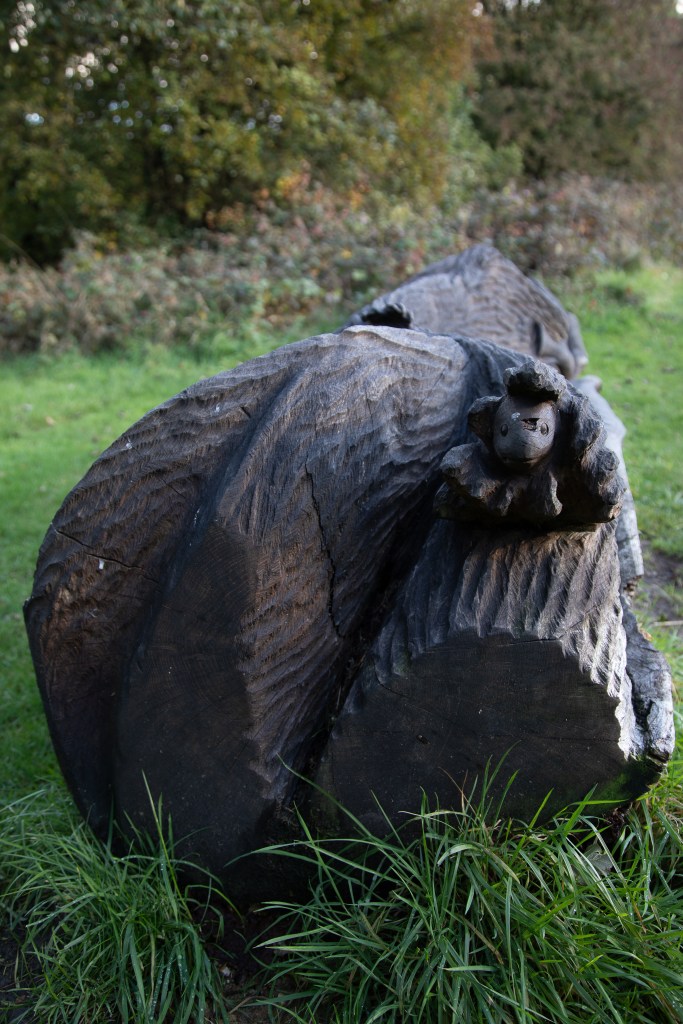
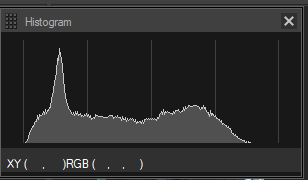
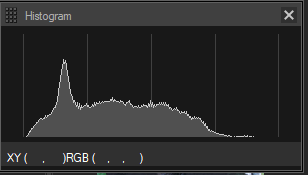
The four images I selected are shown below, with their histogram.

Analysis:

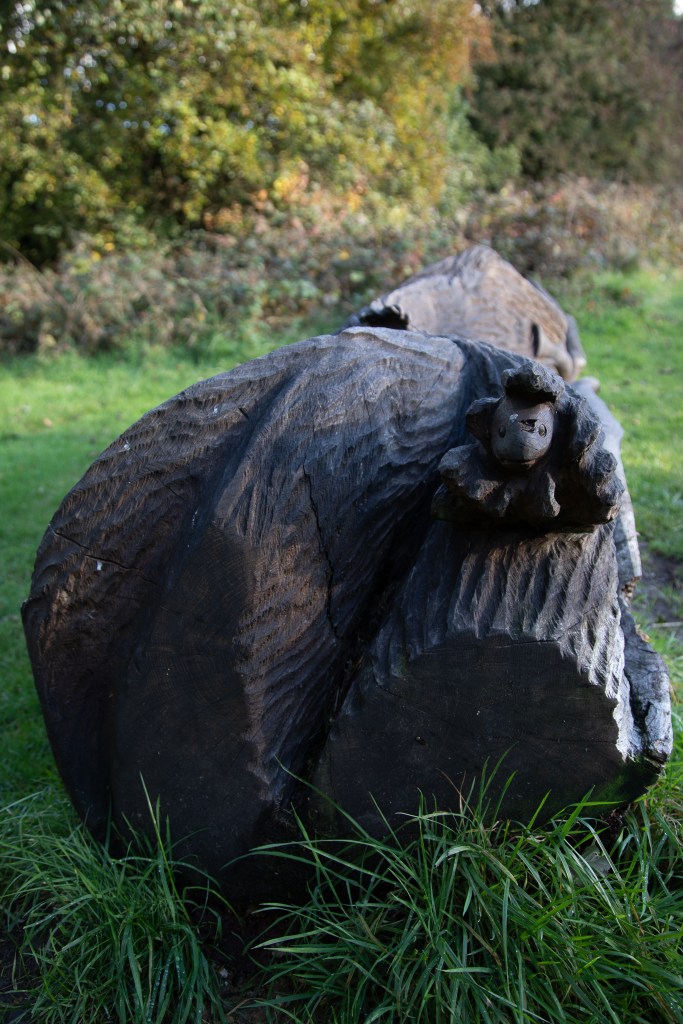
I have shown four sequential images from the middle of the sequence. They are taken over a period of only 37 seconds from 17:41:57 to 17:42:34. In spite of this the lighting is very different in each image. There is a difference in the lighting of the background, and the extent to which the carving in shown to greater or lesser effect by the light casting shadows. In addition, although probably not readily seen on the webpage, the grass in the foreground at the bottom of the carved log bench, moves with the wind.

There is little change in the histogram, however a noticeable feature is that the images with the brighter sunlight have a more prominent peak at the right-hand (lighter) end of the histogram.

I have presented the image meta-data in a separate post (previous to this one).

Overall however, to cite Graham’s interpretation of Heraclitus’s assertion that all things change, these are all images of a carved bench, and to see it in various different lighting conditions only enables us to see and understand its features more clearly.

Exercise 1.1 – Methods & Image Meta-data

I put off going out to do this exercise for a few days. The weather had been very overcast and drizzly, and I thought the light was flat and relatively uninteresting. However, one afternoon the cloud broke up and there was intermittent sunshine.

I chose to go in the late afternoon – when the sun was getting low in the sky. The shooting information shows the images were taken from 09:41, however I had forgotten to reset the time zone on my camera since my recent trip to Canada. In fact, I started shooting the sequence at 17:41 (sunset on that day was at 18:32).

I used a tripod to have a consistent image across the sequence. The camera was set to Automatic mode as set out in the brief. The images were saved as RAW files and exported as JPG from Adobe Lightroom for this exercise. They have undergone no post-processing and were exported exactly as shot in that mode.

There were ten images in all and I included four from the middle of the sequence.

Contact sheet of all the images is at Contacts Ex 1-1

I have included here tables of the image information for the four images I selected for this exercise.

File Name 2018-10-06 EYV Ex1-1-3.CR2
File Size 34.7MB
Camera Model Canon EOS 5D Mark IV
Firmware Firmware Version 1.0.4
Shooting Date/Time 06/10/2018 09:41:57
Owner’s Name
Shooting Mode Scene Intelligent Auto
Tv(Shutter Speed) 1/30
Av(Aperture Value) 4.0
Metering Mode Evaluative Metering
Exposure Compensation 0
ISO Speed 125
Auto ISO Speed ON
Lens EF24-105mm f/4L IS USM
Focal Length 32.0mm
Image Size 6720×4480
Crop/aspect ratio 3:2
Image Quality RAW
Flash Off
FE lock OFF
White Balance Mode Auto: Ambience priority
AF Mode AI Focus AF
AF area select mode Automatic selection
Picture Style Auto
Sharpness:Strength 3
Sharpness:Fineness 4
Sharpness:Threshold 4
Contrast 0
Saturation 0
Color tone 0
Color Space sRGB
Long exposure noise reduction Disable
High ISO speed noise reduction Standard
Highlight tone priority Disable
Auto Lighting Optimizer Standard
Anti-flicker shoot. Enable
Peripheral illumination correction Enable
Chromatic aberration correction Enable
Distortion correction Disable
Diffraction correction Enable
Digital Lens Optimizer Disable
Dust Delete Data No
Drive Mode Self-Timer Operation
Live View Shooting OFF
Camera Body No. 203056002032
Comment


File Name 2018-10-06 EYV Ex1-1-4.CR2
File Size 34.4MB
Camera Model Canon EOS 5D Mark IV
Firmware Firmware Version 1.0.4
Shooting Date/Time 06/10/2018 09:42:10
Owner’s Name
Shooting Mode Scene Intelligent Auto
Tv(Shutter Speed) 1/30
Av(Aperture Value) 4.0
Metering Mode Evaluative Metering
Exposure Compensation 0
ISO Speed 125
Auto ISO Speed ON
Lens EF24-105mm f/4L IS USM
Focal Length 32.0mm
Image Size 6720×4480
Crop/aspect ratio 3:2
Image Quality RAW
Flash Off
FE lock OFF
White Balance Mode Auto: Ambience priority
AF Mode AI Focus AF
AF area select mode Automatic selection
Picture Style Auto
Sharpness:Strength 3
Sharpness:Fineness 4
Sharpness:Threshold 4
Contrast 0
Saturation 0
Color tone 0
Color Space sRGB
Long exposure noise reduction Disable
High ISO speed noise reduction Standard
Highlight tone priority Disable
Auto Lighting Optimizer Standard
Anti-flicker shoot. Enable
Peripheral illumination correction Enable
Chromatic aberration correction Enable
Distortion correction Disable
Diffraction correction Enable
Digital Lens Optimizer Disable
Dust Delete Data No
Drive Mode Self-Timer Operation
Live View Shooting OFF
Camera Body No. 203056002032
Comment


File Name 2018-10-06 EYV Ex1-1-5.CR2
File Size 34.5MB
Camera Model Canon EOS 5D Mark IV
Firmware Firmware Version 1.0.4
Shooting Date/Time 06/10/2018 09:42:26
Owner’s Name
Shooting Mode Scene Intelligent Auto
Tv(Shutter Speed) 1/30
Av(Aperture Value) 4.0
Metering Mode Evaluative Metering
Exposure Compensation 0
ISO Speed 100
Auto ISO Speed ON
Lens EF24-105mm f/4L IS USM
Focal Length 32.0mm
Image Size 6720×4480
Crop/aspect ratio 3:2
Image Quality RAW
Flash Off
FE lock OFF
White Balance Mode Auto: Ambience priority
AF Mode AI Focus AF
AF area select mode Automatic selection
Picture Style Auto
Sharpness:Strength 3
Sharpness:Fineness 4
Sharpness:Threshold 4
Contrast 0
Saturation 0
Color tone 0
Color Space sRGB
Long exposure noise reduction Disable
High ISO speed noise reduction Standard
Highlight tone priority Disable
Auto Lighting Optimizer Standard
Anti-flicker shoot. Enable
Peripheral illumination correction Enable
Chromatic aberration correction Enable
Distortion correction Disable
Diffraction correction Enable
Digital Lens Optimizer Disable
Dust Delete Data No
Drive Mode Self-Timer Operation
Live View Shooting OFF
Camera Body No. 203056002032
Comment


File Name 2018-10-06 EYV Ex1-1-6.CR2
File Size 34.7MB
Camera Model Canon EOS 5D Mark IV
Firmware Firmware Version 1.0.4
Shooting Date/Time 06/10/2018 09:42:34
Owner’s Name
Shooting Mode Scene Intelligent Auto
Tv(Shutter Speed) 1/30
Av(Aperture Value) 4.0
Metering Mode Evaluative Metering
Exposure Compensation 0
ISO Speed 100
Auto ISO Speed ON
Lens EF24-105mm f/4L IS USM
Focal Length 32.0mm
Image Size 6720×4480
Crop/aspect ratio 3:2
Image Quality RAW
Flash Off
FE lock OFF
White Balance Mode Auto: Ambience priority
AF Mode AI Focus AF
AF area select mode Automatic selection
Picture Style Auto
Sharpness:Strength 3
Sharpness:Fineness 4
Sharpness:Threshold 4
Contrast 0
Saturation 0
Color tone 0
Color Space sRGB
Long exposure noise reduction Disable
High ISO speed noise reduction Standard
Highlight tone priority Disable
Auto Lighting Optimizer Standard
Anti-flicker shoot. Enable
Peripheral illumination correction Enable
Chromatic aberration correction Enable
Distortion correction Disable
Diffraction correction Enable
Digital Lens Optimizer Disable
Dust Delete Data No
Drive Mode Self-Timer Operation
Live View Shooting OFF
Camera Body No. 203056002032
Comment


Exercise 1.1 “You can’t step into the same river twice”


This quotation, or rather the sense of it, is generally attributed to Heraclitus, a Greek philosopher of Ephesus (near modern Kuşadası, Turkey) who was active around 500 BCE. He proposed a doctrine that things are constantly changing, the flux doctrine.

The above quotation is attributed to Plato’s statement about Heraclitus’s work:

“Heraclitus, I believe, says that all things pass and nothing stays, and comparing existing things to the flow of a river, he says you could not step twice into the same river.”

(Plato Cratylus 402a, as cited in Graham, Daniel W., “Heraclitus”, The Stanford Encyclopedia of Philosophy (Fall 2015 Edition), Edward N. Zalta (ed.),

URL = <https://plato.stanford.edu/archives/fall2015/entries/heraclitus/&gt;.

Graham (2015, op.cit. above), suggests however, that an interpretation of Heraclitus’s reference to the river, “is not that all things are changing so that we cannot encounter them twice, but something much more subtle and profound. It is that some things stay the same only by changing”. He suggests that, for example, a human body only achieves constancy, by virtue of its constant metabolism. Therefore while Heraclitus believed in flux, not as destructive of constancy, rather as a necessary condition of constancy.

This is an interesting concept related to the earlier exercise of the Square Mile, in which I tried to examine how environments change over time. However while the visual appearance alters, it could be considered that, in the case of my study, Glossop as a town remained constant – only by changing over time as economic and technological developments affected it.

Final Submission

I had many images to chose from these are what I submitted.

2018-08-25 Shelf Stones-33
On Shelf Moor

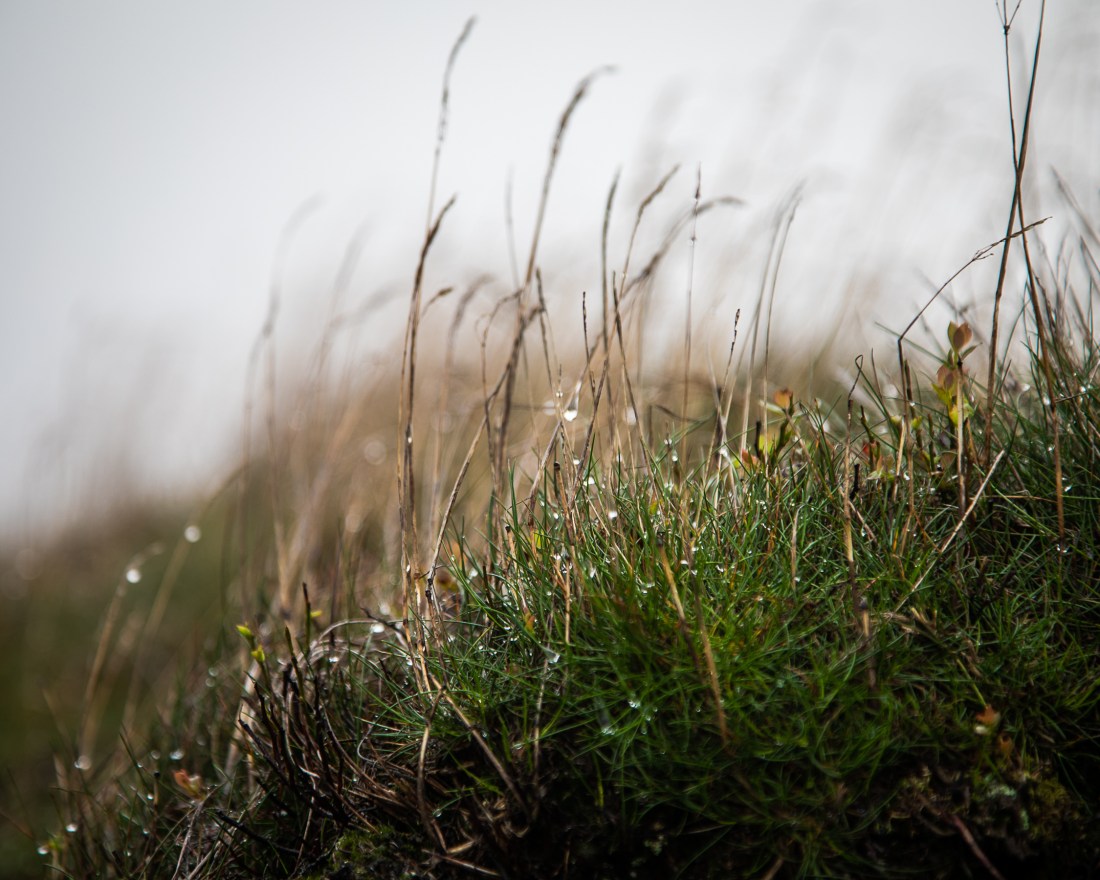
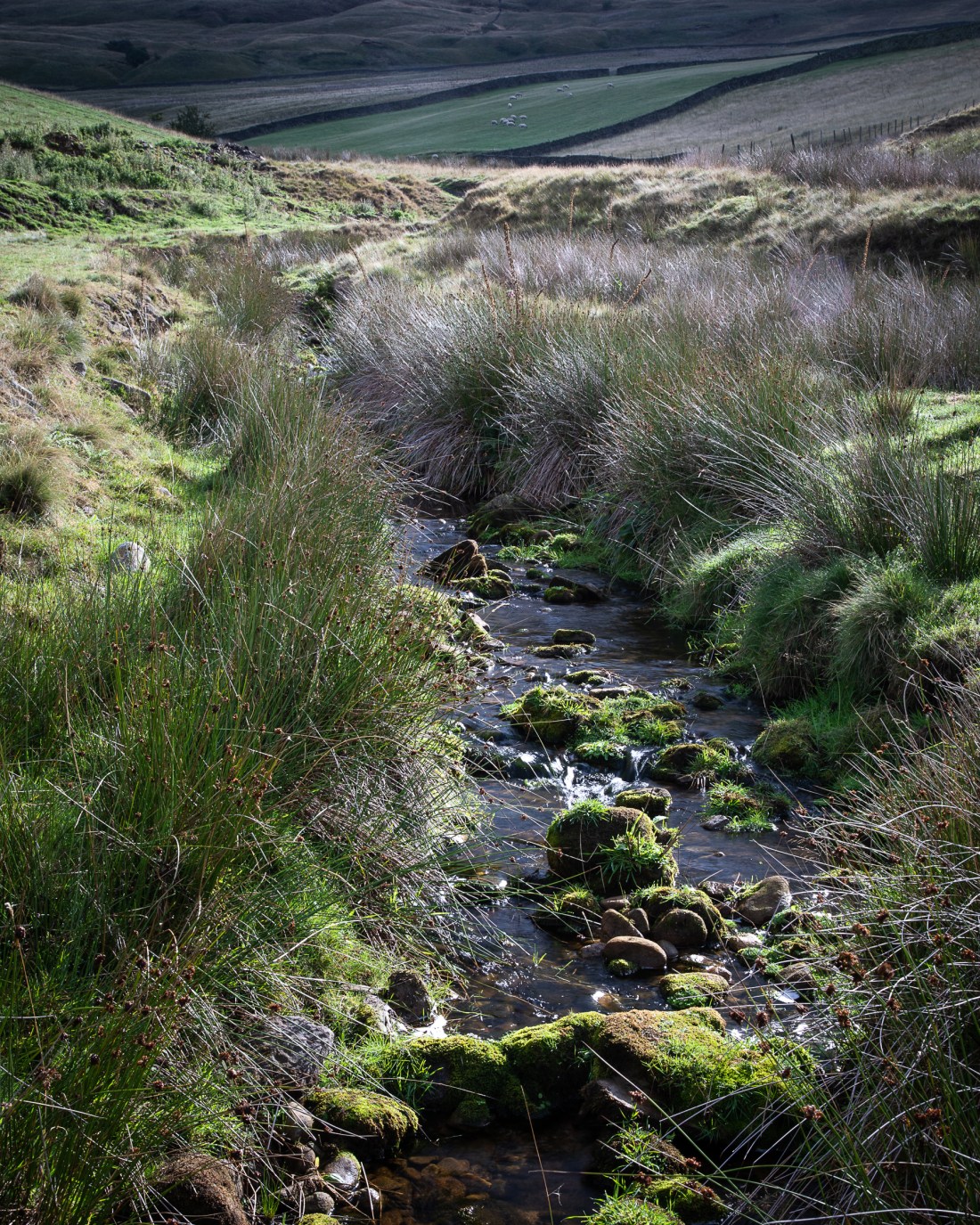
This is water droplets forming on grass and moss on the moors above Glossop when covered by cloud. I chose it because it reflects the source of the waters of Glossop Brook and the humid atmosphere that attracted the cotton spinning industry to the area.

It is taken against the light to catch the light as it passes through the droplets. I would have liked better lighting of the droplets to emphasise them and make them stand out, but the sun never broke through while I was there, and I had no artificial light with me.

2018-08-25 Shelf Stones-6
Pennine Way near Shelf Moor

Paving slabs from the floors of old mills have been used to pave eroded parts of footpaths on the moors. This image shows those and reflects to me the cycle of regeneration as those parts of the old mills are now used to protect the moors that have been damaged in the past by their smoke.

It is taken on a very cloudy day and the light is quite flat, but this enhances the atmosphere of the moors.

2018-08-25 Shelf Stones-61
Yellowslacks Brook

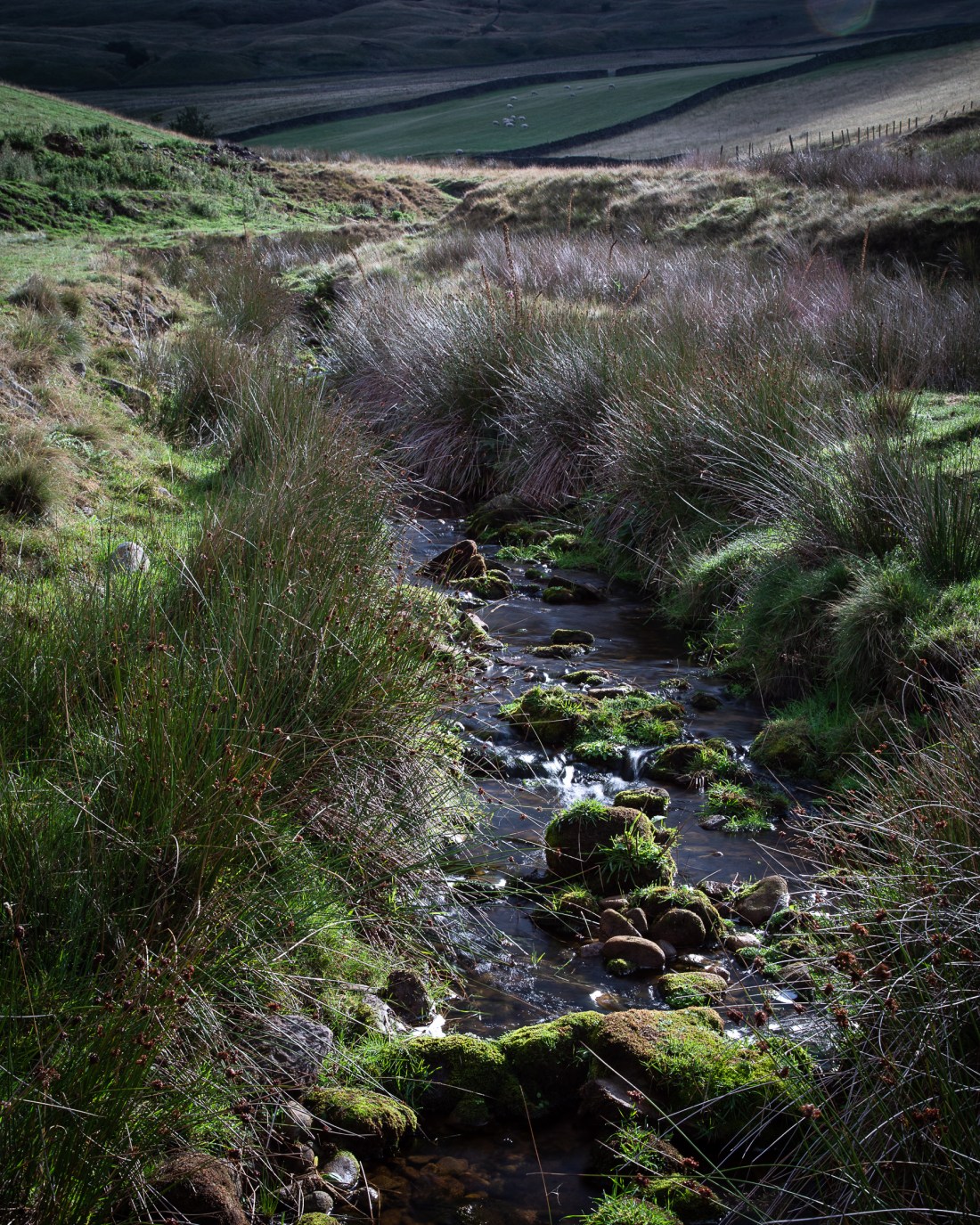
As the rivers descend from the moors there is the evidence of hill farming. In the background the sheep. It is the sheep farming which has created the landscape we see today. That landscape apparently natural, is as artificial as the industrial landscape of the town.

2018-08-25 Shelf Stones-87
Factory, Old Glossop

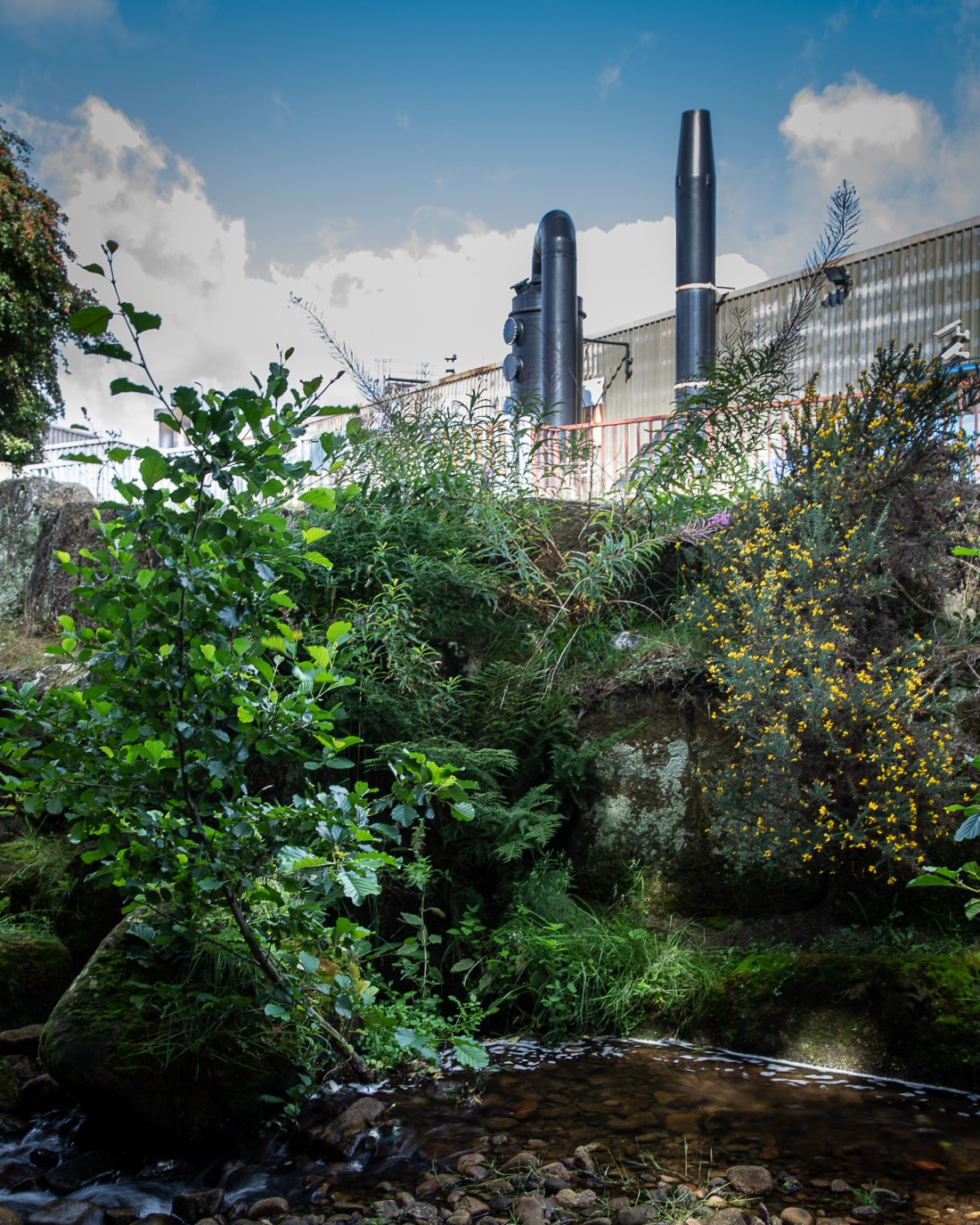
Entering the town the river passes modern factories such as this. I tried to reflect here the contrast between the force of nature as reflected by the river and vegetation, and the modern industrial plant.

I struggled finding a location to get a composition of this to get the juxtaposition of the two elements. In this image I think that the foreground is cluttered and messy, and there may not be a position to get that from. It might be better to just include the modernistic appearing black factory elements.

2018-07-12 Milltown-325
Glossop Brook at Milltown

This is Glossop Brook in the centre of the town, passing through what was a huge development of mills. Here all that can be seen in an old pipe in the bed of the river and the walls on the left of the mill complex. This apparently rural river was in fact the centre of an industrial complex, again showing the power of regeneration.

2018-08-21 Glossop EYV-41
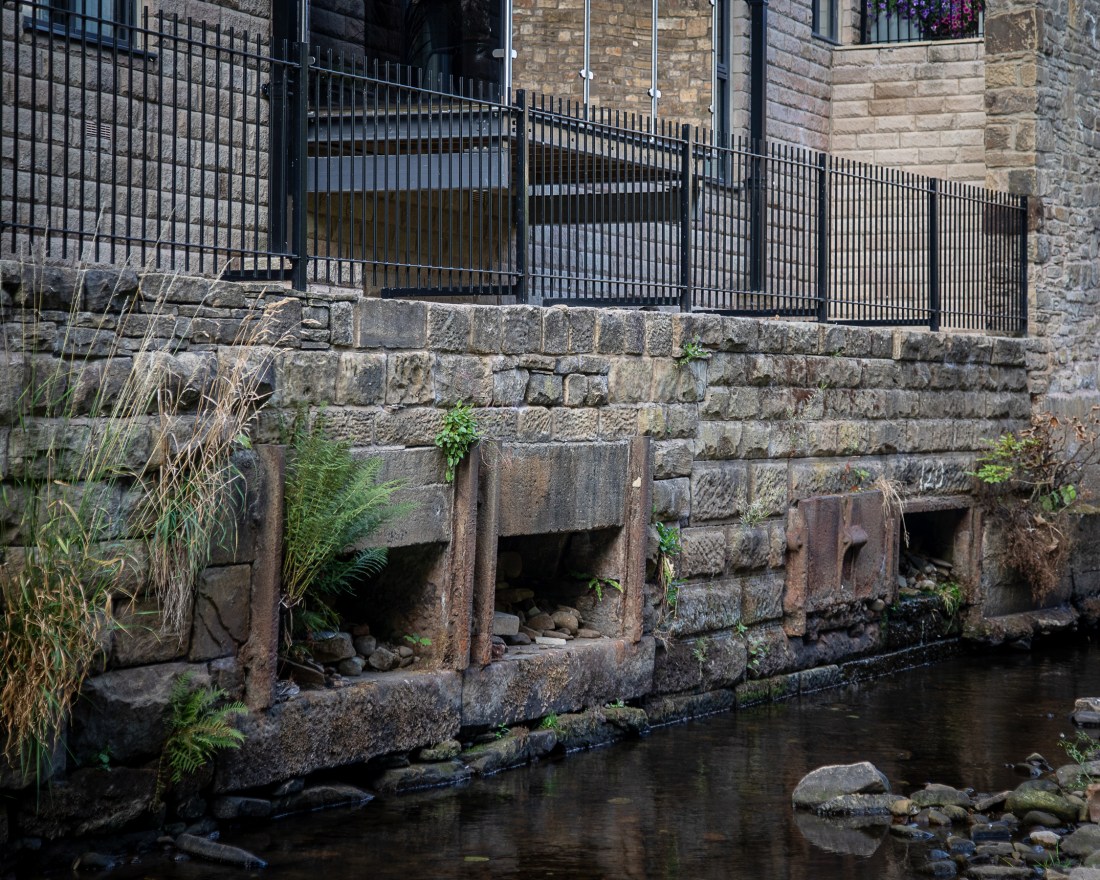
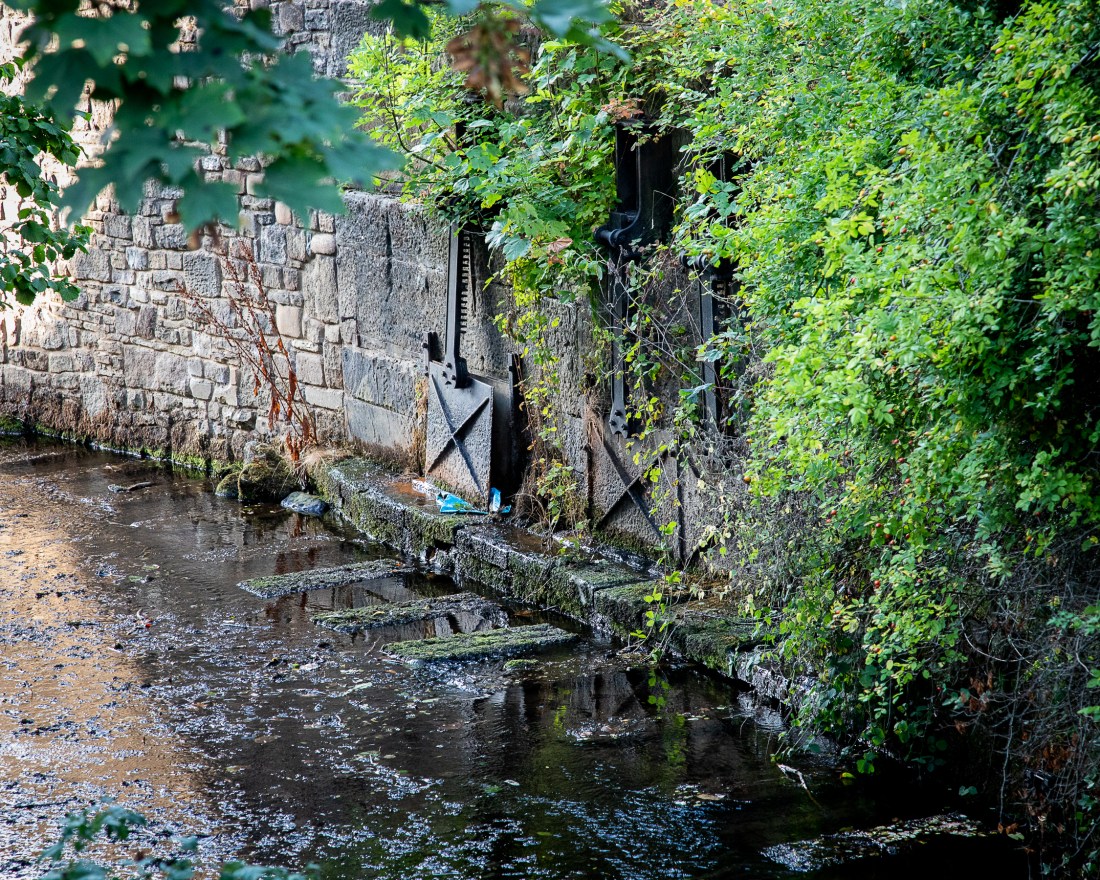
Glossop Brook and sluices for mill race

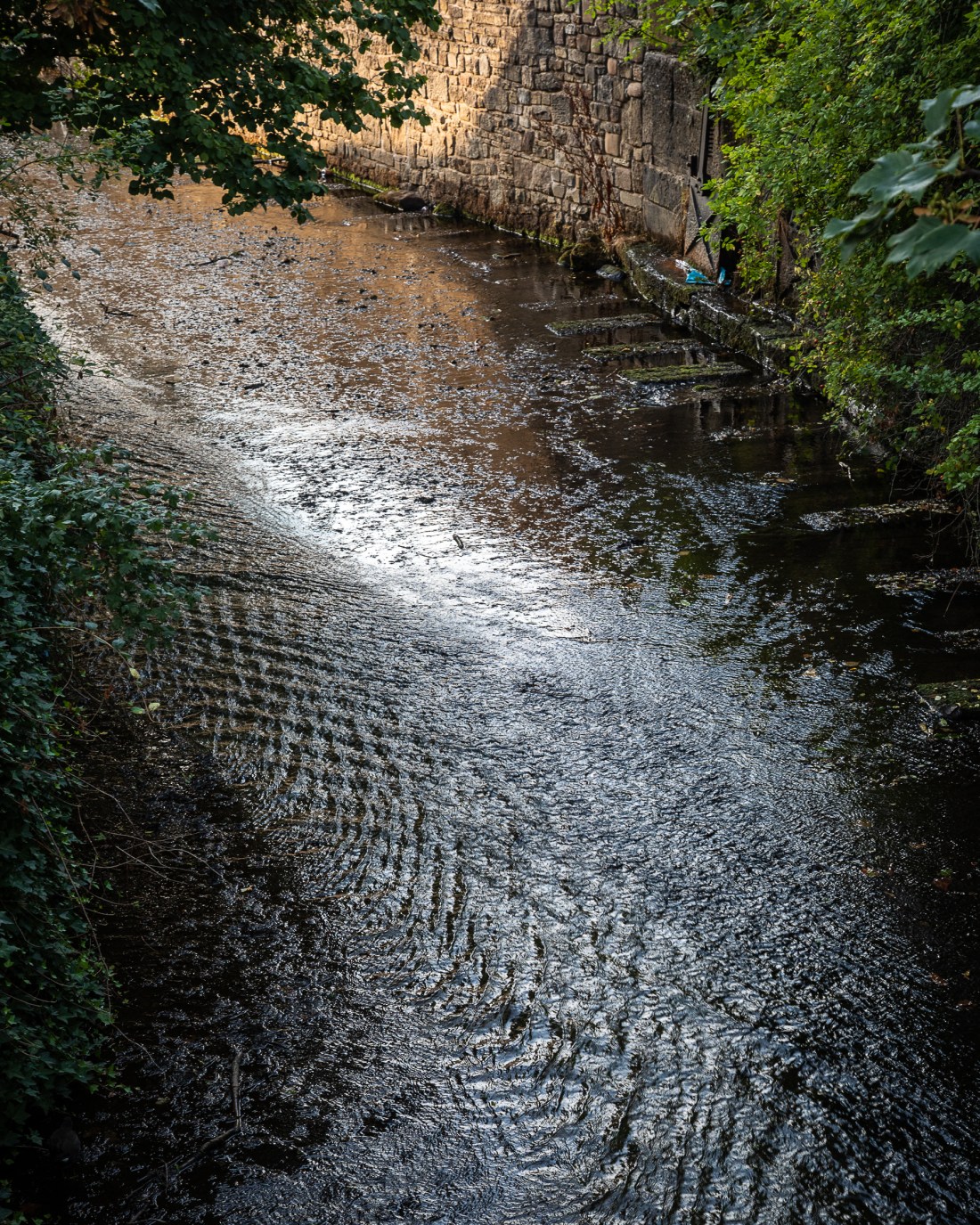
Further into the Mill complex the river is forced into artificial water course with paved bed. As it flows over that these patterns are formed, and I was attracted to the aesthetic element of this.

The patterning is perhaps small in relation to the size of the image and might be improved by better position and camera angle to enhance this.

2018-08-21 Glossop EYV-4
Glossop Brook near Calico Court and the base of old mills

I like to think this image encapsulates what I am trying to show in my project. At the bottom is the river. This is what caused the mills to be built here, and the remains of old buildings can be seen in the centre. On the remains of these have been built new apartments with contrasting clean straight lines.

2018-08-21 Glossop EYV-25
Glossop Brook at Wren Nest Mills

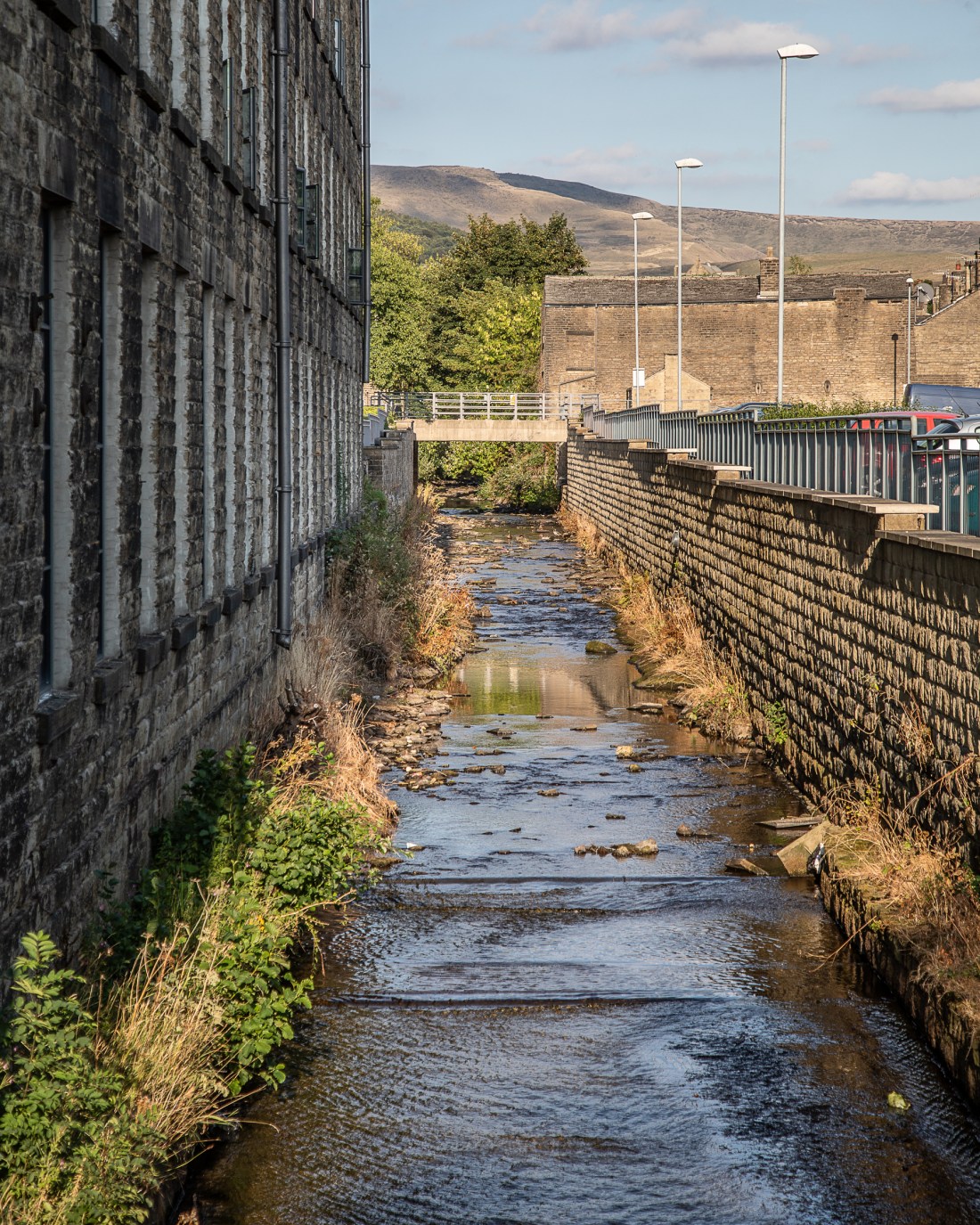
Similarly near this mill the river is forced into a man-made course, here the contrast between the old mill building and the modern carpark is enhanced by the quality of the light. The mill in the shadow is cool and blueish, whereas the right of the image is lit by the evening sun and is warmer. The background is important as it shows where this has all come from.


2018-08-21 Glossop EYV-34
Old mill ponds and modern retail park
2018-08-21 Glossop EYV-36
Wren Nest Mill Pond – behind Next

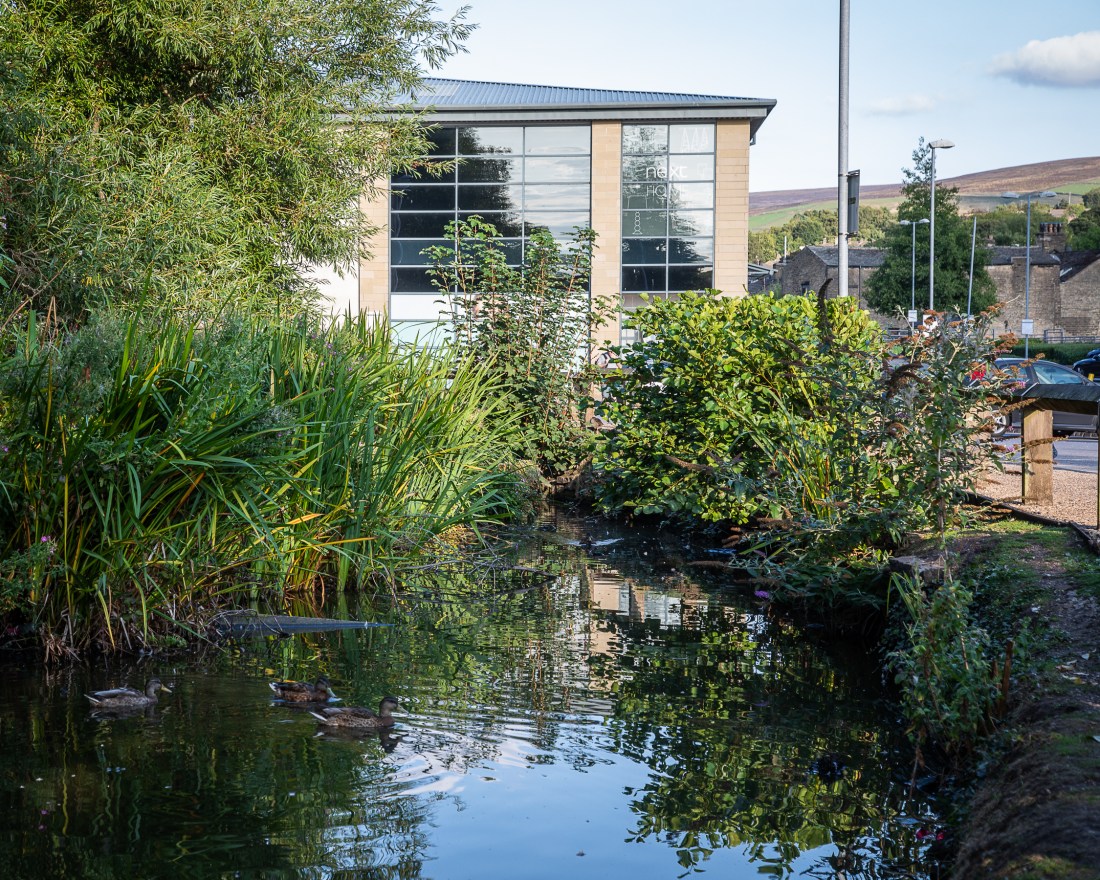
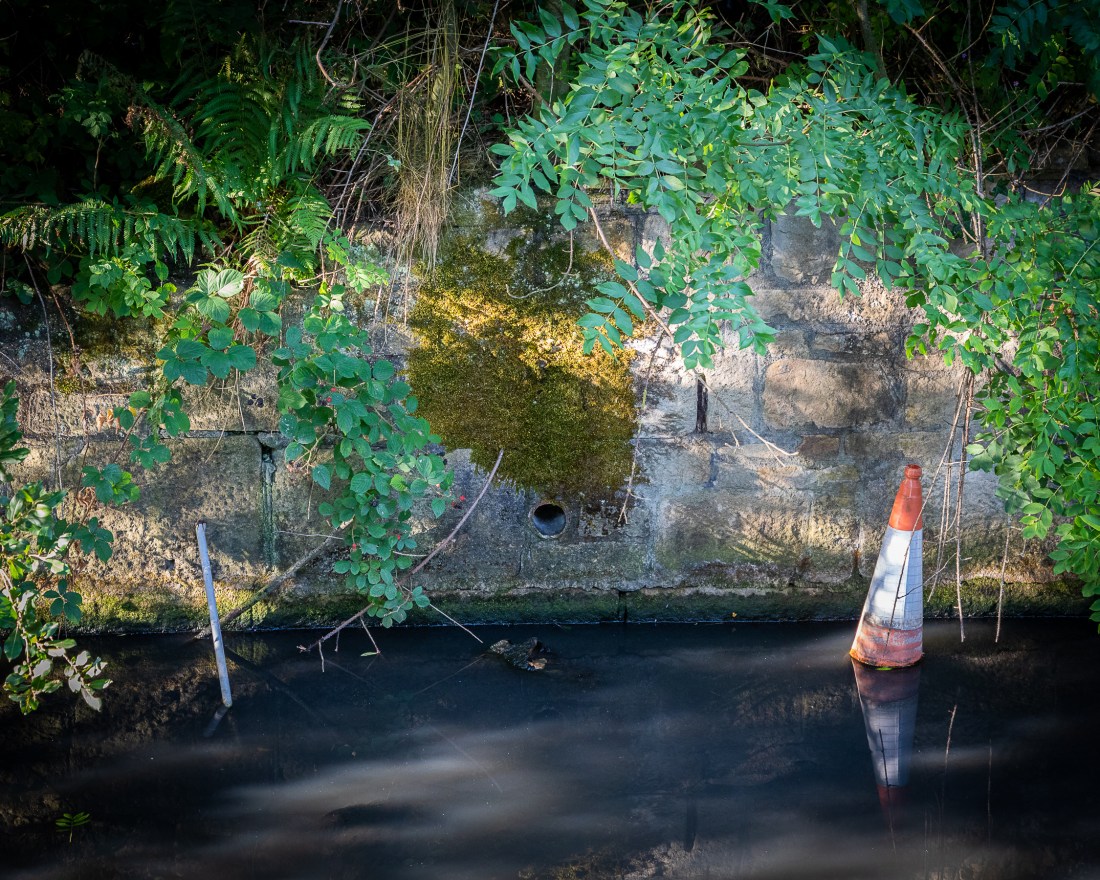
These images are a pair. The left shows a modern retail development with clean straight lines and the incorporation of the old mill pond into the landscaping around it. The right is taken behind the buildings where the mill pond is still there, but overgrown and including the archetypal image of urban decay, a discarded traffic cone.

2018-08-20 Glossop EYV-29
Etherow at the site of the Riverside Line

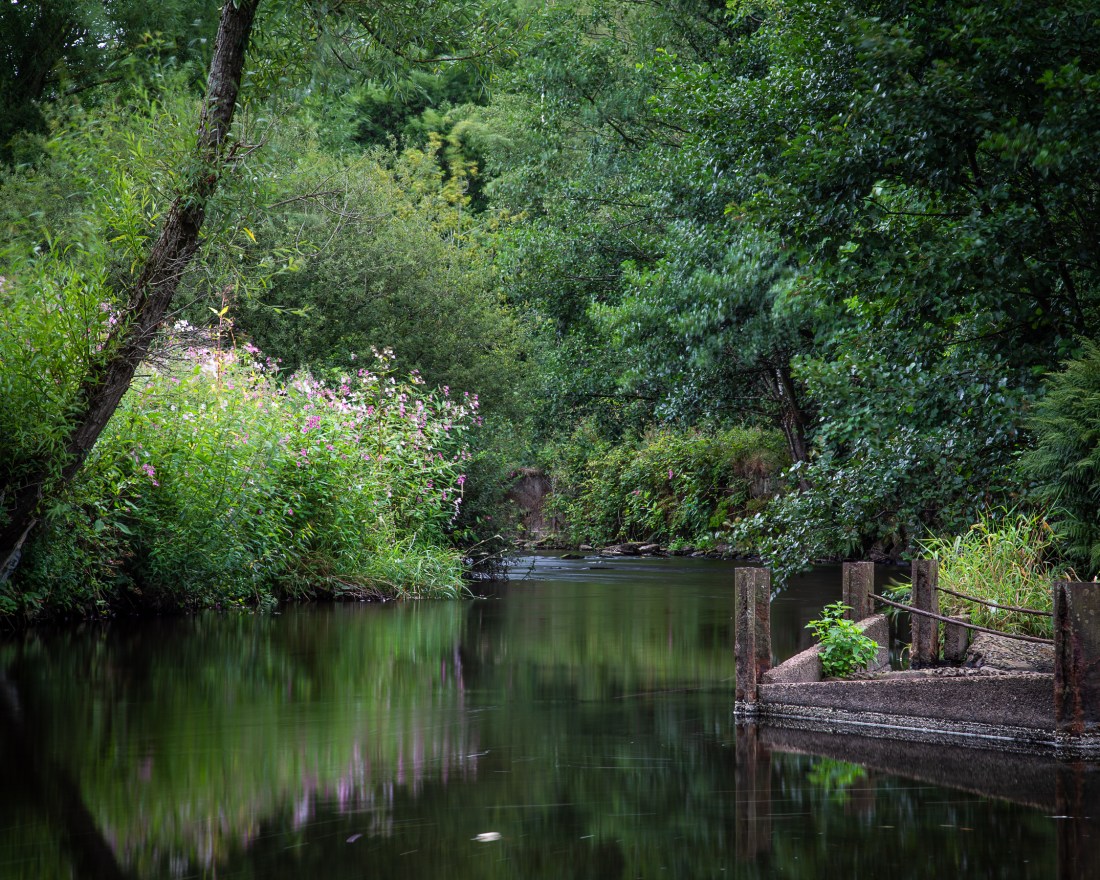
This shows the confluence of Glossop Brook with the River Etherow. Here the nature of the rivers has changed and they are bigger and slower flowing. Superficially this looks like a rural river with lush vegetation. However to the left of the image is the course of the Riverside Branch line which ran along the edge of the river here to other mills. Remains of the supports for a viaduct can be seen. The course of the railway is  bridle path and the landscape remains as heavily managed now for recreation, as it was for industry.


2018-08-20 Glossop EYV-3
River Etherow looking to Mottram Church

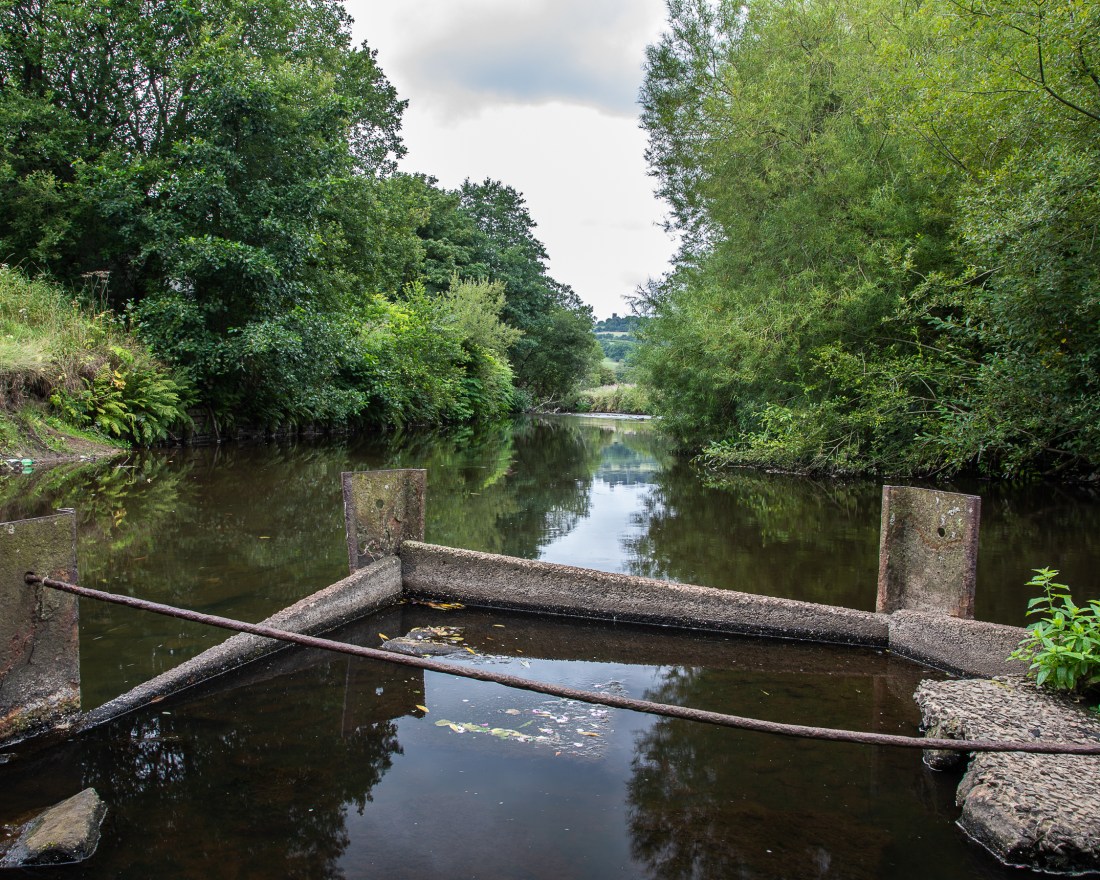
Looking down the River as it flows out onto the plain , it looks like a long standing rural landscape. However the traces of the old iron work, show that this remains a changing and evolving landscape.

My Learning so far!

I have a number of images now which I think enable me to fulfil my interpretation of the brief.
My biggest learning experience, has been to not leave it to the last minute. Unfortunately, since registering for the course, I have been away a lot with work and other commitments. I have also spent a lot of time on the course sorting out my organisation and work flow pattern to keep notes and be easily able to produce my final submissions.

I have referred to some other artists for sources of influence, but recognise that this is an area in which I need to do more work.
I have chosen several sites for my images and because of the way I have interpreted the brief they are very different. I think it would be better for my own development had I concentrated on one style for this exercise and had more opportunity to explore different ways of approaching one setting.  As a result of this I think my submission will be weak in the creativity and novelty of approach. I will adapt this in my future exercises.

The image “Glossop Brook near Calico Court and the base of old mills” is the one I believe best encapsulates the concept I was trying to show. At the base is the river, which was there before the town and the establishment of the town was dependent on it. Above this are the remains of the old mills, which brought about expansion of the town, all dependant on the river. As these have declined, they have been replaced by new buildings such as the Calico Court apartments in the upper part of the image.
The modern factory in Old Glossop, has interesting futuristic shapes, but I found it difficult to find an angle where I could juxtapose this with the river. I think that maybe it would be more effective without the river in the image, and it is enough for me to know it is there, rather than have to explicitly include it.
Overall I think the project shows different facet of the river at different points, and in that respect goes part way to illustrating the points I have tried to make. However, because they are all different locations I am not sure they fit as a coherent whole and the “backstory” needs to be explicitly stated to make sense.
I think that the images are pleasant, but not particularly striking and do not all make a strong visual impact. The Old Mill Ponds and Modern Retail Park is an example, but is in contrast to the image of the mill pond at the back of the retail park.

I would like to explore more view points and angles of the sites, to try and improve the compositions to become more visually striking. This would need more visits to each site, and going at different times to get different lighting effects. The lighting of Glossop Brook at Wren Nest Mill shows a warm light to the right of the image, associated with the modern carpark, and a cooler shadow of the old mill on the left. This use of light was accidental, but an area for more development.


The Source

To complete my images of the river as it passes through Glossop, I walked up on to the moors above the town and followed the course down to the hill farms and into Old Glossop.

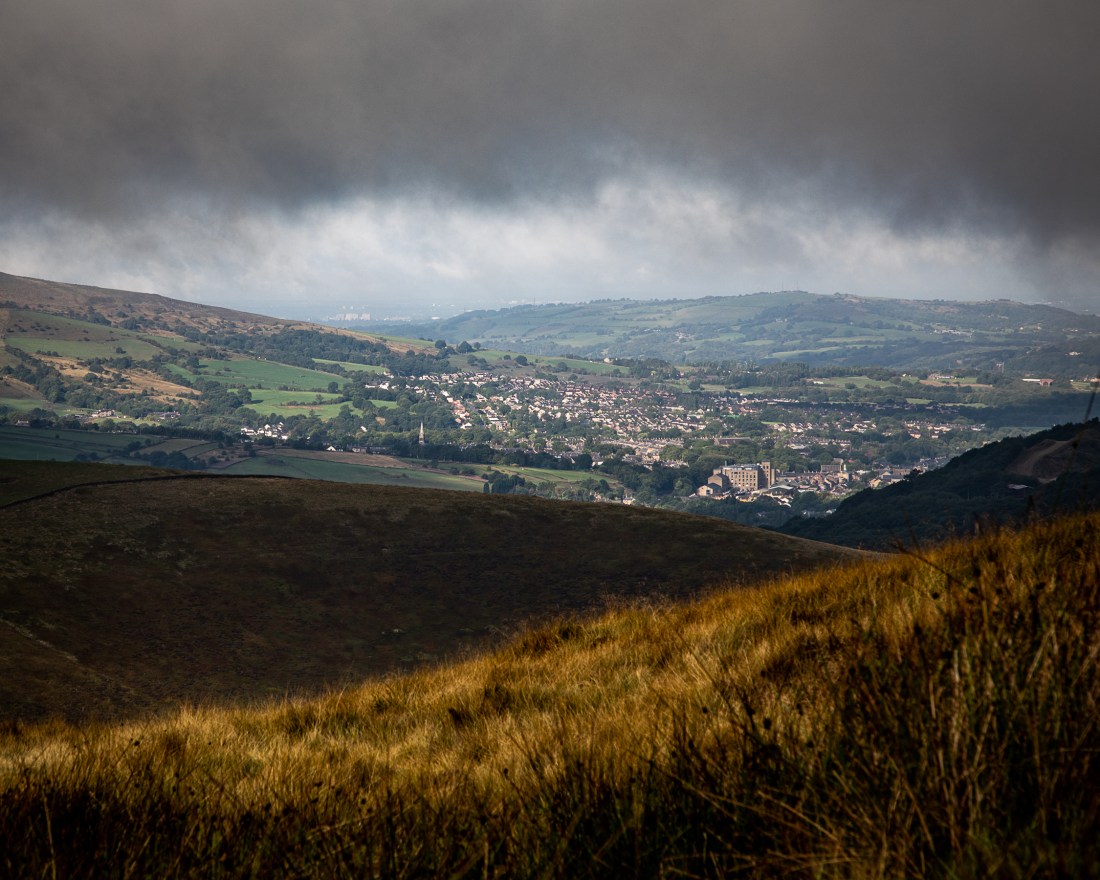
I had hoped to get images as I envisaged in my story board, of Glossop sitting between the moors and the plain. However there was heavy cloud and I only found this lower down.

2018-08-25 Shelf Stones-43
Glossop from Shelf Moor


While waiting for the cloud to clear, I noticed the droplets of water on the grass and thought this encapsulated the source of the rivers, and the humidity of the atmosphere that allegedly attracted cotton spinners to the area.

2018-08-25 Shelf Stones-33
On Shelf Moor


I also noticed the paving of the footpaths. Many of these are reclaimed flagstones from old mills. These images illustrate how the fabric of the old mills is now being used to protect the peatland which was so damaged by the pollution from those same mills when they were in use. This underpins the cycle of regeneration and regrowth I am trying to show.


Down in the valley, the river passes through agricultural land. This is a sheep farming area and it is the effect of their grazing which has produced the landscape we now see: apparently natural, but in its own way as artificial as the industrial landscapes of the town.

2018-08-25 Shelf Stones-60

Yellowslacks Brook

In Old Glossop the brook returns to the industrial landscape. But here it is of new, working factories, not the derelict mills of the town centre.


Glossop Town Centre

Glossop Brook flows through the centre of the town and is a feature of many elements of the urban scenery. I took a series of images to try and depict how the river fits into this and adjacent to old buildings and new and “regenerated” buildings. I have also tried to emphasise how the river brings the more natural environment into the town as a base for the growth of plants – planned and unplanned.

2018-08-21 Glossop EYV-4

Glossop Brook near Calico Court and the base of old mills

In these images I tried to emphasise the juxtaposition of the new development and its clean straight lines with the base of the old mills underlying it with more irregular edges.


As the river flows through the riverside park, it can be seen that this is a resource used by residents for exercise and recreation.

2018-08-21 Glossop EYV-15
Glossop Brook near High Street West

2018-08-21 Glossop EYV-14

Near Wren Nest Mill, a mill now converted into appartments and a retail park, the river is forced into a narrow channel, but still forms a reserve for plant growth.

2018-08-21 Glossop EYV-22
Glossop Brook at Wren Nest Mills


2018-08-21 Glossop EYV-34
Old mill ponds and modern retail park

The retail park appropriates the old features of the Mills by landscaping the old mill pond and incorporating this into the car park. However behind the shops the signs of urban decay still remain.


2018-08-21 Glossop EYV-36
Wren Nest Mill Pond – behind Next

However, I think that the interaction of light and the pattern of the water flow on the paved river bed still creates aesthetically pleasing patterns. I tried to create a monochromatic image similar to those I saw in Phoebe Kielty’s work from her series “These were my Landscape” which I referred to in my account of my visit to Hit the North exhibition.

2018-08-21 Glossop EYV-41
Glossop Brook and sluices for mill race


2018-08-21 Glossop EYV-43
Glossop Brook and sluices for mill race