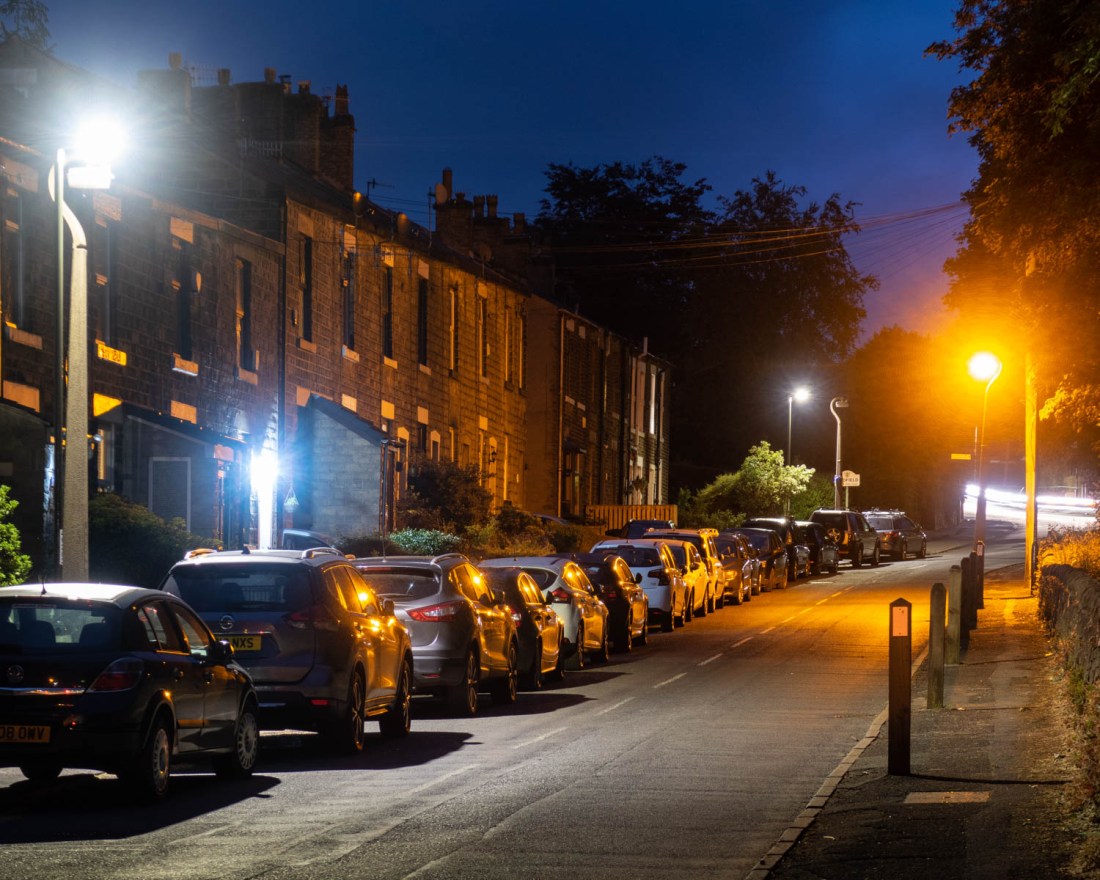
I would like to try and capture more of the interaction between the light and water, as I have highlighted previously. In a similar way, the reflection of lights from different surfaces creates interesting patterns, unique to the night time. Detail from this image shows the sort of effect that I would like to explore further in another shoot.
2020-06-03 OCA Ex4.2 #31
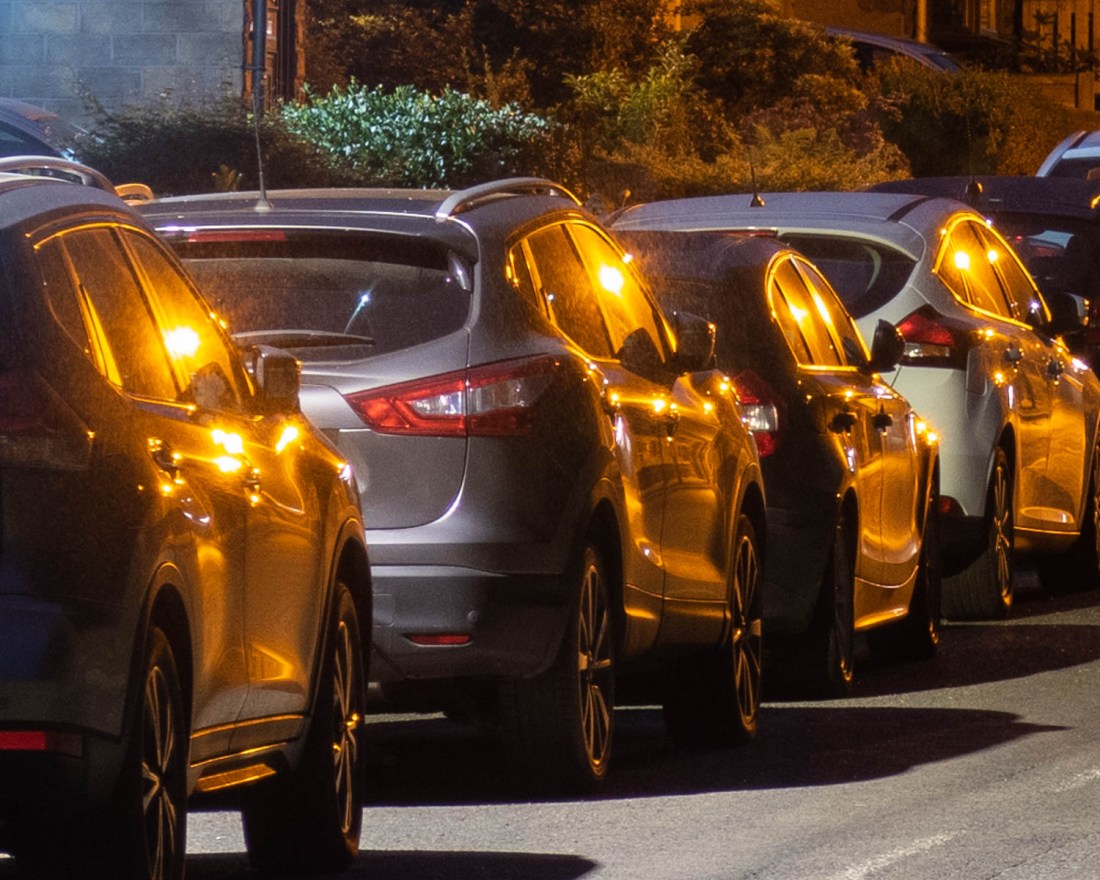
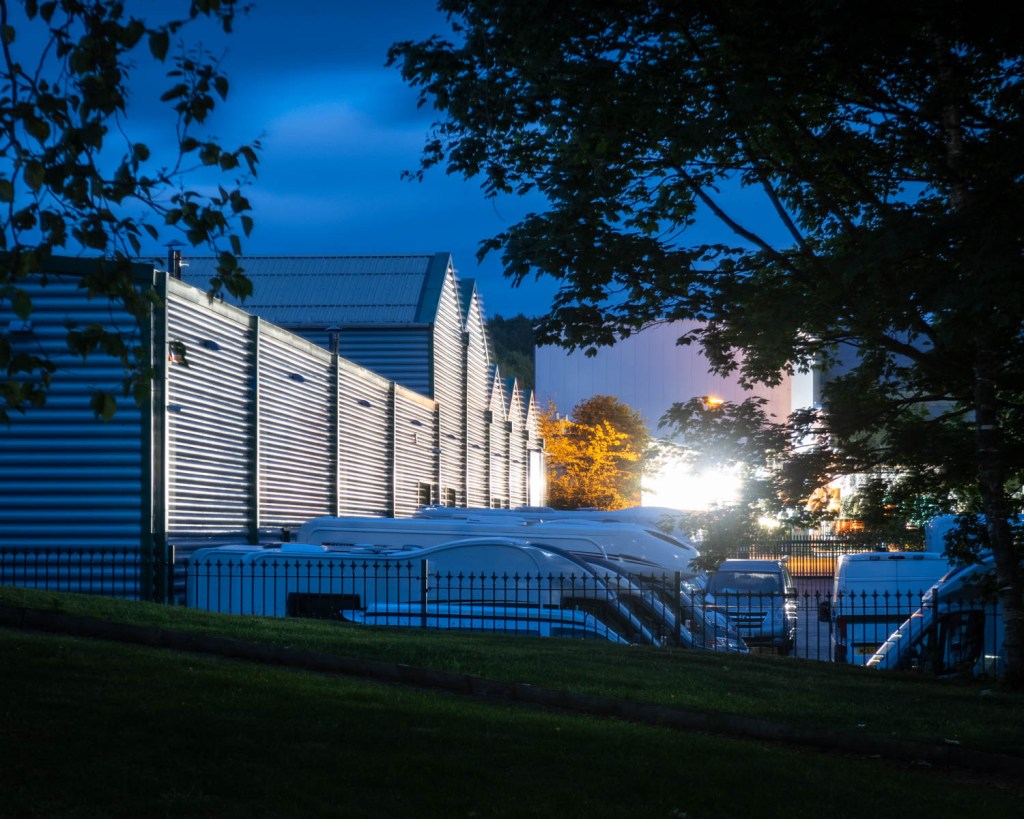
The reflections of the street lights in different colours on the parked cars gives an almost abstract feel to this.
2020-06-03 OCA Ex4.2 #31 (detail)
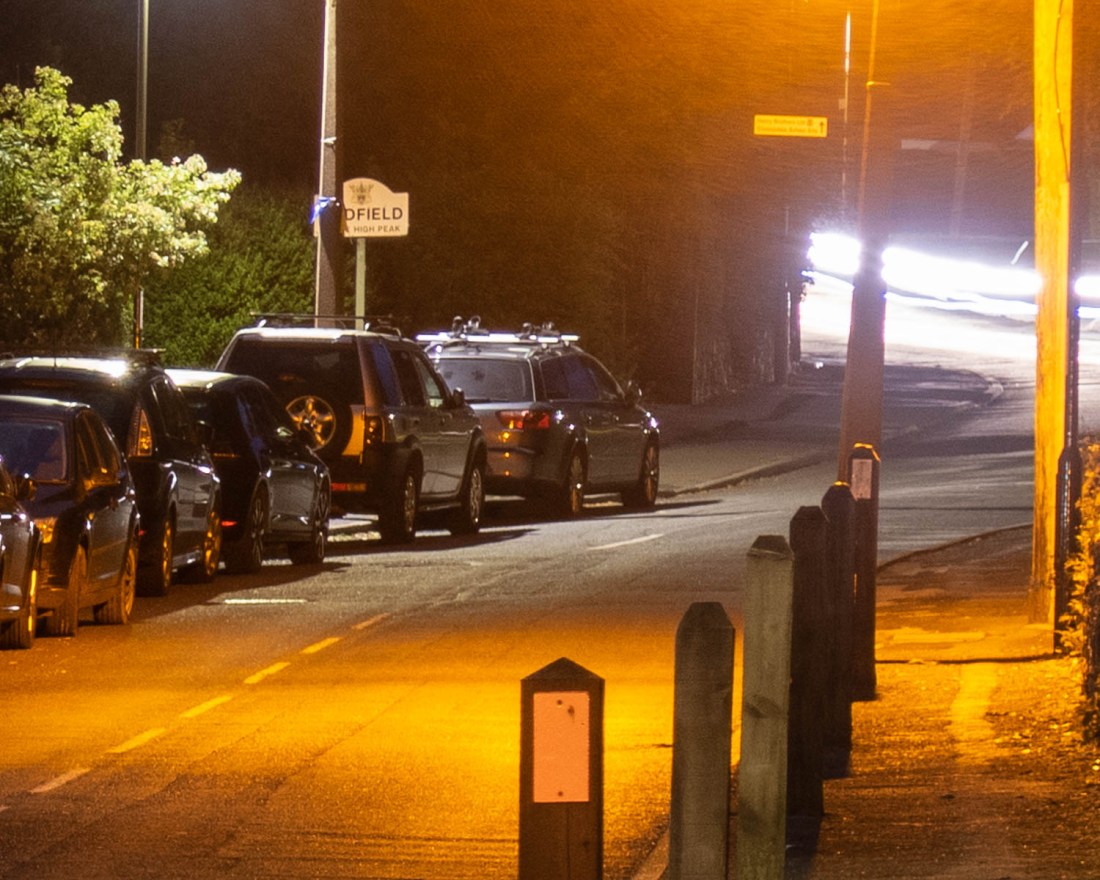
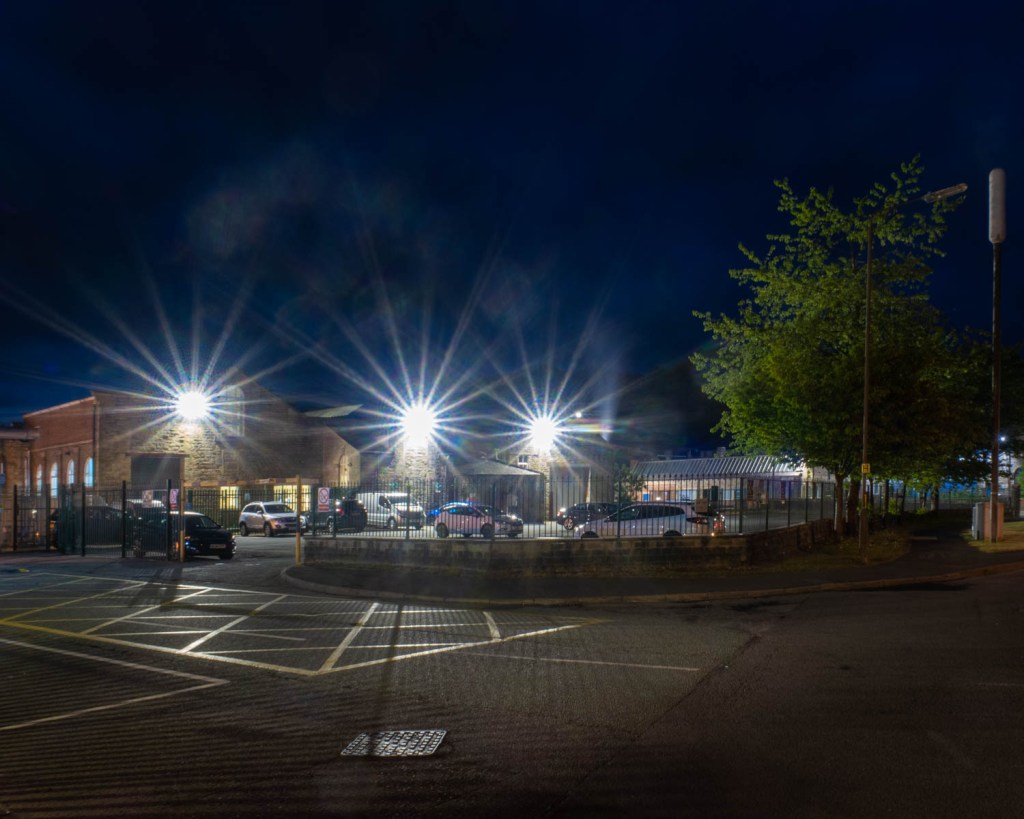
The pools of different types of light on the ground here make patterns which could be the subject for further exploration.
2020-06-03 OCA Ex4.2 #31 (detail)
These effects are reminiscent of the images of London in Rut Blees Luxemburg’s “Liebeslied: My Suicides” (Luxemberg and Duttman, 2000). It is this type of image I would like to develop more in future shoots.
“Capture ‘the beauty of artificial light’ in a short sequence of shots (‘beauty’ is, of course, a subjective term). The correct white balance setting will be important; this can get tricky – but interesting – if there are mixed light sources of different colour temperatures in the same shot. You can shoot indoors or outside and the light can be ambient or handheld flash.
Add the sequence to your learning log. In your notes try to describe the difference in the quality of light from the daylight shots in Exercise 4.1.”
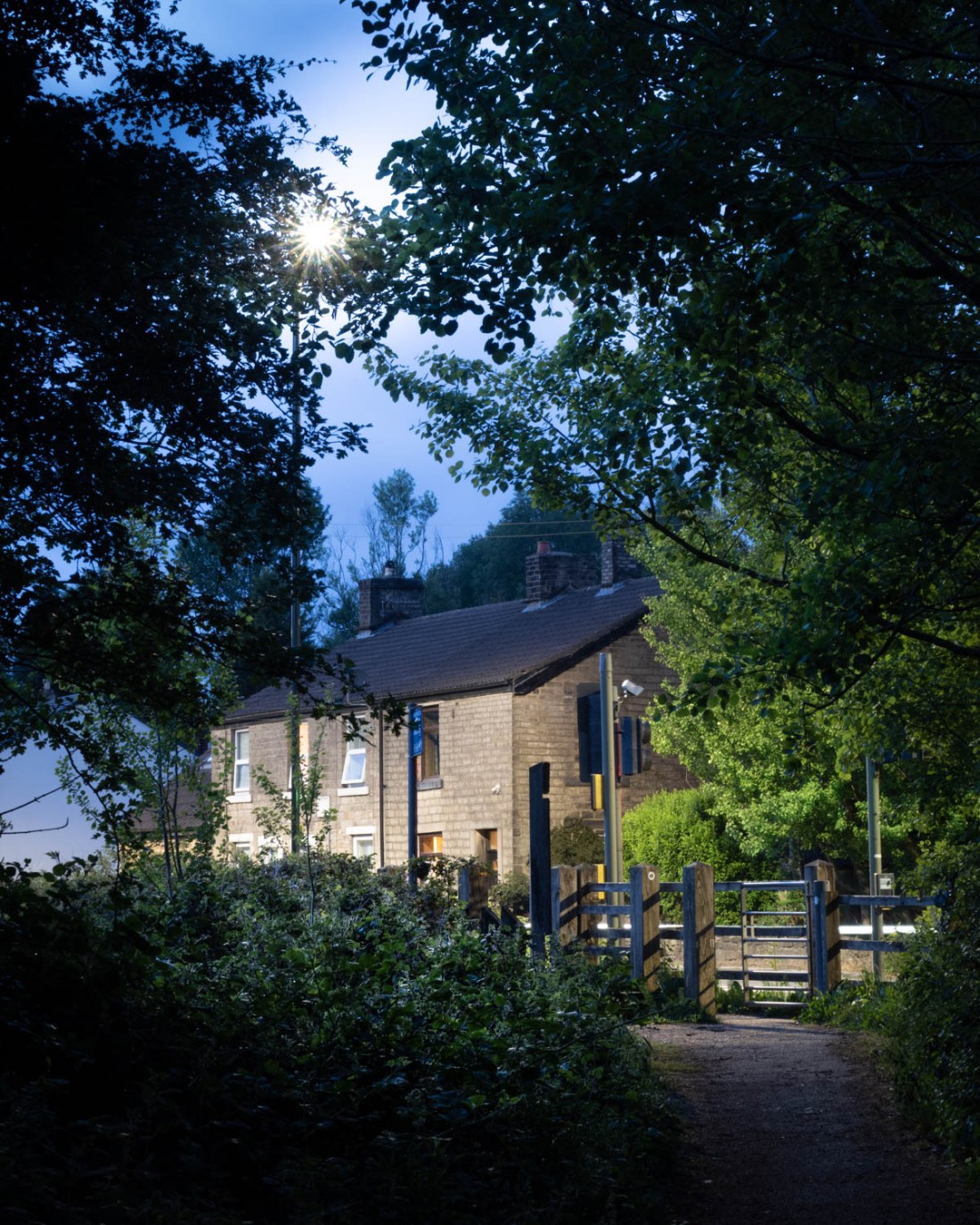
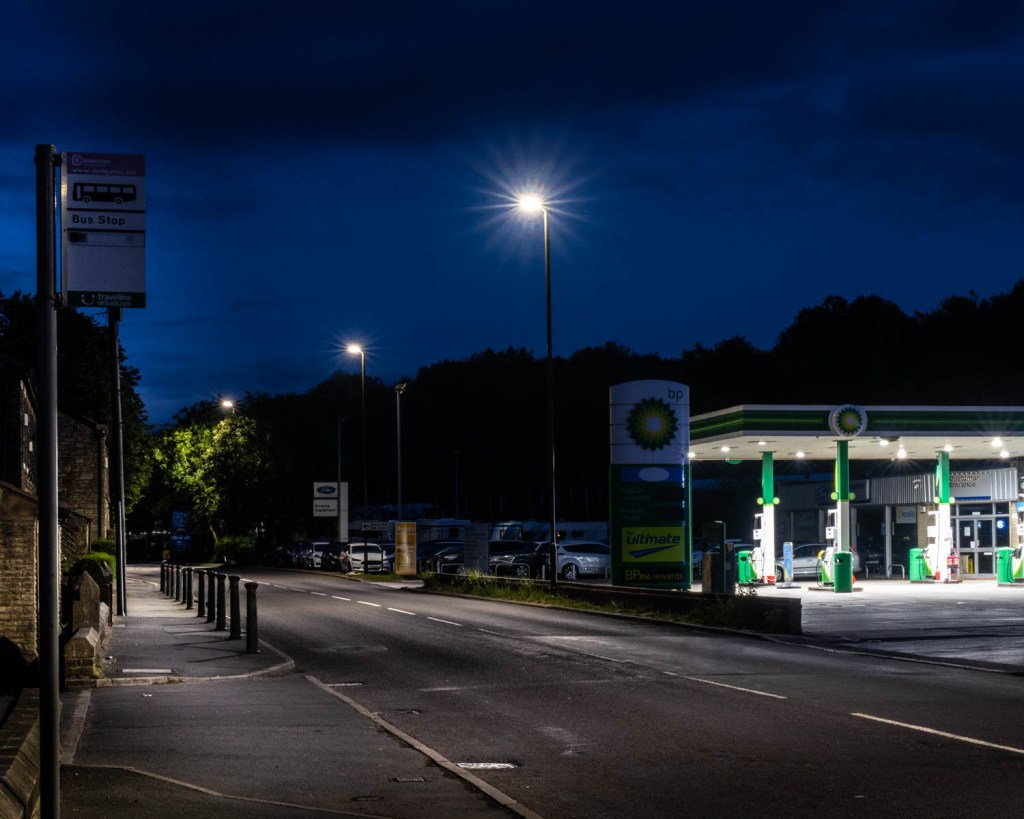
I approached this exercise by taking an evening walk close to my house to make some images of scenes familiar to me, but illuminated by the street lights. In this way I was trying to see how the resulting images differed from those I might have expected when made in the daylight.
My objective here was not to create “definitive” final images, but to gain a better understanding of the technical aspects of photographing in these conditions and to examine those elements of the final images which might be used to produce a series which do indeed capture the “beauty of artificial light”.
As I wanted to explore a range of locations, and used lightweight equipment for this reason. I used a Canon Powershot G7x Mkii for these images rather than my DSLR. It still enables me to use manual, as well as aperture and speed priority shooting modes and for this exercise I used manual mode. I made the images between 2100h and 2300h GMT when sunset was at 2029h.
I used manual shooting mode with a setting of “auto white balance” for all the images. Post-processing of the images is confined to modest cropping to a 4×5 aspect ratio (chosen because I have been using 10×8 printing paper for my film work and wanted a degree of consistency with this). There are also local exposure adjustments but no alteration in the white balance or other colour adjustments.
Initially I used the camera hand-held with a fast ISO. This image shows considerable grain so at subsequent locations I used much longer exposures on a tripod.
2020-06-03 OCA Ex4.2 #6 ISO6400, f/4.0 1/60sec
In most of the images the sky is not totally black and in this it almost looks like daylight. However, the major difference in this image is the direction of the lighting, rather than any other quality of the light.
2020-06-03 OCA Ex4.2 #13 ISO125, f/11 30.0sec
Where there are many light sources, this effect is more striking and the differences in the colour of the lights adds a difference in the mood and atmosphere of the scene.
2020-06-03 OCA Ex4.2 #16
ISO125, f/11 4.0sec
2020-06-03 OCA Ex4.2 #24
ISO125, f/5.0 15.0sec
2020-06-03 OCA Ex4.2 #27
ISO125, f/5.0 15.0sec
2020-06-03 OCA Ex4.2 #28
ISO125, f/11 15.0sec
The long exposures used enabled the incorporation of the moving lights of vehicles, even though the vehicle itself does not appear in the image. This adds a different quality to the image, and an effect I think I might develop more in the future. I do not think that in these images this effect adds much.
2020-06-03 OCA Ex4.2 #22
ISO125, f/7.1 4.0sec
2020-06-03 OCA Ex4.2 #35
ISO125, f/4.0 15.0sec
2020-06-03 OCA Ex4.2 #36
ISO125, f/4.0 15.0sec
The camera makes it very obvious that different types of street light have very different colour qualities, and this golden effect is reminiscent of that in the images of Rut Blees Luxemburg. The reflections of the lights from parked vehicles and pools of light and dark give these images a mystery and I think show a type of beauty of which we are not normally aware.
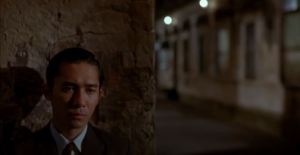
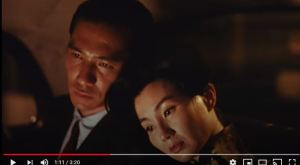
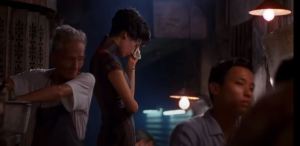
The course notes for this section attribute the phrase “the beauty of artificial light” to the cinematographer, Christopher Doyle who the notes say, “recommended studying the ‘beauty of artificial light’ on people’s faces.” I was unable to find the source for this quotation, but did look at his film, “In the Mood for Love” (Dir Wong Kar Wei, 2000). This film set in Hong Kong, is shot almost entirely in artificial light, either in-doors or at night. Indeed, the lighting of the faces is very atmospheric, and conveys some of the emotional content of the scenes. Such as these stills which I selected
The Mood For Love – Capture 1
The Mood For Love – Capture 2
The Mood For Love – Capture 3
The Mood For Love – Capture 4
The course notes direct me towards examining the work of Sato Shintaro, and his series “Night Lights”.
Night Lights 29, Sato Shintaro
These are a series of images of the Tokyo streets, illuminated by neon signs. The images are all bright and colourful, even though shot at night.
Shintaro also has made images of Tokyo lit by a combination of artificial light and the dawn or dusk light of the sky, in his series, “Risen in the East” and “Tokyo Twilight Zone”. Such as:
Risen in the East – Tokyo Dec 10 2008, Sato Shintaro
Tokyo Twilight Zone – Tokyo 2006, Sato Shintaro
Personally I found a greater resonance with these images as I think they show a greater degree of subtlety in the colouration and depiction of the city. However I recognise that the vibrant bright primary colours of the neon street signs serve to depict a vibrancy of the city itself.
The images of neon signs in Tokyo may soon be a thing of the past, as reports about Hong Kong suggest (Fernández, 2018). Like Tokyo, Hong Kong has had a proliferation of neon signs, but regulations have made it more and more difficult for these to remain and they are being replaced by LED lights.
A point which I did not highlight in my record of my research for the last exercise, “Daylight”, is that as well as emphasing the importance of “the quality of the air and light (as being)…so layered, complex, and mysterious”, Sally Mann also refers to “the refulgence or the reflection when light and water interact” (Rong and Mann, 2013). This is also the case with artificial light.
Rut Blees Luxemburg has made many images of London at night, all lit with artificial light from street and other lighting.
A Modern Project, 1996; Rut Blees Luxemburg
Towering Inferno, 1995; Rut Blees Luxemburg
However in her series “Liebeslied: My Suicides” (Luxemberg and Duttman, 2000) she also examines the interaction between the light and water. “From rain collecting in gutters, to overspill from the Thames, water exists as an emblem of this throughout.” (Abel-Hirsch, 2018).
A Girl From Elsewhere, 2000; Rut Blees Luxemberg
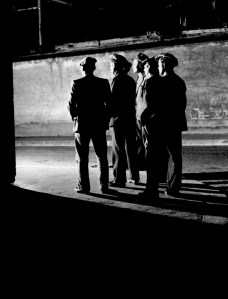
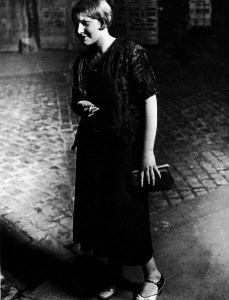
The course notes refer to the work of Brassai , and in particular his book “Paris by Night”. While many of the images in this record the life of the city at night and its inhabitants such as these.
From Paris Nuit, Brassaï
From Paris Nuit, Brassaï
From Paris Nuit, Brassaï
From Paris Nuit, Brassaï
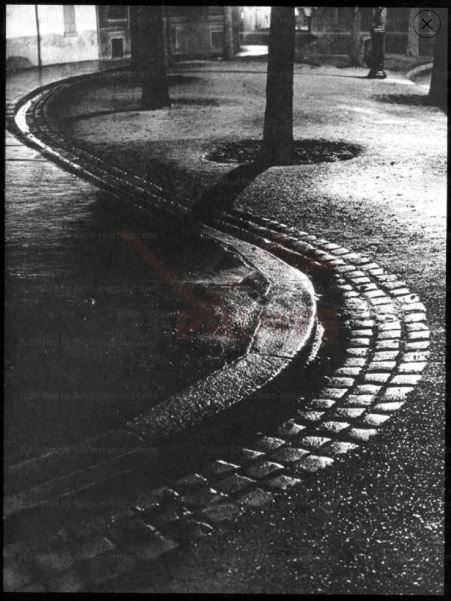
There are others which also look at the almost abstract images created by the reflection of light on wet surfaces, in a manner developed many years later by Rut Blees Luxemberg.
Open Gutter, From Paris Nuit, Brassaï
References
References to the works cited in this post are found in my separate post “References”
Virtual study event: Susan Bright | Collaboration & Creative Practice
2 June 2020
Open College of the Arts, Photography & Moving Image, International Guest Lecture:
Susan Bright | Collaboration and Creative Practice, Followed by in conversation with Arpita Shah and Dan Robinson.
I watched the on-line lecture by Susan Bright and attended the conversation session
From the OCA description of the session:
Susan Bright is a curator and writer based in Paris. She has curated exhibitions internationally at institutions including: Tate Britain, The National Portrait Gallery in London and The Museum of Contemporary Photography, The Photographers’ Gallery and the Foundling Museum Chicago amongst others.
This lecture asserts that photographic practice is inherently collaborative…Drawing on recent projects where she has developed relationships and friendships with artists, writers and editors, Bright considers what curating can be and its possibilities when working with others. Examples including Elina Brotherus’ solo exhibition Playground and her Guest Curation of PHotoESPAÑA 2019. Both projects highlight the in-flux nature of her work and the various roles a curator and her collaborators play.
From this lecture I think I gained a better understanding of the role of the curator – both in an institution and, like Bright, as a freelance curator.
A second aspect of this was the interplay between curator and artist – which in the course of the conversation after her lecture, she described as analogous to that between and writer and editor. ie a collaboration to produce the finished works.
Murray, M. (2017) ‘Matthew Murray’s atmospheric landscape images inspired by walks on Saddleworth Moor’ In: British Journal of Photography: Journeys (7865) pp.20–21.
‘Layered, complex and mysterious…’ is a quote from American photographer Sally Mann from an interview for Chinese Photography magazine in 2010, and reproduced on American Suburb X website (Rong and Mann, 2013). In this interview Mann describes how she perceives the difference between the quality of the light in the Southern states of the USA, as compared to the “North”. I interpreted her use of the term “North” here to refer to the northern states rather than the far north and high latitudes of the Arctic regions.
In this interview Mann emphasises her aims as being “less interested in the facts of a picture than in the feelings” and that “the facts don’t have to be absolutely sharp. I can get information across by appealing to viewer’s emotions.” (Rong and Mann, 2013)
The mysterious feeling she achieves in some of her work seems to be exemplified by her images of “Southern Landscapes”, such as this image, Deep South 03.
Deep South 03, Sally Mann
In this monochrome image the composition is achieved with areas of light and deep darkness, the shadows suggesting mystery. However the light areas of the image are hazy and unclear suggesting a mist.
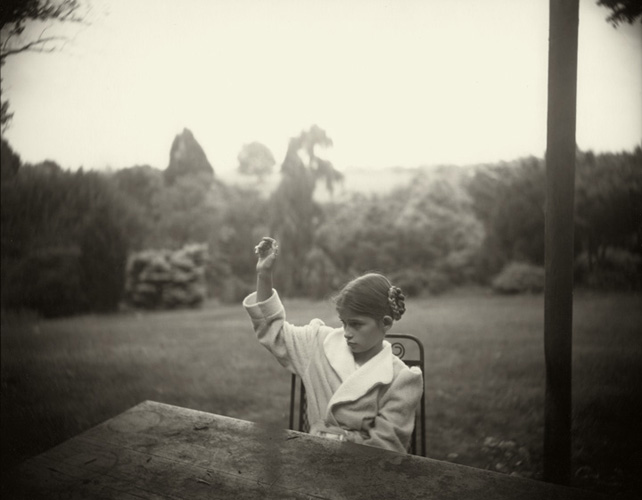
I would argue that she achieves a similar effect in some of the images in her series “Family Pictures”, such as this Family Pictures 12.
Family Pictures 12, Sally Mann
The background is similarly hazy and the light of the landscape diffuse. Whereas the subject is lit by a much more direct light on her hair.
However I also note from the extended biography on her website (Mann, 2020), that many of her black and white, have been created with photography’s antique technology. She has used an 8×10 bellows camera, and a variety of printing processes to produce pictures that “almost seem like hybrids of photography, painting, and sculpture”. In her 2010 interview she also says that “there is no coating on the lens of my old camera, which permits a much softer and more luminous light”.
It seems to me that Mann is achieving her objectives of communicating emotional and spiritual aspects of a subject by the use not only photographing with the optimal light for her intention but this is enhanced by the choice of equipment and techniques.
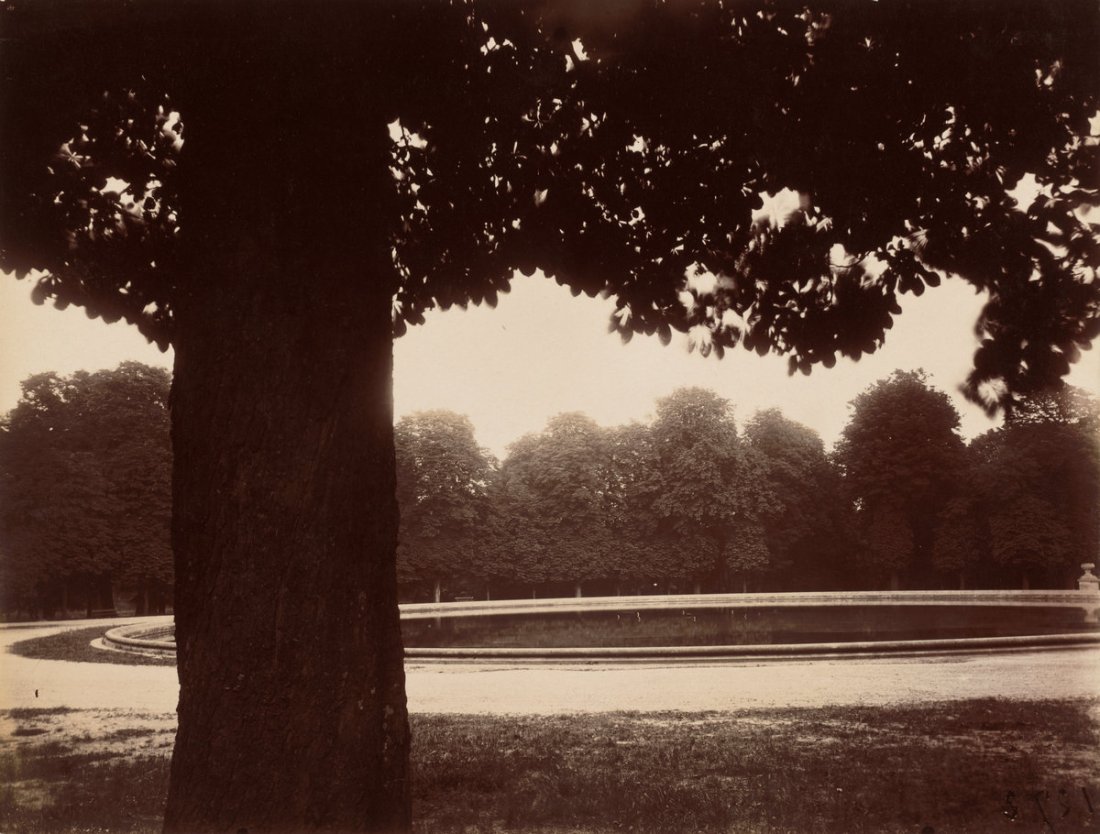
The course notes refer me to the work of Atget. The notes (p 83) cite Washington’s National Gallery of Art website as describing his late photographs, as:
“frequently marked by subjective light and deep shadows. Often made early in the morning, these pictures – such as Parc de Sceaux – use light and shadow to create a mood rather than to describe a place”
I was unable to find this description of his work on that website (Eugène Atget, 2020). I have, however, found other descriptions of his late work and his approach to lighting conditions which indicate this technique:
“Among the qualities that characterize Atget’s work are… a willingness to work in a wide variety of lighting conditions, even (especially during the last five years of his life) shooting almost directly into the sun, a practice that was religiously avoided by conventional photographers.”(Szarkowski, 2020)
This is illustrated by this image, where shooting into the sun gives deep shadow behind the foreground tree.
Saint-Cloud, Eugène Atget
Other images of the parks have similar qualities to those I have shown above by Mann. Here the lighting also enhances a mood, rather than providing a documentary description of a scene as in Atget’s earlier work.
Parc de Sceaux 2, Eugène Atget
Parc de Sceaux 02, Eugène Atget
Like Mann, Atget used equipment and techniques which also enhanced that approach and added to the emotion and subtlety of the scene..
“Atget used a large view camera that held 7 x 9 inch glass negatives, standard when he began to photograph but antiquated by the end of his career, when smaller and more versatile cameras were available. He developed the negatives in his workroom and contact-printed them in sunlight on the roof of his apartment building. He usually printed on albumen papers, even well after most photographers had abandoned the process in favor of platinum and silver papers.” (Eugène Atget, 2020).
This is distinct from the approach of Michael Schmidt described in the course notes which quote from an interview with Schmidt in Camera Magazine #3, March, 1979. (Editorial @ ASX, 2010).
In the interview, Schmidt states his aims as “to achieve a maximum of objectivity and thus create a photograph which possesses credibility and authenticity as a document”.
Unlike Mann in particular, he sets out to create images such that “The viewer must allow the objects portrayed in the photograph to take their effect upon him without being distracted by shadows or other mood effects.”
He achieves this by photographing in a neutral diffused light. Furthermore he shoots in black and white.
“I prefer black and white photography because it guarantees the viewer a maximum amount of neutrality within the limits of the medium. It reduces and neutralizes the coloured world to a finely nuanced range of greys, thus precluding an individual way of seeing (personal colour tastes) by the viewer. This means that the viewer is able to form an objective opinion about the image from a neutral standpoint independent of his subjective colour perception. He is thus not emotionally distracted.” (Editorial @ ASX, 2010)
These principles are illustrated by images from his portfolio for the 2014 Pris Pictet, Lebensmittel (Michael Schmidt | Prix Pictet, 2013), such as this.
“Taking the photography of Mann, Atget or Schmidt or a photographer of your own choosing as your starting point, shoot a number of photographs exploring the quality of natural light. The exercise should be done in manual mode and the important thing is to observe the light, not just photograph it. In your learning log, and using the descriptions above as your starting point, try to describe the quality of the light in your photographs in your own words.”
In addition to the work of Mann, Atget and Schmidt, the course notes for this exercise also refer to a light with no mystery described by Brian Catling in the fantasy novel, The Vorrh (Catling, 2012)
‘The vulgar gate of the day gives no quarter and its insistent brightness will tell lies about all, forcing the subtlety back into the interiors of trees and the other side of the sky.’
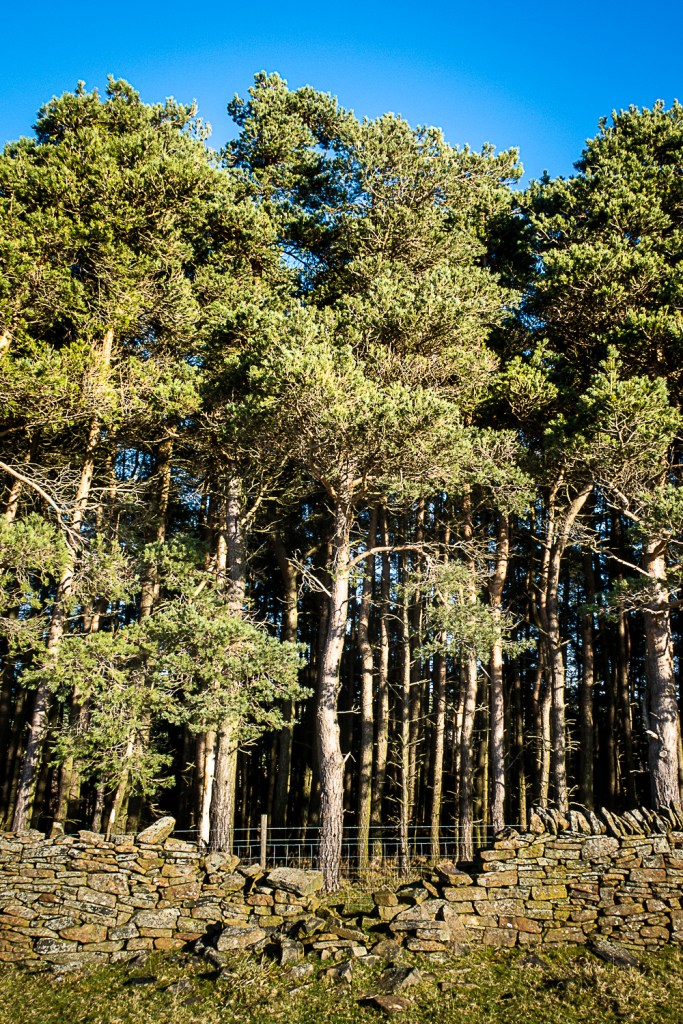
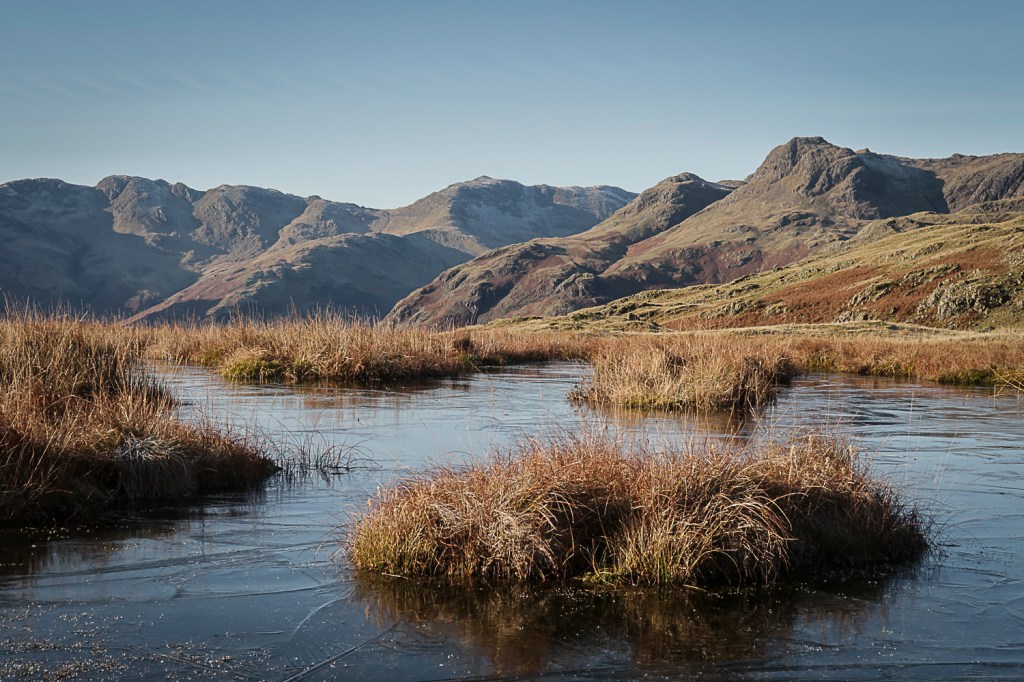
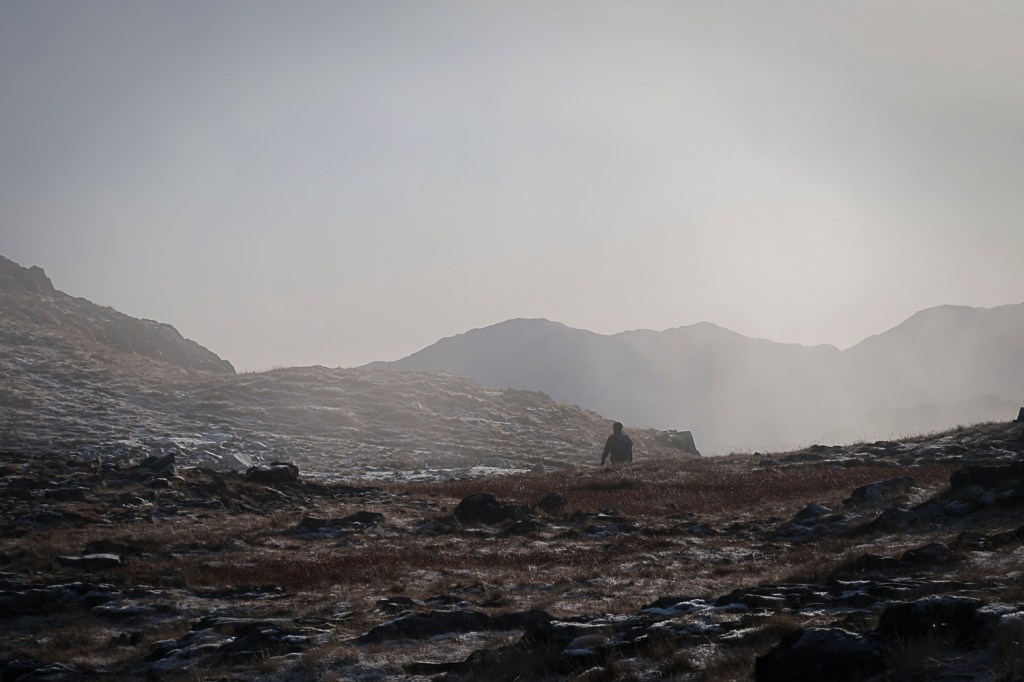
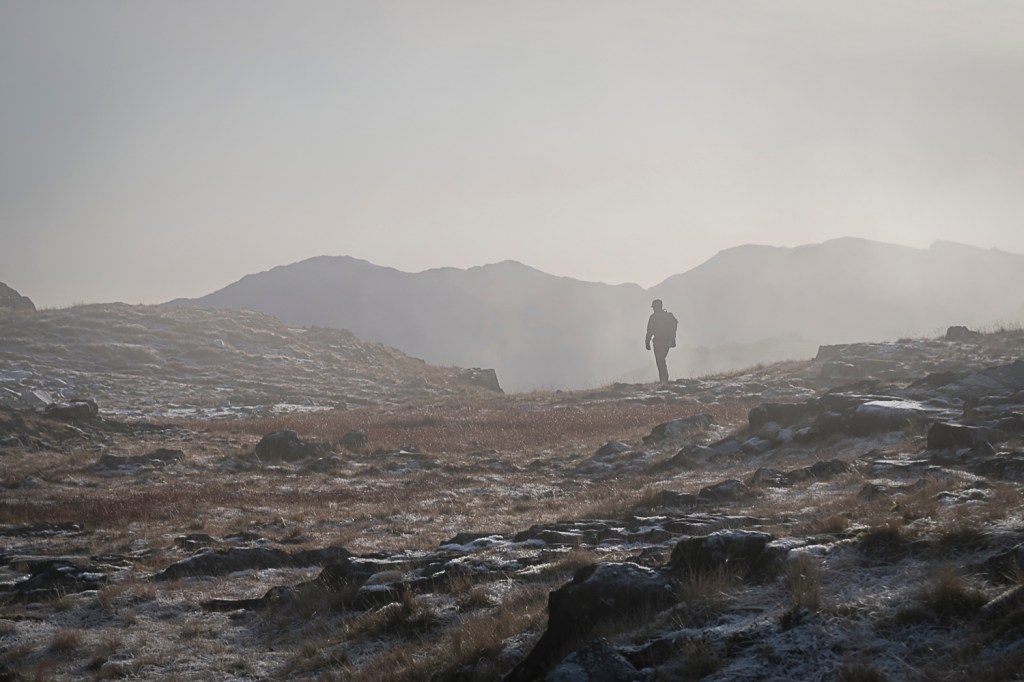
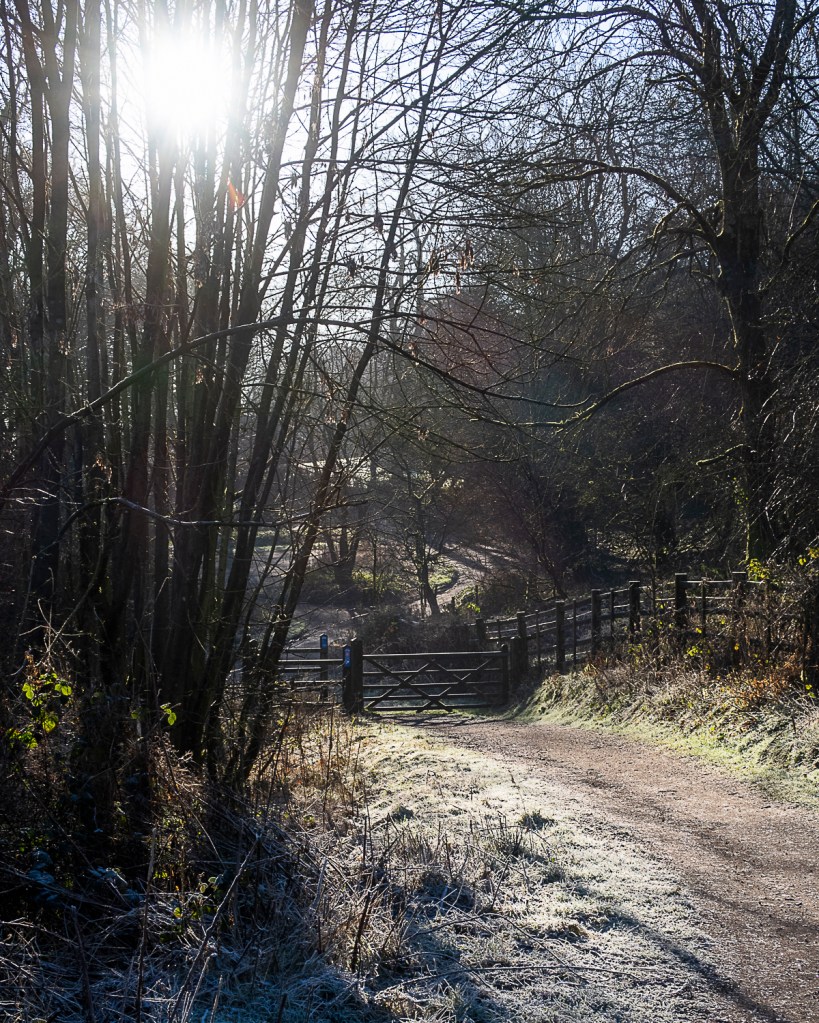
I have taken a series of images to address this exercise, all taken on hill walks in the Lake District and Peak District in winter. The contacts for these shoots are at
The light during the day on both these occasions was bright and the weather clear. As a result the light in many of the images has, to me, the characteristics of that light described by Catling. It is an “insistent brightness” and there is no subtlety in the image – nothing is hidden or mysterious about these images.
Wooler Knoll 01
Wooler Knoll 02
Langhow Tarns 01
Woodlands Valley Plantation 01
The colours are bright and intense, and the shadows do not seem to hold any mystery.
Rendering this type of image into black and white enables a contrasting pattern to emerge and I like to think of this as similar to images made by Fay Godwin (whose work I have described elsewhere in the blog).
Langdale 02
Reedy Loch. Fay Godwin (NSMM 1994/5015/95)
However on the same days and in different settings a more subtle image can be found. Drawing on the technique of shooting into the sun used by Atget, more nuanced images can be achieved.
Langdale 01
Langdale 03
Derwent Valley Way 01
In these images the contrast is reduced and the colours muted – reducing the amount of information in the image. This in itself adds to the mystery of the image and allows the observer to add their own interpretations to the image.
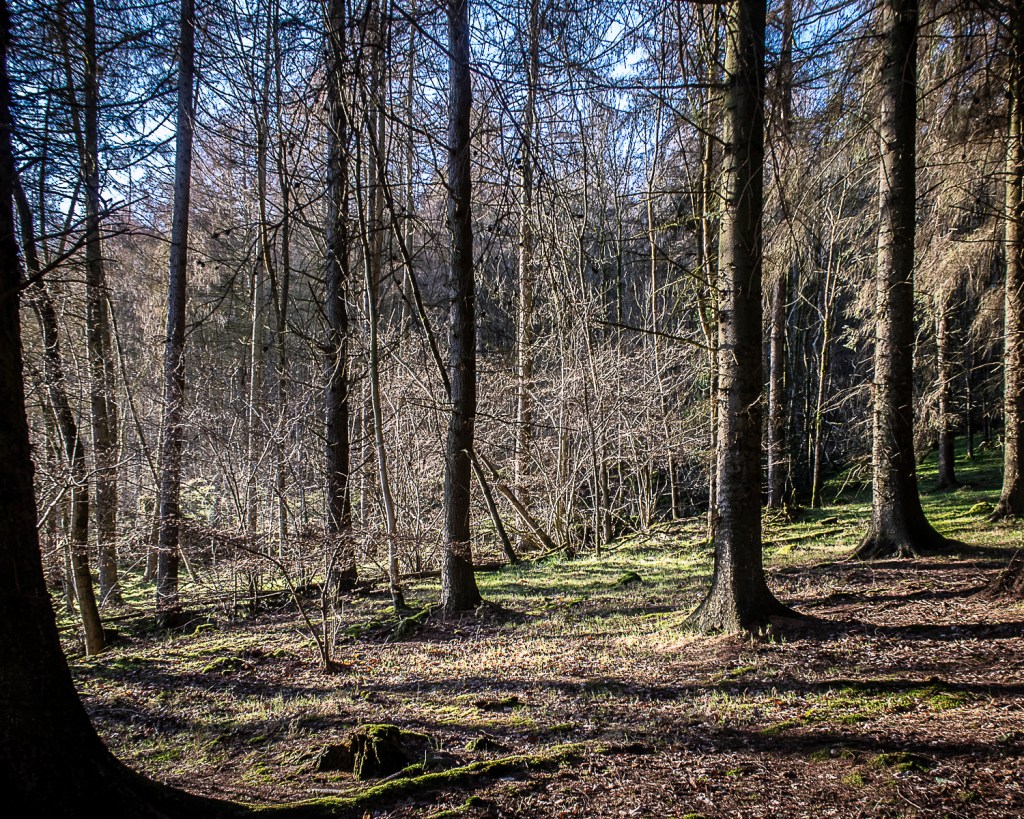
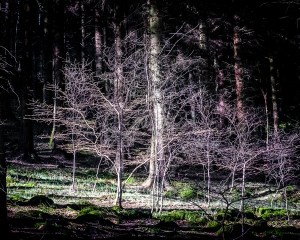
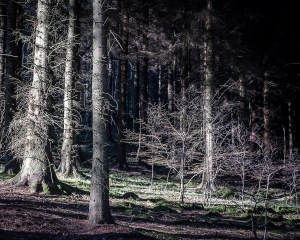
Finally, I have a small series in plantations where the light is altered by being diffused through the trees. Here there is more mystery, reminiscent of the images by Mann.
Woodlands Valley Plantation 01
Woodlands Valley Plantation 02
Woodlands Valley Plantation 03
Woodlands Valley Plantation 01
I note however that all the images I have produced here are on digital cameras and are sharp without the degradation of the image that the equipment and techniques used by Mann (and Atget) produces. I would argue that the atmosphere in their images is a combination of the use and representation of the light together with the loss of detail associated with their techniques.
References
References to the works cited in this post are found in my separate post “References”
Once again for personal reasons, I have not been able to add to this log for longer than I had planned, so this review is later than the monthly reviews planned. Following an episode of illness last year and subsequent health issues, I have been granted an extension for completion of this course. My completion date is now August.
I am now able to work and study more effectively and am very aware that the deadline is not long away!
My over-arching objective now is to re-establish an effective, regular pattern of working in order to be able to complete the course with a view to submission for assessment in November 2020. To this end I will be incorporating techniques and suggestions from Andrea Norrington’s Zoom meeting in January.
Also, there has been a major change in our methods of working associated with adaptations to the restrictions for the COVID-19 pandemic restrictions. This has been associated with greater use of web-based experiences. Objectives Identified Previously Skills: Film Photography
The feedback I have had about my submission for Assignment 3, indicates to me that this has been a worthwhile exercise and development. There remain areas for further work.
Better documentation of the technical elements
Continued improvement in the practical aspects of shooting the images and making the prints.
I plan to continue to use film for remaining exercises, but may not use this for my next assignment in order to be able to examine all parameters of light – not just black and white. Videography
This area remains something I want to explore more, but is not a priority for me until I have completed the course and submitted Assignments 4 and 5. I will not carry this forward to my next review, except where it would shed insights into other objectives.
Use of WordPress
I previously described that in general I can achieve what I need with this. My tutor is encouraging about the structure I have developed for my Learning Log. The weakness I have identified for this is the use of references and a system for recording these. I think this will be important for future courses and I need to develop a system for recording references and generating bibliographies. In addition, there are other digital formats with which I need to interact.
I will re-define this objective as Use of Web-based and other Electronic Learning Tools, which in turn has subdivisions:
Development of Learning Log and Information systems
I need to develop a reference database and will be testing the use of Paperfile for this. I have already set up a paperfile account and will be importing those references I have used to date into it.
Engagement with Electronic Web-based learning events
Access the sites suggested on the EYV Padlet for podcasts etc for useful background reading/learning. In addition I will be looking for other electronic learning experiences, either from the OCA/UCA or other organisations.
Assessment and appraisal skills
This remains an ongoing task and by accessing the EYV and OCA North Padlets I will have opportunity to do this.
Knowledge:
My objective was to gain a better understanding of other art disciplines and influence on photographic work. The feedback I have from my tutor is that I am “starting to connect other art forms to your method and approach to research”. However this remains an ongoing learning objective.
To gain an insight into more contemporary and historical approaches to photography
This is another ongoing objective, and I have done little since my last review of my objectives. However the feedback from my tutor is to concentrate on more contemporary practitioners.
Attitudes:
My objective was the “Demonstration of creativity – Imagination, experimentation, invention”
This remains an objective and I hope with better understanding of the creative process used by other artists I will develop this more.
Assignment 3: The Decisive Moment – Formative Feedback from Andy Hughes
Rather than reproduce Andy’s feedback document I will present sections from it that will enable me to recognise specific elements to maintain and those which need development.
Overall Comments
In his overall comment he wrote that of the prints I submitted, “each shows clear attempts to fulfil the brief requirements”; and that in my written analysis I had a “well-written descriptions of … how the depicted subjects relate to the decisive moment.”
This is an important message for me as I initially found the “decisive moment” a difficult concept to capture (as evidenced by my discussions of the concept at the beginning of my posts on this assignment). Feedback on assignment Demonstration of technical and Visual Skills, Quality of Outcome, Demonstration of Creativity
“Use of traditional composition elements provided for you the basis of a series of strong images.” It is reassuring that Andy finds these “strong” images, as I was uncertain about this myself as I had had hopes of more geometric images with some of the settings.
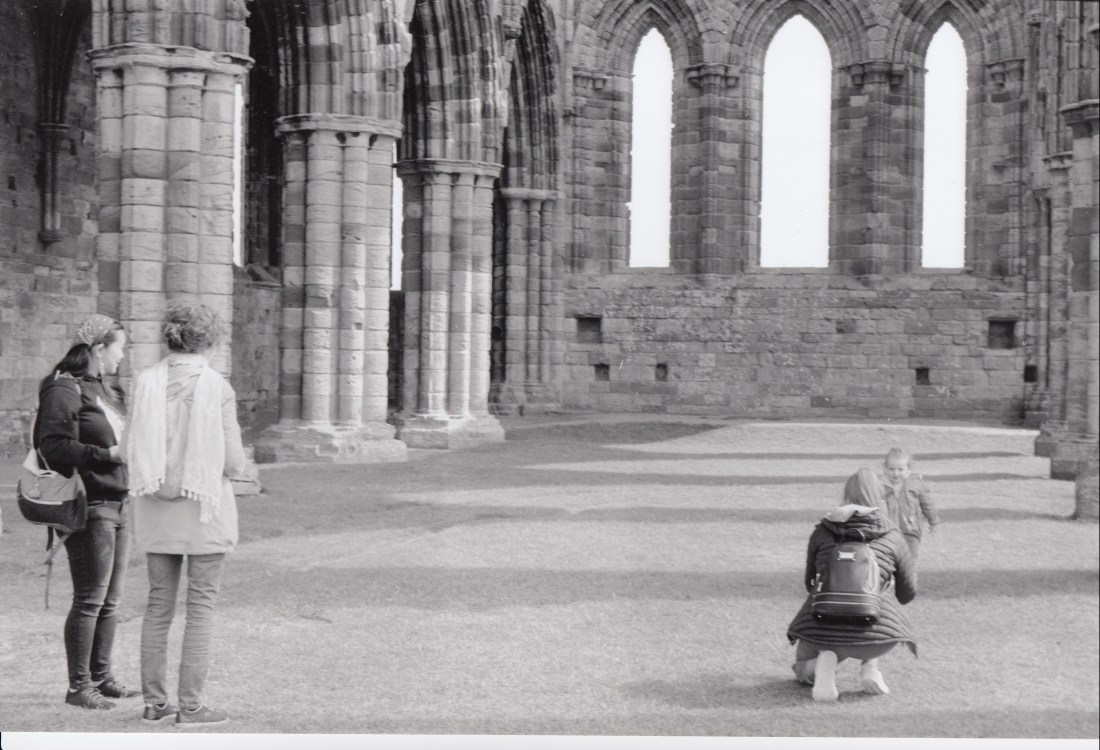
He also picked up on some technical shortcomings of which I was also aware. “There are one of two technical elements to bear in mind: #02-12 might have benefited from a faster shutter … there’s strength in the depiction but the framing is very tight to the edge with the figures.”
2019-09-17 #02-12
I was aware of the tight framing, particularly of the figures to the left of the image. To me it is this image which emphasised the difficulty of working with film and the importance of anticipating the movement of the subjects. The contact sheet shows that these figures are at the edge of the negative – I have a distinct recollection of wanting to catch the image of the child as he ran to (?) mother and pressed the shutter instinctively but had not paid enough attention to the others in the frame!
I chose to use film in order
“ to gain an insight into the work of Cartier-Bresson, and the significance of the timing of releasing the shutter in the creation of this image.” In the creation of this image I think I gained that insight!!
Andy also added that it “would be good to have added a little more specification (film stock and camera settings etc.)” I will bear this in mind for the future – however again things seemed to happen so quickly that I could not make notes of my camera settings before the next shot presented itself! (unlike digital where this is recorded automatically). Coursework Demonstration of technical and Visual Skills, Demonstration of Creativity
Given what I have commented on above, Andy’s comment that “Coursework seems more expressive in terms of subject matter; this is probably due to familiarity with the DSLR” is not surprising!
I plan to continue working with film and making my prints, however the nature of the next assignment (Languages of Light) lends itself to working in colour so I will be using digital cameras for that. I recognise that there is much I can do in black and white relevant to the topic, but taking a medium which prevents me using colour and the changes in colour temperature and balance means I am missing learning opportunities.
Andy referred to my incorporation of my objectives pages into my learning log “There’s some great elements across the site which reveals good planning and strong structure going forward. Objectives page sets goals with subject specific areas to tackle in terms of practical and thinking elements.”
Andy also makes a positive comment about my incorporation of other art forms.
“It’s good to see an ability to connect other art forms and relay back and forth between your interests and subject matter… It’s clear that you’re starting to connect other art forms to your method and approach to research.”
Again I am pleased that he is supportive of this as a specific objective of mine is
He also suggested “It might be worth using a notebook for annotations and sticking in small prints, cutting etc”. This is a theme he has mentioned in the past and I am still struggling with, but doing some work on.
He has directed me to other sources – particularly for contemporary artists.
Overall: Strengths “Good notes and supporting commentary” – I am pleased that the level of discussion I have written is satisfactory and I will aim to continue to work at this level
“New experiences gained by attending events, shows and talks etc.” I have made an effort to seek these experiences, so clearly need to continue. Areas for development
“Consider technical elements and keep a record.” I will aim to record more technical details for my images.
“Look at contemporary work” This will be a focus for my choice of events, shows and talks etc which I attend. My next steps before submission:
I found capturing these images very much more time consuming using film rather than digital, and I am not sure I will have time to re-shoot any. However I think there are some that could be stronger and I will attempt to get a couple more – now I have more confidence that these are suitable.
The printing of some could be improved in terms of contrast and I had to cut the border off one, as there was some fogging due to a failed safelight. Again if I have time I will reprint them.
Zoom Meeting 26 May 2020 – EYV Padlet
Led by Robert Bloomfield
In recent weeks there has been a number of emails and notifications from the OCA regarding arrangements for improved distance working in part it would seem as a general development of the courses and also as adaptation to the COVID-19 pandemic. In his emails prior to this meeting Robert had described part of this work involving the establishment of a Padlet to support EYV.
I have previously come across padlets to support the OCA North Group and enable sharing of work when we are unable to meet in person.
However I am generally unfamiliar with the concept and how best to make use of them.
I had examined the EYV site ( https://oca.padlet.org/robertbloomfield/eyv) prior to the meeting. During the meeting Robert shared his screen and showed how he had set up the layout of the padlet but was seeking opinions as to the best way to use it.












 Andrew Procter